
Features
Dream That was Peradeniya: The Beginning of the End

by Ananda Wanasinghe
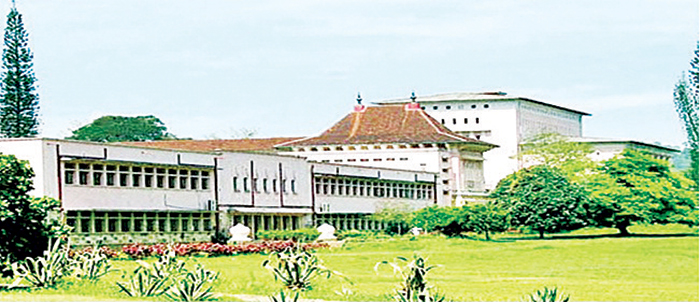
Last Sunday my friend Nissanka Warakaula wrote about the halcyon days at the then iconic University of Ceylon at Peradeniya. Nissanka was three years senior to me. I went down from Peradeniya in 1966. In my first term of that final year, I had the misfortune of being present on the day that set off the decline of “The Dear Perpetual Place” as Prof. Ashley Halpe lovingly and aptly referred to it in the excellent anthology “Peradeniya: Memories of a University” (1997).
A major, and most un-academic, diversion from studies during the first term of every year was routine during our time at Peradeniya. With exams being a distant two terms away, these rumpuses on campus were taken as lively distractions from studies. In my first year (1962) the disturbances started when some left-wing students jostled Mr. Dudley Senanayake, the then Leader of the Opposition, who had been invited to address the students at the Arts Theatre. Two other strikes followed in ‘63and ’64. So, inevitably, a boycott of lectures based on 12 demands commenced on Monday, December 6, 1965. Provision for regular meetings between the Vice Chancellor and students’ representatives; assured government employment for all graduates; and making all minor workers permanent employees of the University were among these demands. Unfortunately, no one seems to remember any of the other demands now. However, they were all couched in the language of the strident radical left-wing politics of the time.
In my narrative below, I write what I recall vividly of what I witnessed that day, as well as what I gathered from others immediately after the events. A few gaps in the account have been filled after discussion over a few weeks, with some of my contemporaries: all of us going down ‘memory lane’. This account amounts to a series of snapshots of incidents in the larger episode and is by no means a minute-by-minute commentary. There could be some incidents that I am not aware of.
MORNING
I was woken up at five in the morning from a deep slumber by the sound of loud knocking on some doors on my floor in the Wijewardane Hall accompanied by loud talk. It was Saturday, December 11, 1965.
The previous night most Hall Societies including ours had decided, after much fractious debate, to end the strike. A large number of students who were against the strike, including myself, participated in a boisterous march to Ramanathan Hall to announce to all that reason was restored.
Now it seemed that the strikers headed by my friend and batch-mate N. Shanmugaratnam (Shan), President of the Union Council, had plotted and planned throughout the night in Marrs Hall and were ordering the first-year students out to continue with their agitation. I realized that we, the anti-strikers, had been preempted. Shan was a decent and good-natured fellow with a strong mind. Politically, he was a ‘Maoist’ with the Peking Wing of the Communist Party. He also had the support of the other left parties for the strike. However, there were also opportunists who were after glory for themselves by indulging in vain deluding heroics.
At about 5.30 in the morning, I telephoned Shan at Marrs Hall and spoke with him for about five minutes. [Shan and I were in the Agriculture Faculty and a large majority of faculty students were against the strike and continued with the lectures and practical work. I openly campaigned against the strike in the Faculty as well as among the fellow students at Wijewardane.] I asked him to rethink the possible consequences of going ahead with the strike, particularly because there were a significantly large number of students who were against the strike. He told me that he believed what they were doing was the right thing and that he was determined to go ahead. I cautioned him about others who may have different objectives and told him to be a little careful of his own personal safety in the event that things got out of hand. It was a very cordial exchange that would be unthinkable in the present culture of campus politics and agitation anywhere in Sri Lanka.
VIOLENCE
After breakfast I was alone in my room on the second floor of the first wing as my room-mate Gerry Jayawardane had gone for lectures. As I had no work in the Faculty that morning I practiced on a ‘Button Accordion’ That I had borrowed from the late Dr. Harold Wijetunga, the Senior University Medical Officer and a very kind gentleman. After a while I decided to catch up on the sleep lost earlier in the morning. I must have slept for about an hour, when for the second time that day I was rudely awakened by the door being burst opened and two girls and a boy rushing into the room screaming “wedi thiyanawa, wedi thiyanawa“. All three of them were covered in perspiration and hysterical.
I told them to sit down and try to be calm. Looking out of my window I saw some policemen come running past Jayatilaka Hall towards Kandy Road with a large number of students in hot pursuit. Just past the railway under crossing, almost out of my line of sight, the students caught up with them and the last policeman was dragged down by the leading pursuant. In an instant a dozen student were upon him. I also saw one student picking up a large rock with both his hands and walking towards the scuffle which was now out of my sight. I thought the policeman might be killed.
Later I learnt that Sarath Ranasinghe of Wijewardane, my classmate in school, while walking to the Medical Faculty had been there on the spot when the students attacked the policeman. He boldly intervened and stopped the student with the rock before he could hurl it on the fallen policeman. Sarath received a few blows himself, but managed to prevail on the assailants to have mercy on the man who was badly injured. When they left, Sarath, being well-built and strong, carried the injured man (Sgt. Seneviratne) up the embankment to the road and continued towards the Medical Faculty to have him attended-to when a police ambulance arrived and took the Sergeant to the hospital. This incident was reported in ‘The Island’ of October 19, 2008.
The spark that set off the violence had been lit at the entrance to the Biology Lab. Kushlani Ranasinghe, a final-year student from Sangamitta had been prevented from entering the zoology lab by picketing strikers lying supine covering all approaches to the main entrance to the building. Evidently, a daring girl, she waded across this mass of ‘fallen’ humanity and stumbled into the doorway where she was stopped from losing her balance and helped in by her batch-mate R. Rudran from Arunachalam Hall, who had arrived before the entrance was blocked. Following this event, Prof. Hilary Cruz, who was authoritarian and could hardly relate to the students, had called the University Proctor.
Kushlani recalls Dr. Tommy Wickramanayake (Proctor) turning up and telling the picketing students to vacate the place, and going away saying that the police would be called if they did not. When there was no response from the strikers Prof. Cruz had called the Police. In a while, the police arrived. Bandula Perera from Wijewardane remembers Mr. R. Sunderalingam, SP Kandy, removing his regulation cap in an obviously conciliatory gesture, and proceeding to address the strikers. He spoke as a graduate of Peradeniya as well as a past President of the Union Council and appealed to the students to disperse peacefully. At this point Shan stepped out and spoke to the gathering asking them to listen to the present President and said that this is our campus, and the police have no right to interfere. He added that the students were not moving away from where they were.
Not long afterwards, a group of policemen had arrived at the scene fired tear gas at the crowd of students and baton-charged them. One of the first to get hit was Shan, and he was bleeding from the head. A Police Inspector took hold of him saying that he had a big mouth. Let me quote Shan about what happened next. “…Then I ended up in a police truck. That was when WS (Prof. W.S. Karunaratne), fleeing the angry crowd, ran towards the truck calling out ‘ralahamy, ralahamy’, and got in and sat with me. He was quite chatty!! The students were now marching in big numbers towards the truck. Coora (P.S. Cooray) was one of the leaders. He removed his shirt, waved it, and raised his clenched fist and shouted at the police. In the melee I saw a tall man steadily walking towards the police truck. Pointing at me, he told the officer standing there – ‘You must release this man, otherwise it’s going to be difficult to control the students.’ I came to know later that he was Prof. Sivapragasapillai of the Faculty of Engineering. After some time, I was taken to the Kandy police station. Prof. Siva had followed us to the police station. He bailed me out and took me to the hospital. Many students visited me at the hospital. Some of them wept.”
The students who had now been provoked attacked the police with stones. Pandemonium reigned at the Biology Building. Rudran remembers hearing shots being fired, and a large number of students fleeing across the cricket field towards the Arts Faculty. Police had fired warning shots in the air. He remembers he was sick the entire day from the tear gas that came into the lab. Kushlani recollects that she, with other lab staff, dressing wounds of a few girls, among those who rushed into the lab for protection.
They were bleeding from cut injuries. There were no reports of any student sustaining gunshot injuries. H.L. Premasiri, an engineering student arriving late in a group to join the protest saw Neville Perera, a well-known loud-mouthed agitator who seemed to bask in the adulation of his followers, come loping down the Old Galaha Road. As he passed Premasiri’s group, he shouted “sahodarawaruni duwanda” [run comrades run]. So Premasiri and others beat a hasty retreat back to Wijewardane Hall.
Among those who fled towards the Arts Faculty was K.S. de Abrew, an engineering student who was a hyperactive supporter of the strike. A few days earlier, he was apprehended by Marshals while slipping leaflets under people’s doors at night. He was an inveterate troublemaker. There were a large number of students at the Arts Theatre who were injured during the baton charge and the resulting stampede. Abrew with a colleague who had a scooter rushed to the Health Center on Sanghamitta Hill to get some medical supplies for dressing wounds. When the Sister-in-charge refused to give anything, they forcibly grabbed as much cotton wool and bandage rolls as they could and rode back to the Arts Theatre.
On his way up and down, he saw a few items of furniture thrown down to the road from the Vice Chancellor’s Lodge. A while later, Sunila Munaweera (final year) an ardent supporter of the strike who enjoyed missing lectures, and Shirani Fonseka (first year) both from Ramanathan remember watching him spellbound as he made a fiery exhortation to the satankaami sahodarawaru (battling comrades) to continue to battle the reactionary forces on campus. Sunila claims that she didn’t know any of the demands she was ‘fighting’ for. Shirani says she had several misgivings about the demands as well as about picketing, but because everyone in her group of friends supported the agitation, she also joined the boycott of lectures but covertly avoided joining in picketing. It is most likely that such attitudes of thrill-seeking and passive participation prevailed among a large majority of the strikers.
A group of students had broken into the Lodge and damaged and thrown out furniture. When Coora visited the place later he saw some periodicals burning on the lawn. And as Samarasinghe says, there was only a little damage caused to the building and the furniture.
There were too many enraged students who were now willing to risk everything to get even with the police and the vastly outnumbered policemen were forced to turn around and run for dear life. It was these men that I saw from my window. By this time, the three [probably first year] students had sought some other place of refuge; and I walked down to the ground floor to find out what was going on. There were a large number of boys and girls in the dining hall and the lobby, and an even larger crowd of boys gathered on the large lawn out in front. It seemed the police had left the campus. Students in small groups were piecing together the preceding events and relating their individual experiences. By now the students had shed their differences and were united against the Police.
Before long, Police returned in larger numbers. Many of them were now armed with rifles. They ordered everybody outside to get inside Wijewardane Hall, and they seemed to mean business – after all, a few of their comrades had been badly mauled by the students earlier in the day. But there were still a few very angry hot-headed students willing to defy the police. However, a few senior students, including Coora and myself stepped out of the crowd and coaxed the others into the Hall. This took some time, and I clearly remember two constables close behind Coora and me pointing their rifles at us. The police ordered students not to leave the Hall. There must have been close to a thousand students now in the Hall. I cannot quite remember about lunch, but I guess that everybody shared what had been prepared for only the 500 occupants of Wijewardane.
REVOLUTION!
Then came to pass the most comical as well as pathetic episode during my four-year stay at Peradeniya.
It was now about two hours after the cessation of hostilities and things seemed to have settled on campus. But police jeeps kept prowling the roads. No student ventured to step out into the open. Then an announcement was made that there would be a meeting of the students in a short while in the dining hall which would be addressed by “The Leader”. To me this sounded ominous and mysterious because everybody knew that Shan was under arrest. I wondered if there was further mischief afoot.
For a while one and all waited in suspense, quandary, and misgivings as to what was going to happen. Then amidst much hailing and hosannas from some of the leading strikers, in strode Neville Perera on to the podium. His supporters kept cheering until he signaled them to stop. Then without any preliminaries he proclaimed that the Union Council was dissolved, and the Revolution had started!! He also announced that the harbor workers in Colombo had gone on strike and that CTB would follow shortly.
Perera went on to give instructions as to how we should conduct ourselves, the details of which I don’t remember. And in truly revolutionary fashion he appointed several agents provocateurs, to act on whatever the ‘revolutionary council’ decreed and also to maintain order. True to form, and to the best of my memory, these agents were bestowed with the code name ‘Danco’. I well remember Bandula, one of the Dancos, marching up and down the lobby of Wijewardane like a drill sergeant ordering students not to leave the Hall. Neville Perera did not stay long after these histrionics and was cheered out by his allies and devotees.
To me it seemed that all this nonsense was taken seriously by everybody present. I felt sad for such seeming credulity of the absurd, among those who were usually referred to by the literati as the ‘cream of the country’s intelligentsia’. Or were they all stunned out of their wits by the bombast?
Towards the evening, Marshals came and asked everyone to get back to their respective halls of residence. They escorted the girls back to their halls. Dancos seemed to have renounced their arrogance and anticipated role in the revolution had re-merged with the students. The police disguised Rudran and Kushlani in police raincoats and evacuated them to Colombo in the evening, for their protection. There came an announcement that the university had closed, and all students were required to leave the campus the next day. This was only one week ahead of the scheduled end of the first term. So ended this unforgettable day.
EPILOGUE
With the start of the second term, the University instituted action against those who were perceived as indulging in violence. This included all the ‘Dancos’. The inquiries were conducted by a triumvirate comprising Dr. Tommy Wickramanayake (University Proctor) and two other senior staff members. The suspect students were allowed, if they so wished, to be represented by another student. [This was the era when today’s State Counsel were called ‘Crown Counsel’. A wag promptly labeled those representing the suspects – ‘Clown Counsel’.] Understandably, most ‘suspects’ chose those who were openly against the strike to represent them. I ‘defended’ Bandula and the late Sinha Perera.
The Court Case and After
The case, Queen vs. N. Shanmugaratnam, N. Perera, Sydney Jayasinghe, and W.B. Wijeratne, was first taken up in the Majistrate’s court. They were charged with unlawful assembly, arson, attempted murder etc. Sydney was discharged at this inquiry. The other three accused stood trial at the district court in Kandy and were defended by a team of three lawyers headed by Mr. V. Karalasingham. In the end, an understanding judge conditionally discharged the accused students.
This was followed by an inquiry by the University’s Board of Residence and Dicipline. The inquiry was conducted by a panel headed by Prof Bawa with Dr. Mrs. Aluwihare as a member. Shan and Sydney were suspended for one year. Wijeratne and Wijegunawardane were suspended for one term. Neville Perera was not suspended on the technical point that he was not a student at the time.
Long-term Consequences
This event was the turning point of the decline of universities in Sri Lanka. The government took the opportunity presented by the violence to appoint Civil Servants as Vice Chancellors instead of electing them from among the academics. The Minister of Education, who had an axe to grind with the university, took every opportunity to intervene in the affairs of the universities. (Incidentally, the minister’s daughter and future son-in-law were students at Peradeniya during this period.) Prof. Ashley Halpe has recounted in some detail the decline of the Universities in Sri Lanka following this event in the anthology mentioned above.
R. Sundaralingam, at the time, Acting S.P. Kandy, and a former president of the Union Council, is on record as telling the Vice Chancellor early in December 1965 “…that police intervention in university student unrest would aggravate the situation, the Vice Chancellor, … was adamant that police should intervene to bring the situation under control.” Sir Nicholas had also reported to the Prime Minister about the SP’s attitude. He further says that the police intervened in response to a call from Prof. Cruz claiming that the biology building was being stoned causing heavy damage. [‘The Island’, October 19, 2008.]
Sir Nicholas Attygalle had a reputation as an exceptionally gifted obstetrician and gynecologist but not as a great educator. He was authoritative, rarely accessible to students, and hardly responsive to student demands of any sort. Newspapers of the time often referred to him as the “Iron Chancellor” after the first German Chancellor von Bismarck. The students’ demand for regular meetings with him reflected this obstinate attitude of his.
It was also known that there was an irreconcilable rift between Sir Nicholas and Prof. EOE Pereira, Dean of the Engineering Faculty. The latter was known to be an excellent teacher and was almost venerated by students of his faculty. He never compromised on the high academic standards expected of them. There would have been members of the staff who supported one or the other of them. This may have been a major reason for the strong participation of the Engineering Faculty in the strike. However, there must have been many other highly respected senior staffers who did not take sides. They perhaps could have opened a dialogue/initiative with student leaders and political leaders of the time who themselves had been the beneficiaries of post-graduate education at prestigious universities in the West. Such an effort towards the development of the University along the liberal lines that Sir Ivor Jennings had intended for Peradeniya could well have prevented the deterioration of university education in Sri Lanka that we see today.
In hindsight, it seems that Sir Nicholas may not have been the best to succeed Sir Ivor who went on to hold the positions of Master of Trinity Hall and Vice Chancellor of Cambridge University. Prof. EOE Pereira was appointed Vice Chancellor in 1969. But by that time, the university system had undergone a seminal change, and its effective management had passed on to the hands of mere politicians.
It is the country’s misfortune that the pantheon of academic luminaries that graced the then University of Ceylon could not deliver a scholar as Vice Chancellor who would have commanded the respect of the staff and the esteem of the students.
How they ended up – 50 years on
Cooray P.S. – Retired Teacher and voluntary social worker; Bandaragama
De Abrew, K.S. – Senior Water and Sanitation Engineer, Botswana
Fonseka, Shirani – (Mrs. De Abrew) Amateur Ceramic Artist; Botswana
Jayasinghe, Sydney – Consultant Director, Bogala Graphite Company PLC; Colombo
Perera, Dr. Bandula – Company Director; Deputy Chairman, Public Utilities Commission; Board Member, Industrial Technology Institute; Colombo
Perera, Neville – Germany (when last heard of)
Premasiri, H.L. – Water Supply Engineer; Specialist in Procurement; Colombo
Munaweera, Sunila – (Mrs. Rajawasan) Formerly; Statistician, RVDB; Now Aerobics Instructor; Mt Lavinia
Ranasinghe, Kushlani – (Mrs. Amarsuriya) Formerly, Executive Director, Alcohol and Drug Information Center (ADIC); now, voluntary social worker, Colombo
Ranasinghe, Sarath – Consultant Physician and Managing Director, Kandy Private Hospital
Late Rudran, Dr. R. – Scientist Emeritus, Smithsonian Institute, Washington D.C. USA
Shanmugaratnam, Dr. N. – Professor Emeritus and Director of international studies,
Norwegian University of Life Sciences, Aas, Norway
Wanasinghe, Ananda – Consultant Development Economist, Colombo
Wijegunasinghe, D.
(now Wije Dias) – General Secretary of the Socialist Equality Party, Colombo
Wijeratne, Dr. W.B. – Director, Research & Food Technology, Harvest Innovations, Iowa, USA

Features
Illegal solar push ravages Hambantota elephant habitat: Environmentalist warns of deepening crisis

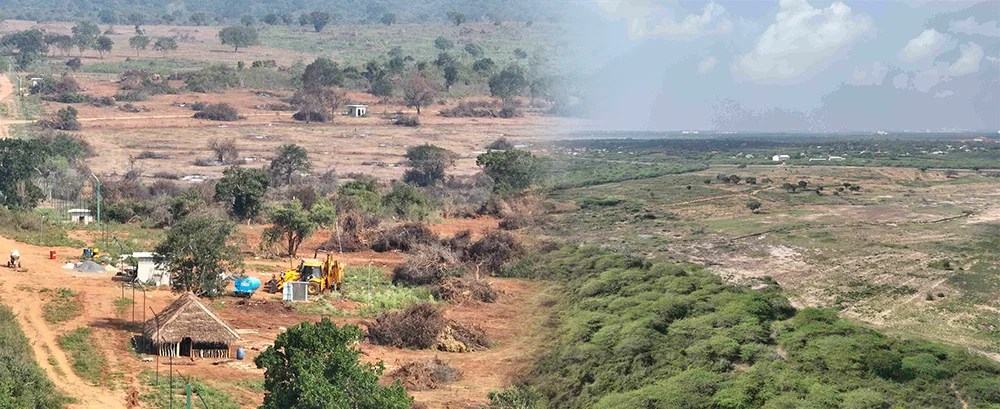
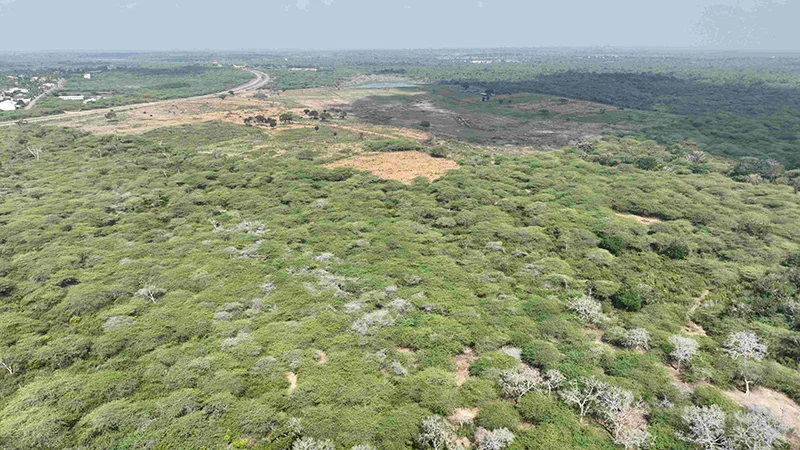
A large-scale move to establish solar power plants in Hambantota has triggered a major environmental and social crisis, with more than 1,000 acres of forest—identified as critical elephant habitat—cleared in violation of the law, environmental activist Sajeewa Chamikara said.
Chamikara, speaking on behalf of the Movement for Land and Agricultural Reform, said that 17 companies have already begun clearing forest land along the boundaries of the Hambantota Elephant Management Reserve. The affected areas include Sanakku Gala, Orukemgala and Kapapu Wewa, which are known to be key elephant habitats and long-used movement corridors.
He said that what is taking place cannot be described as development, but rather as a large-scale destruction of natural ecosystems carried out under the cover of renewable energy expansion.
According to Chamikara, the clearing of forests has been carried out using heavy machinery, while large sections have also been deliberately set on fire to prepare the land for solar installations. He said that electric fences have been erected across wide stretches of land, effectively blocking elephant movement and fragmenting their natural habitat.
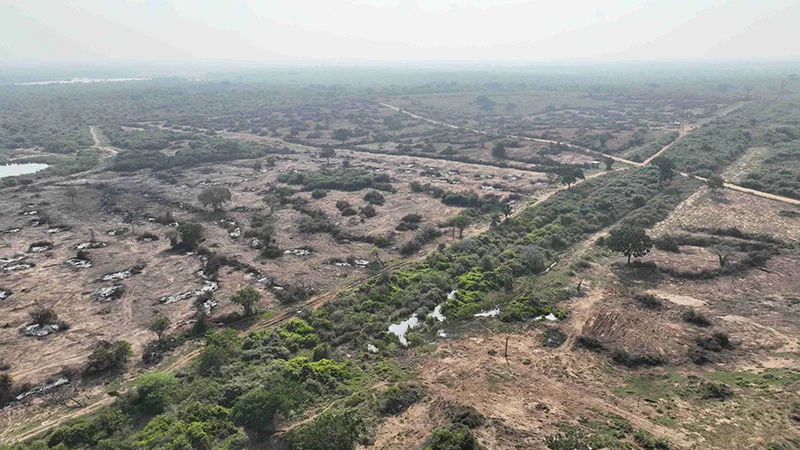
“These forests are not empty lands. They are part of a living system that supports wildlife and nearby communities. Once destroyed, they cannot be easily restored,” he said.
The projects in question include a 50 megawatt solar development undertaken by five companies and a larger 150 megawatt project implemented by 12 companies. The larger project is reported to be valued at around 150 million US dollars.
Chamikara stressed that these projects are being carried out in a coordinated manner and involve extensive land clearing on a scale that raises serious environmental concerns.
He further alleged that certain companies had paid about Rs. 14 million to secure support and move ahead with the projects. He said this points to a troubling failure of oversight by state institutions that are expected to protect forests and wildlife habitats.
“This is not only an environmental issue. It is also a serious governance issue. The institutions responsible for protecting these lands have failed in their duty,” he said.
Chamikara pointed out that under the National Environmental Act, any project of this scale must receive prior approval through a proper Environmental Impact Assessment process.
He said that clearing forest land before obtaining such approval is a direct violation of the law.
He added that legal requirements relating to archaeological assessments had also been ignored. Under existing regulations, large-scale land clearing requires prior evaluation to ensure that sites of historical or cultural value are not damaged.
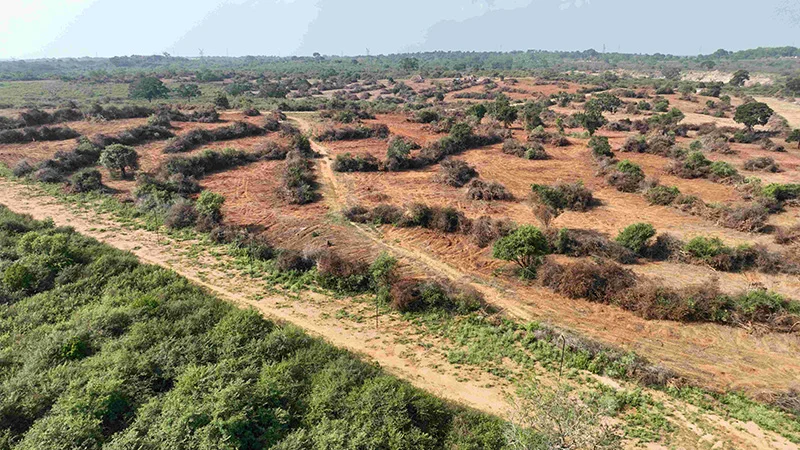
“The law is very clear. You cannot go ahead with projects of this nature without proper approval. What we are seeing is a complete disregard for legal procedure,” Chamikara said.
The environmental impact of these activities is already becoming visible. With their natural habitats destroyed, elephants are increasingly moving into nearby villages in search of food and shelter. This has led to a sharp rise in human-elephant conflict in several areas.
Areas such as Mayurapura, Gonnooruwa, Meegahajandura and Thanamalvila have reported increasing encounters between humans and elephants. According to Chamikara, more than 5,000 farming families in these areas are now facing growing threats to their safety and livelihoods.
He warned that farmers are being forced to abandon their lands due to repeated elephant intrusions, while incidents involving damage to crops and property are rising. There have also been increasing reports of injuries and deaths among both humans and elephants.
“This is turning into a serious social and economic problem. When farmers cannot cultivate their lands, it affects food production, income and rural stability,” he said.
Chamikara also raised concerns about the broader environmental consequences of clearing forests for solar power projects. While renewable energy is promoted as a solution to reduce carbon emissions, he said that destroying forests undermines that goal.
“Forests play a key role in absorbing carbon dioxide. When you clear and burn them, you are increasing emissions, not reducing them. That defeats the purpose of promoting solar energy,” he explained.
He added that large-scale deforestation in dry zone areas such as Hambantota could also affect local weather patterns and reduce rainfall, which would have further negative impacts on agriculture and water resources.
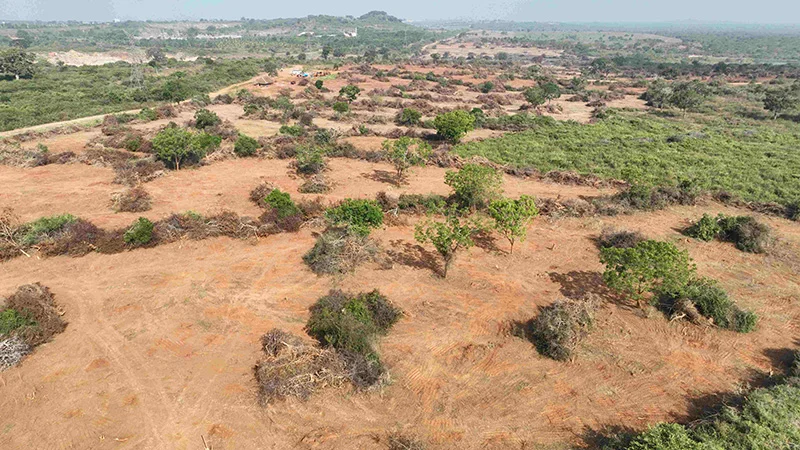
Chamikara called for a shift in policy, urging authorities to focus on more sustainable approaches to solar power development. He said that rooftop solar systems on homes, public buildings and commercial establishments should be given priority, as they do not require clearing large areas of land.
He also recommended that solar projects be located on degraded or abandoned lands, such as areas affected by past mining or other low-value lands, rather than forests or productive agricultural areas.
“Renewable energy development must be done in a way that does not destroy the environment. There are better options available if there is proper planning,” he said.
Chamikara urged the Central Environmental Authority and the Department of Wildlife Conservation to take immediate action to stop ongoing land clearing and investigate the projects. He stressed that all activities carried out without proper approval should be halted until legal requirements are met.
He warned that failure to act now would lead to long-term environmental damage that could not be reversed.
“If this continues, we will lose not only forests and wildlife, but also the balance between people and nature that supports rural life. The consequences will be felt for generations,” he said.
The situation in Hambantota is fast emerging as a critical test of whether development goals can be balanced with environmental protection. As pressure grows, the response of authorities in the coming weeks is likely to determine whether the damage can still be contained or whether it will continue to spread unchecked.
By Ifham Nizam
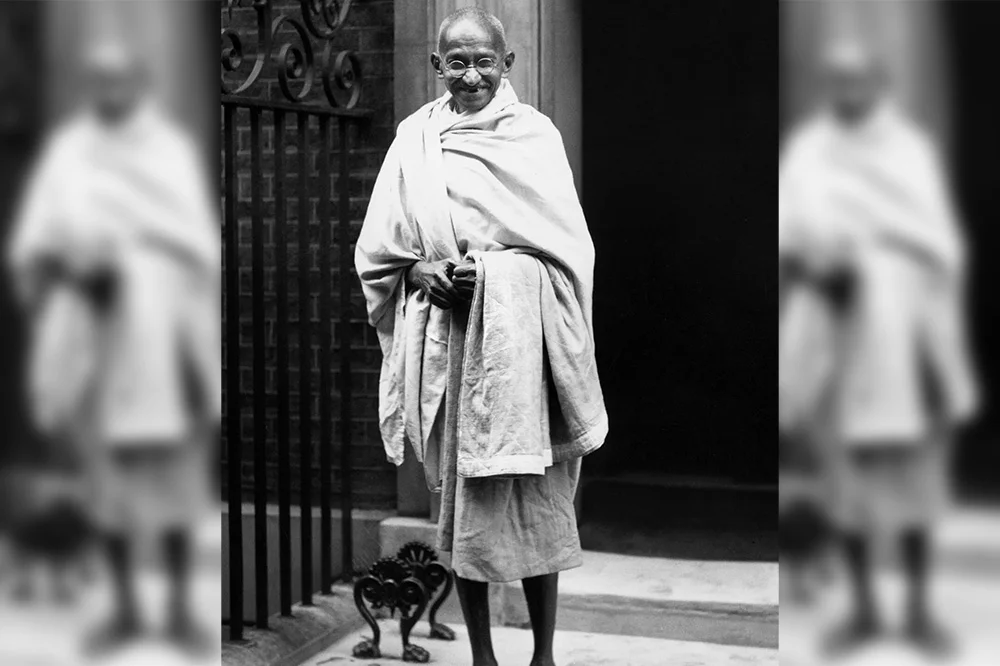
 All credit to the Tamil Nadu government for taking concrete measures to perpetuate the memory of the renowned Mahatma Gandhi of India, who on account of his moral teachings stands on par with the likes of Socrates, Plato, Aristotle, Confucius and Jalaluddin Rumi, to name a few such all-time greats. The time is indeed ripe to draw the world’s attention to the Mahatma’s humanistic legacy which has resonated in the hearts of peace-oriented sections the world over down the decades.
Under its mega developmental blueprint titled ‘ Tamil Nadu 2030’, the Tamil Nadu government, among other things, intends transforming villages into centres of economic growth in conformity with the Mahatma’s vision of making the village the fundamental unit of material and spiritual advancement. Thus will come into being the ‘Uttamar Gandhi Model Villages Project’, which will be initially covering 10 village Panchayats. (Please see page 3 of The Island of March 11, 2026).
The timeliness of remembering and appreciating anew the teachings of Mahatma Gandhi resides in the utter lawlessness that has been allowed to overtake the world over the last few decades by none other than those global powers which took it upon themselves to usher in a world political and economic order based on the UN Charter and the Universal Declaration of Human Rights. Mainly in ‘the dock’ in this regard are the permanent members of the UN Security Council.
As is plain to see, the international law and order situation has veered out of control. Principal priorities for the international community or what’s left of it is to prevent the current mainly regional war in the Middle East from degenerating dangerously into another world war, coupled with the task of eliminating the possibility of another nuclear holocaust.
The most scorching of ironies is that the world’s ‘number one power’, the US, has virtually lost its way in the ‘Global Disorder’ it has been party to letting lose. For instance, instead of making good its boast of militarily neutralizing Iran and paving the way for the constant flow of fuel and gas from the Strait of Hormus by itself and Israel, it is now appealing to the rest of the West to come to its assistance. Not surprisingly, US allies are indicating their unwillingness to help pull the US’ ‘chestnuts out of the fire’.
Oil and gas are the veritable life blood of countries and going ahead it should not come as a surprise if impatience gets the better of the major powers and the nuclear option is resorted to by some of them under the dangerous illusion that it would be a quick-fix to their growing economic ills and frustrations.
All the above and more are within the realms of the possible and the need is pressing for humanistic voices to take centre stage in the present runaway crisis. As pointed out in this column last week, Realpolitik has overtaken the world and unless the latter is convinced of the self-destructive nature of the major powers’ policy of ‘meeting fire with fire’ to resolve their disputes, annihilation could be the lot of a good part of the world.
For far too long the voice of humanity has been muted and silenced in the affairs of the world by the incendiary threats and counter-threats of the big powers and their allies. No quarter has been bold enough in these blood pressure-hiking slanging matches to speak of the need for brotherly love and compassion among nations and countries. But it’s the language of love and understanding that is the most pressing need currently and the Mahatma in his time did just that against mighty odds.
At present the US and Iran are trading threats and accusations over military-related developments in the Gulf and it’s anybody’s guess as to what turn these events will take. However, calming voices of humanity and moderation would help in deescalating tensions and such voices need to go to the assistance of the UN chief and his team.
The Mahatma used the technique of ‘Satyagraha’ or the policy of non-violent resistance to oppose and dis-empower to a degree the British empire in his time and the current major powers would do well to take a leaf from Gandhi. The latter also integrated into the strategy of non-violent resistance the policy of ‘Ahimsa’ or love and understanding which helped greatly in uniting rather than alienating adversaries. The language of love, it has been proved, speaks to the hearts and minds of people and has a profoundly healing impact.
Mahatma Gandhi defined the ideal of ‘Ahimsa’ thus: ‘In its positive form, “Ahimsa” means the largest love, the greatest charity. If I am a follower of “Ahimsa”, I must love my enemy or a stranger to me as I would my wrong-doing father or son. This active “Ahimsa” necessarily includes truth and fearlessness.’ (See; ‘Modern Indian Political Thought; Text and Context’ by Bidyut Chakrabarty and Rajendra Kumar Pandey, Sage Publications India, Pvt. Ltd., www.sagepub.in).
In the latter publication, the authors also defined the essence of ‘satyagraha’ as ‘protest without rancour’ and this is seen as ‘holding the key to his entire campaign’ of non-violent resistance. From these perspectives, the teaching, ‘hatred begets hatred’ acquires more salience and meaning.
Accordingly, the voice of reason and love needs to come centre stage and take charge of current international political discourse. The UN and allied organizations which advocate conflict resolution by peaceful means need to get together and ensure that their voices are clearly heard and understood. The global South could help in this process by seeing to the vibrant rejuvenation of organizations such as the Non-aligned Movement.
An immediate task for the peace-oriented and well meaning is to make the above projects happen fast. In the process they should underscore afresh the profound importance of the teachings of Mahatma Gandhi, who is acclaimed the world over as a uniting and healing political personality and prophet of peace.
If the Mahatma is universally acclaimed, the reason is plain to see. Put simply, he spoke to the hearts and minds of people everywhere, regardless of man-made barriers. The language of peace and brotherhood, that is, is understood by everyone. The world needs more prophets of peace and reconciliation of the likes of the Mahatma to drown out the voices of discord and war-mongering and ensure that the language of humanity prevails.

 The Future Model Hunt extravaganza, organised by Rukmal Senanayake, and advocacy trainer Tharaka Gurukanda, held in late January 2026, has brought into the limelight four outstanding contestants who will participate, at the international level, this year – Sandeepa Sewmini, Demitha Jayawardhana, Diwyanjana Senevirathna, and Nimesha Premachandra.
Nimesha took the honours as Mrs. Tourism Sri Lanka 2026 and was featured in The Island of 05th March,
Sandeepa Sewmini was crowned Miss Supranational 2026 and will represent Sri Lanka at the big event to be held in Poland later in the year.
A Business Management and Human Resources student, she will be competing under the guidance of Rukmal Senanayake from the Model With Ruki – Model Academy & Agency.
The Mister Supranational Sri Lanka crown went to Demitha Jayawardhana, a 20-year-old professional model and motocross rider.
Apart from modelling he is engaged in his family business.

Demitha Jayawardhana: Mister Supranational Sri Lanka 2026
Demitha is also a badminton player with a strong passion for sports, fitness and personal growth.
In fact, he is recognised for his strength, discipline, and passion for fitness.
A past student of Wycherley International School and St Peter’s College, Colombo, Demitha is currently in his second year of Economics Management at the Royal Institute of Colombo.
He will represent Sri Lanka at the 10th edition of the Mister Supranational pageant, in Poland, in August, 2026.
Mister and Miss Supranational are annual international beauty pageants, held in Poland, and are designed to discover new talent for the modelling and television industries and produce instant celebrities.
The competition focuses on elegance, intelligence, and social advocacy, with contestants, representing their countries.
The newly appointed Miss Teen International Sri Lanka 2026 is Diwyanjana Senevirathna.
She was crowned at the Future Model Hunt and will represent Sri Lanka at the Miss Teen International 2026 pageant in India.
Diwyanjana is noted for her grace and dedication to representing the country at this prestigious event that aims to celebrate talent, intelligence, charm, and individuality, and provide a platform for young girls to showcase their skills.

King Charles praises ‘living bridge’ with Nigeria at glitzy banquet

Our objective is to ensure that the Commission to Investigate Allegations of Bribery or Corruption operates as an independent institution, free from any external influence – PM

Showers above 50 mm can be expected at some places in the Central, Sabaragamuwa and Uva provinces and in Ampara district.

Oil nears $110 a barrel after gas field strike

Iran’s intelligence minister Esmail Khatib killed in air strike

Heat Index at ‘Caution Level’ in the Western, Sabaragamuwa, North-central, Southern and North-western provinces and in Monaragala, Mannar, Vavuniya and Mullaitivu districts

‘Dates have the highest sugar content to fight Coronavirus’

Sunday Island 27 December – Headlines

#SundayIsland 17th December – Headlines

Sunday Island – 28th March

Sunday Island Headlines – 21 March

Sunday Island – 21st February – Headlines
-

 Business4 days ago
Browns EV launches fast-charging BAW E7 Pro at Rs. 5.8 million
-

 Life style5 days ago
From culture to empowerment: Indonesia’s vision for Sri Lanka
-

 News2 days ago
CIABOC questions Ex-President GR on house for CJ’s maid
-
 Business6 days ago
Sri Lanka Institute of Information Technology raises the bar for academic excellence
-
 Opinion7 days ago
M. D. Banda: Memories of Appachchi – II
-

 Life style5 days ago
Ranjith Fernando celebrates cricketing journey with Hob Nails to Spikes
-

 Latest News5 days ago
QR code system will be implemented for fuel with effect from 06.00 a.m. today (15th)
-

 News3 days ago
Australian HC debunks misleading travel risk claims for Sri Lanka