
Latest News
Lauren Bell stars with five wickets as Nat Sciver-Brunt puts seal on 3-0 sweep

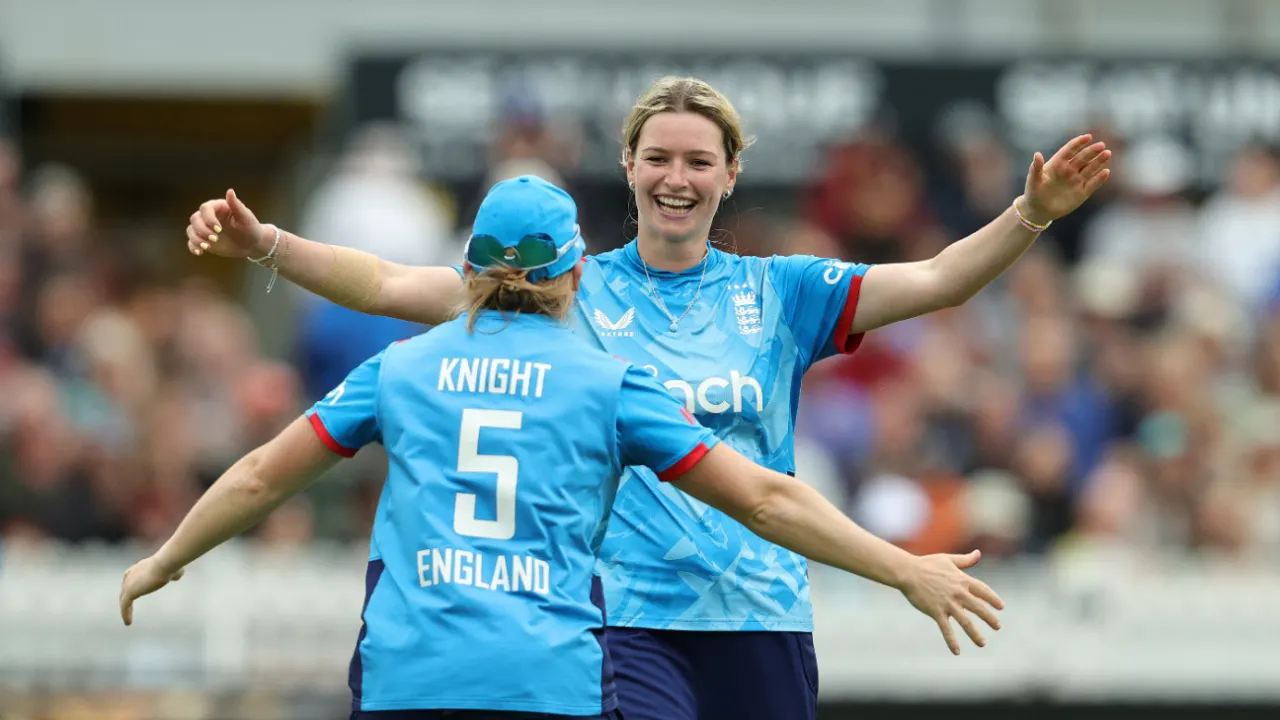
Nat Sciver Brunt’s unbeaten 76 and Lauren Bell’s five-wicket haul ensured England’s 3-0 sweep of the ODI series against New Zealand despite a vastly more spirited performance by the White Ferns.
Amelia Kerr led the tourists with her half-century and England’s batting depth was called upon for the first time in the series as Hannah Rowe and Molly Pensfold made early inroads in Bristol. The hosts had lost three wickets across the first two matches but today were 33 for 3 inside the powerplay, reduced to eight overs when rain delayed the start by 95 minutes and cut the match to 42 overs per side.
Player of the series Maia Bouchier couldn’t push on from her unbeaten century in Worcester on Sunday but Sciver-Brunt, who had facilitated that milestone, produced a typically cool-headed innings to lead England out of danger and ultimately to victory. She and Amy Jones rescued England from 72 for 4 with a fifth-wicket stand worth 90 off 86 balls, Jones posting a run-a-ball fifty as the duo lifted their side 50 runs shy of the 212 target.
Tammy Beaumont was put down by wicketkeeper Izzy Gaze off the first ball of the run-chase, a full delivery from Rowe, which swung away and caught the edge of Beaumont’s attempted drive. But then fortune swung New Zealand’s way just four balls later when Beaumont was given out lbw and declined to review with replays showing that the ball would have missed leg stump.
When Heather Knight sent a leading edge straight back to the same bowler, England were 29 for 2 and Bouchier fell on the penultimate ball of the powerplay with an aborted pull shot off Penfold that ballooned to the keeper.
Her dismissal brought Sophia Dunkley to the crease, back in the starting XI for the first time since a disappointing tour of New Zealand earlier this year as England shook up their team for this dead rubber. It was a nervy start for Dunkley, who faced six balls to get off the mark then overturned an lbw decision off Kerr’s fourth ball of the innings, a wrong’un which brushed her back leg high up as she lunged forward and was ultimately shown to be going over the stumps.
Two balls later, Dunkley managed to steer Kerr for four past short third and, settling into a rhythm, she then punched down the ground for another, more authoritative, boundary off Kerr’s next over when Sciver-Brunt also chimed in through midwicket. But Kerr curtailed Dunkley’s comeback via an inside edge as the batter shaped to cut and was caught behind for 15 off 24 balls.
Sciver-Brunt brought up her 21st ODI fifty with a glorious drive down the ground for four off Rowe and Jones raised hers with a chipped single off Kerr towards point. Moments after Jones fell edging Brooke Halliday behind, Sciver-Brunt was dropped on 63 by Georgia Plimmer at cover. By that stage, England needed 49 from 69 balls and Sciver-Brunt and Alice Capsey eased their way home.
Earlier, Bell’s five-wicket haul and Kerr’s fighting half-century gave a more even complexion to the contest than in the first two games, when New Zealand had struggled to string significant partnerships together and batters made starts without converting them to impactful innings.
Kerr struck 59 and shared partnerships with Sophie Devine and Halliday worth 68 and 65 runs respectively to push the White Ferns to a good total, by far New Zealand’s best of the tour after they had been bowled out for 156 and 141 previously. But Bell’s 5 for 35 from nine overs kept the target manageable, especially in light of England’s current batting form, or so it seemed before the top-order collapse.
In New Zealand’s innings, a sublime throw by Charlie Dean, firing the ball in from backward point, removed Plimmer and, though Kate Cross was expensive early, she made it 46 for 2 when Jones took an excellent catch off Suzie Bates.
With Sophie Ecclestone rested for this match, Devine stepped up the rate against the home side’s other two spinners. She struck Sarah Glenn for two fours in three balls, through the covers to bring up the fifty stand with Kerr and to deep midwicket, then crunched Dean through the covers for another boundary in the next over.
But Devine’s reaction said it all when Bell returned to the attack and struck with her second ball back, one that angled in from a full length as Devine shaped to cut and chopped onto her stumps, dropping her bat and throwing her head back in exasperation as a promising innings ended on 43.
With Maddy Green having fallen to a marginal lbw decision to Cross while the DRS was unavailable, Kerr forged another partnership with Halliday, who made 51 in the series opener and 31 here.
But Kerr and Halliday both fell within three balls of one Bell over, Kerr pinned lbw and Halliday caught behind down the leg side as the White Ferns went from 181 for 4 to 182 for 6. Bell and Sciver-Brunt then teamed up twice to remove Gaze and Lauren Down, Sciver-Brunt’s safe hands helping Bell to her maiden international five-for.
Encouragingly for England, Sciver-Brunt sent down eight overs and, even though she went wicketless, it was her heaviest workload so far this series, having been restricted to spells of four and five overs in the previous two games as she manages her recovery from a knee problem.
Brief scores:
England Women 212 for 5 in 38.4 overs (Nat Sciver-Brunt 76*, Amy Jones 50, Alice Capsey 35*; Hannah Rowe 2-38) beat New Zealand Women 211 for 8 in 42 overs (Suzie Bates 24, Amelia Kerr 59, Sophie Devine 43, Brooke Halliday 31; Kate Cross 2-46, Lauren Bell 5-37) by five wickets
[Cricinfo]

Latest News
Showers above 100 mm are likely at some places in the Western, Sabaragamuwa, Central, Uva and Southern provinces and in Anuradhapura district

WEATHER FORECAST FOR 08 OCTOBER 2026
Issued at 05.30 a.m. on 08 October 2026 by the Department of Meteorology
Misty conditions can be expected at some places in the Western, Sabaragamuwa, Central and Uva provinces and in Galle and Matara districts during the early hours of the morning.
Showers or thundershowers will occur in the most part of the island after 1.00 p.m. Heavy showers above 100 mm are likely at some places in Western, Sabaragamuwa, Central, Uva and Southern provinces and in Anuradhapura district.
The general public is kindly requested to take adequate precautions to minimize damage caused by temporary localized strong winds and lightning during thundershowers.

Former first lady Shiranthi Rajapaksa, wife of former President Mahinda Rajapaksa was produced before the Hulftsdorp court, after being arrested by officers of the Commission to Investigate Allegations of Bribery or Corruption (CIABOC) and produce
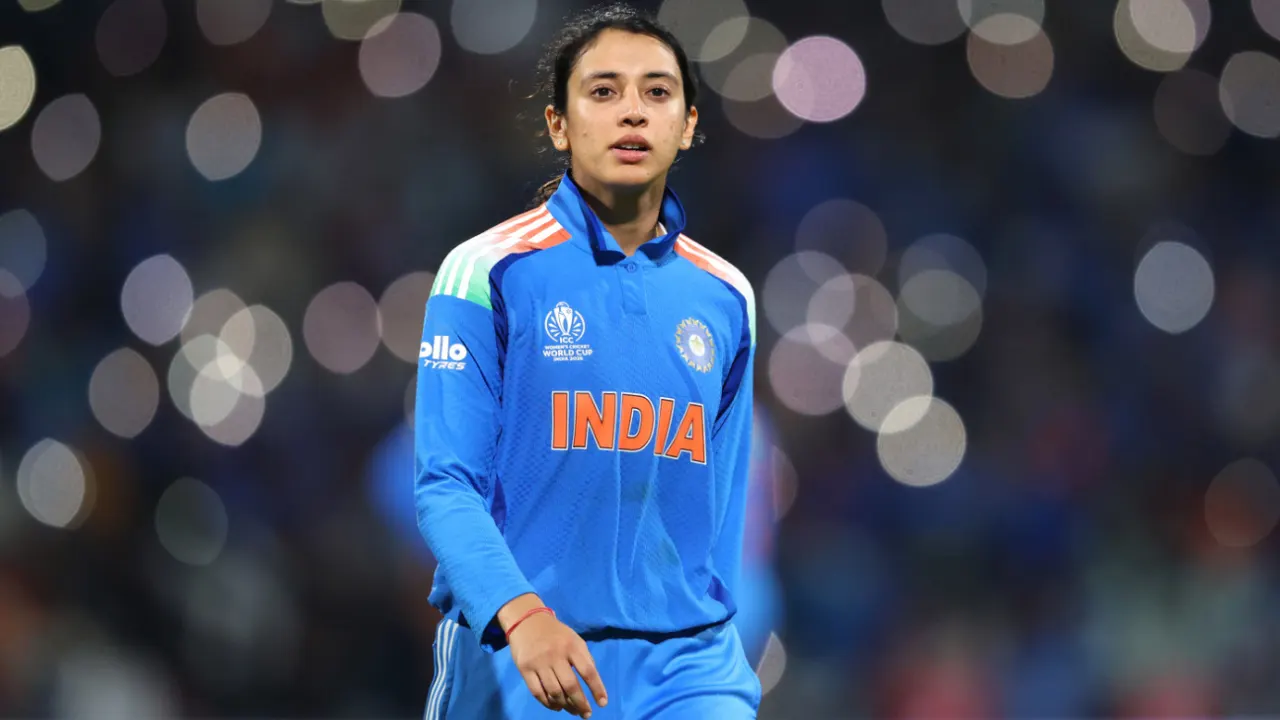
Smriti Mandhana has been named India’s all-format women’s captain on the same day Harmanpreet Kaur stepped down from the role after nearly a decade since she first took over.
Mandhana – vice-captain to Harmanpreet for much of this period – has previously led India in four ODIs and 18 T20Is, apart from captaining Maharashtra in domestic cricket and Royal Challengers Bengaluru in the Women’s Premier League.
Mandhana’s first assignment will be the limited-overs series against Zimbabwe beginning with the three T20Is in Raipur from October 16. On Tuesday, Mandhana was part of the selection meeting chaired by Amita Sharma to pick the squad for the tour.
Terming the appointment a “special honour”, Mandhana also acknowledged the contributions of her predecessor in her welcome note.
“I would also like to acknowledge Harmanpreet and the contribution she has made as captain over the years,” she was quoted as saying by the BCCI. “She has led the team with great commitment and has been an important part of our journey.
“I understand the responsibility that comes with this role and look forward to working with the team, learning along the way and giving my best to take Indian cricket forward.”
Mandhana’s appointment comes on the back of a review meeting held on Monday in Guwahati. Chaired by secretary Devajit Saikia, the meeting was also attended by Mandhana, Harmanpreet and head coach Amol Muzumdar to chart a roadmap forward, with an eye on next year’s inaugural Women’s Champions Trophy in February as well as the T20 World Cup and Los Angeles Olympics in 2028.
Mandhana, India’s best all-format batter, has been knocking on the doors for a while. Earlier this year, she led RCB to their second WPL title, in which she also top-scored in the final.
In September, she overtook Mithali Raj to become the leading run-scorer in women’s international across formats. Her 18 international hundreds are also the most in women’s cricket. She is also the first Indian woman to score centuries in all formats.
[Cricinfo]

Showers above 100 mm are likely at some places in the Western, Sabaragamuwa, Central, Uva and Southern provinces and in Anuradhapura district

PSTA worse than PTA: FSP

Shiranthi R remanded until 13 Oct.

Former NSB Chairman Kariyawasam granted bail

Katchatheevu row: India SC urges fishermen to avoid Sri Lankan waters

Remembering Juvenal, Coke, Acton and Machiavelli

‘Dates have the highest sugar content to fight Coronavirus’

Sunday Island 27 December – Headlines

#SundayIsland 17th December – Headlines

Sunday Island – 28th March

Sunday Island Headlines – 21 March

Sunday Island – 21st February – Headlines
-

 Editorial6 days ago
Colombo Port drug bust: The plot thickens
-

 Features4 days ago
The first woman in the foreign service or Ceylon Overseas Service it was then called
-

 Editorial5 days ago
Fuelling discontent and protest
-

 News3 days ago
Geneva takes up Sallay’s case and govt. ignores opportunity to answer accusations
-

 Foreign News5 days ago
Ten injured after car crashes into rugby supporters in Australia
-

 Latest News5 days ago
Tharindu Rathnayake, bowlers secure Asian Games Bronze for Sri Lanka
-

 News4 days ago
Nearly 20 Iranian tankers stranded off Lanka amid US sanctions
-

 Features3 days ago
Sri Lanka Cricket Bill: Governance reform is not yet a cricket strategy