
Latest News
Rohit, Axar and Kuldeep lead India’s dismantling of England in semi-final

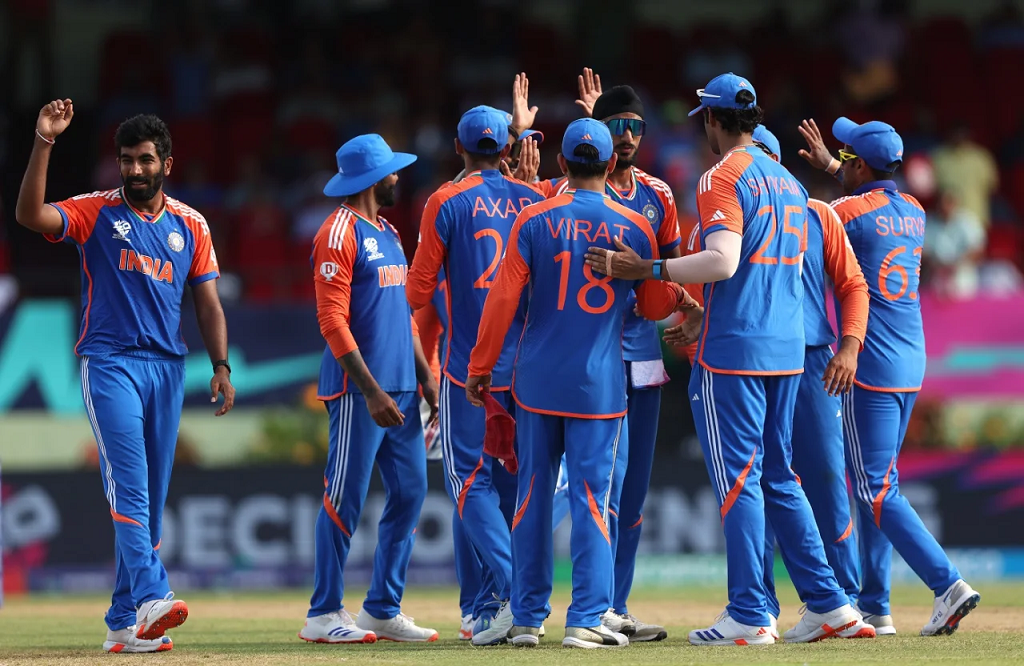
India‘s quest for a world title is well on course. It’s been 11 years since they stood on the podium as champions. Now all that separates them from glory is a few hours’ time and a fiery South African team.
Rohit Sharma and his men dismantled the defending champions England in the semi-final, bowling them out for a mere 103 after first whacking them around to make 171 in Providence, Guyana. The mismatch from Adelaide 2022 was turned on its head.
On a pitch like Guyana’s – where the pace was slow and the bounce was low – runs square T20 World Cup 2024and behind the wicket come at a premium. That’s because if a bowling unit is disciplined enough to hit a good length and keep the stumps in play, the batter just cannot force the pace. England planned to shut out half of the outfield to India but they weren’t always successful: 69 runs, including eight fours and three sixes, still came from where they shouldn’t have, at a strike rate of 192.
Within the powerplay period, Rohit was scoring at a strike rate of 133 with shots he was not at all in control of. For context, his overall career strike rate in T20Is is 141. This has been the difference India have been searching for. Don’t just bat waiting for the bad ball. Bat as if everything is a bad ball.
Rohit eventually settled. Since the fourth over, he was in control of 20 of 26 balls and he used that control to great effect, scoring 40 runs including four fours and two sixes. He’s accepted that risk is a part of T20 cricket and there’s no point being averse to it.
India’s intent manifested in the form of their batters moving around in the crease. Even a bowler of the calibre of Adil Rashid found it hard to cope and that was a triumph because these were conditions where as a bowler all you had to do was hit a length to target the top of the stumps. The England wristspinner was 2-0-17-0. But he recovered. On the other side of the second rain break, which consumed 153 minutes of this game’s time in total, Rashid decided not to worry about where Rohit and Suryakumar were positioning themselves and instead began to hold a line on off stump. His reward was the wicket of the India captain for 57 off 39. Rashid’s final two overs went for only eight runs.
With Rashid done by the 14th over, India held Shivam Dube back believing that the quicks would be taking over. So Buttler found reason to press Liam Livingstone to work, trusting his right-arm all-sorts even at the death. The part-timer finished with figures of 4-0-24-0. It was sign. If he was proving to be unhittable, Axar, Kuldeep and Ravindra Jadeja would be as well. India’s spin-bowling allrounders had a hand to play in getting them to 171 as well, alongside Hardik Pandya, as they struck three sixes and two fours in the last two overs bowled by Jordan and Archer.
Guyana is spin-friendly. The schedule, as soon as it was announced, suggested India would play there in the semi-final. They packed their squad with spinners. Three of them found place in the XI. .
Axar was the game-changer. He came on immediately after Jos Buttler had whacked Arshdeep Singh for three fours in an over and with his very first ball took out the biggest threat. England’s captain went down to reverse-sweep the left-arm spinner because really in these conditions you couldn’t just sit in and play straight-bat shots. Rohit found the boundary when he took that gamble earlier. Buttler only found a toe-end to Pant.
Each of Axar’s first three overs had a wicket off the first ball. Jonny Bairstow once again choosing to stay leg side and getting bowled, and Moeen Ali’s England career potentially ending with him unsure of where the ball had gone only to realise it was right there in Pant’s hand as he broke the stumps.
England were 49 for 4 when Kuldeep got into the act, bamboozling Sam Curran, and then outsmarting Harry Brook. England were the team that took him down so hard he went off into white-ball wilderness after the 2019 ODI World Cup. Here, against a batter coming after him, and with unconventional shots to boot, he didn’t panic. Kuldeep saw Brook going down to reverse-sweep, so he shifted the line onto leg stump, and left him in a tangle, the flatter trajectory and the quicker pace also playing a part in ball evading the swing of the bat and crashing into the stumps behind.
As further sign of their impending defeat, England’s last recognised batter, Livingstone, was run-out after a mix-up with the lower order. The defending champions yielded their crown, with six of them making single-digit scores and none of them going past 25.
Brief scores:
India 171 for 7 in 20 overs (Rohit Sharma 57, Suryakumar Yadav 47, Hardik Pandya 23; Reece Topley 1-25, Jofra Archer 1-33, Sam Curran 1-25, Adil Rashid 1-25, Chris Jordan 3-37) beat England 103 in 16.4 overs (Jos Buttler 23, Harry Brook 25,Jofra Archer 21; Jasprit Bumrah 2-12, Kuldeep Yadav 3-19, Axar Patel 3-23) by 68 runs
[Cricinfo]

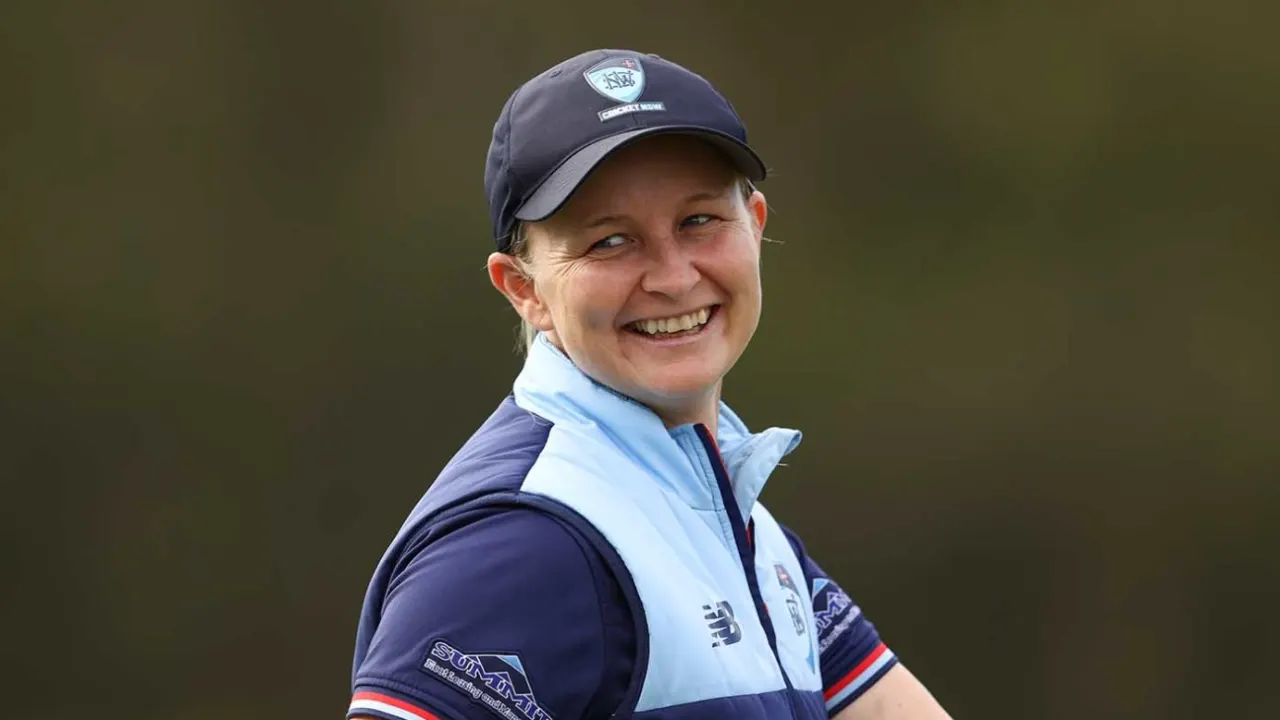
Leah Poulton the former Australia batter turned coach and administrator, will join England Women as managing director, succeeding Clare Connor.
Poulton will be charged with overseeing the success of the international team and pathways after the ECB cited her “impressive track record driving women’s cricket forward in Australia”.
Poulton earned 90 caps for Australia before retiring in 2015 and has spent the past six years as head of elite female cricket at Cricket New South Wales. There, she oversees cricket performance operations across two WBBL franchises, women’s state cricket and one of the world’s largest women’s cricket talent pathways.
Before that, she spent three years at Cricket Australia as a High Performance Coach, where she was instrumental in setting up Australia’s enviable women’s high-performance pathway, which included developing the Australia A and Under-19s women’s teams.
In her new role, she will be accountable for the performances of England Women, England Women A, England Women Under-19s and the overall women’s high-performance system.
Poulton will start in her new role in November with England set to host the Women’s Ashes next summer. She fills the role vacated by Connor, who announced earlier this year that she would be leaving the ECB after a career spanning 18 years, and will work closely with England Women’s head coach Charlotte Edwards and captain Nat Sciver-Brunt.
“I’m incredibly excited and honoured to be joining England, and to have the opportunity to help shape our programmes and, most importantly, invest in our people,” Poulton said. “I’m looking forward to working with Charlotte, Nat and the wider team, building on the strong foundations already in place and taking the programme forward.
“I know how vital strong pathways and a healthy domestic game are to sustained success, so I’m looking forward to connecting with people across the game and helping give the next generation of English players every opportunity to thrive. It’s a huge privilege to be part of England Women, and I can’t wait to get started.”
Richard Gould, the ECB’s CEO, said that with the senior women’s team had made under Edwards, appointed last year, and having reached the final of their recent home T20 World Cup, England Women were well placed for a successful era.
“I’m delighted to welcome Leah on board to help us build on this and take us to the next level,” Gould said. “She has a deep understanding of international cricket from her playing career and has built an impressive reputation in her time in administration.
“I believe she and Lottie will be a formidable combination, and will continue the team’s progress and development as we compete for the ICC Women’s Champions Trophy and Women’s Ashes in 2027.”
[Cricinfo]
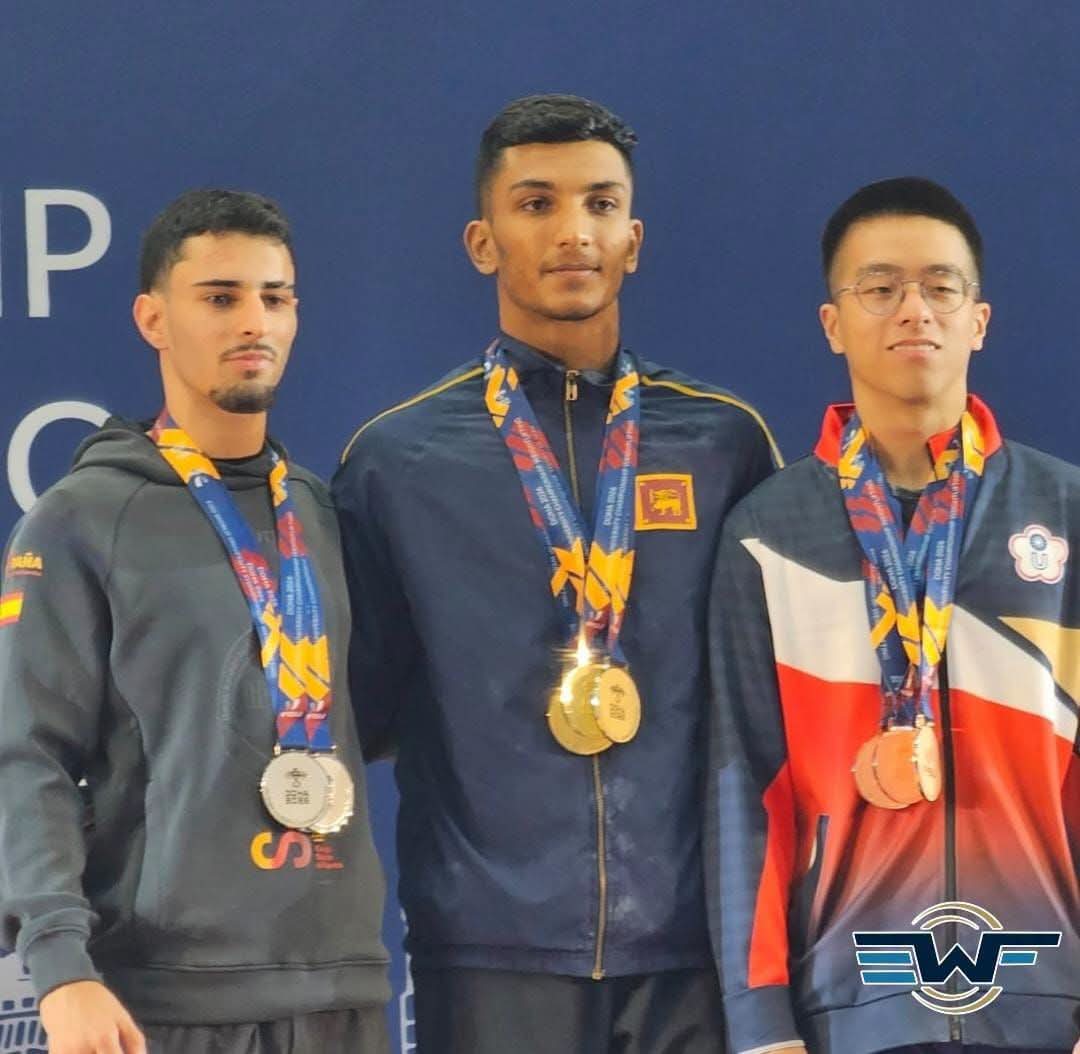
University of Sri Jayewardenepura weightlifter Avindu Liyanagedara made history yesterday by becoming the first Sri Lankan university student to win a gold medal at a World University sports event, as Sri Lanka made a spectacular start to the 2026 World University Weightlifting Championship in Doha, Qatar.
Liyanagedara won the men’s 60kg title, while Sabaragamuwa University’s Nipun Dissanayake added a bronze medal in the 65kg category on the opening day of the championship.
Liyanagedara lifted 105kg in the snatch and 132kg in the clean and jerk for an impressive combined total of 237kg.
Spain’s Gomez Martinez took the silver with 228kg, while Chun-Yen Tang of Chinese Taipei won bronze with 227kg.
Dissanayake also secured a podium finish in the 65kg class with a total of 220kg, comprising a 100kg snatch and a 120kg clean and jerk.
Iran’s Mohhadov Tehran won the gold with 289kg, with Moldova’s Ion Badanev taking silver with 288kg.
Liyanagedara’s achievement represents a landmark breakthrough for Sri Lankan university sport. His gold is the first gold medal won by a Sri Lankan university student at a World University sports event, while Dissanayake’s bronze further strengthened the country’s historic opening-day showing.
The Sri Lanka University Sports Association has entered five male and two female athletes for the championship, with University of Colombo’s Sujan Walgampaya serving as team manager and coach.
The championship continues in Doha until September 12, with Sri Lanka already assured of a memorable place in the history of World University sport through Liyanagedara’s historic gold medal.

The Indian Naval Ship (INS) Udaygiri arrived at the Port of Colombo on an official visit today, 8 September 2026, where it was received by the Sri Lanka Navy in accordance with time-
honoured naval traditions.
INS Udaygiri is a 149.02m long Frigate, Commanded by Captain Vikas Sood. Meanwhile, the Commanding Officer of the visiting ship is scheduled to call on Commander Western Naval
Area, Rear Admiral Harsha De Silva at the Western Naval Command Headquarters.
Captain Sood served as the Defence Adviser at the Indian High Commission in Sri Lanka from July 2020 to October 2023.
During their stay in the island, the crew of INS Udaygiri will participate in several goodwill events organized by the Sri Lanka Navy to enhance camaraderie between the two forces.
The visiting personnel are also scheduled to visit prominent tourist and cultural locations across the island.
Additionally, Sri Lanka Navy personnel are expected to visit the ship for capability observation and knowledge sharing, and will conduct onboard training during its stay.

England Women appoint Leah Poulton as managing director

Bangladesh bank on bowlers in bid to bring India down

Avindu makes history with first World University gold for Sri Lanka

Establishment of National Trade Negotiation Committee (NTFC) and Trade Policy Consultation Committee.

Showers will occur in the Western and Sabaragamuwa provinces and in Galle and Matara districts

Justice Minister hits back at CLA

‘Dates have the highest sugar content to fight Coronavirus’

Sunday Island 27 December – Headlines

#SundayIsland 17th December – Headlines

Sunday Island – 28th March

Sunday Island Headlines – 21 March

Sunday Island – 21st February – Headlines
-

 News7 days ago
Denied of promotion to SC despite vacancies, justice Gurusinghe retires
-

 News7 days ago
22A: SC urged to suspend hearing, appoint full bench
-
 News5 days ago
Namal remanded until Sept. 18 over Airbus deal investigation
-

 Latest News4 days ago
Tharanga creates history with Diamond League crown in Brussels
-
 News7 days ago
Govt. seeks NATO assistance
-

 Editorial7 days ago
Strange arithmetic goes unchallenged
-

 News4 days ago
Dispute which triggered listed company director being detained at BIA resolved
-

 Features3 days ago
After the parade: What a traffic OIC’s walk-out tells us