
News
CPC Losses Rs 3.5 bn: Culprits allowed to go overseas

Fuel Commission Scam
By Shamindra Ferdinando
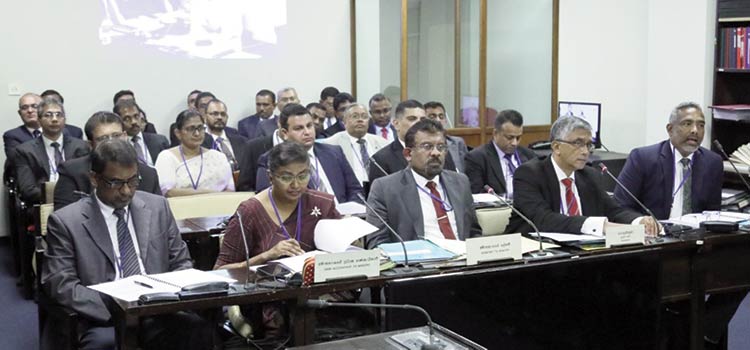
A group of Ceylon Petroleum Corporation (CPC) officials, responsible for causing loss of nearly 3.5 billion rupees, had left the country over the past several years and successive Ministers had failed to take action against any one of them, the Committee of Public Enterprises (COPE) was told recently.
The parliamentary watchdog delved into the corrupt deal that enabled filling station owners to make a killing at the expense of both the corporation and consumers alike, according to a statement issued by the Parliament.
Declaring that the marketing department of the then loss-making enterprise had been directly responsible for the massive fraud, the parliamentary watchdog committee emphasized that the top management deliberately delayed the issuance of a particular circular for nearly nine years to facilitate payment of excessive commissions to distributors.
COPE alleged that the public had to bear the burden as the CPC conveniently passed the unwarranted additional expenditure to the consumers.the statement issued by Jayalath Perera, Director (Legislative Services) on behalf of the Director Communication, the CPC and the distributors had perpetrated the robbery exactly over a period of eight years and eight months. On the basis of Auditor General W.P.C. Wickremaratne’s report for 2022 and examination of the current status of the CPC, the COPE estimated the losses caused at Rs. 3,416 mn for the period of 2014 to 2022.
The examination of the CPC was undertaken by COPE, under the leadership of Rohitha Abeygunawardena, whose appointment as its Chairman, in early March this year, caused a major uproar in Parliament. Questioning the integrity of the lawmaker concerned, the Opposition announced a boycott of the proceedings. The status quo remains the same. AG Wickremaratne had been present at the proceedings where COPE questioned the current top management of the CPC on June 19th.
State Ministers Indika Anuruddha and Shantha Bandara, Members of Parliament Mahindananda Aluthgamage, Dayasiri Jayasekara, U. K. Sumith Udukumbura, (Major) Sudarshana Denipitiya, Upul Mahendra Rajapaksha, M. Rameshwaran and Madhura Withanage were present at the proceedings.
COPE declared that the marketing department should be held accountable for the mega fraud. At the time the marketing department initiated the manipulation of the process in 2014, Pavitradevi Wanniarachchi had been the Minister in charge of the Power and Energy portfolio. According to the AG’s findings, the manipulation had continued during the tenure of Patali Champika Ranawaka, Ranjith Siyambalapitiya, Ravi Karunanayake, Mahinda Amaraweera, Dullas Alahapperuma, Gamini Lokuge and again Pavitradevi Wanniarachchi. Except Ravi Karunanayake, who is a qualified top accountant, all others are in the current Parliament, with Amaraweera serving the Cabinet of Ministers, while Siyambalapitiya is State Finance Minister.
The corrupt deal between the CPC and the distributors had continued unabated during the Covid-19 epidemic, and the economic crisis, leading to the declaration of bankruptcy in April 2022.
The top management hadn’t been able to explain the action taken against those responsible at any level. COPE asked the CPC, on June 19, to submit a list of those responsible for the sordid operation, within seven working days. COPE also asked for a comprehensive report on fraudulent activities, within two weeks, and requested the lodging of a complaint with the Criminal Investigation Department (CID), regarding the case.
According to COPE, due to payment of unjustifiable commissions to the distributors, consumers had to pay Rs. 5.85 for a litre of 92 petrol, Rs. 7.50 for a litre of 95 petrol, Rs. 5.88 for LED and Rs. 6.96 for LSD in excess as of the calculations to date.
It was also disclosed that massive commissions that had been paid in 2022, the year the country declared bankruptcy, was conveniently categorised as sales expenditure. The examination revealed that absolutely no action had been taken against those responsible.
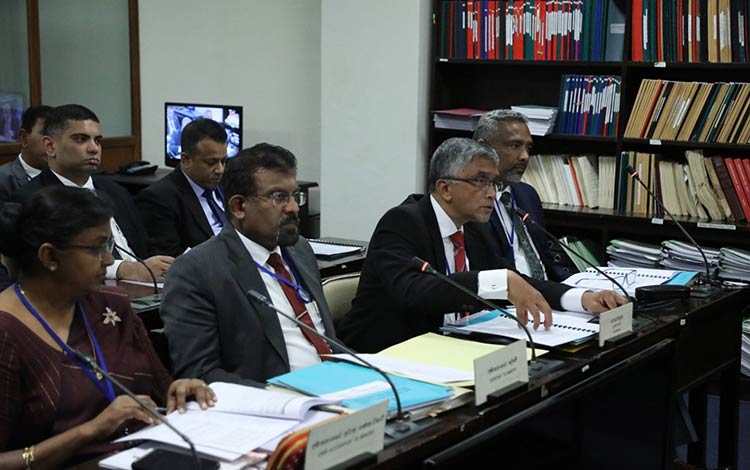
CPC officials before COPE





The Cabinet of Ministers approved the resolution furnished by the President in his capacity as the Minister of Finance, Planning and Economic Development to instruct the Legal Draftsman to prepare a draft bill to amend the State Mortgage and Investment Bank Law No. 13 of 1975
By Cabinet decision dated 2025-12-01, policy approval was granted to amend the definition of the term “animal” in the Animals Act No. 29 of 1958 by including, pigs, goats, and sheep, in addition to cattle and buffaloes, within the interpretation section of the act.
In accordance with the said approval, the Legal Draftsman has drafted an Amended Bill in all three languages, and the clearance of the Attorney General has also been obtained.
Accordingly, the Cabinet of Ministers has approved the
resolution furnished by the Minister of Agriculture, Livestock, Land and Irrigation to publish the draft Amendment Bill in the Government Gazette and thereafter to submit the same to the Parliament for its concurrence.
News
Cabinet approves establishment of a ‘Trust’ to carry out the management of the Jaffna Thiruvalluvar Cultural Centre

The Jaffna Thiruvalluvar Cultural Centre, comprising 11 floors, has been constructed with the assistance of the Government of India with the objective of serving as a hub for cultural activities in Sri Lanka and expanding bilateral cooperation for the promotion, preservation, and fostering the cultural heritage of Jaffna.
In accordance with the approval granted at the Cabinet meeting held on 2022-02-21, a Joint Management Committee has been appointed to make decisions relating to the affairs of the said cultural centre, in terms of the Memorandum of Understanding signed for the operation of the Jaffna Thiruvalluvar Cultural Centre.
According to the provisions of the aforementioned MOU, upon completion of the construction of the project, the cultural centre should be transferred to the Jaffna Municipal Council through the Government of Sri Lanka.
Following such transfer, the relevant parties have reached an agreement to establish a ‘trust’ for carrying out the management activities of the centre. The Attorney General’s clearance has been received for the draft trust deed prepared for that purpose.
Accordingly, the Cabinet of Ministers has approved the resolution furnished by the Minister of Buddhasasana, Religious and Cultural Affairs to establish the trust to continue the management activities of the Jaffna Thiruvalluvar Cultural Centre

Eshan Malinga keeps getting them in the second half

State Mortgage and Investment Bank Law No. 13 of 1975 to be amended
Animals Act No. 29 of 1958 amended
Cabinet approves establishment of a ‘Trust’ to carry out the management of the Jaffna Thiruvalluvar Cultural Centre

Prime Minister Keir Starmer under pressure as ministers quit, 80 MPs urge him to resign

Nahid Rana rips through Pakistan to seal a final-session win for Bangladesh

‘Dates have the highest sugar content to fight Coronavirus’

Sunday Island 27 December – Headlines

#SundayIsland 17th December – Headlines

Sunday Island – 28th March

Sunday Island Headlines – 21 March

Sunday Island – 21st February – Headlines
-

 News6 days ago
MIT expert warns of catastrophic consequences of USD 2.5 mn Treasury heist
-

 News3 days ago
Lanka Port City officials to meet investors in Dubai
-

 Editorial6 days ago
Clean Sri Lanka and dirty politics
-

 Editorial5 days ago
The Vijay factor
-

 News4 days ago
SLPP expresses concern over death of former SriLankan CEO
-

 News7 days ago
Development Officer bids Rs. 48 mn for CPC’s V8 at auction
-
 Opinion7 days ago
Postmortem reports and the pursuit of justice
-
 News4 days ago
Police inform Fort Magistrate’s Court of finding ex-CEO of SriLankan dead under suspicious circumstances