
News
Parliament in the dark about Speaker’s claim that sittings cost taxpayers Rs. 15m a day

…recurrent and capital expenditure for 2023 Rs 3,616,201,443
By Shamindra Ferdinando
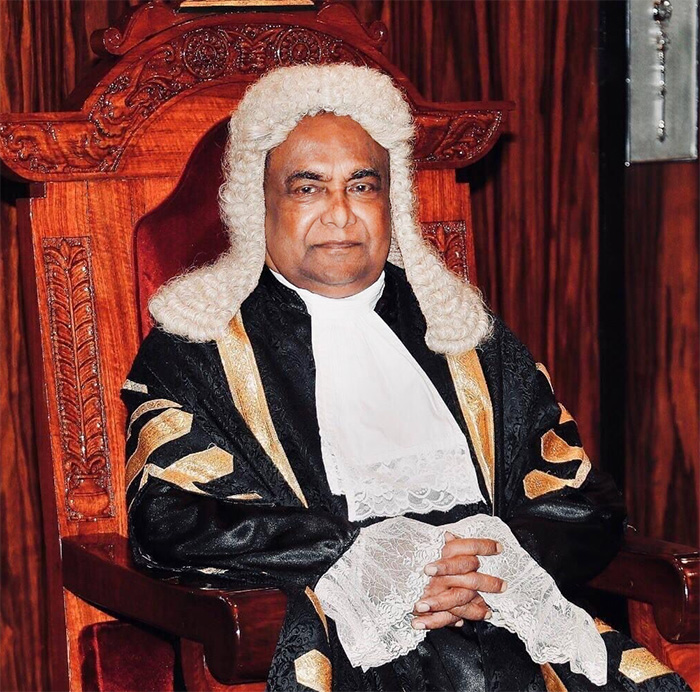
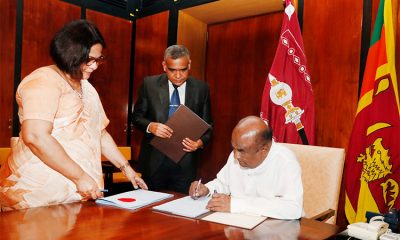
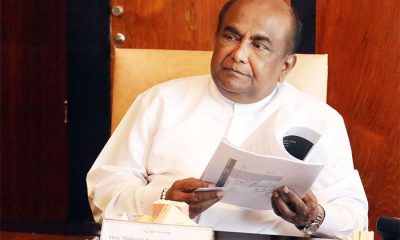
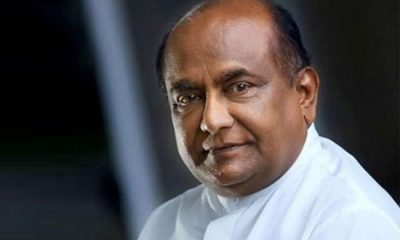
The Parliament says it cannot confirm Speaker Mahinda Yapa Abeywardena’s claim that a day’s proceedings cost the taxpayer as much as Rs 15 mn.
The Parliament emphasised that as in the case of other government corporations and departments, a day’s expenditure couldn’t be calculated.
The House said so in response to The Island query pertaining to a statement made by Speaker Mahinda Yapa Abeywardena in Parliament on March 20, this year. Responding to a series of questions that had been submitted to Parliament in terms of the Right to Information (RTI) Act No 12 of 2016, the Parliament didn’t have the required data to back Speaker Abeywardena’s claim.
The Island asked Parliament as to how Speaker Abeywardena calculated a day’s expenditure at Rs 15 mn as the House previously declared it couldn’t confirm Chief Government Whip Prasanna Ranatunga’s declaration that a day’s proceedings cost the taxpayer Rs 10 mn.
Minister Ranatunga, on Dec 10, 2023, alleged that the main Opposition Samagi Jana Balawegaya (SJB) wasted Rs 10 mn by sabotaging the special debate on the VAT (Amendment) Bill conducted on that day.
The SLPP heavyweight said so during a heated argument with SJB and Opposition Leader Sajith Premadasa.
During Karu Jayasuriya’s tenure as the Speaker (2015-2019) the UNPer is on record as having said that a day’s proceedings cost the taxpayer over Rs 4 mn.
Parliament responded to a set of queries posed by The Island on March 22, 2024 ,well after the stipulated period to answer RTI queries.
However, the Parliament disclosed that the recurrent and capital expenditure of Parliament for 2023 were Rs 3,574,101,968 and Rs 42,099,475 respectively. Hence the total expenditure Rs. 3,616,201,443.
Parliament declined to respond to several questions claiming either Parliament didn’t have the relevant data or they were irrelevant. The questions included one on the expenditure incurred during the Budget debate last year (Nov 13-Dec 08, 2023).
The House declined to compare the expenditure of Sri Lanka’s Parliament and that of regional Parliaments.
The Speaker, on March 20, declared that a three-day no-confidence motion against him over the enactment of the Online Safety Bill wasted as much as Rs 45 mn at the rate of Rs 15 mn per day.
The Parliament couldn’t say how much food and electricity cost the taxpayer. According to the response received for the RTI query, the Parliament opened on all week days though the sittings were held a maximum of eight days a month.








The Cabinet of Ministers approved the resolution furnished by the President in his capacity as the Minister of Finance, Planning and Economic Development to instruct the Legal Draftsman to prepare a draft bill to amend the State Mortgage and Investment Bank Law No. 13 of 1975
By Cabinet decision dated 2025-12-01, policy approval was granted to amend the definition of the term “animal” in the Animals Act No. 29 of 1958 by including, pigs, goats, and sheep, in addition to cattle and buffaloes, within the interpretation section of the act.
In accordance with the said approval, the Legal Draftsman has drafted an Amended Bill in all three languages, and the clearance of the Attorney General has also been obtained.
Accordingly, the Cabinet of Ministers has approved the
resolution furnished by the Minister of Agriculture, Livestock, Land and Irrigation to publish the draft Amendment Bill in the Government Gazette and thereafter to submit the same to the Parliament for its concurrence.
News
Cabinet approves establishment of a ‘Trust’ to carry out the management of the Jaffna Thiruvalluvar Cultural Centre

The Jaffna Thiruvalluvar Cultural Centre, comprising 11 floors, has been constructed with the assistance of the Government of India with the objective of serving as a hub for cultural activities in Sri Lanka and expanding bilateral cooperation for the promotion, preservation, and fostering the cultural heritage of Jaffna.
In accordance with the approval granted at the Cabinet meeting held on 2022-02-21, a Joint Management Committee has been appointed to make decisions relating to the affairs of the said cultural centre, in terms of the Memorandum of Understanding signed for the operation of the Jaffna Thiruvalluvar Cultural Centre.
According to the provisions of the aforementioned MOU, upon completion of the construction of the project, the cultural centre should be transferred to the Jaffna Municipal Council through the Government of Sri Lanka.
Following such transfer, the relevant parties have reached an agreement to establish a ‘trust’ for carrying out the management activities of the centre. The Attorney General’s clearance has been received for the draft trust deed prepared for that purpose.
Accordingly, the Cabinet of Ministers has approved the resolution furnished by the Minister of Buddhasasana, Religious and Cultural Affairs to establish the trust to continue the management activities of the Jaffna Thiruvalluvar Cultural Centre

Eshan Malinga keeps getting them in the second half

State Mortgage and Investment Bank Law No. 13 of 1975 to be amended
Animals Act No. 29 of 1958 amended
Cabinet approves establishment of a ‘Trust’ to carry out the management of the Jaffna Thiruvalluvar Cultural Centre

Prime Minister Keir Starmer under pressure as ministers quit, 80 MPs urge him to resign

Nahid Rana rips through Pakistan to seal a final-session win for Bangladesh

‘Dates have the highest sugar content to fight Coronavirus’

Sunday Island 27 December – Headlines

#SundayIsland 17th December – Headlines

Sunday Island – 28th March

Sunday Island Headlines – 21 March

Sunday Island – 21st February – Headlines
-

 News6 days ago
MIT expert warns of catastrophic consequences of USD 2.5 mn Treasury heist
-

 News3 days ago
Lanka Port City officials to meet investors in Dubai
-

 Editorial6 days ago
Clean Sri Lanka and dirty politics
-

 Editorial5 days ago
The Vijay factor
-

 News4 days ago
SLPP expresses concern over death of former SriLankan CEO
-

 News7 days ago
Development Officer bids Rs. 48 mn for CPC’s V8 at auction
-
 Opinion7 days ago
Postmortem reports and the pursuit of justice
-
 News4 days ago
Police inform Fort Magistrate’s Court of finding ex-CEO of SriLankan dead under suspicious circumstances