
Sports
India quicks lead demolition of Ireland on fizzing pitch

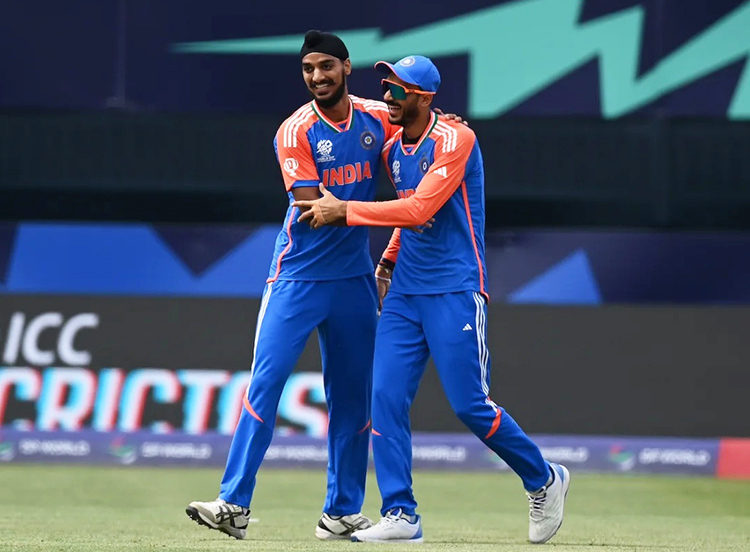
New York’s second match as a T20I venue was a lot like its first: low-scoring and brutal. Two days after South Africa bowled Sri Lanka out for 77 here, India bowled Ireland out for 96. A different strip was used for this game, but the bounce was just as inconsistent, and batting just as difficult, if not outright dangerous.
India’s selection was spot-on – they picked four fast bowlers including Hardik Pandya, and two spin-bowling allrounders to lengthen their batting, which meant they left Kuldeep Yadav on the bench. They didn’t need all that batting in the end, as Rohit Sharma and Rishabh Pant helped them cross the line with 46 balls remaining, but the packed pace attack proved extremely useful. Arshdeep Singh, Mohammed Siraj, Jasprit Bumrah and Hardik picked up 8 for 81 between them, extracting seam movement and up-and-down bounce right through an Ireland innings that lasted just 16 overs.
As good as those performances were, though, this match will be remembered for the conditions. Batters from both teams took body blows – Rohit retired hurt on 52, soon after being struck on the arm – and by the time India wrapped up their win, their thoughts may have gone ahead to June 9 at the same venue, and what kind of pitch they may have to play Pakistan on.
The first two overs gave enough of a clue of how this pitch would behave, with both Arshdeep and Siraj extracting inconsistent bounce. One ball from Arshdeep – seam-up rather than a slower ball or cutter – bounced a second time before reaching wicketkeeper Pant, but most of the inconsistency was up rather than down, with one ball forcing Pant into a leaping, overhead, goalkeeper-style save.
Extra bounce brought India their first wicket, Paul Stirling top-edging a heave across the line at the start of the third over.
By the end of that over, Arshdeep had taken out both openers. He was finding ways to mix up his stock inswinger to the right-hander with balls that kept going with the left-armer’s angle across them, and one of these away-slanters bowled Andy Balbirnie, as he stayed leg-side of the ball and tried to steer one down to third.
By the end of the powerplay, Ireland were still only two down, but Harry Tector had already been hit
By then they had also lost Lorcan Tucker, bowled trying to drive a nip-backer from Hardik.
India kept getting the length ball to nip around and the short-of-length ball to climb, and Ireland kept losing wickets. Even the introduction of spin didn’t stem the collapse, as Barry McCarthy was caught and bowled by an Axar Patel ball that stuck in the pitch. At 50 for 8, Ireland were in danger of falling short of their lowest T20I total – 68 against West Indies during the 2010 edition of this tournament.
They eventually crossed that mark, with Gareth Delany’s risk-taking coming off – where that of his team-mates’ mostly didn’t – in a 14-ball 26 that carried Ireland to 96.
Rohit and Virat Kohli came out swinging – perhaps they reckoned that the new ball and powerplay field restrictions gave them the best chance of quick runs – and came away with contrasting outcomes.
Kohli fell early, caught on the deep-third boundary while charging at Mark Adair and looking to slap him over the covers.

Rohit enjoyed two slices of early luck – Balbirnie put down a tough chance at second slip in the first over, off Adair, and an inside-edge in the second over, off Josh Little, ran away for four past the stumps – and carried on to score his 30th T20I fifty. The pitch remained treacherous, and Rohit’s control percentage hovered in the 40s for most of his innings, before climbing to 51 by the time he retired hurt. But he hit some telling blows too, most notably two trademark pulls off successive balls from Little that brought up his 599th and 600th sixes in international cricket. Before that, he also went past 4000 runs in T20Is.
Pant looked more fluent than Rohit, indeed as fluent as anyone could have looked on this pitch
onthe glove and the thigh pad and was batting on 1 off 10. That became 4 off 15 before a nasty short ball from Bumrah hurried him, and he ended up gloving the attempted pull into his helmet and then to the fielder at short extra-cover.
, and hit three sixes and two fours while scoring an unbeaten 36 off 26. He took a hit to the elbow and one to the shoulder, and his response to the latter blow summed him up as a cricketer and character: he finished the match off the next ball, reverse-scooping McCarthy for six over the wicketkeeper.
Brief scores:
India
97 for 2 in 12.2 overs (Rohit Sharma 52, Riishabh Pant 36*; Mark Adair 1-27, Ben White 1-06) beat Ireland 96 in 16 overs (Gareth Delany 26; Hardik Pandya 3-27, Jasprit Bumrah 2-06, Arshdeep Singh 2-35, Mohammed Siraj 1-13, Axar Patel 1-03) by eight wickets








Latest News
Home comfort vs championship pedigree as Gujarat Titans and Royal Challengers Bengaluru collide in IPL 2026 final

Gujarat Titans (GT) will be thrilled to play the IPL final at their home ground in Ahmedabad. Just that they will not be able to get there till deep into the night on Saturday. Thunderstorms in Chandigarh delayed the team from flying out, meaning they wouldn’t even have spent 24 hours in the place where they’ll have to find a way to win an IPL title.
Speaking of which, once upon a time – and for a very long time – IPL finals used to be held at the home venue of the previous year’s champions. So Royal Challengers (RCB) could have been the ones looking forward to a bit of home advantage. But something, somewhere went wrong. And now it is GT who go in with that ace up their sleeve.
And as much as the old rules do not apply to this RCB – not when their batting line-up dovetails so wonderfully, and their new-ball bowlers have been so devastating – there is some small precedent to consider. They lost to GT in Ahmedabad in the league stage, bowled out for 155. They’ve won only three of their seven away or neutral games in IPL 2026. All of that can be tossed into the wayside if any of their match-winners come off. Five of them did – the entire top five – in Dharamsala just a few days ago to put up the highest score ever seen in the playoffs. From going 18 years without a title, RCB could win two back-to-back. For the last eight straight IPLs, the team winning Qualifier 1 has gone on to become champion.
GT’s campaign has been built on the hard work of Kagiso Rabada and Mohammed Siraj; in particular the unstinting way they attack oppositions in the powerplay. Both quicks have been encouraged to go pace-on. Both quicks have been remarkable at assessing the vulnerabilities of specific batters. Both quicks have the potential to break the game early. GT have a strike rate of 16 this season, the best of all the teams (at an economy of 9.49) and it gets better when they play at home – 13.5 (economy of 8.72). They’ve converted a fourth playoff appearance in five years into a third final in five years. A second title in five years is well within reach.
Three of Tim David’s last five innings have ended in single-digit scores and a strike rate under 100. You wouldn’t qualify that as a slump though, given his innings against Punjab Kings during the same sequence. He was 2 off two at the start of the 17th over and finished 28 off 12. David just needs to connect one ball to send several out of the ground.
Jason Holder has been an impeccable addition to the GT line-up, his bowling enabling them to frontload their Test-quality fast bowlers and retain flexible use of Rashid Khan. On top of that, Holder himself has picked up 17 wickets at an economy rate of just 7.54. The extra bounce that he generates, even on Indian pitches, has been telling.
RCB will likely bring Phil Salt back in if he’s ready to go but even if not, Venkatesh Iyer has filled in very nicely.
Royal Challengers Bengaluru (probable): Virat Kohli, Venkatesh Iyer/Phil Salt, Devdutt Padikkal, Rajat Patidar (capt), Krunal Pandya, Tim David, Jitesh Sharma (wk), Romario Shepherd, Bhuvneshwar Kumar, Josh Hazlewood, Rasikh Salam, Jacob Duffy/Suyash Sharma
GT have had the middle-order question thrown at them over and over and it will be done one last time. In Qualifier 1, when Shubman Gill and B Sai Sudharsan failed, they lost. Badly.
Gujarat Titans (probable): Shubman Gill (capt), B Sai Sudharsan, Jos Buttler (wk), Washington Sundar, Nishant Sindhu, Jason Holder, Rahul Tewatia, Rashid Khan, R Sai Kishore, Kagiso Rabada, Prasidh Krishna, Mohammed Siraj
[Cricinfo]
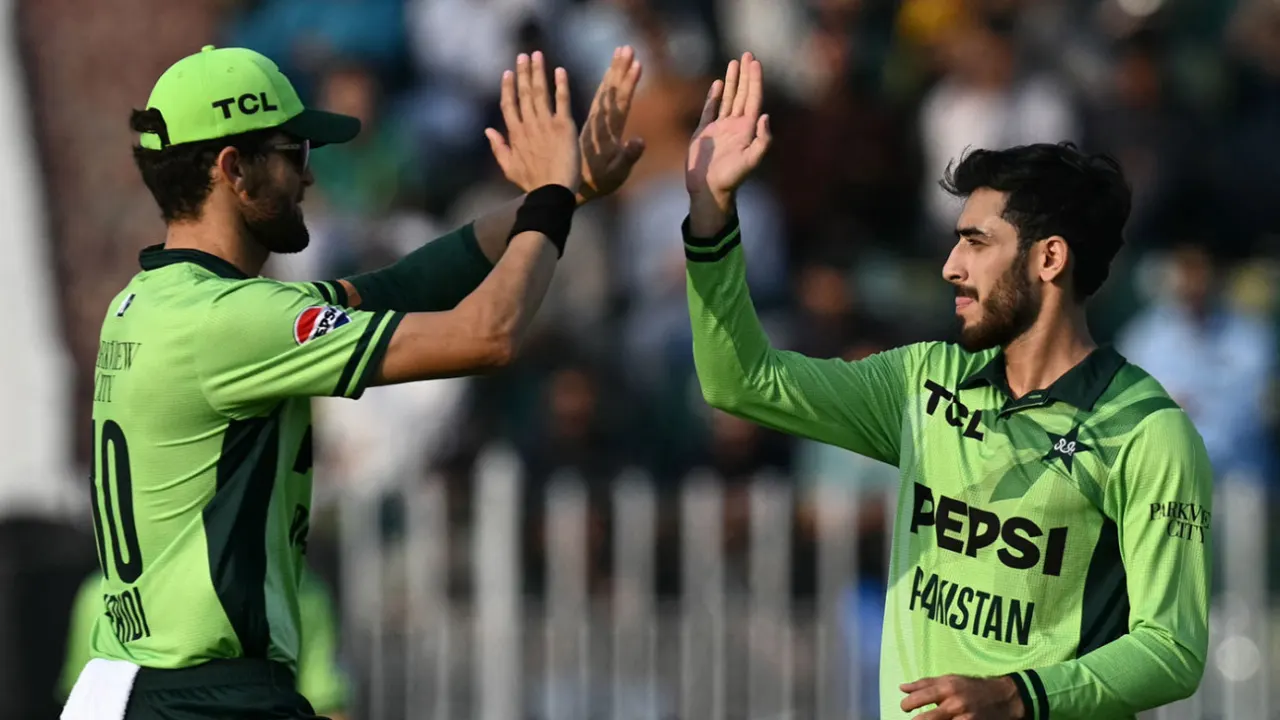
Arafat Minhas made his ODI debut memorable by picking up five wickets – the first Pakistan bowler to do so in his maiden appearance in the format. His sensational 5 for 32 from ten overs orchestrated his side’s comprehensive five-wicket win over Australia in the first ODI at Rawalpindi.
The 21-year-old left-arm fingerspinner used his variations with great guile on a pitch that offered plenty of purchase to the spinners to bundle Australia for 200. Their run chase brought another youngster Ghazi Ghori , a wicketkeeper-batter, in the limelight as he stitched a sturdy 127-run stand with Babar Azam.
Despite sweltering conditions, Pakistan captain Shaheen Shah Afridi had been encouraged to bowl first because of the dryness in the pitch. Pakistan, to make the most of it, played four spinners and just the two quicks and that they wrapped up the visitors’ innings with 35 balls to spare for a meagre total suggested that all went according to plan.
Australia were dealt a blow before the toss as the experienced Adam Zampa was ruled out because of neck spasms and had to be replaced by Tanveer Sangha, who went on to bowl very tidily. A good total would have put Pakistan’s batting capabilities to the test as three of their top four – Sahibzada Farhan, Maaz Sadaqat and Ghori – came in with just a handful of matches between them, having debuted in the format in just the last series in Bangladesh.
Australia started steadily with their makeshift opening pair of Matthew Short and Alex Carey finding boundaries in the first half of the opening powerplay. While Carey took his time to settle, Short crunched Haris Rauf for two consecutive fours through the off side in the second over. Soon Carey smoked Afridi for fours, but his stay at the crease was cut short in the seventh over as Abrar Ahmed had him caught at slip with a flighted delivery in what was his first over.
Afridi introduced Minhas from the other end and the pair bowled in tandem until the 16th over. It took a while for Minhas to nail his line and length, but once he found the rhythm he tore through Australia’s batting. It all came crashing down for them in his fourth over as he pushed the ball with the arm with great deception to have Josh Inglis and Marnus Labuschagne trapped in front.
The two were removed in the space of three balls in the 14th over. While Labuschagne was undone by the flatter trajectory of the ball – he was late bringing his bat down to negotiate a fuller delivery on the back foot – Inglis missed with a reverse sweep. The ball of the match, however, was in Minhas’ next over: a ripping delivery that pitched back of a length on middle and leg struck the top of Cameron Green’s off stump to leave Australia 68 for 4.
A 55-run partnership between Short and Matt Renshaw arrested the collapse and both went on to score half-centuries. While they steadied the innings by milking the spinners around the dial and picking up the odd boundary, they were allowed an opportunity to get back into the match as Afridi removed the spin duo from the attack.
Shadab Khan, who was playing his first ODI since the 2023 World Cup, was smashed for a boundary on the first ball as he gave away 12 runs in the over. He never found his rhythm and proved to be the most expensive in the innings with none for 54 from eight overs. He had also gone wicketless in his last three matches, all during that World Cup in India.
With Australia gaining momentum, Afridi returned to Minhas and the move worked as he beat Short with pace and turn. Minhas dragged his length back and put a few extra yards into his delivery as Short charged at him, providing enough time for Ghori to dislodge the bails. Later, a sharp legbreak from Abrar from around the wicket smashed into Renshaw’s off stump as Australia’s hopes of setting a challenging total started to fade.
Pakistan used all four spinners, the last being Salman Agha, who bowled five overs, but none of the others got the ball to turn as sharply as Minhas did. He was brought back for his final two overs at the start of the third powerplay and completed his five-wicket haul with another stinging delivery that turned sharply after pitching on middle stump to bowl Nathan Ellis. This was also the first time that he had taken five wickets in a List A match.
Matt Kuhnemann had faced 15 balls in his ODI career before this match. His 40-ball vigil annoyed Pakistan, who peppered him with short balls. He stitched partnerships of 34 and 20 with Renshaw and Ellis as he made 24. He was the last man to fall. Afridi and Rauf wrapped things up with a wicket each.
Australia were quick to introduce spin, as early as the fourth over, and they tasted success right away as Sadaqat holed out at deep midwicket off Kuhnemann. The wicket belonged to Short as much as it did to Kuhnemann, as he did well to take a clean catch along the boundary. Short was in action again, this time at long-off, when Farhan failed to connect cleanly with Sangha’s tossed-up delivery.
The ball seemed to be following Short and there was a chance later in the innings off Kuhnemann’s bowling when Babar mistimed a drive to short cover. With the ball dying on him, Short tried to pluck it diving low to his right but third umpire Richard Kettleborough ruled it had touched the ground. Babar was on 28 off 48 at that time and he went on to score 69 off 94.
Being the only experienced batter in the top four, Babar had to display his prowess in these tough batting conditions with the pitch continuing to deteriorate and offering more turn and uneven bounce to the bowlers. He had sliced Ellis for a boundary earlier in the innings, but later traded his attacking instincts for more composure. Ghori, who made his maiden half-century only in his second ODI, supported him. His 65 off 92 was also his highest List A score.
Babar and Ghori had the luxury of playing dots in the absence of scoreboard pressure and they seemed content with rotating the strike. The pair picked up boundaries occasionally. They shifted gears towards the end of their partnership as Ghori launched Ellis down the ground for boundaries and Babar smashed the first six of the match off Renshaw before hitting a glorious inside-out drive off Labuschagne. Inglis, Australia’s captain, was encouraged by the turn in the pitch to introduce the part-time spin of Short, Renshaw and Labuschagne, but it did not do much to derail the partnership.
As soon as he reached his 38th half-century in the format, Babar mistimed a loft down the ground but he was put down by Kuhnemann. He eventually fell to Ellis’ slower ball, a delivery which kept low. Ellis accounted for Ghori in his next over and Labuschagne removed Agha as he missed an audacious slog sweep with six runs needed.
But Pakistan strolled to the finish line with 45 balls to spare and they were, fittingly, taken over the line with a gigantic six down the ground by Minhas, who made 18 not out off 17.
Scores:
Pakistan 202 for 5 in 42.3 overs (Babar Azam 69, GaziGhori 65; Nathan Ellis 2-45) beat Australia 200 in 44.1 overs (Matt Renshaw 61, Matthew Short 55, Arafat Minhas 5-32, Abrar Ahmed 2-44) by five wickets
[Cricinfo]
Time was when Sri Lanka used to produce captains who were admired across the world; leaders who were ahead of their time and commanded respect wherever the game was played. In the early years of the IPL, several Sri Lankans were entrusted with franchise captaincy roles and they handled those responsibilities with distinction.
In recent years, however, captains in this part of the world have often been appointed more on seniority than exceptional leadership qualities. The roots of the problem may well lie in school cricket itself. From Under-13 level onwards, you often see captains being shouted instructions ball-by-ball from the boundary line. Coaches are effectively captaining sides from the dressing room and that is hardly a healthy phenomenon.
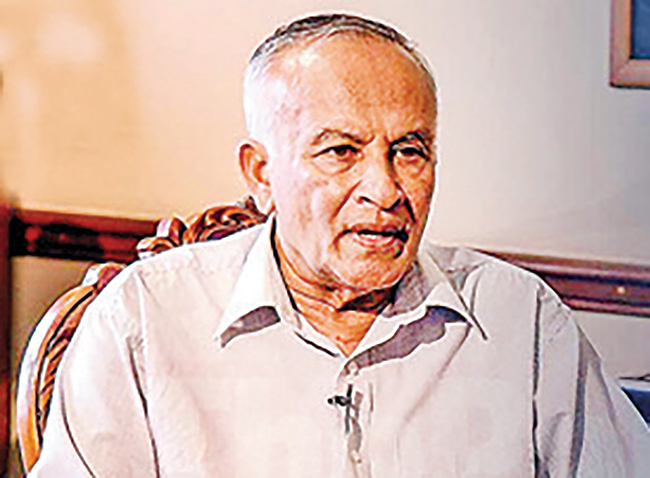
The issue came into sharp focus recently when Sri Lanka Cricket acknowledged that measures need to be taken to educate school coaches. Sunday Island spoke to former Sri Lanka captain Anura Tennekoon, who had some fascinating views on the subject.
Tennekoon captained Sri Lanka in the 1975 and 1979 World Cups and is regarded as one of the finest batsmen produced by the country. He also served the game in several administrative capacities, functioning as selector, national team manager, Secretary of the Board and CEO of Sri Lanka Cricket.
“You can’t develop captains overnight. You have to let them take decisions, make mistakes and then learn from them. I have seen coaches sending down instructions after every ball from the boundary rope and it is extremely disappointing to watch. This is not how you develop leaders,” Tennekoon told Sunday Island.
“You have to monitor the system. Maybe you ask the umpires to keep an eye on things or appoint observers. Maybe you deduct points if it keeps happening after a warning. If it still continues, then you take drastic measures,” Tennekoon added.
The former captain felt the development of young leaders would be severely hindered if coaches continued to make most of the decisions from the dressing room.
“Coaches themselves are under pressure because if they don’t win games, their jobs are at stake. But preventing captains from developing is a very serious issue,” Tennekoon said.
“There were hardly any coaches during our time. There was only a master-in-charge who looked after discipline and coached us and gave advice when required. The captain handled all the planning and execution with some support from the vice-captain and senior players. Games were far more interesting because captains made bold declarations in pursuit of outright victories. You hardly see that anymore.”
“You need captains brave enough to take decisions. Even if you lose, that’s fine because captains learn valuable lessons from defeat. Today, the first instinct seems to be to secure a draw. Winning becomes secondary. The approach now is safety first and if an opportunity to win comes later, then perhaps you go for it.”
Tennekoon recalled a recent big match where one side was heavily favoured while the opposition were rank underdogs.
“But cricket is a funny game and things don’t always go according to script. The underdogs were on top and had a genuine chance to win. Yet they still settled for a draw because they wanted to play safe. If you play three-day cricket or even five-day cricket with that mindset, you are inevitably going to end up with dull draws. It feels as if losing a game is treated as the end of the world and that is rubbish,” he remarked.
“You should teach young cricketers to play with positive intent. If you approach cricket negatively, the game becomes boring. Neither the players nor the spectators will enjoy it. You should never kill the spirit of this great game.”
Sri Lanka Cricket’s current administration appears keen to address the issue. This week, the board invited all Division One and Division Two school coaches for a workshop conducted by Head Coach Garry Kirsten. More such sessions are expected to be held regularly.
“I am very happy with the appointment of Eran Wickramaratne to head cricket. He has a proven track record in many fields and is deeply passionate about the game. I am also pleased to see three former cricketers, who are respected globally, involved in the process. I am confident they will put structures in place that can deliver results.”
“We need to give them time and support them wholeheartedly if we want to see meaningful change,” Tennekoon concluded.
by Rex Clementine

What Hegseth’s comments at Shangri-La Dialogue say about US foreign policy
Home comfort vs championship pedigree as Gujarat Titans and Royal Challengers Bengaluru collide in IPL 2026 final

Minhas’ record-breaking debut sets up handsome Pakistan victory

Showers expected in the Western, Sabaragamuwa and North-western provinces and in Galle, Matara, Kandy and Nuwara-Eliya districts
Fuel prices increased

Sangha reform drives stymied from within: CBK

‘Dates have the highest sugar content to fight Coronavirus’

Sunday Island 27 December – Headlines

#SundayIsland 17th December – Headlines

Sunday Island – 28th March

Sunday Island Headlines – 21 March

Sunday Island – 21st February – Headlines
-

 News6 days ago
Police probe underway to ascertain links between criminals deported from UAE and local politicians
-

 News5 days ago
Easter Sunday carnage: Court told Maulana’s statement cannot be accepted without cross-examination
-

 News1 day ago
IMF urges Lanka not to meddle with exchange rate
-

 Opinion5 days ago
Undermining the democratic political framework
-

 News5 days ago
UK passport holder hiding here wants to have deportation order rescinded to leave without blemish
-

 Features2 days ago
The Division Bell Mystery
-

 News6 days ago
Dickoya double murder suspect arrested
-

 Midweek Review4 days ago
Israeli-US aggression won’t go unanswered -Iranian Ambassador