
News
Enactment of key finance bills: Govt. not following due process – Opposition


By Shamindra Ferdinando
Opposition MP Prof. Charitha Herath yesterday took exception to the inclusion of the controversial Economic Transformation Bill (ETB) and the Public Financial Management (PFM) Bill in the first week’s agenda of Parliament in June, in spite of the Bills not being subjected to due process yet.
Parliament meets on June 4, 5 and 6. Declaring that the ETB and PFM had been included in the June 5 and 6 agenda, respectively, the dissident SLPP MP pointed out the irregularity in doing so in the absence of the Supreme Court determination on the two Bills.
Chief Government Whip Minister Prasanna Ranatunga on May 22 presented the two Bills to the House.
Responding to The Island queries, Prof. Herath said that those opposed to the Bills could challenge them in the Supreme Court within two weeks. The first entrant to Parliament Herath asked as to why Parliament included them in its agenda before the SC decided on their constitutionality.
The JVP-led NPP would move the SC against the ETB, according to top spokesman Vijitha Herath, MP.
Herath, a former Chairman of the Committee on Public Enterprises (COPE), asked what would happen if the Supreme Court ruled that many sections of the ETB were flawed and remedial measures required.
MP Herath said that the two Bills hadn’t been discussed at the Committee on Public Finance headed by Dr. Harsha de Silva. Alleging that the government was in an indecent hurry to enact these controversial laws, lawmaker Herath said that the relevant Sectoral Oversight Committee or committees were yet to examine them.
Prof. G. L. Peiris, MP, told The Island that legislation, with such far reaching repercussions, should not be enacted by a government without a popular mandate within its last 100 days. The former External Affairs Minister and one-time SLPP heavyweight said: “ETB purports to bind future Parliaments and to thrust upon them the economic policy of President Wickremesinghe which is at variance with the publicly expressed convictions of the SLPP which commands a majority in the current Parliament.”
Recently Prof. Peiris switched his allegiance to the SJB. Claiming that President Wickremesinghe was blatantly exploiting the situation to push ahead with his much-disputed agenda, MP Peiris said: “Local entrepreneurship which needs to be nurtured and strengthened, is placed at a distinct disadvantage by the Bill. An unelected President, by virtue of his power of nomination to controlling mechanisms, is able to concentrate more and more authority in his hands, at the expense of broad-based institutions. The degree of detail set out smacks of intolerable arrogance: it purports to deprive succeeding administrations of legitimate decision-making capability. Changes of this magnitude are compatible with the tenets of representative democracy only in the aftermath of fresh national elections, due very shortly.”
Asked about planned legal action, Prof. Peiris said that proposed legislation would certainly be challenged vigorously by various parties. The ex-Minister said that the SC determination was not a solution in itself. The Court could only determine whether particular provisions were inconsistent with the Constitution, and therefore required a special majority or a referendum for enactment. The Court’s constitutional function would not enable it to examine broader aspects from a policy perspective, he added.
The Island sought State Finance Minister Shehan Semasinghe’s views on the proposed laws against the backdrop of SLPP Chairman Mahinda Rajapaksa’s recent declaration in respect of government economic strategy. The Anuradhapura district lawmaker said that since July 2022, President Wickremesinghe and the SLPP had worked according to a certain framework. Therefore, there was no likelihood of the SLPP withholding support for these laws.
The former President while calling the present government an interim arrangement formed to run the country for the remainder of former President Gotabaya Rajapaksa’s term, declared: “Even the pro-privatization lobby should realize that the hasty divestiture of state owned assets at a time like this will not produce the best outcome for the country. Furthermore, the next Presidential election is only a few months away. Hence, as a measure to ease the widespread discontent over the government’s divestiture drive, I wish to propose that all moves to sell off state owned assets or enterprises be postponed until a new government is formed after the next Presidential election. The new government will then be able to deal with state-owned properties and enterprises in accordance with the mandate they obtain at the election.”
State Minister Semasinghe said that the Opposition shouldn’t follow destructive strategies meant to reverse the economic revival. The MP stressed that in addition to the much-discussed ETB and PFM, there was another crucial Bill aimed at addressing the challenges the country faced. “We’ll take the Public Debt Management Bill on June 4,” lawmaker Semasinghe said, claiming that the three Bills were intended to provide much needed stability at all levels.






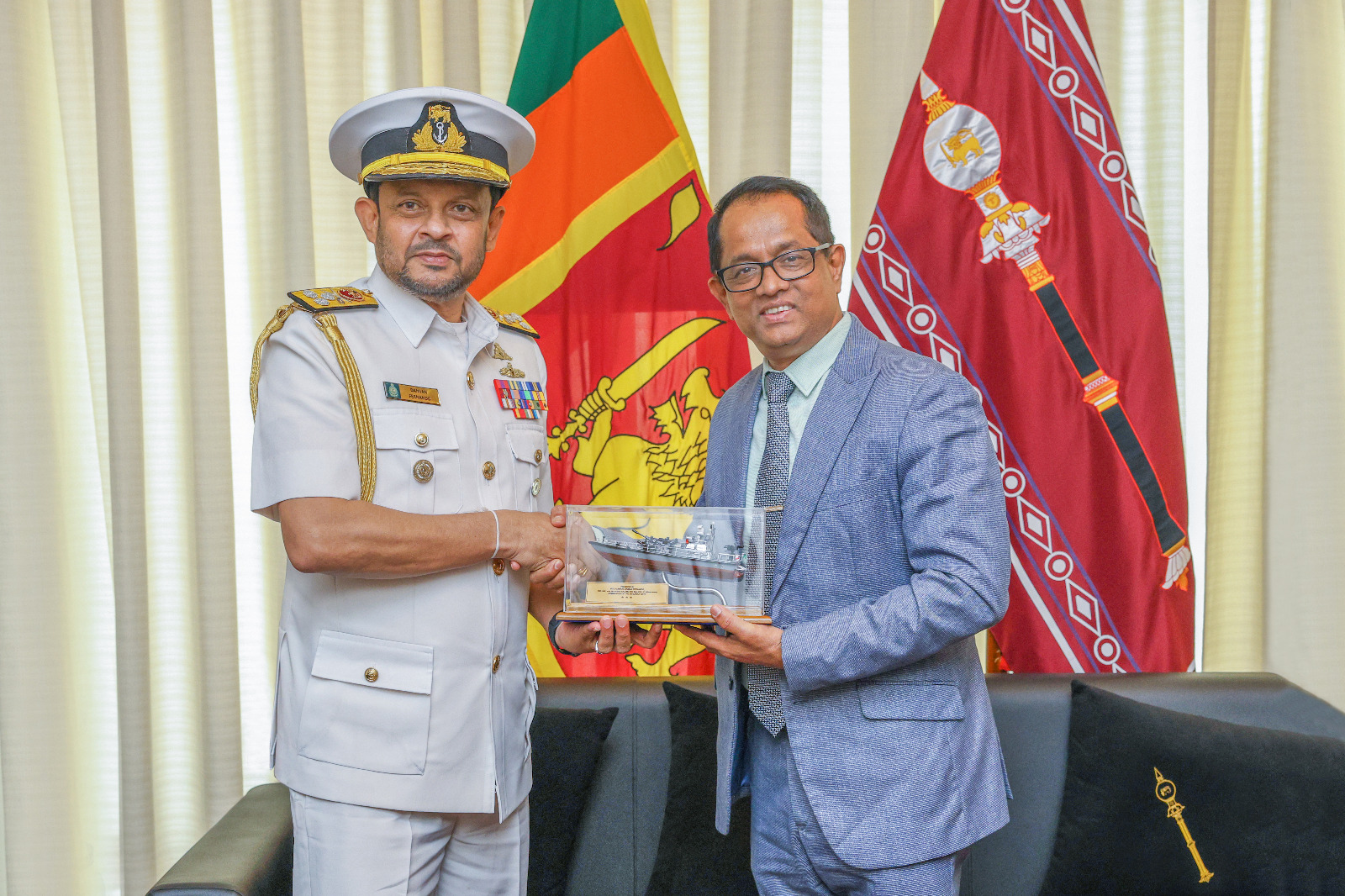
The Commander of the Navy, Vice Admiral Damian Fernando paid a courtesy call on the Speaker of the Parliament, Dr Jagath Wickramaratne at the Office of the Speaker, today (7 July
2026).
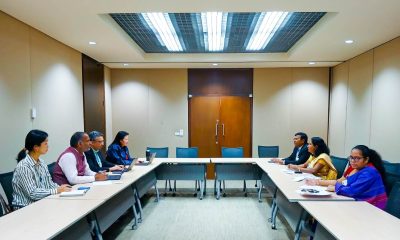
The meeting marked the Commander of the Navy’s first official interaction with the Speaker following his assumption of command of the Sri Lanka Navy. During the cordial discussion, they exchanged views on the Navy’s role in matters of national importance.
The formal meeting drew to a close with an exchange of mementoes, signifying the importance of the occasion.

At least 26 people, including five prison officers and 20 inmates, have been confirmed dead following violent unrest at Negombo Prison, hospital sources said yesterday, as authorities struggled to restore full control over the facility.
According to unconfirmed reports the prison officers were killed by rioters yesterday morning, in retaliation, and weapons carried by those officers were grabbed by them.
Negombo General Hospital Director Consultant Dr. Pushpa Gamlath said nearly 100 injured persons had been admitted, following the clashes, and eight of the critically wounded had been transferred to the National Hospital, in Colombo, for further treatment.
The violence, which initially broke out on Sunday (5) between remand prisoners and convicted inmates, left two inmates dead and 38 others injured before being temporarily brought under control.
However, tensions flared again on Monday (6), with prison officials reporting renewed unrest inside the facility despite earlier assurances that the situation had stabilised.
Police said the initial confrontation was triggered by a dispute linked to the exposure of an alleged drug trafficking network, operating within the prison, and was reportedly orchestrated by a drug trafficker, identified as Suresh, who is said to have links to an underworld figure known as ‘Booru Moona’.
The violence rapidly escalated, with female inmates staging a protest on the Prison roof in support of those involved in the clashes, while relatives gathered outside demanding information on detainees. Police later facilitated visits for selected family members to hospitalised inmates.
The Negombo Prison, which houses around 1,800 remand and convicted inmates, descended into widespread disorder as rival groups clashed, with reports indicating that the violence later spread beyond the initial confrontation.
Authorities said rioting inmates had allegedly seized firearms during the renewed unrest on Monday, prompting heightened security measures.
The Sri Lanka Air Force deployed drones for aerial surveillance and a Bell 412 helicopter to monitor the situation, while additional military personnel were sent to reinforce security around the prison.
Prisons Department spokesperson A.C. Gajanayake said a special investigation team had been appointed, under the direction of the Commissioner General of Prisons, to probe the incident, while a separate police investigation is also underway.
Justice Minister Harshana Nanayakkara told The Island that he had called for a detailed report on the disturbances.
By Norman Palihawadane
News
Cleaner, cheaper electricity gathers momentum with rapid progress in 50 MW Mannar wind power project

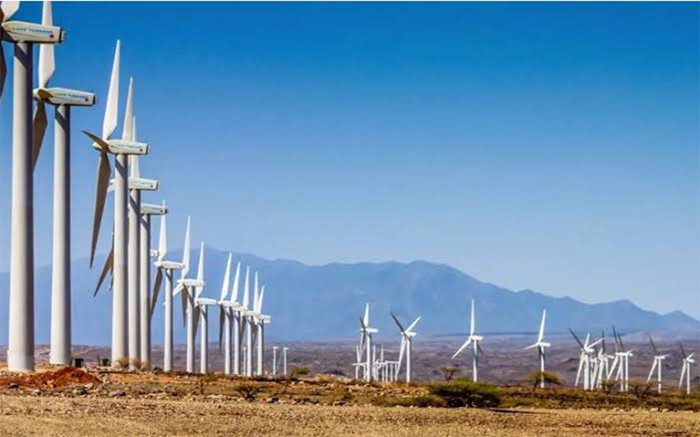
Sri Lanka’s drive towards cleaner and cheaper electricity gathered fresh momentum with the reported rapid progress in the 50 MW Mannar Wind Power Project, which is expected to produce the lowest-cost wind-generated electricity in the country’s history while saving billions of rupees in annual fuel imports.
The Ministry of Energy announced that the first wind turbine for the project had already arrived in the country, while the remaining turbine components have reached the Port of Trincomalee and are currently being unloaded, signalling a major milestone in the construction of one of the country’s key renewable energy ventures.
The project, inaugurated by President Anura Kumara Dissanayake, in January this year, is expected to become a cornerstone of the government’s strategy to transform Sri Lanka’s electricity sector by expanding renewable energy generation and reducing dependence on imported fossil fuels.
According to the Ministry, electricity generated by the Mannar wind farm will be purchased at USD 0.0465 (approximately Rs. 14.37) per unit, making it the lowest tariff ever secured for wind-generated electricity in Sri Lanka.
Energy experts say the competitive tariff demonstrates the growing economic viability of renewable energy and could help stabilise future electricity prices.
The Ministry also estimates that once the wind farm is connected to the national grid, Sri Lanka will save approximately Rs. 4.7 billion annually by reducing the import of fossil fuels required for thermal power generation, easing pressure on the country’s foreign exchange reserves.
The Mannar project is expected to support the government’s ambition of substantially increasing the contribution of renewable energy to the national electricity mix, by 2030, while helping Sri Lanka move towards its long-term goal of achieving net-zero carbon emissions by 2050.
Hayleys Fentons PLC, selected through an international competitive bidding process, is responsible for the installation and maintenance of the wind turbines.
The National System Operator (NSO), operating under the Ministry of Energy, will oversee the integration and management of electricity generated by the project within the national grid.
By Ifham Nizam

Commander of the Navy pays courtesy call on Speaker of the Parliament

Woman suspected of Monaco bomb attack found dead in Ukraine

Balogun reprieve in vain as Belgium beat USA to set up Spain quarterfinal

Trump confirms he asked Fifa to review Balogun ban

Late Spain goal eliminates Portugal, ends Ronaldo’s international career?

Nyamhuri and Ngarava stun Bangladesh by defending 141

‘Dates have the highest sugar content to fight Coronavirus’

Sunday Island 27 December – Headlines

#SundayIsland 17th December – Headlines

Sunday Island – 28th March

Sunday Island Headlines – 21 March

Sunday Island – 21st February – Headlines
-

 News3 days ago
Singapore-based Buddhist monk marks nearly four decades of humanitarian service
-

 News4 days ago
Freedom 250: US Embassy celebrates America’s 250th Independence Day through magic of American cinema
-

 News5 days ago
CIABOC to question Harak Kata on Rs. 200 mn bribery allegation
-
 News5 days ago
SLAF conducts successful rescue mission under UN command in Central African Republic
-
 Midweek Review7 days ago
H’tota port’s strategic status remains focal point of geopolitical scrutiny
-

 News2 days ago
AI concerned over proposed SL military deployment in Haiti
-
 News4 days ago
UNEP support pledged to strengthen Sri Lanka’s Environmental Priorities
-

 Features3 days ago
The NPP’s New Challenge: Balancing Easter Lawfare and Economic Welfare