
Business
‘Sri Lankan authorities turning a blind eye on the health hazards of asbestos’

By Ifham Nizam
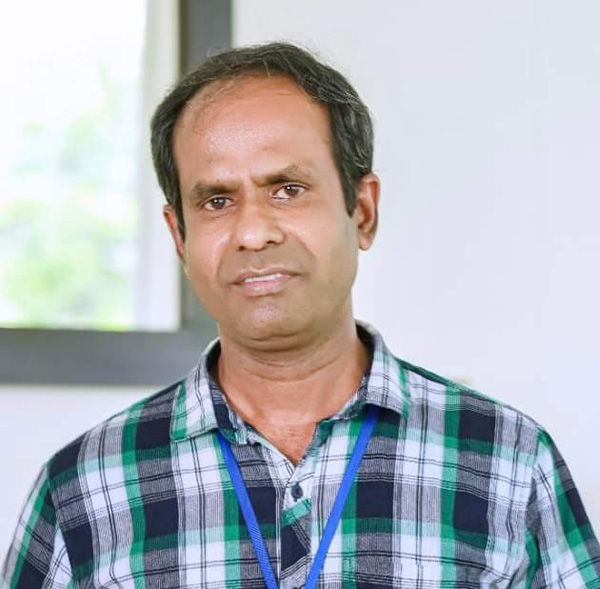
The negative impact of the use of asbestos in Sri Lanka is aggravated by factors like open dumping, continuing with the practice of installing roofs without ceilings that increases the human’s exposure to asbestos and the demolition of structures without following the procedures relating to the proper disposal of demolished materials consisting of asbestos. The Sri Lankan authorities are, thus, turning a blind eye on the health hazards emanating from asbestos, Centre for Environmental Justice Executive Director Dilena Pathragoda said.
Pathragoda added: ‘There are alternative roofing materials that Sri Lanka has been using and still uses, such as, clay tiles, Aluminium/ stainless steel metal roofing sheets, as well as concrete roofs that are advantageous for maximizing the use of space.
‘Research is also ongoing for the introduction of cement and sand roofing sheets and alternative fibres that can replace asbestos fibres.
‘We need a strong alliance in Sri Lanka to lead research-based decision-making on the use of asbestos. I fail to understand how this material which is a proved health threat in some countries becomes safer in Sri Lanka.
‘Toxicity is not defined by geographical boundaries and our decision-makers should understand this to ensure a safe environment for us and our children. We must at least start from preventing early childhood exposure by banning the use of asbestos in pre-schools, schools, child care facilities, children’s homes and hostels.
‘Environmental exposure to asbestos here is almost undetected. Piles of asbestos sheets are openly dumped, used as separators in gardening and demolished debris lies open, amidst the residences.
‘Children have been observed playing around these areas. However, no health screening has ever been conducted to determine the exposure and health impact among these kinds of communities.’
Meanwhile, the CEJ’s project planning and environmental scientist Chalani Rubesinghe said: ‘Asbestos is widely used in Sri Lanka as it is believed to be economical. However, the real cost of asbestos is not calculated. The health cost of environmental and occupational exposure is not included in the cost of these sheets. ‘Research conducted by Eng. Priyanga Peiris and the team revealed that occupational exposure is high among; workers in the asbestos manufacturing industry, carpenters working in the installation and cleaning of asbestos roofs and ceilings, policemen on traffic duties exposed to asbestos emanating from vehicle brake pads, carpenters and masons working on the demolishing of asbestos roofs and ceilings, and persons who live under asbestos roofs. This research also indicated that the number of cancer cases increased among participants who were exposed to asbestos at workplaces for more than 10 years.’




The Securities and Exchange Commission of Sri Lanka (SEC) successfully hosted a series of high-level meetings of the International Organization of Securities Commissions (IOSCO), bringing together leading securities regulators and enforcement officials from around the world to discuss emerging regulatory challenges, strengthen international cooperation, and enhance collective efforts to combat cross-border securities market misconduct.
The meetings, held at the Hilton Colombo from 13 to 16 October 2026, included sessions of the IOSCO Enforcement and Cooperation Committee and its Screening Group (Committee 4/SG), as well as meetings of the Monitoring Group and the Steering Committee. The event attracted approximately 50 senior representatives from securities regulators and exchanges across several jurisdictions, including Australia, Japan, the United States, the United Kingdom, France, Italy, Canada, New Zealand, India, Germany, Belgium, Singapore, China and Spain, reflecting the global significance of the discussions and the growing importance of international regulatory collaboration.
Welcoming delegates to Sri Lanka, Senior Professor D.B.P.H. Dissabandara, Chairman of the SEC, emphasized the critical role of international cooperation in safeguarding market integrity and investor confidence in an increasingly interconnected financial landscape.
“No regulator can effectively address cross-border misconduct in isolation. The speed with which information, transactions and illicit activities can move across borders requires an equally coordinated and timely regulatory response. Strong international cooperation, effective information sharing and mutual trust among regulators are essential to maintaining fair, transparent and resilient capital markets,” he stated.
The discussions focused on a range of enforcement and cooperation matters, including mechanisms for enhancing cross-border information exchange, strengthening investigative collaboration among regulators, addressing increasingly sophisticated forms of securities fraud and market abuse, and promoting the effective implementation of international standards and best practices. Participants also exchanged experiences and insights on emerging enforcement challenges arising from technological developments, digitalization of financial services, and increasingly interconnected global markets.
IOSCO is recognized as the leading international body that brings together the world’s securities regulators and serves as the global standard setter for securities regulation. Through its policy work and cooperative initiatives, IOSCO plays a central role in promoting investor protection, ensuring that markets are fair, efficient and transparent, reducing systemic risk, and strengthening confidence in capital markets worldwide.
Sri Lanka has maintained a strong and active relationship with IOSCO for more than three decades. The SEC became an Ordinary Member of IOSCO in 1993 and has been a signatory to the IOSCO Multilateral Memorandum of Understanding (MMoU) since 2004. The MMoU is the internationally recognised benchmark for cooperation and information sharing among securities regulators and serves as a critical tool in facilitating cross-border investigations and enforcement actions.

Pan Asia Bank recently entered into a one-year Memorandum of Understanding (MOU) with Ideal Motors (Pvt) Ltd, creating a new financing avenue for customers purchasing vehicles from the authorised Mahindra dealer. The strategic partnership will enable customers of Ideal Motors to access leasing facilities from Pan Asia Bank, making vehicle financing more convenient while supporting their mobility and business requirements. The agreement also provides an opportunity for the Bank to expand its leasing portfolio and strengthen its presence in Sri Lanka’s vehicle financing market.
Ideal Motors is the authorised dealer for the Mahindra vehicle range in Sri Lanka, including the Mahindra Bolero CPU Truck and Scorpio Jeep/Pickup. The vehicles cater to a range of requirements, from commercial and business applications to personal mobility, making accessible financing an important part of the purchasing decision.
The Bank’s vehicle leasing facilities are designed to simplify the financing process, with convenient repayment options and professional support to help customers select a solution suited to their requirements. For customers, the arrangement brings vehicle selection and financing closer together, reducing the need to navigate the two processes separately.
“Our partnership with Ideal Motors enables us to bring financing closer to customers at the point of vehicle purchase. We remain focused on providing convenient and flexible leasing solutions that support both personal mobility and the needs of businesses,” said Naleen Edirisinghe, Director/CEO of Pan Asia Bank.
Pan Asia Bank and Ideal Motors will work closely during the one-year partnership to maximise business opportunities and deliver a seamless financing experience to customers. The collaboration is expected to strengthen both organisations’ ability to respond to demand for commercial and personal vehicles while creating greater value for customers.
Yohan Ebell, Head of Retail Credit, Pan Asia Bank, said: “Through this partnership, we aim to make vehicle financing simpler and more accessible, with leasing solutions designed to meet the varied requirements of Ideal Motors’ customers.”
The collaboration also reflects Pan Asia Bank’s commitment to building partnerships that make financial services more accessible and responsive to the needs of individuals and businesses.
Pan Asia Bank has established a growing presence in vehicle financing, offering leasing solutions designed around customer convenience and flexibility. Its leasing proposition is supported by a nationwide branch network and a customer-focused approach, enabling customers to obtain guidance on financing options while completing their vehicle purchase.

Heritance Hotels and Resorts has secured four distinguished titles at the World Travel Awards 2026, with three national awards recognising its Sri Lankan properties and an international title for Heritance Aarah in the Maldives.
The three Sri Lankan titles recognise Heritance Tea Factory as Sri Lanka’s Leading Heritage Hotel 2026, Heritance Ahungalla as Sri Lanka’s Leading Luxury Hotel 2026, and Heritance Kandalama as Sri Lanka’s Leading Wedding Hotel 2026. Heritance Aarah was named the Indian Ocean’s Leading All-Inclusive Resort 2026.
Internationally recognised within the global travel and tourism industry, the World Travel Awards celebrate excellence across hotels, resorts, and destinations. Recognition at this level affirms the quality, distinctiveness, and consistency of the experiences delivered by Heritance Hotels and Resorts.

Import and Export (Control) Regulations No. 08 of 2026
Draft Bill of the Public Private Partnership Enterprises Act to be gazzetted
Amendment of the Ayurvedha Act No. 31 of 1961

Cabinet nod to amend the Sri Lanka Development Administration Institute Act No. 9 of 1982
Establishment of the National Higher Performance Centre
State patronage for the cremation ceremony of the late deputy prelate (Anu Nayaka Thero) of the Sri Laka Ramangya Maha Nikaya, Gatambe Rajopawanramadhipatha, Siri Chandawimala Wanshalankara, Chandrakeerthi Sri Amarawansha, Sadhdharmawageeshwara, Shasanashobhanna Most Venerable Keppetiyagoda Siriwimalabhidhana Thero

‘Dates have the highest sugar content to fight Coronavirus’

Sunday Island 27 December – Headlines

#SundayIsland 17th December – Headlines

Sunday Island – 28th March

Sunday Island Headlines – 21 March

Sunday Island – 21st February – Headlines
-

 Features3 days ago
Kotahena:A Small Enclave, An Extraordinary Legacy
-

 News7 days ago
Sri Lanka, India caught in US-Iran ship crisis
-

 News4 days ago
Asgiri Mahanayake calls for immediate release of Gnanasara Thera
-

 Latest News7 days ago
Missiles intercepted near Riyadh after Saudi coalition hits Yemen fuel depot
-

 Latest News7 days ago
Kusal Mendis’ unbeaten 87 hands Sri Lanka consolation win
-

 News3 days ago
Record 1,600 students take Russian Classical Ballet examination in Sri Lanka
-

 News6 days ago
AC President recuses himself from hearing prison attire case pertaining to Gnanasara Thera
-

 Latest News7 days ago
Heavy showers above 100 mm are likely at some places in the Western, Sabaragamuwa, Southern, Central, and North-western provinces and in Anuradhapura district.