
News
Discrepancy in compensation for terror victims highlighted

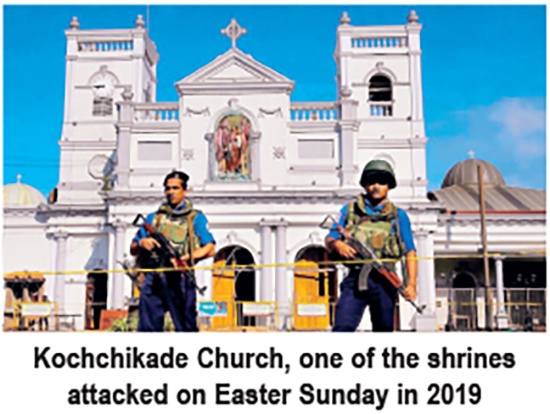
Easter Sunday probe:
By Rathindra Kuruwita
There was no uniform policy on compensating those killed or injured in terror attacks or riots and political influence had help those affected by riots in Digana and Beruwala receive higher compensation than the victims of Easter Sunday attacks, the Presidential Commission of Inquiry on the Easter Sunday attacks was informed yesterday.
Acting Director of the Office of Reparations S. M. Bathiudeen told the PCoI that one million rupees each had been paid for the persons killed during the Easter Sunday attacks. However, two million rupees each had been paid for those killed during the anti-Muslim riots in Digana and Beruwala, he said.
“We have received 220 applications from families of those killed during the Easter Sunday attacks. Rs. 220 million was paid to these individuals. The Cabinet also decided to pay a maximum of Rs. 500,000 to those who were injured. Rs. 86 million was paid to 506 applicants. There was also a cap of Rs. 5 million for properties that were damaged.”
The families of those who died during the Digana and Beruwala riots were paid Rs. 2 million each and there was no cap as regards damages caused to properties.
Bathiudeen said: “There was a meeting at the Kandy Kachcheri after the Digana riots. The then PM Ranil Wickremesinghe, Ministers Rauff Hakeem and Lakshman Kiriella and Kandy MPs were present. They decided on the amounts to be paid. Those who were injured at Digana were also compensated without medical reports.”
Bathiudeen said that people frequently asked him why they had been paid less than others who had been in a similar situation. The amount to be paid was not decided by the Office of Reparations, but by politicians. It was unfair that only Rs. 100,000 each was paid for those killed in the North.
“We don’t decide on the figures. We are not even asked. We are sent Cabinet papers and we implement them,” Bathiudeen said.
Bathiudeen was then cross-examined by Shamil Perera, PC, who represents the Archbishop of Colombo, Malcolm Cardinal Ranjith.
Shamil Perera: “How much was an injured person to be paid?”
Bathiudeen: “The Cabinet decided to put a cap of Rs. 500,000 as regards the victims of the Easter Sunday attacks. But people were paid less based on medical reports. We judged the effect of these injuries would have on his or her earning capacity.”
Perera PC: “You said that 280 injured persons of the blast at Katuwapitiya Church were compensated. However only 32 victims have received Rs. 500,000. Meanwhile 147 people, the overwhelming majority, received only Rs. 50,000 each. At Kochchikade 102 were injured. Only 13 victims received Rs. 500,000 each. Meanwhile 40 people received only Rs. 50,000 each. Did you know that these people had serious injuries”
Bathiudeen: “Yes.”
Perera PC: “Many people had to undergo surgeries. Is Rs. 500,000 enough for a surgery?’
Bathiudeen: “It’s true. The Cabinet took this decision”.
Perera PC: “Do you know that the Catholic Church paid for the surgeries?”
Bathiudeen: “No.”
Perera PC: “You said that those who died at Digana and Beruwala received higher amounts due to political influence.”
Bathiudeen: “As I said the numbers were agreed upon during the meeting at the Kandy Kachcheri. The then Minister of Rehabilitation D. M. Swaminathan prepared the first draft. The Finance Ministry headed by then PM Ranil Wickremesinghe then amended the Cabinet paper.”
A Commissioner: “Politicians didn’t try to increase compensation for Easter Sunday attack victims?”
Bathiudeen: “Politicians on different occasions decide on various numbers.”
Perera, PC: “Do you agree that the compensation paid to Easter Sunday attack victims is not enough?”
Bathiudeen: “The amount is less than what was paid to the victims in Digana and Beruwala.”

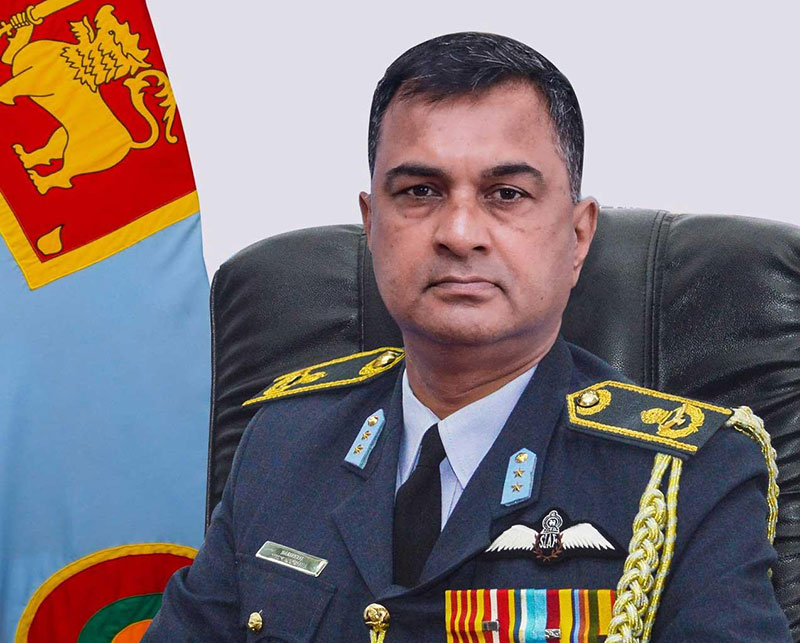
Sri Lanka has secured Tier 2 status in the United States Department of State’s 2026 Trafficking in Persons (TIP) Report for the fifth consecutive year, reflecting the continued efforts of the government of Sri Lanka to strengthen the national response to Trafficking in Persons.
The text of the Defence Ministry statement: “This recognition reflects ongoing efforts to improve coordination, victim protection, law enforcement action, prevention initiatives and institutional cooperation in combating human trafficking.
The National Anti-Human Trafficking Task Force (NAHTTF), chaired by the Secretary to the Ministry of Defence, AVM Sampath Thuyakontha, continues to provide national-level coordination among relevant government institutions responsible for prevention, protection, investigation, prosecution, migration management, labour, child protection and victim assistance.
During the reporting period, Sri Lanka took several important steps to strengthen its anti-human trafficking framework. A major milestone was the launch of the National Strategic Action Plan to Monitor and Combat Human Trafficking 2026-2030, which provides the national framework for coordinated action over the next five years.
Sri Lanka also continued to strengthen its district-level response through the establishment and expansion of District Anti-Trafficking Forums, improving coordination among local authorities, law enforcement agencies and other relevant institutions. These mechanisms support the early identification of victims, improved referrals and more coordinated responses at the district level.
Further efforts included awareness and capacity-building programmes for frontline officers, strengthened cooperation among member institutions, engagement with international and regional partners, and increased attention to emerging forms of trafficking, including technology-facilitated recruitment, online exploitation and forced criminality.
Sri Lanka’s continued placement in Tier 2 recognises the progress made and the sustained efforts undertaken to combat human trafficking, while highlighting the importance of further strengthening the national response.
The NAHTTF remains committed to addressing remaining challenges and to further strengthening prevention, victim protection, investigation, prosecution and inter-agency coordination.
Further, securing Tier 2 status for five consecutive years reflects the collective efforts of government institutions and other stakeholders involved in Sri Lanka’s response to trafficking in persons. This achievement reinforces the importance of sustained commitment, continued cooperation and further progress towards effectively preventing and combating human trafficking.”
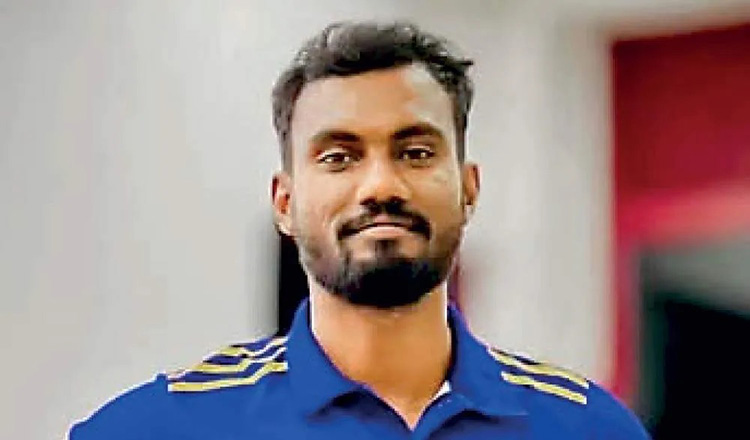
Parliament told his life is in danger
Sri Lankan national Sivarasa Anojan, migrant worker on death row in Saudi Arabia, was given an opportunity to meet Sri Lankan Ambassador O. L. Ameer Ajwad last Thursday (08).
Ajwad, visited Anojan Sivarasa at Dammam Central Prison, located approximately 450 kilometres from Riyadh, to inquire about his well-being and ascertain his current status, the Foreign Ministry here said. Saudi authorities allowed the visit amidst accusations that another inmate at the Dammam Central Prison had caused him serious injury.
The family of Sri Lankan national Sivarasa Anojan earlier alleged that he was attacked with a sharp weapon. The family has contradicted Saudi prison authorities’ claim that he suffered only fingernail scratches.
Ilankai Tamil Arasu Kachchi (ITAK) Batticaloa MP Shanakiyan Rasamanickam, on Wednesday, the day before Ambassador Ajwad visited Anojan, raised the issue in Parliament. According to the Batticaloa District MP, Anojan’s family had been told that he was stabbed in the head by a fellow inmate after being moved, within the prison, and that his life was in danger.
“The accounts of the family and the authorities clearly contradict each other,” Rasamanickam said, urging the government to verify Anojan’s condition directly and ensure his protection.
The Foreign Ministry spokesman said: “During the visit, the Ambassador held an extensive discussion with Anojan Sivarasa, listened to his needs and concerns, and reaffirmed the Embassy’s commitment to providing all possible consular and legal assistance, under the guidance of the Ministry of Foreign Affairs, Foreign Employment and Tourism of Sri Lanka. The Ambassador also shared his contact details with Anojan Sivarasa to facilitate direct communication.”
Following the meeting, Ambassador Ameer Ajwad confirmed that Anojan Sivarasa was in good health and that the Saudi prison authorities were attending to his well-being.
The Ambassador also met the Director of Dammam Central Prison and the prison’s medical doctor, expressing his appreciation for their cooperation in facilitating his visit to the prison and for the care and attention extended to Anojan Sivarasa to safeguard his health and well-being.
The Embassy of Sri Lanka is also extending assistance to Anojan Sivarasa in connection with his appeal process to the Supreme Court.”
News
NSC: Indians and Bangladeshis among crews of stranded Iranian oil carriers experiencing acute shortage of essentials

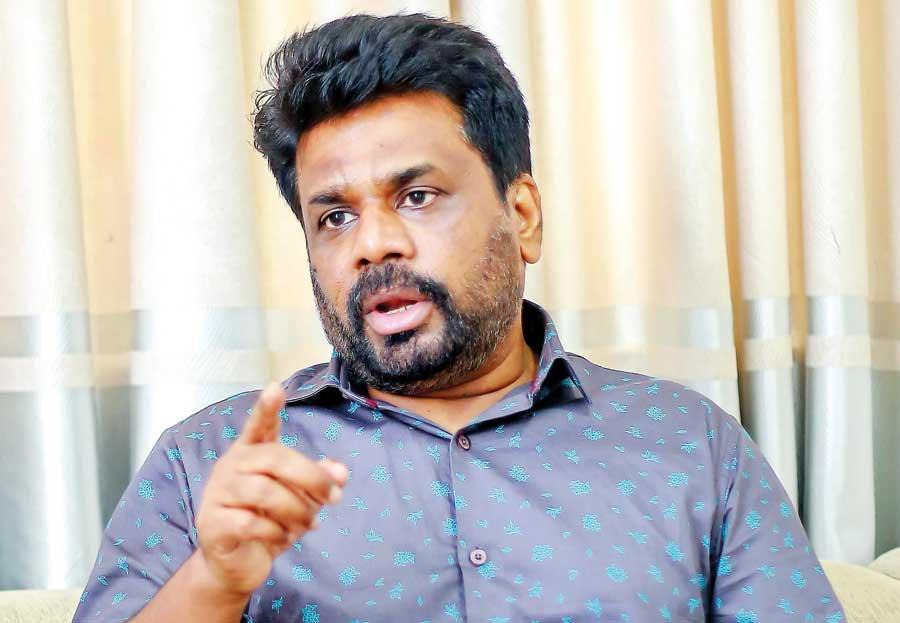
“It is in the national interest to save civilian lives facing death within Sri Lanka’s EEZ”
In an urgent letter sent on Friday (09) to President Anura Kumara Dissanayake, the National Shoora Council (NSC) has urged the President to uphold the humanitarian principle that the ‘territorial sea is a boundary for ‘exercising sovereignty’ and not a boundary limiting ‘humanitarian help’.
NSC has urged the President that the Iranian vessels stranded South of Galle, within Sri Lanka’s Exclusive Economic Zone (EEZ), are said to be facing acute shortages of water, food and medicine, according to credible sources, and require official government search and rescue operations, and possible medical attention.
On board are civilian seafarers and workers who are nationals of Iran, India, Bangladesh and several other neighbouring countries. The Iranian civilian vessels are unable to return to the home destination owing to the continued naval blockade and the unilateral sanctions announced by Donald Trump, President of the United States, measures that carry no endorsement or authority of the United Nations or of the UN Security Council.
It is in the national interest to save civilian lives facing death within Sri Lanka’s EEZ.
The NSC letter has been signed by NSC President M M Zuhair, PC, and General Secretary Rashid M Imthiyaz, Attorney-at-Law, and copied to the Minister of Foreign Affairs, Human Rights Commission of Sri Lanka, Secretary Defence and Commander of the Sri Lanka Navy.
NSC’s request to the President states, “We note with grave humanitarian concern the stated position that no supplies will be provided while these vessels remain beyond the 12-nautical-mile territorial sea. The Government has made no effort to facilitate or encourage Sri Lankan shipping agents, ship chandlers or private companies to officially deliver basic provisions. We submit that this position is not consistent with Sri Lanka’s obligations under international law, nor with the humanitarian traditions of our nation,” NSC has sought immediate official assistance to the seafarers and workers.
• Obligations as a Member State of the United Nations: The UN General Assembly and the UN Human Rights Council have repeatedly expressed concern at unilateral coercive measures that obstruct basic human requirements such as access to food and medicine. Security Council Resolution 2664 (2022) itself protects humanitarian assistance even within UN sanctions regimes. Most significantly even United States sanctions practice, exempts food and medicine from the US sanctions.
• Obligations under the Law of the Sea: Article 98 of the UN Convention on the Law of the Sea (UNCLOS), which applies in the EEZ through Article 58(2), requires every coastal State to maintain an adequate and effective search and rescue service,”regardless of the nationality or status of such a person or the circumstances in which that person is found”
• Obligations under International Human Rights Law: As a State party to the International Covenant on Civil and Political Rights, Sri Lanka must take reasonable measures to protect the right to life (Article 6). The UN Human Rights Committee has affirmed that this duty extends to rescue at sea and to persons outside a State’s territory whose lives are directly and foreseeably affected.
• Obligations under International Humanitarian Law and Neutrality: Neutrality forbids military or commercial support to a belligerent State; it never forbids feeding civilians. As the International Court of Justice held in Corfu Channel (1949), “elementary considerations of humanity” bind all States, and in Nicaragua (1986) it confirmed that strictly humanitarian aid can never be unlawful intervention. Sri Lanka is a neutral State and a party to the four Geneva Conventions of 1949.
• Sri Lanka’s Own Practice: In March 2026 Sri Lanka rescued survivors of IRIS Dena in international waters and escorted IRIS Booshehr from the EEZ to harbour, which the Sri Lankan President described as a humanitarian responsibility. That conduct was accepted as correct in law and was widely welcomed. Withholding water, food and medicine from civilian seafarers today would be inconsistent with that example and with Article 27(15) of our Constitution, which directs the State to foster respect for international law and treaty obligations.
• NSC’s humble requests:
(a) uphold the humanitarian principle that the territorial sea is a boundary for exercising sovereignty and not a boundary for limiting humanitarian assistance.
(b) direct MRCC Colombo, the Sri Lanka Navy and Coast Guard, with the Sri Lanka Red Cross Society and the ICRC, to assess needs and deliver drinking water, food and essential medicine as an urgent humanitarian priority, and to evacuate for immediate treatment the sick and the injured;
(c) issue clear guidance and assurance to Sri Lankan shipping agents, ship chandlers and private companies that the supply of purely humanitarian provisions is lawful and encouraged, distinct from bunkering, repairs, cargo or other commercial services;
(d) engage the Governments of Iran, India, Bangladesh and other States of nationality, and the flag States, to secure provisioning, crew welfare and repatriation; and
(e) adopt a transparent standing policy, notified through diplomatic channels, so that humanitarian relief at sea is never again held hostage to unilateral measures

‘Death at the Sign of the Rook’

Safety, security and teamwork in aviation

How long can Sri Lanka remain silent on its demographic crisis?

Chathura and Chamalka win schools half marathon titles

Sri Lanka continues to maintain Tier 2 status in the 2026 TIP report

Sri Lankan Ambassador visits Anojan on death row in Saudi Arabia

‘Dates have the highest sugar content to fight Coronavirus’

Sunday Island 27 December – Headlines

#SundayIsland 17th December – Headlines

Sunday Island – 28th March

Sunday Island Headlines – 21 March

Sunday Island – 21st February – Headlines
-

 News7 days ago
Geneva takes up Sallay’s case and govt. ignores opportunity to answer accusations
-
 Features6 days ago
Preventing grievances from becoming communal
-

 Features4 days ago
The Sri Lankan who made Scottish history
-

 Sports4 days ago
Nissanka absence opens door for Sri Lanka’s young guns
-

 News5 days ago
Gnansara Thera to be assigned to prison printing section: Officials
-

 News3 days ago
NDB fraud Rs 60mn more than reported
-

 News3 days ago
Removing monk’s robes matter for Sangha to decide: Mahanayake Theras
-

 Features4 days ago
Future of Sri Lanka’s state university system: Should it be shut down and reopened?