
News
Ex-Indian Envoy and Sri Lanka Expert S.D Muni on the Ethnic Conflict

————————
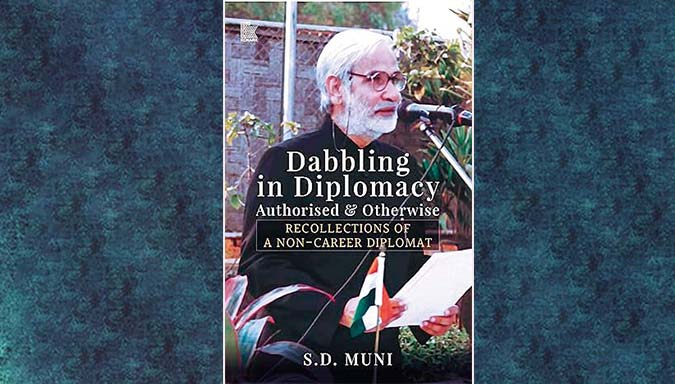
Below are excerpts from Dabbling in Diplomacy – Authorised & Otherwise: Recollections of a Non-Career Diplomat by S.D. Muni (New Delhi: Konark, 2024).
———————————
The TULF leadership duo of A. Amrithalingam and V. Anandasangaree came to JNU [Jawaharlal Nehru University, New Delhi] to talk to all those interested in Sri Lankan affairs. Prof Urmila Phadnis organised a meeting where I was also present. The TULF leaders’ proposition was that why can India not intervene in Sri Lanka in support of Tamils and create an Eelam (independent Tamil State) as it had done in the case of Bangladesh. They explained that Tamils were being ethnically dominated and persecuted by the Sinhalese as the Bengalis had been exploited and suppressed in the erstwhile East Pakistan. The Tamil Eelam, proposed by the TULF in 1976, was to liberate Tamils from this persecution and it was to be a ‘secular, socialist state based on the right to self-determination’.
Both Urmila ji and I explained to them why it was not possible and practical for India to intervene as in 1971. I have elaborated on some of the reasons, in my book Pangs of Proximity: India and Sri Lanka’s Ethnic Crisis (Sage, 1993). It was not India’s policy to have a separate sovereign Tamil State in close proximity to India’s Tamil Nadu. Tamil nationalism had already erupted once in India during the late 1950s. The regional strategic context was also very different from what operated in 1971 for any drastic military action by India in the immediate neighbourhood.
The TULF leaders went back disappointed from JNU but all of us made common friends and our contacts remained active thereafter, until Amrithalingam was unfortunately assassinated by the LTTE later.
————————
I had close contacts with the EPRLF and EPDP. From EPRLF, Ketheeswaran Loganathan (popularly addressed as Ketheesh) came in contact with me first when he was lobbying for his cause in New Delhi. He introduced me to Shanthan Thambiah who was based in London and Varadaraja Perumal, another top-ranking leader of EPRLF. Both of them introduced me to their leader Comrade K. Pathmanabha, (popularly addressed as Com. Nabha), a suave, impressive and ideologically oriented personality. He disapproved of the LTTE’s insistence on a political order that had no room for dissent and diverse opinions.
Nabha’s thrust was on having a polity that valued social justice and equality, not only among all the sections of the Tamil community but also in relation to the majority Sinhalese community. He had accepted the Indo-Sri Lanka accord of July 1987 as against LTTE’s opposition to it. The LTTE could not stand his challenge to their ideological line. They assassinated him in June 1990 in Chennai where all Tamil leaders were scheduled to meet for mutual consultation and coordination.
Nabha visited me for dinner three days before his assassination where I witnessed his casual and overconfident approach to his personal security. He explained to me the approach of EPRLF to the struggle for Eelam under the situation created by the Indo-Sri Lankan Agreement. After dinner, when he was leaving, I cautioned him about his personal security in Chennai. I contributed to the Volume brought out by the EPRLF as a tribute to his memory.
—————————————
President Premadasa was a different class of politician, with a strong and rustic sense of nationalism. Emerging from a backward section of Sri Lankan society, his views differed from those leaders from the upper echelons. We met him in August 1989, shortly after he was elected to office. Our discussions were relaxed but intense and the subjects on the table were India-Sri Lanka relations as well as Sri Lanka’s domestic politics with reference to the role of the LTTE and the JVP. President Premadasa expressed his displeasure with the continued presence of the IPKF in Sri Lanka and India’s support for the North-East Provincial government headed by Varadaraja Perumal. We tried to explain to him that India had no bad intentions in Sri Lanka; the IPKF was there only at the request of the previous Sri Lankan government and would be withdrawn after it completes its mission. In response, he remarked, ‘India was invited as a guest but it has overstayed, to the discomfort of the host.’ When questioned about his approach to critical political issues, he likened it to a soccer player assessing a ball that needs to be put into the goal, showing little concern for other players or events on the field. Premadasa harboured such strong dislike for India that he did not hesitate in supporting the LTTE with arms supplies to confront the IPKF.
———————-
CBK [Chandrika Bandaranaike Kumaratunga] had her first visit to India as President in March 1995. She was put up in Rashtrapati Bhawan. She invited me and Hardeep Singh Puri for a quiet lunch. Puri was a senior IFS (Indian Foreign Service) officer who served in Sri Lanka under Dixit. CBK had been interacting with him in Colombo and knew that he had closely watched the LTTE and interacted with them during his stay in Colombo. Puri was actively involved in assisting Dixit to persuade the LTTE to accept the 1987 Agreement and accordingly, cooperate in laying down arms and help in the establishment of an Interim Administrative Council for the Northern and Eastern Provinces.
LTTE chief Velupillai Prabhakaran held many discussions with Dixit and agreed to cooperate. The agreement for laying down arms was signed on 28 September 1987. For signing the agreement, Prabhakaran personally backed out at the last moment and pushed his deputy to do this with the Indian High Commission. Explaining his refusal to sign the agreement, Prabhakaran said: ‘Mahatma Gandhi never signed any agreement with the British government so why should I.’ In reaction, Dixit also refused to sign the Agreement and deputed Puri to do so with the deputy of the LTTE leader, K. Mahendra Raja. This was disclosed to me by Dixit in one of our meetings and discussions in Colombo.
——————-
At the Rashtrapati Bhawan lunch, Chandrika told us very confidently that she would be able to strike a peace deal with the LTTE leader. She referred to three months of ceasefire between the LTTE and the Sri Lankan army since her assumption of presidency. She told us about the letters (seven in all, by then) exchanged between her and the LTTE leader Prabhakaran. Both Puri and I did not share her optimism and confidence. In our different ways, we explained to her the deceptive nature of the LTTE promises.
I narrated to her the way in which the EPRLF and other Tamil leaders were assassinated by the LTTE. I also referred to her a Ph.D. Dissertation done under my supervision by Sudha Ramachandran on the LTTE, its character, strategy and behaviour. Puri shared with her his experiences in dealing with the LTTE, especially Prabhakaran. Puri had accompanied Prabhakaran when after the 1987 Indo-Sri Lanka Agreement, he was brought to Rajiv Gandhi for a face-to-face meeting. Puri had told me in one of our Colombo meetings that Prabhakaran looked very nervous with his shirt going completely wet with his sweat.
We emphasised to CBK that it is a part of the LTTE strategy to make the adversary complacent and relaxed and then strike so as to take him by surprise. We cautioned her and requested her not to take the LTTE words on face value and remain prepared for any eventuality. It did not seem that she was convinced by our explanations. Within a few weeks of her return to Sri Lanka, we learnt that the LTTE in April 1995 had broken the ceasefire and declared war.
—————————
CBK took two other initiatives towards resolving the Tamil question that were unique in some respects. One was a proposal in August 2000, for a new Constitution that pledged devolution of power to Tamils and Muslims through federal institutions. It also proposed trimming of the Executive Presidency to create a more transparent and democratic political system. The constitutional proposal was being worked upon since her coming to power and had been subjected to informal feedback and suggestions from all stakeholders before its presentation as a Bill in Parliament.
It had support from all coalition parties in her government, including the JVP, which generally did not favour devolving powers to Tamils through federalism. It was for the first time that a federal solution to the ethnic issue had been proposed and that too with the support of diehard Sinhala parties like the JVP.
The second initiative was concerning the composition of her government. In the parliamentary elections of 2004, her party emerged victorious defeating the UNP. She decided to appoint her very able Foreign Minister Lakshman Kadirgamar, a Tamil, as the Prime Minister to instill confidence of Tamils in her government. I heard about this from some of her party members in her official residence during one of my visits. Here again, she could not succeed because of stiff opposition from the hardline Sinhalese and Sangha pressures from within and outside her party.
—————————————————-
I have had opportunities to meet Chandrika’s successor Mahinda Rajapaksa. On his first visit to India in 2006, the Sri Lankan High Commission organised a public reception. High Commissioner Jayasinghe invited me and took me to President Rajapaksa for a one-on-one meeting introducing me to him as ‘former President’s friend’. President Rajapaksa, after exchanging pleasantries, said: ‘Professor, please ask your friend to support and cooperate with me.’ I submitted that ‘Excellency, in Sri Lanka’s interest, it is desirable that both of you work together.’ Chandrika then was the President of Rajapaksa’s party, the Sri Lanka Freedom Party (SLFP), and it may be recalled that she made him Prime Minister in 2004.
———————-
[At an interaction with a small group during his visit to Singapore] Gotabaya [Rajapaksa] was completely dismissive of any ethnic issue left to be resolved in Sri Lanka and also of any human rights violations during the anti-LTTE operations. He was only concerned about the possibility of the LTTE’s re-emergence. I met him again in Colombo as part of a Kalinga Foundation delegation under the leadership of India’s former foreign secretary Lalit Mansingh. We had gone to Sri Lanka on the invitation of The Pathfinder Foundation in September 2019. We met Gotabaya at his private residence. While shaking hands with him, I said, ‘Am I meeting the future President of Sri Lanka?’ He responded with a smile, stating that it was ‘all in the hands of his party’. He was sworn in as President in November 2019. During our meeting, I also enquired about his approval, during the previous regime, for the Chinese nuclear submarine to dock in the Colombo port. He explained, ‘That file was presented to me as the docking of a warship, and since we were allowing warships of other countries for refueling, etc., I also permitted that.’ He went on to mention, ‘The Indian High Commission raised the issue with me, and I assured them that we would not allow the submarine to dock on its return. However, it seems that the return docking permission had also been granted with the initial approval.’ Unfortunately, his response did not completely satisfy us.
(Excerpted with permission from Konark Publishers, New Delhi)


By Shamindra Ferdinando
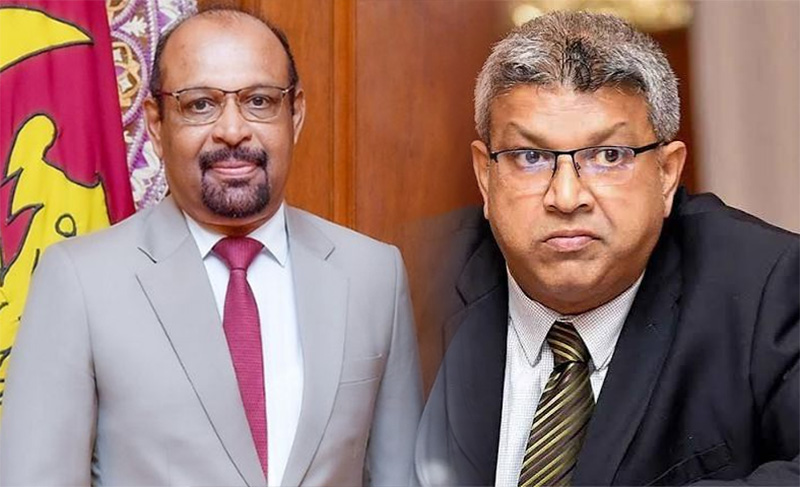
Justice and National Integration Minister Harshana Nanayakkara said yesterday that the Cabinet was studying a set of recommendations made by a Committee, led by retired Supreme Court judge Sithambarampillai Thurairaja, PC, regarding a systematic, fair and transparent mechanism for granting presidential pardons to convicted prison inmates.
Attorney-at-law Nanayakkara said so when The Island raised the issue in the wake of the ongoing controversy over prison authorities compelling General Secretary of the Bodu Bala Sena (BBS) Ven. Galadodaaththe Gnanasara to wear civilian attire when produced in court.
The Minister declined to elaborate but said the Cabinet of Ministers was yet to reach consensus on the recommendations. The NPP government, on 25 June 2025, appointed Thurairaja’s committee to study the provisions of the Article 34(1) of the Constitution, along with other statutory acts and judicial rulings.
Justice Thurairaja handed over his report to Justice and National Integration Ministry Secretary Ayesha Jinasena, PC.
The other members of the Committee were Deputy Minister of Mass Media Dr. Kaushalya Ariyarathne, Additional Secretary to the Ministry of Justice and National Integration Piyumanthi Peiris, Additional Solicitor General Nerin Pulle, Senior Deputy Inspector General of Police (SDIG) Legal Asanga Karawita, Chairperson of the Bureau of Rehabilitation Professor Wasantha Subasinghe, Specialist Dr. Chiththahari Abayanayake, former Acting Commissioner of Prisons Nishan Dhanasinghe, Acting Commissioner General of Prisons Prasad Hemantha Kumara, Senior Assistant Secretary (Legal) to the Ministry of Justice and National Integration Roshani Hettige, and Senior Assistant Secretary to the Ministry of Justice and National Integration Chandima Welikala.
The government called for guidelines regarding presidential pardon over a year before the Supreme Court rescinded, in September this year, the presidential pardon granted by Maithripala Sirisena to Ven Gnanasara serving a six-term of rigorous imprisonment for contempt of court. That pardon was granted in May 2019, the third controversial release by Sirisena during his presidency.
President Sirisena pardoned an ex-LTTE terrorist and also the Royal Park murderer Don Shramantha Jude Anthony Jayamaha, in 2016 and 2019, respectively. The Supreme Court, in June 2024, annulled the pardon granted to Jayamaha and ordered his arrest though he still remains free having fled overseas no sooner he was granted the pardon.
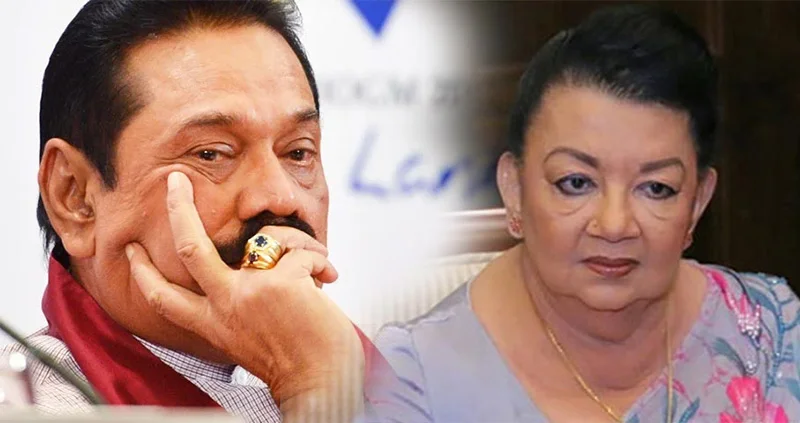
Former President Mahinda Rajapaksa was admitted to a private hospital yesterday morning (12).
Meanwhile, former First Lady Shiranthi Rajapaksa, who is currently in remand custody at Welikada Prison, has been admitted to the Cardiology Unit of the National Hospital in Colombo.

“JVP did not bomb Dalada Maligawa; it seized weapons from security personnel stationed there”
By S. K. Samaranayake
Most Venerable Tibbotuwawe Sri Sumangala Mahanayake Thera of the Malwathu Chapter yesterday said the President has assured that a final decision on new prison regulations would be taken withn two weeks and until then whenever bhikkhus were produced before court, they must be allowed to wear robes. The monk said the Mahanayaka Thera has written to the Commissioner General of Prisons about their decision.
The Mahanayake Thera said so when SJB MPs, led by General Secretary Ranjith Madduma Bandara, paid a courtesy call on him.
During the meeting, the Mahanayake Thera expressed the following views:
“Currently, a massive campaign is underway on social media to insult and disrespect the Maha Sangha. Some individuals carrying out these attacks are not linked to any political party. We expected the government to intervene and completely put an end to this, which is entirely possible. Laws should be introduced to control this. The insults directed at monks must be stopped immediately. We cannot accept these acts, no matter who commits them. We even saw fabricated images circulated on social media depicting the President in robes and monks in lay attire. Such disrespect is completely unacceptable and must be curbed.
“We also know that some individuals currently representing Parliament have past ties to the Sasana. All we ask is for the mudslinging and insults targeting monks to be halted immediately. Certain elements continue to spread falsehoods about the government. Before this administration came to power, they claimed temples were finished, Buddhism was over, and the Perahera wouldn’t take place. But didn’t they just conduct the Kandy Perahera brilliantly?
“Various people are even complaining about the Casket (Karanduwa) of the Dalada Maligawa. In particular, we saw former Diyawadana Nilame Niranjan Wijeratne criticising the matter. Much of what he said was false. During his tenure, the previous casket was coated in lacquer, which nobody talks about. Replacing the old brass casket with a golden casket is a very commendable step what is wrong with that? Just as items from royal eras are retired and modern equivalents are put to use, the older casket has been given due respect and securely housed. There is no issue there. Some people claim the JVP bombed the Maligawa too. Nothing of the sort happened; it was LTTE terrorists who bombed the temple. The JVP merely seized weapons from the security personnel stationed there.”
Meanwhile, speaking during the visit, SJB General Secretary Ranjith Madduma Bandara and other parliamentarians charged that the current administration is laying the groundwork to turn the country into a secular state.
“It is impossible to introduce new laws for monks within two weeks; it takes much longer,” Bandara noted. “The President has the authority to issue an interim directive that any monk presented to court must appear in robes, but he chooses not to do so because he does not want to. Everyone who speaks out against this is targeted and smeared on social media, driven by a network of 2,000 to 3,000 social media operators tied to the government who attack and insult me. Even during the case of Father Mathew Peiris, who committed murder, his clerical cassock was not stripped. Inside the prison religious leaders were respected.
“The public base of this current government is rapidly eroding as a result of their actions, which is why they are attempting to strike at Buddhism to secure minority votes. Any government is constitutionally bound to protect the Buddha Sasana. We will not allow them to destroy Buddhism and turn this country secular; we will defend Buddhism to the very last, and all Sri Lankans must step forward for this cause.”
Following their meeting at the Malwathu Chapter, the delegation proceeded to the Asgiri Mahavihara, where they met the Mahanayake Thera of the Asgiri Chapter, Most Venerable Warakagoda Sri Gnanaratana Mahanayake Thera, and Anunayake Venerable Narampanaye Sri Ananda Thera to brief them on the current situation.
The delegation included SJB Parliamentarians Ranjith Madduma Bandara, Kins Nelson, Sujeewa Senasinghe, A.C. Alahapperuma, Rohana Bandara, Suranga Ratnayake, Rohini Kaviratne, Chandrani Kirielle, alongside prominent figures such as Lakshman Kiriella, Wasantha Yapa Bandara, Ranjith Aluwihare, and Professor Upul Dissanayake.

Heavy showers (100-150) mm likely at some places in the Western, Sabaragamuwa, Central, Uva and Southern provinces showerss above 75 mm are likely in the other areas of the island.

Presidential pardons: Govt. studying Justice Thurairaja’s recommendations – Minister

Mahinda and Shiranthi hospitalised

Monks must be allowed to wear robes when produced in court: Mahanayake Theras

Jt. Opp. seeks presidential pardon for Ven. Gnanasara

Shiranthi’s anticipatory bail application rejected

‘Dates have the highest sugar content to fight Coronavirus’

Sunday Island 27 December – Headlines

#SundayIsland 17th December – Headlines

Sunday Island – 28th March

Sunday Island Headlines – 21 March

Sunday Island – 21st February – Headlines
-

 Features5 days ago
The Sri Lankan who made Scottish history
-

 Sports5 days ago
Nissanka absence opens door for Sri Lanka’s young guns
-

 News6 days ago
Gnansara Thera to be assigned to prison printing section: Officials
-

 News4 days ago
NDB fraud Rs 60mn more than reported
-

 News4 days ago
Removing monk’s robes matter for Sangha to decide: Mahanayake Theras
-

 Features5 days ago
Future of Sri Lanka’s state university system: Should it be shut down and reopened?
-

 News6 days ago
OIC of FCID summoned before Maligakanda Magistrate
-

 News5 days ago
Shiranthi R remanded until 13 Oct.