
News
Ex-Indian Envoy and Sri Lanka Expert S.D Muni on the Ethnic Conflict

————————
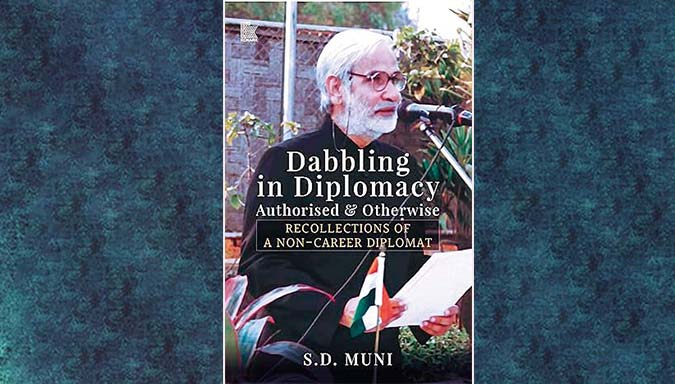
Below are excerpts from Dabbling in Diplomacy – Authorised & Otherwise: Recollections of a Non-Career Diplomat by S.D. Muni (New Delhi: Konark, 2024).
———————————
The TULF leadership duo of A. Amrithalingam and V. Anandasangaree came to JNU [Jawaharlal Nehru University, New Delhi] to talk to all those interested in Sri Lankan affairs. Prof Urmila Phadnis organised a meeting where I was also present. The TULF leaders’ proposition was that why can India not intervene in Sri Lanka in support of Tamils and create an Eelam (independent Tamil State) as it had done in the case of Bangladesh. They explained that Tamils were being ethnically dominated and persecuted by the Sinhalese as the Bengalis had been exploited and suppressed in the erstwhile East Pakistan. The Tamil Eelam, proposed by the TULF in 1976, was to liberate Tamils from this persecution and it was to be a ‘secular, socialist state based on the right to self-determination’.
Both Urmila ji and I explained to them why it was not possible and practical for India to intervene as in 1971. I have elaborated on some of the reasons, in my book Pangs of Proximity: India and Sri Lanka’s Ethnic Crisis (Sage, 1993). It was not India’s policy to have a separate sovereign Tamil State in close proximity to India’s Tamil Nadu. Tamil nationalism had already erupted once in India during the late 1950s. The regional strategic context was also very different from what operated in 1971 for any drastic military action by India in the immediate neighbourhood.
The TULF leaders went back disappointed from JNU but all of us made common friends and our contacts remained active thereafter, until Amrithalingam was unfortunately assassinated by the LTTE later.
————————
I had close contacts with the EPRLF and EPDP. From EPRLF, Ketheeswaran Loganathan (popularly addressed as Ketheesh) came in contact with me first when he was lobbying for his cause in New Delhi. He introduced me to Shanthan Thambiah who was based in London and Varadaraja Perumal, another top-ranking leader of EPRLF. Both of them introduced me to their leader Comrade K. Pathmanabha, (popularly addressed as Com. Nabha), a suave, impressive and ideologically oriented personality. He disapproved of the LTTE’s insistence on a political order that had no room for dissent and diverse opinions.
Nabha’s thrust was on having a polity that valued social justice and equality, not only among all the sections of the Tamil community but also in relation to the majority Sinhalese community. He had accepted the Indo-Sri Lanka accord of July 1987 as against LTTE’s opposition to it. The LTTE could not stand his challenge to their ideological line. They assassinated him in June 1990 in Chennai where all Tamil leaders were scheduled to meet for mutual consultation and coordination.
Nabha visited me for dinner three days before his assassination where I witnessed his casual and overconfident approach to his personal security. He explained to me the approach of EPRLF to the struggle for Eelam under the situation created by the Indo-Sri Lankan Agreement. After dinner, when he was leaving, I cautioned him about his personal security in Chennai. I contributed to the Volume brought out by the EPRLF as a tribute to his memory.
—————————————
President Premadasa was a different class of politician, with a strong and rustic sense of nationalism. Emerging from a backward section of Sri Lankan society, his views differed from those leaders from the upper echelons. We met him in August 1989, shortly after he was elected to office. Our discussions were relaxed but intense and the subjects on the table were India-Sri Lanka relations as well as Sri Lanka’s domestic politics with reference to the role of the LTTE and the JVP. President Premadasa expressed his displeasure with the continued presence of the IPKF in Sri Lanka and India’s support for the North-East Provincial government headed by Varadaraja Perumal. We tried to explain to him that India had no bad intentions in Sri Lanka; the IPKF was there only at the request of the previous Sri Lankan government and would be withdrawn after it completes its mission. In response, he remarked, ‘India was invited as a guest but it has overstayed, to the discomfort of the host.’ When questioned about his approach to critical political issues, he likened it to a soccer player assessing a ball that needs to be put into the goal, showing little concern for other players or events on the field. Premadasa harboured such strong dislike for India that he did not hesitate in supporting the LTTE with arms supplies to confront the IPKF.
———————-
CBK [Chandrika Bandaranaike Kumaratunga] had her first visit to India as President in March 1995. She was put up in Rashtrapati Bhawan. She invited me and Hardeep Singh Puri for a quiet lunch. Puri was a senior IFS (Indian Foreign Service) officer who served in Sri Lanka under Dixit. CBK had been interacting with him in Colombo and knew that he had closely watched the LTTE and interacted with them during his stay in Colombo. Puri was actively involved in assisting Dixit to persuade the LTTE to accept the 1987 Agreement and accordingly, cooperate in laying down arms and help in the establishment of an Interim Administrative Council for the Northern and Eastern Provinces.
LTTE chief Velupillai Prabhakaran held many discussions with Dixit and agreed to cooperate. The agreement for laying down arms was signed on 28 September 1987. For signing the agreement, Prabhakaran personally backed out at the last moment and pushed his deputy to do this with the Indian High Commission. Explaining his refusal to sign the agreement, Prabhakaran said: ‘Mahatma Gandhi never signed any agreement with the British government so why should I.’ In reaction, Dixit also refused to sign the Agreement and deputed Puri to do so with the deputy of the LTTE leader, K. Mahendra Raja. This was disclosed to me by Dixit in one of our meetings and discussions in Colombo.
——————-
At the Rashtrapati Bhawan lunch, Chandrika told us very confidently that she would be able to strike a peace deal with the LTTE leader. She referred to three months of ceasefire between the LTTE and the Sri Lankan army since her assumption of presidency. She told us about the letters (seven in all, by then) exchanged between her and the LTTE leader Prabhakaran. Both Puri and I did not share her optimism and confidence. In our different ways, we explained to her the deceptive nature of the LTTE promises.
I narrated to her the way in which the EPRLF and other Tamil leaders were assassinated by the LTTE. I also referred to her a Ph.D. Dissertation done under my supervision by Sudha Ramachandran on the LTTE, its character, strategy and behaviour. Puri shared with her his experiences in dealing with the LTTE, especially Prabhakaran. Puri had accompanied Prabhakaran when after the 1987 Indo-Sri Lanka Agreement, he was brought to Rajiv Gandhi for a face-to-face meeting. Puri had told me in one of our Colombo meetings that Prabhakaran looked very nervous with his shirt going completely wet with his sweat.
We emphasised to CBK that it is a part of the LTTE strategy to make the adversary complacent and relaxed and then strike so as to take him by surprise. We cautioned her and requested her not to take the LTTE words on face value and remain prepared for any eventuality. It did not seem that she was convinced by our explanations. Within a few weeks of her return to Sri Lanka, we learnt that the LTTE in April 1995 had broken the ceasefire and declared war.
—————————
CBK took two other initiatives towards resolving the Tamil question that were unique in some respects. One was a proposal in August 2000, for a new Constitution that pledged devolution of power to Tamils and Muslims through federal institutions. It also proposed trimming of the Executive Presidency to create a more transparent and democratic political system. The constitutional proposal was being worked upon since her coming to power and had been subjected to informal feedback and suggestions from all stakeholders before its presentation as a Bill in Parliament.
It had support from all coalition parties in her government, including the JVP, which generally did not favour devolving powers to Tamils through federalism. It was for the first time that a federal solution to the ethnic issue had been proposed and that too with the support of diehard Sinhala parties like the JVP.
The second initiative was concerning the composition of her government. In the parliamentary elections of 2004, her party emerged victorious defeating the UNP. She decided to appoint her very able Foreign Minister Lakshman Kadirgamar, a Tamil, as the Prime Minister to instill confidence of Tamils in her government. I heard about this from some of her party members in her official residence during one of my visits. Here again, she could not succeed because of stiff opposition from the hardline Sinhalese and Sangha pressures from within and outside her party.
—————————————————-
I have had opportunities to meet Chandrika’s successor Mahinda Rajapaksa. On his first visit to India in 2006, the Sri Lankan High Commission organised a public reception. High Commissioner Jayasinghe invited me and took me to President Rajapaksa for a one-on-one meeting introducing me to him as ‘former President’s friend’. President Rajapaksa, after exchanging pleasantries, said: ‘Professor, please ask your friend to support and cooperate with me.’ I submitted that ‘Excellency, in Sri Lanka’s interest, it is desirable that both of you work together.’ Chandrika then was the President of Rajapaksa’s party, the Sri Lanka Freedom Party (SLFP), and it may be recalled that she made him Prime Minister in 2004.
———————-
[At an interaction with a small group during his visit to Singapore] Gotabaya [Rajapaksa] was completely dismissive of any ethnic issue left to be resolved in Sri Lanka and also of any human rights violations during the anti-LTTE operations. He was only concerned about the possibility of the LTTE’s re-emergence. I met him again in Colombo as part of a Kalinga Foundation delegation under the leadership of India’s former foreign secretary Lalit Mansingh. We had gone to Sri Lanka on the invitation of The Pathfinder Foundation in September 2019. We met Gotabaya at his private residence. While shaking hands with him, I said, ‘Am I meeting the future President of Sri Lanka?’ He responded with a smile, stating that it was ‘all in the hands of his party’. He was sworn in as President in November 2019. During our meeting, I also enquired about his approval, during the previous regime, for the Chinese nuclear submarine to dock in the Colombo port. He explained, ‘That file was presented to me as the docking of a warship, and since we were allowing warships of other countries for refueling, etc., I also permitted that.’ He went on to mention, ‘The Indian High Commission raised the issue with me, and I assured them that we would not allow the submarine to dock on its return. However, it seems that the return docking permission had also been granted with the initial approval.’ Unfortunately, his response did not completely satisfy us.
(Excerpted with permission from Konark Publishers, New Delhi)

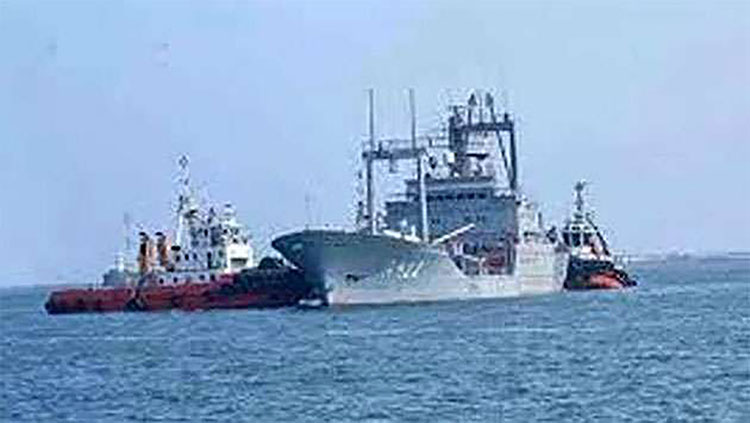
‘Companies may face US sanctions’: Lanka to put ‘national interest’ first as 19 Iranian vessels seek help
(ToI) Sri Lanka said on Friday it would “prioritise our national interests” before providing assistance to the crews of 19 Iranian ships anchored in international waters near the island nation.The crews are facing shortages of food, water and fuel. A foreign ministry spokesperson cited the risk of US sanctions against Sri Lankan companies supplying the vessels as a key concern.
The United States and Iran have been at war since February 28, when the US and Israel launched joint strikes against the Islamic Republic.
“Sri Lanka will put its national interest first before considering any help, and the companies that supply ships are aware of possible secondary sanctions from the United States,” spokesperson Thushara Rodrigo told reporters, ruling out any immediate assistance to the vessels.
Rodrigo clarified, however, that Sri Lanka had received no communication from the United States warning of repercussions if it decided to assist the vessels.According to Rodrigo, the ships are stationed 24 nautical miles off Sri Lanka’s coast.The Iranian Embassy said it had no information on the matter.
In March, a US torpedo attack sank the Iranian naval vessel IRIS Dena in Sri Lankan waters, killing 87 sailors.
The ship was returning to Iran after participating in a naval exercise at India’s invitation. A second Iranian vessel was brought to a Sri Lankan port after its crew reported technical problems.
Wounded sailors were treated at Sri Lankan hospitals, while those rescued from the second vessel were safely repatriated to Iran.
Sri Lanka is still recovering from an economic crisis, with both the United States and Iran serving as important trading partners. Washington played a key role in securing an International Monetary Fund bailout and supporting Sri Lanka’s agricultural sector to help avert a food crisis.
Sri Lanka CERT has warned the public of fraudulent social media advertisements offering admission to foreign universities after receiving complaints from parents and students who have lost hundreds of thousands of rupees to scammers.
The fraudsters reportedly pose as representatives of reputed foreign universities, promising admission, student visas, work permits and even eventual citizenship in return for registration fees and initial tuition payments.
They use convincing videos, photographs and documents circulated via email and WhatsApp to gain the confidence of unsuspecting victims before asking them to transfer money to foreign bank accounts. The scammers then disappear after receiving the payments, Sri Lanka CERT said.
The agency has urged prospective students and their parents to verify the authenticity of university representatives, documents and bank account details before making payments, and to seek overseas education opportunities only through legitimate and recognised channels.
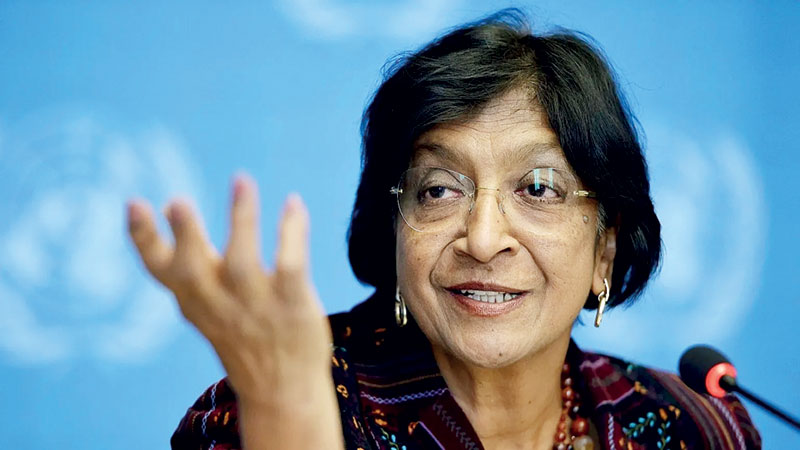
Former UN High Commissioner for Human Rights and International Court of Justice judge Navanethem “Navi” Pillay has won the 2026 Nobel Peace Prize for her contribution to international law and efforts to promote peace, the Norwegian Nobel Committee announced in Oslo on Friday.
Announcing the award, committee chairman Jørgen Watne Frydnes said Pillay had “significantly enlarged the scope and impact of international law” and helped advance “a more comprehensive global legal order” with exceptional courage. He also praised her long career, which began as a lawyer confronting deep-rooted discrimination in South Africa, and described her as a person with a “firm moral compass”.
Pillay, 85, served as the UN High Commissioner for Human Rights from 2008 to 2014. Her tenure brought her into sharp focus in Sri Lanka, particularly over her assessment of the country’s human rights situation in the aftermath of the decades-long civil war.
During an official fact-finding visit to Sri Lanka from August 25 to 31, 2013, Pillay travelled to areas including Jaffna, Kilinochchi and Trincomalee, where she met civil war survivors, families of the disappeared and local communities.
Following the visit, she warned that Sri Lanka was moving towards authoritarianism and highlighted what she described as a persistent climate of fear.
She also reported intimidation and harassment of people who had sought to meet her during the mission.
Pillay urged the UN Human Rights Council to establish an international inquiry mechanism to investigate alleged war crimes and crimes against humanity committed by both government forces and the LTTE during the final stages of the 26-year civil war.
Her observations and recommendations became a significant part of international scrutiny of Sri Lanka’s post-war human rights record.
The Norwegian Nobel Committee received 287 nominations for this year’s Peace Prize, slightly more than a quarter of them being organisations. The committee traditionally considers efforts to promote peace, international fraternity and institutions that contribute to lasting stability.
Last year, Venezuelan opposition leader Maria Corina Machado won the prize for her campaign for a democratic transition in Venezuela. She was praised as a woman who kept the flame of democracy burning amid growing darkness.
The 2026 award marks the 125th anniversary of the Nobel Peace Prize, first presented in 1901. Over its history, the prize has recognised prominent figures and organisations involved in advancing peace, human rights and international cooperation.

Rahmat, Malik fifties lead Afghanistan’s strong reply

Showers above 75 mm are likely at some places in the Western, Sabaragamuwa, Central, Uva and North-Western provinces and in Galle, Matara, Anuradhapura and Mannar districts.

Iranian ships stranded, Lanka fears US sanctions

Sri Lanka CERT warns of overseas university admission scams

Navi Pillay’s Lankan affairs in focus as she wins 2026 Nobel Peace Prize

Lanka welcomes Indian SC remarks on Katchatheevu dispute

‘Dates have the highest sugar content to fight Coronavirus’

Sunday Island 27 December – Headlines

#SundayIsland 17th December – Headlines

Sunday Island – 28th March

Sunday Island Headlines – 21 March

Sunday Island – 21st February – Headlines
-

 News6 days ago
Geneva takes up Sallay’s case and govt. ignores opportunity to answer accusations
-
 Features5 days ago
Preventing grievances from becoming communal
-

 Features3 days ago
The Sri Lankan who made Scottish history
-

 Sports3 days ago
Nissanka absence opens door for Sri Lanka’s young guns
-
 News4 days ago
Gnansara Thera to be assigned to prison printing section: Officials
-

 Features6 days ago
Sri Lanka Cricket Bill: Governance reform is not yet a cricket strategy
-

 News2 days ago
NDB fraud Rs 60mn more than reported
-
 Features3 days ago
Future of Sri Lanka’s state university system: Should it be shut down and reopened?