
Latest News
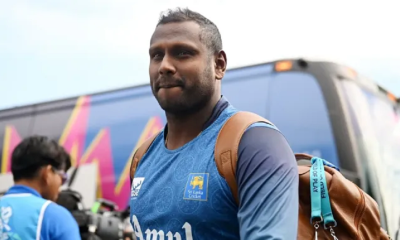
Hasaranga and Pathirana bring a thriller home for Sri Lanka

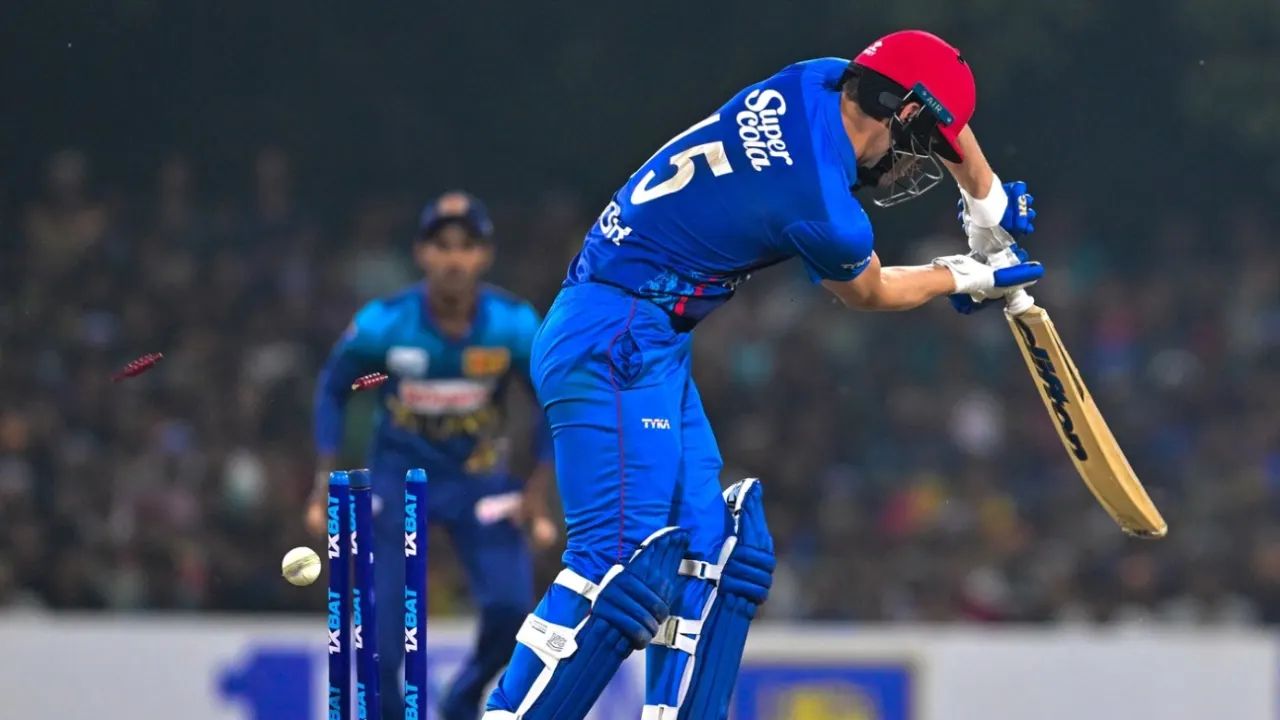
In front of a sold out crowd in Dambulla, Sri Lanka edged a rollercoaster first T20I against Afghanistan, winning by four runs to take a 1-0 lead in the three-match series.
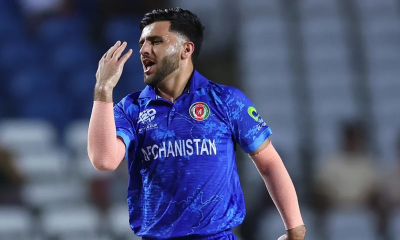
Binura Fernando who had been taken for 38 runs in three overs up until then – came up trump in the end, defending 11 runs in the final over. At the other end was Ibrahim Zadran having batted through the innings – unbeaten on a 55-ball 67, but having fallen agonisingly short.
But it was Matheesha Pathirana who turned the game in the hosts favour, bowling an exceptional penultimate over where he grabbed two wickets for just three runs, as he ended with figures of 4 for 24.
Sri Lanka had earlier been put into bat, and had been bowled out for 160 – much of which was down to Wanidu Hasaranga’s outstanding counter-punch innings of 67 off 32. Afghanistan though had picked up a cluster of wickets either side of Hasaranga’s knock to keep Sri Lanka to a par total.
For much of Afghanistan’s chase the game had looked in hand, particularly with Ibrahim at the crease, but Sri Lanka’s bowlers led by Pathirana did well to grab wickets at crucial junctures and nip in at the death.
Action packed powerplay
All the talk across the ODIs had been the nature of the wickets, with the batting friendly tracks delivered in Pallekele widely lauded. The question then was, would Dambulla – hosting its first men’s international in five years – follow suit? Well, while Afghanistan opted to bowl, choosing to first see how the wicket played before taking a crack, Sri Lanka were tasked with gauging it on the fly.
The question didn’t take long to answer as Sri Lanka got off to a flyer, crashing a healthy 51 runs in the powerplay. The only hitch was they lost three wickets in the process, as Afghanistan had expertly preyed on Sri Lanka’s newfound aggression. Pathum Nissanka edged through flaying at a wide one, Kusal Mendis got a leading edge on an attempted scoop down to third man and Dhananjaya de Silva pulled one straight to deep square leg.
Three became four shortly after when Asalanka sought to pull a long hop down leg, but only managed to feather an edge to the keeper. Midway through the eighth over Sri Lanka were suddenly 55 for 4.
Wow-nindu’s floating counter
With Sri Lanka at very real risk of throwing away a promising start, skipper Hasaranga took it upon himself to promote himself up the order ahead of both Angelo Mathews and Dasun Shanaka.
The role of Hasaranga as a floating pinch-hitter had first been explored in last year’s LPL with devastating results, but the question now was could he translate it to the international stage? An injury prior to last year’s World Cup meant the answer to that had to wait a little a longer, but here he was finally able to showcase his batting chops.
In a blitzkrieg knock, Hasaranga ransacked 67 off just 32 deliveries. His partnership with Sadeera Samarawickrama worth 72 came off 40 balls, with the latter accounting for just 18 of those. By the time Hasaranga was dismissed in the 16th over, he had taken Sri Lanka to 146 for 6.
Afghanistan strike back and start fast
Fazalhaq Farooqi, Azmatullah Omarzai, Naveen-Ul-Haq and Karim Janat, each with their variations in pace and length proved too good for the Lankan lower order and tail to get away.
Despite both Angelo Mathews and Dasun Shanaka around to launch at the death, Afghanistan made sure that Sri Lanka didn’t even complete their 20 overs in the end. The final four wickets added just 14 runs – Mathews and Shanaka accounting for 12 of those – as Sri Lanka were bowled out for 160.
Then with the bat they began with a bang. The trick often to completing middling chases is in making use of the power-play, and in this respect Afghanistan followed the script to a tee. Aside from the first over, the remaining five in the power-play saw at least one boundary scored.
With Ibrahim taking the lead they eventually razed 57 runs in the opening six overs for the loss of just one wicket.
Sri Lanka chip away
Hasaranga had spoken before the game about Sri Lanka’s impressive bowling stocks and here he utilised them to their fullest extent. Having initially brought himself on inside the power-play – an uncharacteristic move but one warranted owing to Afghanistan’s fast start – he struck in his second over, sneaking a googly through Gulbadin Naib’s leg side hack.
Pathirana’s introduction in the next over saw another fall, before Dasun Shanaka and his clever variations in pace grabbed two in the space of three balls two overs later. Just like that Afghanistan were 86 for 5
Pathirana comes through clutch
But in keeping with the theme of the game, the drama wasn’t done yet. Ibrahim and Karim Janat’s stand of 39 off 28 took the game down to the wire, and with 36 need from 24 with five wickets in hand, the game was conceivably Afghanistan’s to lose.
Pathirana however had other ideas. Janat had no answer to a searing length ball that kept lower than expected owing to Pathirana’s slingy action, and trapped him in front. The 21 year-old saved the best for last though, producing two exceptionally quick fuller ones two overs later to get rid of Noor Ahmad and Naveen-Ul-Haq, as Afghanistan were reduced to 150 for 9 heading into the final over.
There, Binura redeemed himself with a series of well directed wide yorkers that Ibrahim was unable to get away, as Sri Lanka secured a nervy victory.
Brief scores:
Sri Lanka 160 in 19 overs (Kusal Mendis 10, Dhananjaya de Silva 24, Sadeera Samarawickrama 25, Wanidu Hasaranga 67; Fazalhaq Farooqi 3-25, Naveen-ul-Haq 2- 25, Azmatullah Omarzai 2-30, Noor Ahmad 1-18, Karim Janat 1-23 ) beat Afghanistan 156 for 9 in 20 overs (Ibrahim Zadran 67*, Rahmanullah Gurbaz 13, Gulbadin Naib 16, Karim Janat 20; Angelo Mathews 1-16, Maheesh Theekshana 1-31, Wanidu Hasaranga 1-20, Matheesha Pathirana 4-24, Dasun Shanaka 2-17) by four runs
(Cricinfo)









Without Mark Chapman and Rachin Ravindra, the hosts have a top-three spot for Devon Conway. They have as many as six seamers in the squad to pick from, with Glenn Phillips and Michael Bracewell offering part-time spin in a fairly stacked bowling attack.
[Cricbuzz]
Latest News
Bangladesh and Nepal to host Women’s Under-19 T20 World Cup from January 21 to February 6

Four venues in Bangladesh and Nepal will host the 2027 Under-19 Women’s T20 World Cup, which is set to run from January 21 to February 6. Chattogram, Sylhet, Kirtipur and Mulpani are the four venues, with Chattogram set to host the two semi-finals on February 4 as well as the final on February 6.
The 16-team event will feature four groups of four teams each, with the group stage set to be followed by a two-group Super Six stage, and then the semi-finals and final.
This is the third edition of the tournament, with India having won the first two back-to-back in 2023 and 2025. The defending champions have been drawn in group A alongside Ireland, West Indies and Nepal. Group B has 2025 runners-up South Africa as well as New Zealand, Pakistan and Samoa.
Australia, Bangladesh, Nigeria and UAE make up Group C, while England, Sri Lanka, USA and Scotland have been drawn in Group D.
The tournament will kick off with four matches on January 21, with Sylhet hosting Bangladesh vs UAE and Australia vs Nigeria, and Mulpani hosting Sri Lanka vs Scotland and England vs USA. The other two venues and other eight teams will be involved on January 22: New Zealand vs Samoa and South Africa vs Pakistan in Chattogram, and Nepal vs Ireland and India vs West Indies in Kirtipur.
All 41 games of the tournament will be played during the day. Morning matches will begin at 9.30am local time, and afternoon games at 1.30pm local time.
“The ICC U19 World Cup is the stage that showcases the future of our sport and serves as the ultimate platform for young players to make the leap towards elite careers representing their countries,” ICC CEO Sanjog Gupta said. “These future stars representing 16 teams will garner the world’s attention and become relatable role models for many young girls playing the sport, serving inspiration for their continued cricket journeys.
“The choice of our hosts – Bangladesh and Nepal – is also reflective of the ICC’s belief and investment in the future of the cricket ecosystem. With deep passion for cricket and nearly 40% of the two countries’ populations below the age of 20, they serve as the ideal hosts for one of the world’s biggest youth sporting events.”
(Cricinfo)

President Anura Kumara Dissanayake today (20) paid his last respects to the remains of Most Venerable Kappetiyagoda Siri Wimala Thera, Anunayake of the Sri Lanka Ramanna Maha Nikaya and Chief Incumbent of the Rajopawanaramaya Temple in Gatambe, Kandy, who passed away.
The President visited the Rajopawanaramaya Temple in Gatambe, Kandy, where the remains of the Thera are lying, and paid his last respects. He subsequently expressed his deepest condolences to the Maha Sangha and the temple’s Dayaka Sabha, who are mourning the passing of the Thera.
Central Province Governor and Consultant Physician Dr Harsha Suranga Fernando, Kandy District Secretary Indika Udawatta and several others were present.
President’s Media Division (PMD)

Crystal Palace urged to retire bald eagle mascot

Little time to unpack as India open in Christchurch

Senior England players to miss Sri Lanka T20Is for WPL 2027

Bangladesh and Nepal to host Women’s Under-19 T20 World Cup from January 21 to February 6

Showers above 100 mm are likely at some places in the Western, Sabaragamuwa, Central, North-western, Northern and Southern provinces and in Anuradhapura district.

Low-quality coal causes power cuts: Ex-LECO Chief

‘Dates have the highest sugar content to fight Coronavirus’

Sunday Island 27 December – Headlines

#SundayIsland 17th December – Headlines

Sunday Island – 28th March

Sunday Island Headlines – 21 March

Sunday Island – 21st February – Headlines
-

 Features4 days ago
Kotahena:A Small Enclave, An Extraordinary Legacy
-
 News5 days ago
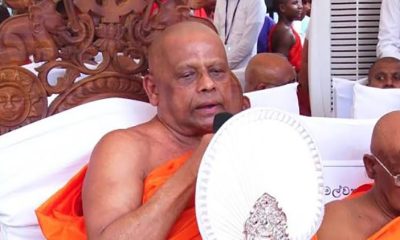
Asgiri Mahanayake calls for immediate release of Gnanasara Thera
-

 News3 days ago
Record 1,600 students take Russian Classical Ballet examination in Sri Lanka
-
 News7 days ago
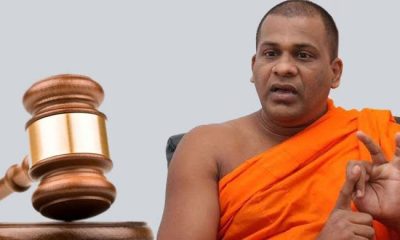
AC President recuses himself from hearing prison attire case pertaining to Gnanasara Thera
-

 News6 days ago
Naval officer testifies Yoshitha received Rs. 5.15 mn in salaries during SLN service
-

 News4 days ago
Karannagoda pushed for £24,536 for Yoshitha’s UK training, Court told
-

 Editorial6 days ago
Saving Anojan: Beyond Executioner’s Blade
-

 News7 days ago
CID informs Fort Magistrate’s Court investigation into money laundering case against Namal completed