
News
Enactment process of Online Safety Act raises questions on law-making: CPA


ECONOMYNEXT —The process followed in enacting Sri Lanka’s controversial Online Safety Act (OSA) raises serious questions on law-making and its impact on constitutional democracy, the Centre for Policy Alternatives (CPA) said, urging the government to replace the act with a law that “genuinely addresses” concerns on online safety.
Claiming that the process of drafting the OSA was shrouded in secrecy, CPA said the rushed manner of its passage raises questions as to the intentions of the government in enacting a law that has significant implications for fundamental rights and the rule of law in Sri Lanka.
“CPA has previously commented on the substance and process followed with the Bill and challenged its constitutionality. In light of recent events surrounding the enactment of the OSA, CPA condemns the enactment of such a draconian law that can further limit freedom of speech and the right to dissent,” the organisation said.
“It is with concern that CPA notes the issues surrounding committee stage amendments of January 24, 2024. With the Supreme Court ruling requiring 31 amendments for the passage of the Bill with a simple majority in Parliament, questions were raised concerning the compliance with Article 78(3) of the Constitution which states that ‘Any amendment proposed to a Bill in Parliament shall not deviate from the merits and principles of such Bill’.
“CPA at the outset noted that the committee stage amendments proposed were substantial alternations, requiring the Bill to be withdrawn and re-gazetted. Despite this, the Government proceeded with the Bill, while failing to adopt mandatory changes required by the Supreme Court to pass the law with a simple majority.
For example, CPA said, the Supreme Court required that the State ensures that all persons involved in investigations maintain confidentiality of information obtained from the subject of investigations. However, the current Act contains no such protection (see page 60 of the determination). It was also determined by the Court that the inclusion of terminology such as “malicious” and “wantonly” was vague (see page 48 of the determination), yet, the OSA continues to use such wording in Section 14.
Moreover, CPA noted, it was determined that certain services, such as emails that are the only user-generated content enabled by the service or SMS/MMS services, must be exempted from the OSA (see pages 59 to 60 of the determination). However, these changes were not made and the provisions on which the Supreme Court raised concerns continue under Section 27 of the OSA, thus raising concerns that the Supreme Court’s decision was selectively ignored.
“The government’s rush to enact the OSA and its disregard for the Supreme Court determination has resulted in a constitutional crisis, raising questions about the legality of the OSA. Moreover, by intentionally undermining the determination of the Supreme Court, the Government is setting a dangerous precedent that has implications for the rule of law and separation of powers in Sri Lanka.
“These concerns are also in the context of multiple other issues with the OSA that have been previously raised by CPA such as the broad powers of the Online Safety Commission, vague terminology and the role of experts, among others,” the organisation said.
In light of these and other concerns, CPA said it urges the Government to review the process and substance of the OSA, take immediate steps to repeal the OSA and introduce a law that genuinely addresses the concerns of online safety. CPA also called on the government to have a transparent and inclusive law-making process that provides time for stakeholder consultations and review.
“The processes followed with the enactment of the Personal Data Protection Act No. 09 of 2022 and Right to Information Act No. 12 of 2016 are some examples where sufficient time was taken to ensure the law-making process was transparent and that it factored in diverse viewpoints. Such practices of good governance are fundamental for Sri Lanka at its present stage of recovery and reform,” it said.


Latest News
Sun directly overhead Moratuwa, Kesbewa, Handapangoda, Idalgashinna, Yudhaganawa, Kotiyagala and Panama about 12.08 noon today (05)


The sun is going to be directly over the latitudes of Sri Lanka from 28th of August to 07th of September due to its apparent southward relative motion.
The nearest places of Sri Lanka over which the sun is
overhead today (05) are Moratuwa, Kesbewa, Handapangoda, Idalgashinna, Yudhaganawa, Kotiyagala and Panama about 12.08 noon
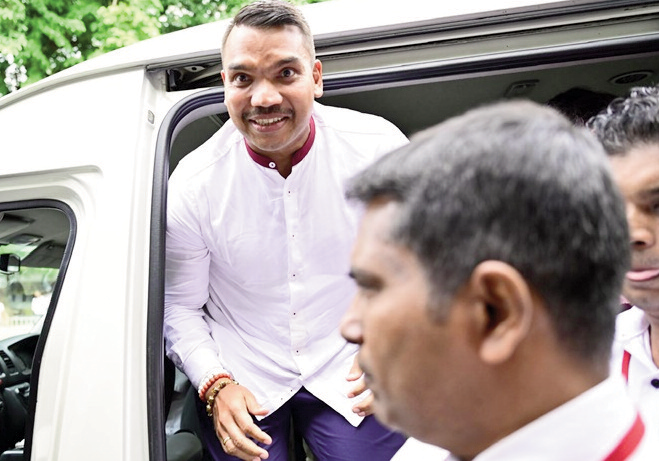
Sri Lanka Podujana Peramuna (SLPP) National Organiser and Parliamentarian Namal Rajapaksa was yesterday remanded until September 18 by the Colombo Chief Magistrate’s Court following his arrest by the Commission to Investigate Allegations of Bribery or Corruption (CIABOC) in connection with an investigation into the controversial SriLankan Airlines Airbus aircraft transaction.
Rajapaksa appeared before the CIABOC at around 9.15 am yesterday to record a statement after being summoned over the transaction. He was taken into custody following several hours of questioning and subsequently produced before the Colombo Chief Magistrate.
The investigation centres on allegations surrounding the acquisition of six Airbus A330 and eight A350 aircraft by SriLankan Airlines in 2013, in connection with an alleged USD 2 million bribe.
Former SriLankan Airlines Chief Executive Officer Kapila Chandrasena and his wife, Priyanka Niyomali Wijenayake, had previously been named in connection with the alleged bribery.
Chandrasena was arrested on March 12 as part of an investigation launched by the CIABOC under the Anti-Corruption Act and was subsequently released on bail. He was later found dead on May 8 while on bail, with police suspecting that his death was a suicide.
Open warrants have been issued for the arrest of Wijenayake, who is named as the second suspect, and Shamindra Rajapaksa, named as the third suspect, in the case pending before the Fort Magistrate’s Court in connection with the Airbus transaction.
The investigation has also received assistance from Airbus, with a delegation from the company’s parent group in France visiting Sri Lanka during the first week of August. The delegation provided statements and other assistance to the CIABOC as part of the ongoing inquiry.
Rajapaksa’s arrest and remand yesterday mark a further development in the widening investigation into the controversial aircraft deal.
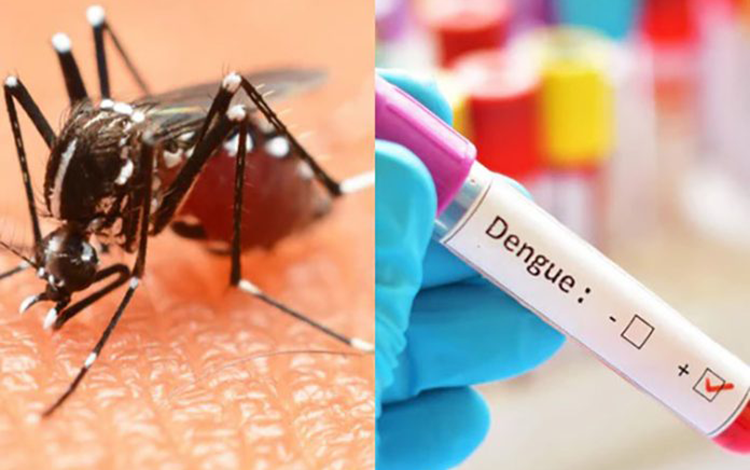
The number of dengue cases reported in Sri Lanka this year has risen to 96,040, with 72 deaths recorded so far, according to the National Dengue Control Unit.
The Unit said 10,155 cases were reported in August alone, highlighting the continuing spread of the disease across several parts of the country.
The Western Province has recorded the highest number of cases at 50,760, followed by the Southern Province with 13,931, the Central Province with 8,788 and the Sabaragamuwa Province with 7,910.
At district level, Gampaha has reported the highest number of cases at 20,444, followed by Colombo with 19,008.
Kandy has recorded 7,043 cases, while Kalutara and Matara have reported 6,181 and 6,154 cases,a respectively.
The National Dengue Control Unit said 50 Medical Officer of Health (MOH) areas across the country have been identified as high-risk areas for dengue.
Health authorities have continued to urge the public to take measures to prevent mosquito breeding, particularly in areas where a high incidence of dengue has been reported.

Sun directly overhead Moratuwa, Kesbewa, Handapangoda, Idalgashinna, Yudhaganawa, Kotiyagala and Panama about 12.08 noon today (05)

Showers above 75 mm are likely at some places in the Uva, Central and Eastern provinces and in Polonnaruwa and Mullaittivu districts after 2.00 p.m

Namal remanded until Sept. 18 over Airbus deal investigation

Dengue cases surpass 96,000 this year

PM Harini, Bhutan King explore closer ties

Johnston granted bail following CIABOC arrest

‘Dates have the highest sugar content to fight Coronavirus’

Sunday Island 27 December – Headlines

#SundayIsland 17th December – Headlines

Sunday Island – 28th March

Sunday Island Headlines – 21 March

Sunday Island – 21st February – Headlines
-

 Features6 days ago
“Wrap Me Up in My Blazer”— A Gentlemanly Bradby Reminiscence
-

 Features5 days ago
When Sri Lankan stories find their own voice
-
 Features6 days ago
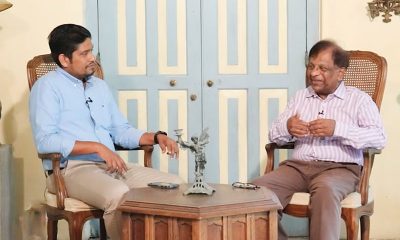
JVP/NPP government as seen from outside by Lionel Bopage now domiciled in Australia
-
 News5 days ago
BASL takes exception to Justice Ganepola being denied a place in SC
-
 Features6 days ago
Prof. Savitri Goonesekere: What has she done?
-

 News2 days ago
Denied of promotion to SC despite vacancies, justice Gurusinghe retires
-

 Latest News3 days ago
Grade 5 scholarship exam results released
-

 Features6 days ago
World Trade Politics: Canada rebuffs Trump’s tariff blackmail