
News
SJB accuses govt. of trying to put off Presidential poll


By Saman Indrajith
Chief Opposition Whip and Kandy District SJB MP Lakshman Kiriella told Parliament yesterday that President Ranil Wickremesinghe was planning to put off the Presidential polls with the help of some crony civil society organisations.
Participating in the debate on President Wickremeisnghe’s government policy statement, Kiriella said that a plot was being orchestrated to postpone the presidential polls.
“There was no mention of the presidential election in the President’s speech. There is no single reference to democracy. There is a plan to have the presidential polls put off making use of civil societies as cat’s paws. Their plan is to move a proposal for the abolition of the executive presidency. The Constitution will have to be amended for that purpose. Amending the constitution is a time consuming process. Their plan is to bring the proposal for amending the Constitution to abolish the executive presidency and to put off the presidential polls until such time,” Kiriella said.
Kiriella said the Chairman of the National Elections Commission during an interview last week had been unable to state what it would do if the government tried to put off the presidential election.
“There was an interview last week where the Chairman of the Elections Commission was asked about holding elections. It was pointed out that the Elections Commission had not been able to do anything when the government refused to release funds for conducting the local government elections. Asked what would happen if the government sought to put off the presidential polls, the Chairman of the National Elections Commission could not give a clear answer. This is a shame! We will not allow this government to continue in this manner.

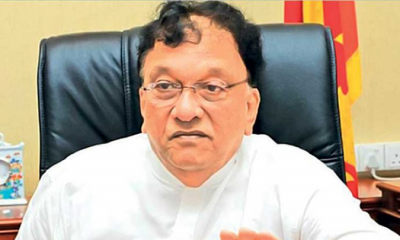

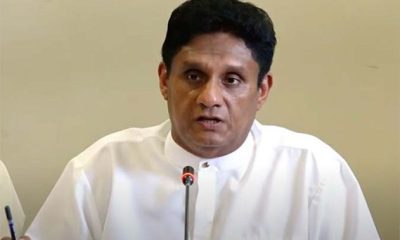

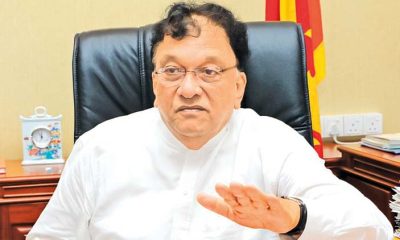


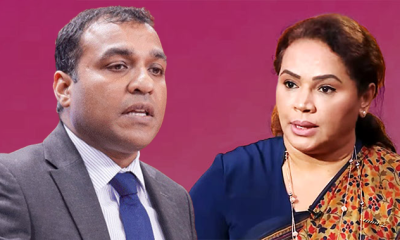

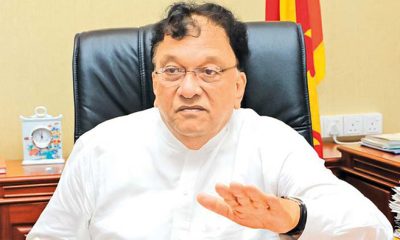

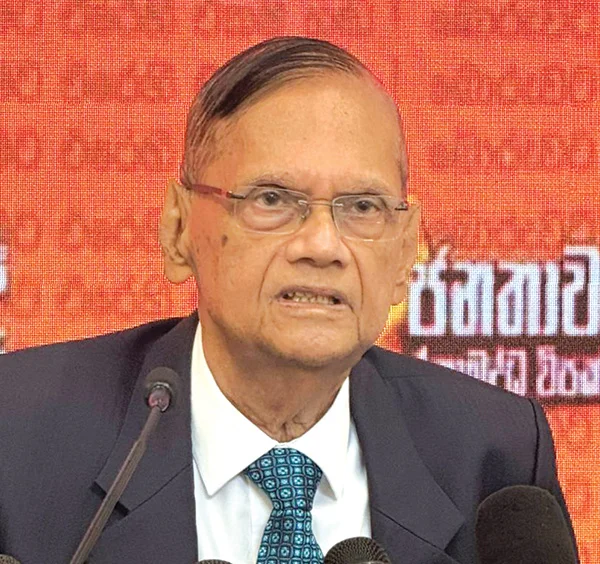
An opposition grouping alleged yesterday (18) that the Commission to Investigate Allegations of Bribery or Corruption (CIABOC) had become a political tool in the hands of the JVP/NPP to suppress the Opposition both in and outside Parliament.
Former Minister Prof. G. L. Peiris accused the CIABOC of fabricating cases against political opponents by manipulating those summoned. He tore into the institution, alleging that it drove people to suicide.
Addressing the media at the former President Ranil Wickremesinghe’s Flower Road office, Prof. Peiris alleged that former SriLankan Airlines CEO, Kapila Chandrasena, had been a victim of that despicable strategy. Director General of CIABOC, ex-High Court Judge Ranga Dissanayake, had warned Chandrasena of dire consequences unless the latter fully cooperated with the Commission, Prof. Peiris said.
Prof. Peiris emphasised the responsibility on the part of all concerned to examine Chandrasena’s affidavit regarding the intervention made by the Director General.
Chandrasena committed suicide while being on bail in connection with an investigation into the alleged USD 2 mn bribe to facilitate an Airbus deal during the second term of President Mahinda Rajapaksa.
Prof. Peiris alleged that the CIABOC Director General had taken control of the Commission and was pursuing an agenda inimical to the law. (SF)
News
Over 5,000 military personnel promoted to coincide with 17th anniversary of victory over terrorism

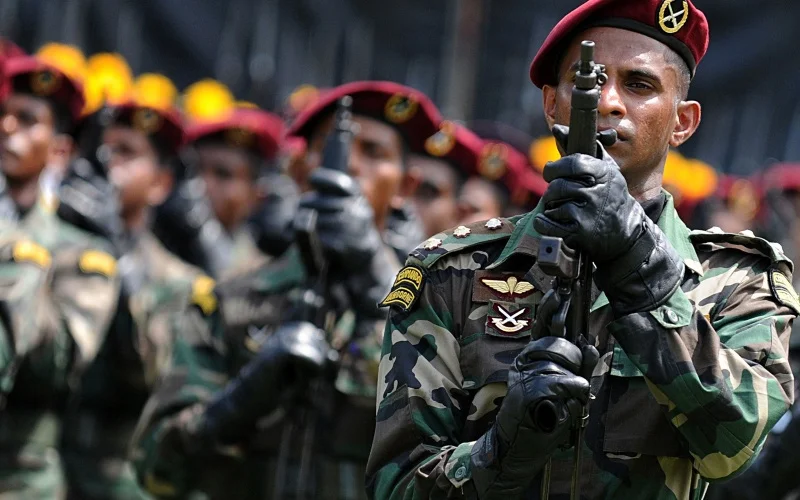
In line with the 17th National War Heroes’ Commemoration Day, which falls on 19 May, a total of 5,289 Tri Service personnel have been granted promotions to their next respective ranks in recognition of their dedicated service rendered to the nation, the Defence Ministry announced.
The National War Heroes’ Commemoration Day is commemorated annually on 19 May to honour and appreciate the invaluable sacrifices and exemplary service of members of the Tri Forces who contributed immensely towards restoring peace and safeguarding the sovereignty of the motherland.
Accordingly, these promotions have been awarded, based on the recommendations of the respective Service Commanders, and in accordance with the established administrative procedures of the Tri Forces.
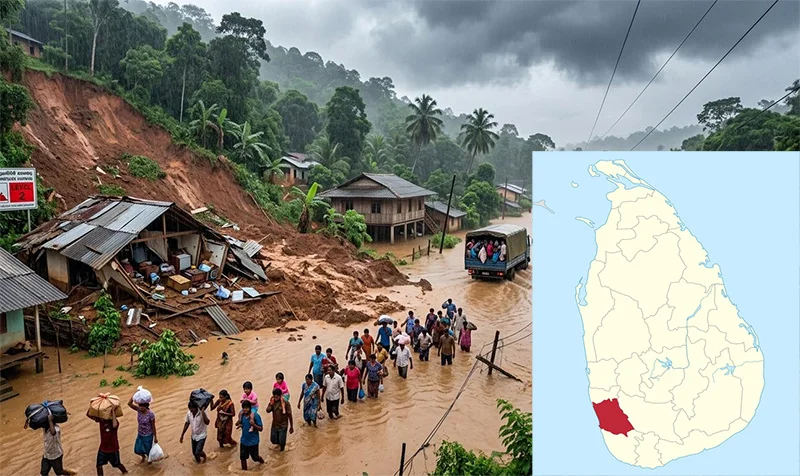
Kalutara is the worst affected district due to the prevailing adverse weather conditions. According to the Disaster Management Centre (DMC) of approximately 200 houses partially damaged so far, about 90% are in the Kalutara district.
DMC said that 22 houses had been damaged in the Ratnapura District, 14 in the Galle District, 4 in the Moneragala District, 25 in the Batticaloa District, 5 in the Colombo District, 4 in the Jaffna District, 25 in the Gampaha District, 2 in the Hambantota District, 2 in the Anuradhapura District, 5 in the Mannar District, and 2 in the Trincomalee District..
One house was destroyed in the Ratnapura District.
The DMC further stated that 1,582 families had been affected by the inclement weather.
The affected families are in 66 Divisional Secretariat divisions across the country.
Accordingly, a total of 5,267 individuals from 1,582 families have been impacted by adverse weather, according to the statement issued by the Centre.

At least 100 dead in Ebola outbreak in DR Congo, official says

Trump says he called off new Iran attack at request of Gulf states

Lanka Premier League returns after two years, opener set for July 17

Cummins, Kishan, Klaasen power Sunrisers Hyderabad into playoffs; Chennai Super Kings not out yet

Mushfiqur ton, Litton and Joy fifties set Pakistan 437

Showers will occur at times in the Western, Sabaragamuwa, Central, North-western, Northern and Southern provinces and in Anuradhapura district

‘Dates have the highest sugar content to fight Coronavirus’

Sunday Island 27 December – Headlines

#SundayIsland 17th December – Headlines

Sunday Island – 28th March

Sunday Island Headlines – 21 March

Sunday Island – 21st February – Headlines
-
 News6 days ago
Ex-SriLankan CEO’s death: Controversy surrounds execution of bail bond
-

 Features2 days ago
Sri Lankan Airlines Airbus Scandal and the Death of Kapila Chandrasena and my Brother Rajeewa
-
 News3 days ago
Lanka’s eligibility to draw next IMF tranche of USD 700 mn hinges on ‘restoration of cost-recovery pricing for electricity and fuel’
-
 Midweek Review6 days ago
A victory that can never be forgotten
-
 News2 days ago
Kapila Chandrasena case: GN phone records under court scrutiny
-

 Opinion5 days ago
Electricity tariffs have skyrocketed: Can further increases be prevented?
-
 Features4 days ago
Mysterious Death of United Nations Secretary General Hammarskjöld
-

 News2 days ago
Rupee slide rekindles 2022 crisis fears as inflation risks mount