
News
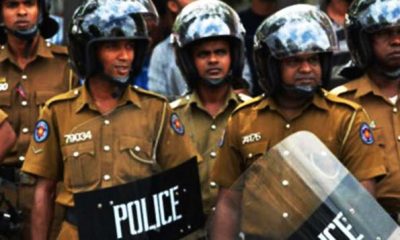
Police to nab errant drivers with CCTV data from 01 Feb.


By Rathindra Kuruwita
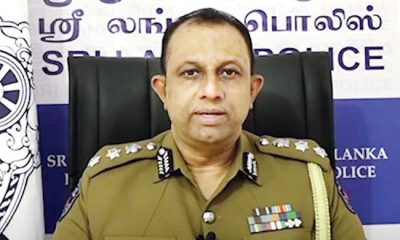
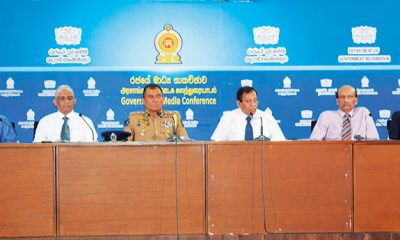
The initiative launched by the police to identify traffic offenders through CCTV cameras would come into full force from 01 February, Director – Traffic Administration and Road Safety division, DIG Indika Hapugoda said.
Hapugoda said that the system had been in operation as a pilot project from January 22 to 28 in Colombo. During the pilot phase, no legal action would be taken against the drivers nabbed with the help of CCTV, he added.
“Within the initial 36 hours, we have identified nearly 300 violators of traffic laws. Steps have been taken to inform vehicle owners of the evidence the police possess of their road rule violations. It’s important to note that legal action will not be instituted during this phase. Between January 28 and 31, we will conduct a thorough review of the project to identify weaknesses and determine improvement of strategies. Subsequently, action will be taken against road rule violators from 01 February,” DIG Hapugoda said.
He said that being a traffic policeman was among the most challenging occupations. At the conclusion of 2023, Sri Lanka had registered over 8.3 million motor vehicles of which 4.8 million were motorcycles. Additionally, there were approximately 1.2 million trishaws in the country. “Sri Lanka has an extensive road network spanning around 119,350 km. The country has 607 police stations with dedicated traffic divisions. Complementing these efforts is a robust patrol motorcycle unit comprising 297 high-performance bikes with a capacity of 600CC each. A total of around 9,600 traffic policemen contribute to road safety, with approximately 4,600 actively patrolling at any given moment. Thanks to the diligent efforts of these officers, the incidence of serious motor accidents decreased in 2023 compared to the previous year. The current project is aimed at streamlining and facilitating their demanding responsibilities,” he said.
DIG (Telecom Engineering), Thushara Gamlath said that the entire process was not automated.”Upon detecting a motorist violating a road rule, the procedure involves assigning a specific violation number and extracting the corresponding video footage. Subsequently, another officer is tasked with identifying the owner of the vehicle by utilising the number plate information. Access to the Department of Motor Traffic’s database facilitates obtaining ownership details. Once the necessary information about the particular vehicle owner is ascertained, notices are sent to both the police station where the traffic violation occurred and the nearest police station to the vehicle owner’s address. This entire process is completed within a day,” he said.
Upon discovering a traffic law violation, the vehicle owner is promptly notified. The owner has the option to pay the fine, and once the payment is made, the corresponding police station informs the CCTV division.
If the vehicle owners needed more information, three copies of the footage are obtained and forwarded to the relevant police, accompanied by an affidavit from the vehicle owner. Subsequently, legal action can be instituted under the Evidence (Special Provisions) Act (No. 14 of 1995), if necessary, he said.
Responding to criticisms, particularly from bus owners’ associations urging the police to establish a Bus Priority Lane (BPL) before implementing this system, DIG Hapugoda said despite most Sri Lankan roads having only two-lanes, there were a few designated BPL areas in the country.
Hapugoda said, “There is a functioning BPL from the Polduwa Junction to Lotus Tower, operational between 6 a.m. and 9 a.m., as well as from 4 p.m. to 7 p.m. However, problems have arisen, such as three-wheeler drivers expressing concerns about their ability to pick up or drop off passengers along the roadside during these periods. Despite these issues, the BPL has proven to be successful. But the entry of trishaws or motorcycles into the bus lane can disrupt the traffic flow.”
Approximately 500,000 vehicles enter the City of Colombo daily, according to DIG Hapugoda. Tragically, around seven individuals lost their lives each day in road accidents, he said.
The introduction of the Easy Cash system would allow individuals to promptly settle fines. Additionally, a de-merit system is in the pipeline for drivers, commencing with an initial allocation of 24 points at the beginning of the year. Points will be deducted for every violation, and if a driver exhausted all 24 points, he or she would face driving restrictions.
DIG Hapugoda highlighted that approximately 10 to 12 percent of vehicles on roads lacked proper documentation; they had open papers. That practice was unlawful, and the CCTV system aims to assist the police in identifying individuals operating vehicles with incomplete paperwork. According to Hapugoda, it is mandatory for a person selling a vehicle to notify the Department of Motor Traffic of the sale within 14 days.
He emphasised that “The new owner is also required to inform the department about the purchase of the vehicle.”
In situations where a vehicle owner has either rented out a vehicle or employed a driver, Hapugoda stressed the owner must be able to provide information about the driver in the event of a traffic law violation.
“Policemen will approach the owner, who is required to identify the person behind the wheel. Subsequently, law enforcement will proceed to locate the individual responsible for the violation,” said.








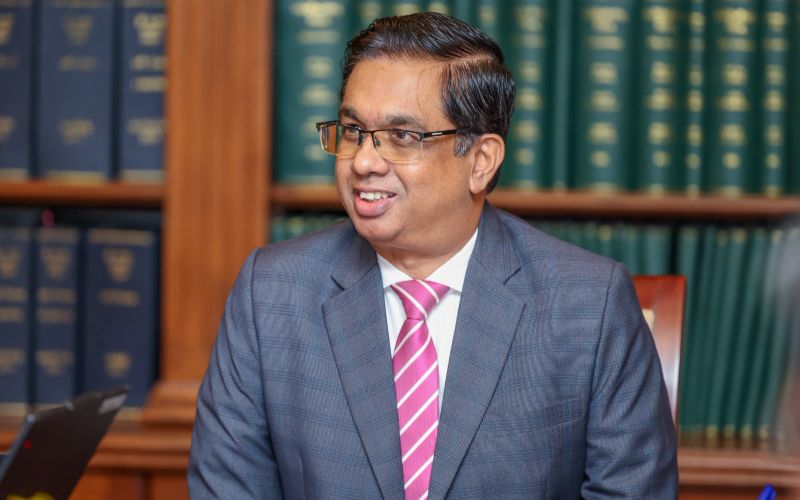
A progress review meeting on reforms and modernisation initiatives at Sri Lanka’s key state revenue-collecting institutions was held on Thursday (15) at the Presidential Secretariat, chaired by Secretary to the President Dr Nandika Sanath Kumanayake, with the participation of representatives of the International Monetary Fund (IMF) and officials of the Revenue Administration, Reform and Modernisation Bureau (RARMB) of the Presidential Secretariat.
At the meeting, the IMF representatives commended the revenue collection efficiency of the Department of Inland Revenue, Sri Lanka Customs and the Department of Excise, the country’s three leading state revenue-collecting institutions. Extensive discussions were also held on the progress of the reform and modernisation programmes being implemented at these institutions.
Secretary to the President Dr Nandika Sanath Kumanayake outlined the progress achieved by the three institutions to date and the reforms planned for implementation in the future.
The IMF representatives also highlighted the importance of strengthening risk management, developing human resources and ensuring the efficient operation of computer systems at the respective institutions.
Senior Additional Secretary to the President Seevali Arukgoda also attended the meeting. The IMF was represented by Cindy Negus, Senior Economist in Revenue Administration for the Asia and Pacific, Europe, Middle East and Central Asia regions; Alison Lister, Revenue Administration Adviser; and Gregory Toppin, Resident Revenue Adviser in Sri Lanka. A group of senior officials from the Revenue Administration, Reform and Modernisation Bureau of the Presidential Secretariat also participated.
(President’s Media Division)
By Anuradha Hiripitiyage
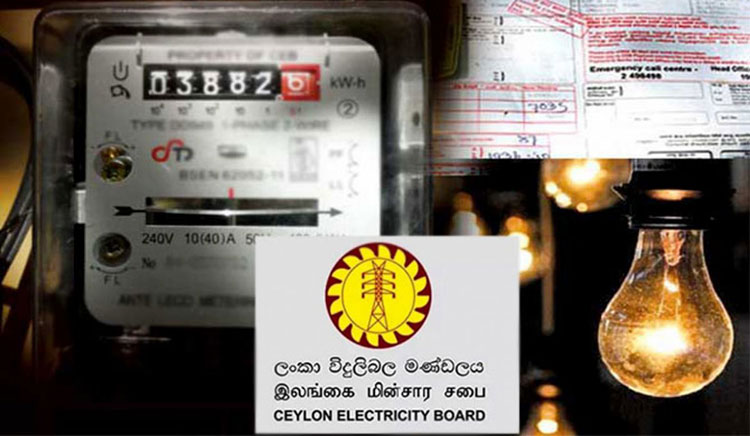
Electricity tariffs should be reduced by between 3 and 5 percent instead of being increased by 2.88 percent in the fourth quarter, as proposed by the National System Operator (NSO), Electricity Consumers’ Association Secretary Sanjeewa Dhammika said.
Addressing a media briefing in Maradagahamula, Divulapitiya, Gampaha, yesterday (16), Dhammika said a proper assessment of electricity generation costs, including the contribution of hydropower, could justify a reduction in tariffs.
He said the NSO had sought approval from the Public Utilities Commission of Sri Lanka (PUCSL) for a 2.88 percent tariff increase, which was expected to generate an additional Rs. 4,438 million.
However, the Commission had indicated that an increase of only 1.46 percent was warranted, amounting to Rs. 2,245 million, he said, adding that even this increase was unnecessary.
Dhammika alleged that the proposed revision sought to pass on to electricity consumers the financial burden arising from the non-arrival of five coal shipments and failed tenders.
“The Government had said that the burden of coal-related losses would not be passed on to the public. It is therefore unjust to make consumers bear these costs,” he said.
He pointed out that the PUCSL had forecast that hydropower would account for 32.34 percent of total electricity generation in the coming quarter, while the cost of such generation would represent only 3.45 percent of the overall cost of electricity production.
Consumers should benefit from the lower cost of hydropower generation rather than bear the burden of more expensive thermal power generation, he said.
Dhammika also questioned the inclusion of Rs. 669 million in capacity charges that had not been approved by the PUCSL, as well as a further Rs. 1,069 million to repay loans relating to incomplete projects.
Including such charges in the proposed tariff revision was unjustifiable, he said.
The PUCSL has given the public until October 30 to submit their views on the proposed tariff revision.
Dhammika said the possibility of increased hydropower generation in the coming weeks, as reservoir levels rise, should also be taken into account when determining electricity tariffs.
He maintained that tariffs could be reduced by 3 to 5 percent if hydropower generation was properly assessed and coal-related losses and unapproved charges were excluded from the calculations.
He further claimed that electricity tariffs could be reduced by as much as 10 percent through the promotion of renewable energy and the effective use of solar power and battery storage systems.
The Electricity Consumers’ Association urged the Government to withdraw the proposed tariff increase, insisting that consumers should not be made to bear costs arising from coal supply problems and other disputed charges.

By S.K. Samaranayake
Most Ven. Warakagoda Sri Gnanaratana Mahanayake Thera of the Asgiri Chapter has called for the immediate release of Ven. Galagodaaththe Gnanasara Thera, who is currently serving a prison sentence, following a court ruling.
The Asgiri Mahanayake made the appeal when a delegation of senior prison officials, including Assistant Commissioner of Prisons and Director of Operations Senaka Pallegedara, called on him on the 16th.
During the meeting, the prelate warned that the continued incarceration of Ven. Gnanasara Thera could lead to a volatile situation and cause public agitation.
Responding to the appeal, the prison officials informed the Mahanayake Thera that the authority to order the release of Ven. Gnanasara Thera did not rest with the Prisons Department but with the President.
Other senior prison officials, including Rajeev Srimal Silva, Sampath Warnakulasooriya and Mangala Welivita, were also present at the meeting.

Rare pink diamond goes on display in France 100 years after amateur heist

Nursery owner in China jailed for life after hundreds of children poisoned

Pakistan, Sri Lanka look to find the right mix as World Cup countdown begins

Mumbai Indians and head coach Mahela Jayawardene part ways

Review of progress in reforms and modernisation of key state revenue-collecting institutions

Rose Bowl expanded to include Australia vs New Zealand T20Is

‘Dates have the highest sugar content to fight Coronavirus’

Sunday Island 27 December – Headlines

#SundayIsland 17th December – Headlines

Sunday Island – 28th March

Sunday Island Headlines – 21 March

Sunday Island – 21st February – Headlines
-

 News7 days ago
Sri Lanka escalates anti-graft drive with Shiranthi’s jailing
-

 News7 days ago
Iranian ships stranded, Lanka fears US sanctions
-

 Latest News6 days ago
Farhan and Sadaqat help Pakistan seal series in style
-

 Latest News4 days ago
Nissanka’s return headlines Sri Lanka’s Test squad against Pakistan
-

 Features6 days ago
Intake 16: 45 years of duty and honour
-

 News6 days ago
Malwathu Chapter issues statement on talks with President over Gnanasara Thera’s robes
-

 News7 days ago
Navi Pillay’s Lankan affairs in focus as she wins 2026 Nobel Peace Prize
-

 News6 days ago
CP alleges NPP has taken the blame for illegal US sanctions on Iranian vessels