
Latest News
Non-aligned nations, once perceived as weak states, have evolved beyond that characterization -President

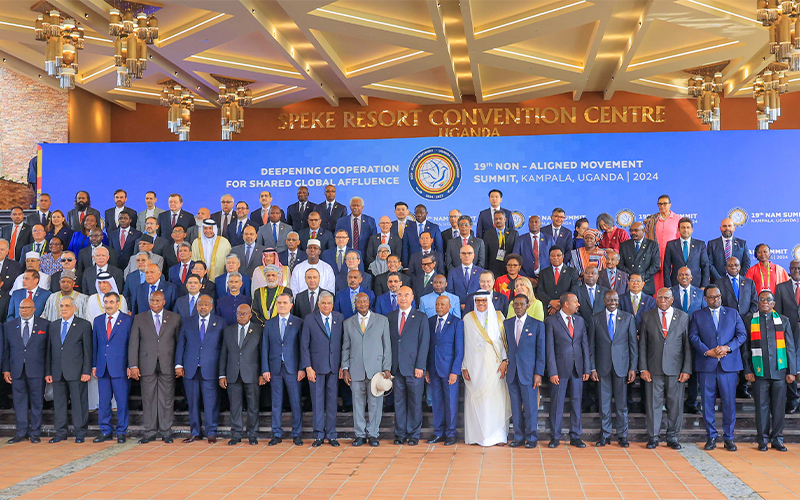
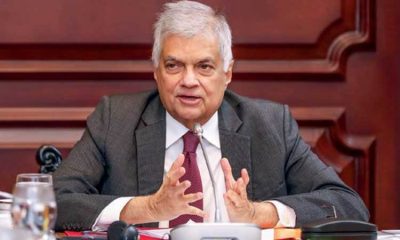
President Ranil Wickremesinghe addressing the 19th Non-Aligned Movement (NAM) Summit in Kampala, Uganda said that Non-aligned nations, once perceived as weak states, have evolved beyond that characterization.
He also expressed gratitude to President Museveni and Uganda for hosting the summit.
Following is the full speech delivered by President Ranil Wickremesinghe;
“Let me begin by congratulating you President Yoweri Museveni of Uganda for taking over the helm of the Non Aligned Movement at this 19th Summit. Your leadership is even more timely as Uganda assumes this role at a critical moment of collective awareness among countries of the global South. This is the first NAM Summit following the onset of the pandemic, the debt crisis, climate catastrophe, new global competition, and the ensuing multiple implications for the world, in particular, for the Global South.
As we meet today, a humanitarian crisis is unfolding in the Gaza Strip and beyond. For over 3 months immense suffering and losses have been endured by the Palestinian civilian population, endangering regional security and stability. Until now, the NAM was largely silent. How can we remain silent when the Gaza is destroyed? People denied humanitarian aid and a vast majority of the dead are innocent civilians. Silence implies consent. It is encouraging that this 19th Summit has given the highest priority to this crisis in Gaza and the inalienable rights of the people of Palestine to self- determination and the realisation of an independent and sovereign state of Palestine. We must congratulate South Africa for the bold stand it has taken in regard to Gaza. The international community has already called for an immediate humanitarian ceasefire and a release of hostages.
There cannot be a two state solution based on one state – Israel. No resolution is possible without a state of Palestine. Therefore, in line with multiple UN Resolutions, and the Declaration of this Summit, the international community must recognise the West Bank, Gaza and East Jerusalem as territories coming within the State of Palestine and in addition there should be no change in the ethnic composition of Gaza. Sri Lanka also proposes that the State of Palestine be established within 5 years and no more.
We are now witnessing the end of the post cold war order and the coming into being of the evolving multipolar world. On the geopolitical front, we are witnessing a resurgence of latent and open conflicts involving former and aspiring major powers. In Europe the transatlantic military alliance has been strengthened, past arms control agreements have collapsed, military expenditure has reached historically unprecedented levels and nuclear weapons are once again the subject of apparently serious policy discussion. Outer space and the oceans have become potential theatres of conflict and geo-strategic competition including in our vicinity in the Indian and Pacific Oceans.
Free trade and economic integration is being reversed by policy driven rise of trade protectionism due to strategic competition among major powers. Furthermore, this being extended further with the concepts of de-coupling and de-risking. A unilateral declaration of a new trade order and the setting aside of multilateralism by the West of the WTO. The weaponising of the Dollar. New challenges of economic and the debt crisis, climate justice, food and energy security. Digital and technological divides and advanced WMD arsenals have aggravated existing inequalities between the developing states of the NAM and the developed world.
The theme of this Summit ‘Deepening Cooperation for Shared Global Affluence” reflects the need to address the inequities between our two worlds. Furthermore, experience shows us that, to succeed we need a strong and a united NAM that contributes to a better world for all. To do so, we have to reinvent ourselves.
Our membership today is no longer a grouping of weak states. We must recognise that as a result of the rapid progress and economic advancement of some of Asian, African and Latin American states. A majority of the 10 leading economies of 2050 will belong to this movement. We see among us, rising aspirants for leadership status in global affairs. They must be prepared to give leadership. Furthermore, there is a vital role we must play as geostrategic rivalries in political, economic, technological and military terms becomes more pronounced among former and new contenders for Major Power status.
Therefore, the NAM must reinvent itself under your Chairmanship. Assume a new role in a multipolar world – to transform itself as the largest bloc representing the Global South. We must also recast our objectives. While upholding the Bandung Principles in the evolving multipolar world we need to,
- oppose the spread of big power rivalry including the coercion of uncommitted states,
- build a multipolar world which incorporates the political, economic, social and climate change mitigation aspirations of the Global South.
Let us transform ourselves from this loose movement to become a dynamic bloc of the Global South and its friends. Let us establish an effective permanent operational structure which is equipped to address the contemporary challenges facing the Global South. An organisation which is capable of shaping the new order.
Our future lies in our hands.
We can make it or break it. Let us make it work.
Let me conclude by thanking you Mr President and the Government of Uganda for the excellent arrangements for hosting this important 19th Summit of the Non Aligned Movement.”
(PMD)







Two people in a serious condition who were evacuated from a cruise ship with a confirmed outbreak of deadly hantavirus have arrived in the Netherlands for treatment, operator Oceanwide Expeditions has said.
A third passenger in a stable condition was on board an evacuation flight that has been delayed, the operator added.
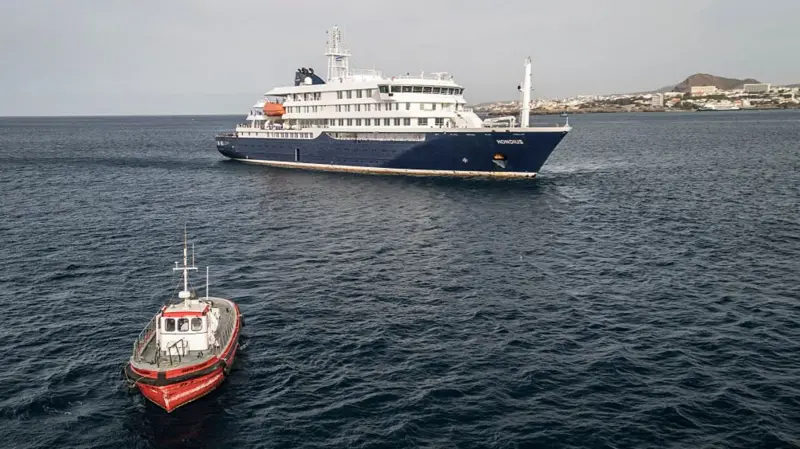
The MV Hondius is now sailing towards Spain’s Canary Islands after being anchored for three days near Cape Verde, an archipelago nation off the West African coast.
The three evacuees were British, Dutch and German. Oceanwide Expeditions said the 65-year-old German evacuee was “closely associated” with a German woman who died on board the ship on 2 May.
The British evacuee has been identified by several media outlets as 56-year-old ex-police officer Martin Anstee, who is understood to be in a “stable condition” in the Netherlands.
A 41-year-old Dutch crew member is also among those who have been evacuated.
Separately, Dutch media reported on Thursday that a KLM flight attendant had been admitted to hospital in Amsterdam with hantavirus symptoms.
The stewardess reportedly came into contact with a 69-year-old Dutch woman after she was briefly on board a KLM plane in South Africa but was deemed too ill to fly.
The 69-year-old later died, and her death is being investigated as a suspected hantavirus case by South African health authorities.
Three people who were aboard the ship have died since it set sail from Argentina a month ago.
Meanwhile, two US states have confirmed to the BBC that they are monitoring three passengers who had returned to the US after disembarking earlier. All are currently not displaying symptoms.
Georgia’s public health department said two residents were being monitored and were in good health, showing no signs of infection.
Arizona’s health department said one resident was being monitored, but was not symptomatic.
The World Health Organization (WHO) has also confirmed a man who had travelled back to Switzerland after disembarking the ship tested positive for hantavirus and is receiving care at a hospital in Zurich.
“The patient had responded to an email from the ship’s operator informing the passengers of the health event,” World Health Organization chief Tedros Adhanom Ghebreyesus said in a statement.
A total of 146 people from 23 different countries remain aboard the MV Hondius under “strict precautionary measures”, Oceanwide Expeditions said.
In its latest update, the World Health Organization (WHO) said eight cases of hantavirus – three confirmed and five suspected – have so far been identified in people who were on the ship.
South African health authorities have said the Andes strain of hantavirus – prominent in Latin America, where the cruise originated – was found in two of the confirmed patients after tests were carried out by the country’s National Institute for Communicable Diseases.
Experts have observed the Andes strain spreading between human patients in previous outbreaks. South Africa says efforts to trace all contacts remain underway.
Officials have said that one of the deceased had the virus, while the other two deaths are under investigation.
The three deaths on board include the 69-year-old Dutch woman who left the MV Hondius when it stopped at the island of St Helena on 24 April. Her husband died on board on 11 April, but is not a confirmed case.
The Dutch woman travelled to South Africa, where she died on 26 April. WHO official Dr Maria Van Kerkhove told the BBC that health experts were carrying out contact tracing on the flight she took.
KLM Airlines on Wednesday issued an advisory saying the woman had also briefly been aboard one of their flights from Johannesburg to Amsterdam on 25 April before the crew decided not to let her fly due to her medical condition.
The third fatality – a German woman – is not a confirmed case either. Her body remains on the ship.
None of the three people who were medically evacuated on Wednesday have tested positive for hantavirus so far, but two are showing symptoms.
It comes as the UK’s Health Security Agency said two British people were self-isolating at home in the UK after potential exposure tothe virus on the ship. They left the vessel earlier in its journey and did not have symptoms.
On board, there were 19 passengers and four crew members listed as British, according to figures released by Oceanwide Expeditions on Tuesday.
This included Anstee, who was evacuated on Wednesday.
Hantavirus typically spreads from rodents, but health experts believe that in this case, it may have passed between humans who were in close contact.
Testing to confirm whether other people on the ship have contracted the virus is ongoing. Health officials have stressed that the risk of transmission to the wider public is low.
The vessel had been anchored near Cape Verde before it set off towards the Canary Islands on Wednesday.
Spanish authorities agreed to the move, but the Canary Islands’ president has opposed the plan.
“I cannot allow [the boat] to enter the Canaries,” Fernando Clavijo told Spain’s Onda Cero radio. “This decision is not based on any technical criteria and nor have we been given enough information.”
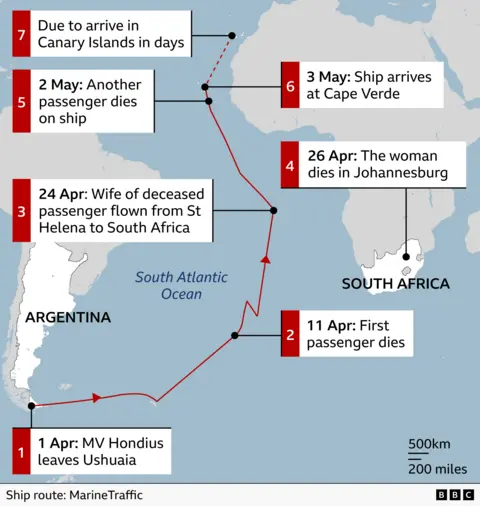
Spain’s Health Minister Mónica García said that everyone on board will undergo a medical assessment when they arrive in Tenerife and, if fit to travel, those from abroad will be repatriated to their home countries.
Spaniards will be sent to a defence hospital in Madrid to quarantine.
The evacuation would “avoid contact” with Canary Island citizens and there would be “no risk” to them when it arrives in Tenerife in the coming days, Garcia said.
Dr Van Kerkhove said the way hantavirus is transmitted “is very different than COVID and flu”.
“We’re not talking about casual contact from very far away from one another,” she said, but “really physical contact”.
[BBC]
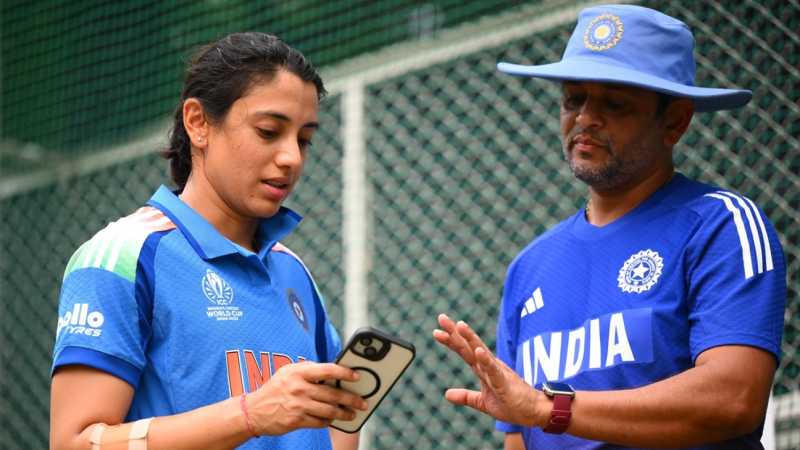
The India and Zimbabwe women’s teams are all set to play an international fixture against each other for the first time when Zimbabwe tour India for white-ball fixtures this October.
The tour comprises three T20Is and three ODIs and will be Zimbabwe’s first visit to India; India are yet to tour Zimbabwe for bilateral fixtures.
The three T20Is will be played in Raipur on October 16, 18 and 20, and the ODIs are on October 23, 25 and 28 in Baroda.
The fixtures were announced by the BCCI on Wednesday, along with two home series for the India A women’s side against Australia A in September and England A in December. Both those series comprise three T20s, three List A games and one multi-day fixture.
The India Under-19 women’s team will also host Sri Lanka U-19 in June and July for three T20s and three 50-over games, and England U-19 in November and December for five T20 fixtures.
The Australia A men’s side will tour India for two multi-day fixtures and three one-dayers in September and October, while the Australia U-19 side will visit India for two multi-day fixtures and three one-dayers also in September and October.
[Cricinfo]

Oil prices have dropped and global stock markets have risen following reports that the US and Iran are close to a deal to end the war.
Brent crude futures, the global benchmark oil price, fell to $97 (£73) a barrel after the reports before rebounding to over $101. The price was over $108 earlier in the day.
The FTSE 100 index of London’s largest public firms and Germany’s Dax index closed over 2% up while the French Cac 40 was up 3%. Asian indexes also ended the day higher while the US S&P 500 was up by more than 1% over the day.
The market movements come after Axios reported that the US believes it is close to a one-page document which will end the war and set up detailed nuclear talks.
Hours later, an Iranian foreign ministry spokesperson told Iranian Students’ News Agency that the US proposal to end the war with Iran was still being considered.
However, not long after that, Trump suggested a deal could still be a way off.
He said on Truth Social that any agreement by the Iranians is “a big assumption” and that a failure to come to a deal will result at bombardments “at a much higher level and intensity ” than was the case during Operation Epic Fury.
Oil prices are still much higher than the $70 a barrel they were hovering around before the start of the US-Israel war with Iran, which has caused caused production and transportation of oil in the region to slump.
Central to the conflict is Iran’s threat to attack oil ships crossing the Strait of Hormuz, a narrow waterway south of the country, in response to US-Israeli strikes since 28 February.
About a fifth of global oil and gas shipments usually cross the strait, which has been effectively closed for weeks. Global gas prices have also soared since the conflict began.
As for stock markets, the big European bourses are lower than they were at the end of February, while the S&P 500 climbed by more than 1%.
The main Asian markets all rose on Wednesday, with the South Korean Kospi closing up 6.45%, the Hong Kong Hang Seng ending the day up 1.22%, and the Japanese Nikkei finishing 0.38% higher.
The Hang Seng is down since the start of war, but the other two are up.
[BBC]

Comprehensive reforms to be introduced in the higher education sector in line with primary and secondary education reforms – PM

Hantavirus-hit cruise ship on way to Canary Islands after three evacuated

Joint programme between President’s Fund and Janashakthi Foundation to expand healthcare facilities for children

Maldivian President concludes state visit to Sri Lanka

India to host Zimbabwe for maiden women’s bilateral series

Showers above 75 mm are likely at some places in the Sabaragamuwa, Central, Uva, Southern and North-central provinces

‘Dates have the highest sugar content to fight Coronavirus’

Sunday Island 27 December – Headlines

#SundayIsland 17th December – Headlines

Sunday Island – 28th March

Sunday Island Headlines – 21 March

Sunday Island – 21st February – Headlines
-
 News3 days ago
CJ urged to inquire into AKD’s remarks on May 25 court verdict
-
 News7 days ago
“Three-in-one blood pressure pill can significantly reduce risk of recurrent strokes”
-

 News4 days ago
USD 3.7 bn H’tota refinery: China won’t launch project without bigger local market share
-

 News7 days ago
Alarm raised over plan to share Lanka’s biometric data with blacklisted Indian firm
-
 News5 days ago
Easter Sunday Case: Ex-SIS Chief concealed intel, former Defence Secy tells court
-

 News6 days ago
Ten corruption cases set for court in May, verdict ordered in one case – President
-

 News16 hours ago
MIT expert warns of catastrophic consequences of USD 2.5 mn Treasury heist
-

 News7 days ago
USD 2.5 mn fraud probe: Interdicted MoF official found dead at home