
Features
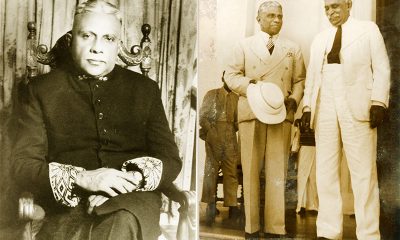
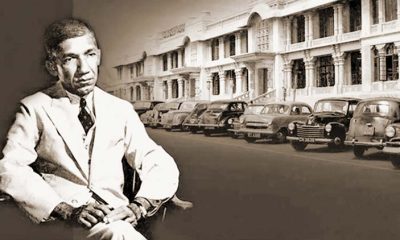
D. R Wijewardene 1886-1950, newspaper baron and all time great in the struggle for Independence

CHIEFS AND FRIENDS
(Excerpted from Selected Journalism by HAJ Hulugalle)
Don Richard Wijewardene was one of the formative influences of our times. Had he died in his early youth, the history of Ceylon during the past 30 years might well have been different. He was not merely a powerful newspaper proprietor, though to be one was a considerable achievement as never before had a Ceylonese succeeded in establishing a newspaper on a sound business foundation.
Lorenz tried with the “Examiner.” Hector Van Cuylenberg with the “Independent,” the de Soysa family with the “Standard” and the “Morning Leader” and Sir P. Ramanathan and the Jayewardene brothers with the “Ceylonese.” Each of them had some measure of success but none on the same scale and of the duration of Wijewardene’s great enterprise.
D. R. Wijewardene was first and last a patriot. It was the love of his country which led him to prepare, as a student in England, for his life’s work. It was his realization that the struggle for independence was the one most worthy of a wealthy young man’s energies that guided him to politics. Although he possessed a strong personality he had not sufficient confidence in his ability to excel in debate or sway crowds by power of speech. He chose the far more effective method of influencing men by establishing newspapers, among the best in Asia and published in the national languages as well as in English.
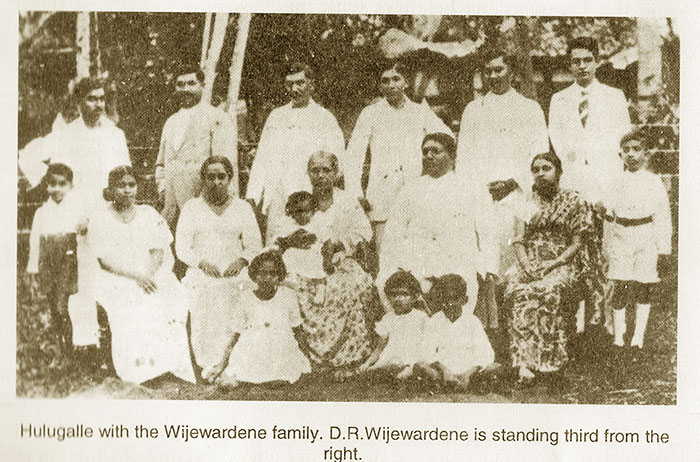
He was the third son in a family of nine and was born at Sedawatte, where his father, the late Muhandiram D.P. Wijewardene, a wealthy merchant and contractor, lived within easy reach of Colombo, where he had a very successful business. Richard Wijewardene was educated at St. Thomas’ College when Read was Warden and the Rev. G. A. H. Arndt was Sub-Warden. His teachers included Swinburne, Meynert, J. S. H. Edirisinghe, C V_ Pereira and E. Navaratnam. Among his contemporaries were D. S. Senanayake and Francis Molamure.
From St. Thomas’, Wejewardene went to Peterhouse, Cambridge. He has told us that it was in his undergraduate days at Cambridge that his interest in politics began. “There was a wave of unrest in India, as a result of Lord Curzon’s action in partitioning Bengal, and prominent Indian leaders came over to England and addressed meetings to enlighten the British public on the situation in their country.
Among them there was Lala Lajpat Rai, a great nationalist and scholar, who had been deported under an obsolete law. Bepin Chandra Pal and Surendranath Banerji, generally known as the silver-tongued orator of Bengal, drew large audiences.
There came to England also Mr. Gopal Krishna Gokhale, a member of the Imperial Legislative Council, a statesman who made great sacrifices in the service of his country. He impressed on me that every educated young man, Indian or Ceylonese, had a part to play in the public life of his country and must be prepared to make sacrifices for his country’s welfare.
I met Gokhale often at the National Liberal Club and had many long and interesting talks with him on political questions of the day. He asked me to accompany him on his great mission to South Africa as one of his secretaries. To my great regret I was not able to accept the invitation.”
Wijewardene’s friend and mentor during his student life in England was F. H. M. Corbet, an influential barrister with Ceylon connections. Among those who worked in Corbet’s chambers at the time, and whom Wijewardene met frequently, were Patrick Hastings, later to become Attorney-General of England and Brooke Eliott, who practised in Ceylon and Madras. Corbet had many friends in the House of Commons and showed him the ropes “in the delicate task of interesting Members of Parliament in the domestic affairs of a Crown Colony.”
Wijewardene organized the first Reforms deputation to be received by Colonel Seely (afterwards Lord Mottistone) on behalf of the Secretary of State for the Colonies, the Marquis of Crewe. The deputation was led by Mr. H. J. C. Pereira K. C., and included Mr. E.W. Perera. Wijewardene organized a second deputation two years later, this time to meet Mr. Lewis Harcourt, the Secretary of State. He induced Sir Baron Jayatilaka and Sir Marcus Fernando to join it.
On his return to the Island from the exhilarating atmosphere of British politics, Wijewardene found local conflicts distinctly parochial. He was not interested in a career at the Bar, but to Hultsdorp he went because it was there that all political movements were set afoot. Ponnambalam Ramanathan and James Peiris had retired from the Bar but H. J. C. Pereira, Hector Jayewardene, E.J. Samarawickrame, Francis de Zoysa, R. L. Pereira, E. W. Perera, D. B. Jayatilaka, and younger men like E. T. de Silva and M. A. Arulanandam, were knocking at the door of the political arena. But there was only one seat in the legislature to which they could have aspired, the so called Educated Ceylonese Seat, to which Sir Ponnambalam Ramanathan had been elected.
The riots in 1915 were suppressed in a brutal manner and political agitation was prohibited by a strict censorship. As soon as this was relaxed D. R. Wijewardene, who had resigned his commission in the Ceylon Light Infantry, re-organized the Ceylon National Association. He persuaded Sir Ponnambalam Arunachalam who had retired from the Civil Service to deliver an address on “Our Political Needs.
” The outcome of this was the formation of the Ceylon Reform League, formed for the purpose of putting forward the case for a substantial measure of responsible government for Ceylon. D. R. Wijewardene was joint Secretary of the League with W. A. de Silva. The Ceylon National Congress was formed the next year under the presidentship of Sir P. Arunachalam.
Wijewardene also helped Arunachalam and James Peiris to organize the Ceylon Social Service League and was one of its joint secretaries. He had so impressed the older politicians by his remarkable grasp of current affairs and organizing capacity that he was always in the inner councils of the Reform movement. On one occasion Sir Ponnambalam Arunachalam wound up his presidential address to the National Congress with a tribute to Mr. Wijewardene who, he said, always worked quietly “like a process of nature.”
D. R. Wijewardene’s major contribution was the moulding of public opinion through the highly successful newspapers he conducted. Their success was due not only to business ability and political knowledge but even in greater measure to a flair for journalism. Although he had never been a reporter or political correspondent he was always the best news-gatherer of his papers. Though he very rarely put pen to paper, the columnists and leader-writers were inspired and encouraged by his uncanny gift of reading the public mind. One of his staff would sometimes feel that the public would not stand for the line taken by him on some controversial issue but “The Chief’ was usually proved correct.
D. R. Wijewardene’s interest in journalism was stimulated by daily reading of the London “Daily News” then edited by A. G. Gardiner. Among the regular contributors to that paper were Arnold Bennet, G. K. Chesterton, Spencer Leigh Hughes and Charles Masterman. When he founded a newspaper himself, Wijewardene called it the “Ceylon Daily News.” In the meantime he owned a half share in a Sinhalese newspaper called the “Dinamina” published from Norris Road in which D. B. (later Sir Baron) Jayatilaka wrote most of the editorials.
The “Ceylon Daily News” was and remains the keystone of the edifice which Wijewardene built up. Writing on its twenty-fifth birthday, the late Orion de Zylva, one of its brilliant staff, wrote:
“When the ‘Daily News’ was published on January 3, 1918, certain ideals were aimed at. To turn these ideals into a deed required in the doer a spirit of determination and high adventure.
“The way of Ceylonese journalism up to that time was for the most part crazy-paved with broken fortunes and shattered hopes. To make the prospect even more discouraging the “Ceylonese,” launched a few years earlier by a group of able and patriotic men with a confidence sustained by hope, had only recently failed. But Mr. Wijewardene was not deterred by these unhappy omens. Purchasing the plant and machinery of the “Ceylonese” and engaging the services of some of its staff and other competent assistants he boldly started the enterprise he had planned and which his powers of organization were to develop into a mighty force for the country’s good.
“In achieving this, he proved that any person possessed of perseverance and drive and fired by an intense desire to attain an ideal could not only command success in business but that he could make a success of a business of the most intricate and complicated kind involved in the running of several newspapers.
“To Mr. Wijewardene’s everlasting credit let it be remembered that he dared and executed what was nothing less than a constructive revolution in journalism such as it had been up to the time he entered the field. The “Daily News” was to be a newspaper with a soul. Though with convictions and opinions of its own, it was to give a fair show always to other convictions and opinions. It was meant to appeal to all thoughtful men and women anxious for the country’s welfare and advancement irrespective of race or creed.”
D. R. Wijewardene bought the assets of the “Ceylonese” for Rs. 20,000. He bought the “Ceylon Observer” and Ferguson’s Directory for a lakh and twenty thousand rupees from a syndicate financed by the late W. H. Figg and representing the European Association.
He leaves a group of half a dozen newspapers, in a palatial home equipped as well as any newspaper organization in the East and giving to the readers daily in all the languages of the country “all the news that’s fit toprint,” independent views, a valuable medium of culture and an indispensable arena of public debate. For 30 years he gave himself up fiercely and wholeheartedly to the exacting business of conducting these journals.
At the start there were many financial and other problems. The “Daily News”first came to life under the shadow of a war censorship. Paper was difficult to get and shipments were uncertain owing to the German submarine campaign. There were already two other English morning newspapers in the field and the editor of one of them, the late Armand de Souza, a redoubtable journalist, was then in his prime. Wijewardene took the bold step of cutting the price of the “Daily News” to five cents when the rival papers were charging ten cents.
The older proprietors and editors did not encourage special articles from outside contributors. Wijewardene did so. Leading men in every walk of life took pride and pleasure in writing for the paper. Contracts were made with well-known English publicists fora regular flow of articles into its columns. Reuters were pressed and paid to improve their services and the London office of the paper was strengthened both from the business and editorial angles. Sir Baron Jayatilaka introduced Frederick Grubb who became London correspondent for 15 years.
Development of the newspaper enterprise meant investment of large sums of money. There was no Bank of Ceylon then and some of the European banks would not lend without the guarantee of a shroff. Wijewardene had often to mortgage his private property to finance the business. The Associated Newspapers of Ceylon Limited, was incorporated after the “Observer” was purchased and the new building was put up at a cost of two lakhs – nowadays a trifling sum – raised by a debenture issue. There were anxious times as during the great depression when advertising revenue sank to small proportions.
Wijewardene was a good judge of men and did not, unfortunately, suffer fools gladly. This and his success sometimes gave him a reputation for arrogance. But it was his natural shyness and dislike of the limelight which made him something of a man of mystery, a “dens ex machine.” He always had loyal workers, men who were ready to be driven hard because they respected his integrity and devotion to duty.
S.J.K. Crowther, whom he had known in England, joined him in 1919 as editor of the “Daily News” and continued in that position until 1931. The partnership was a happy and fruitful one and helped to lay the solid foundations on which the paper stands. But no man worked harder than Wijewardene himself. Even after he bought his delightful house in Diyatalawa he found little time for relaxation and those who went up with him for the week-end were always aware that he had not left his worries behind.
His cares and anxieties were of various kinds and he seemed to enjoy them as some people enjoy a drug. He was always bothered about public affairs and kept in touch with them by telephoning his few political friends. He was a student all his life and was constantly digging into official publications to discover subjects for editorials. He had a habit of extracting information about various matters from persons he met at weddings, funerals or in the course of his walks round Victoria Park. Whatever the question under public controversy, he had a reliable informant who gave him the background.
He was sometimes misinformed, but was never afraid to form an independent opinion regardless of personal relationships. Part of the reasons for the life of a recluse he led was that he tried to be free from influences which might sway him from the path of duty as a newspaper man. As a politician he had been brought up as a liberal with strong radical leanings, and this he remained to the last. When Ceylon got her independence the Prime Minister paid a well-deserved tribute to him as one of the architects of the country’s freedom.
Wijewardene was incapable of disconnecting from the switchboard of a newspaper’s ramifications. He would sometimes get up from the dinner table and go to the telephone to make a suggestion to an editor or to inquire from a sub-editor whether an important speech in the legislature had been adequately reported. He was an exceptionally able businessman and gave the major part of his working hours to the dull details of the counting house but his chief interest in journalism was news and the moulding of opinion.
For a conscientious proprietor a newspaper is not an understanding spouse but a jealous mistress. Lord Beaverbrook, who did not work half as hard as Wijewardene has written: “The business of producing a newspaper requires a type of mind which is very rare indeed. You Must he ready to put your whole heart and soul, your stomach, your liver, your whole anatomy, into a task which will appear most of the time to be dangerously stimulating and occasionally positively revolting.” (Millionaires and their Newspapers – Humbug and Ignorance)
It is not Lake House that will be a monument to the life of D.R. Wijewardene. The enduring monument will be his contribution to the building of the nation. He was not a man without faults. He was not often prepared to see the other side of a question. He was not always tolerant. He was frequently too preoccupied with his own problems to give a thought to the problems of even his nearest colleagues.
He relaxed so rarely that he had almost driven laughter out of his life until his health broke down and he was compelled to abandon his work. But at heart he was a kindly man. It is possible that he regretted nothing more in his later years than the hours he stole from his home and his friends and sacrificed to his business. He loved books, pictures, trees and flowers, but he denied himself of the pleasures they give. There is no respite for mortal creatures. Even a noble achievement must be paid for. By the death of D. R. Wijewardene, six years short of the Psalmist’s span, Ceylon loses one of its few great men.







“We are rather respectable in Colombo. We go to bed fairly early, and we remain there till morning. “
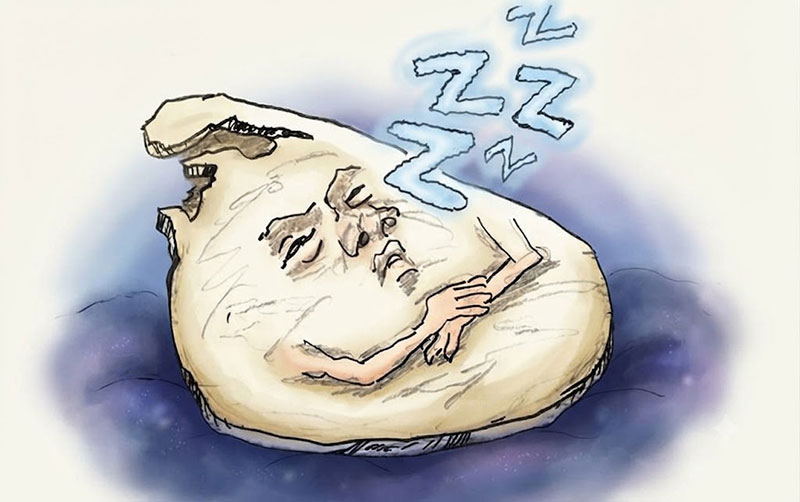
According to Sri Lanka’s diplomatic folklore, the late S.W. R. D. Bandaranaike uttered these words while explaining the reasons for Sri Lanka’s abstention on the UN resolution condemning the Soviet invasion of Hungary. Apparently, SWRD’s foreign ministry officials were asleep at home when the diplomatic cable seeking instructions was received from New York. In those days, there were no cell phones, Internet, or even fax or telex machines. The diplomatic cables were sent through post offices. Decoding them was a slow and time-consuming process. Thus, the government could not provide appropriate instructions to our mission in New York in time, and the Sri Lankan delegation abstained on that sensitive UN vote.
Sri Lanka’s Absence from Section 301 Consultations
But then, how does one explain Sri Lanka’s absence from the crucial bilateral consultation held in Washington by the Office of the United States Trade Representative (USTR) during March-April on “Forced Labour” under the Section 301 of the US Trade Act of 1974? Didn’t our foreign and trade ministries send appropriate instructions to Washington in time? Even if the instructions from the foreign ministry were transmitted to our embassy in Washington by pigeon carriers, there was enough time for Sri Lanka to participate in those meetings.
In March, the USTR initiated these 301 investigations on 60 trading partners, and invited all of them for confidential consultations. Out of the 60, 46 participated in these consultations. Sri Lanka was not one of them. Other countries that didn’t participate in these consultations included China, Russia, and Venezuela! In addition to that, the Section 301 Committee conducted a public hearing with interested parties on April 28 and 29. Washington-based diplomats, representatives from few trade ministries as well as representatives from many foreign trade associations and chambers participated in these hearings. Sri Lanka was once again conspicuously absent.
As a result, when the USTR published the proposed forced labour tariffs on June 2nd, Sri Lanka ended up with a 12.5% duty. Pakistani and Indonesian diplomats participated in these consultations and took appropriate follow-up measures, and managed to enter the 10% duty category. As even a threat of a modest tariff hike could disrupt supply chains and reduce competitiveness, particularly in an industry such as garments, I discussed this issue on 15 June and underscored the importance of Sri Lanka’s participation at the next hearing, which was scheduled to be held from July 7th .
Awakening from Diplomatic Slumber and AKD’s Gazette
Fortunately, Sri Lanka finally awoke from weeks of diplomatic slumber, and Ambassador Mahinda Samarasinghe participated in the public hearing on 9 July, and promised, “…. · We have agreed to the text in our negotiations with the USTR on forced labour, …. The gazette as we speak is being printed and I’m getting the gazette tomorrow morning, and the gazette will be shared with USTR as I get it“.
As promised, President Anura Kumara Dissanayake issued a gazette on 10 July banning the imports of goods produced by forced labour. These new regulations are very similar to what Pakistan and Indonesia enacted in April, after their consultations with USTR in March. Why couldn’t we do it in April? Why did we wait till the very last minute?
Challenges ahead
“War is too important to be left to generals alone,” is a famous saying attributed to former French Premier Georges Clemenceau. Similarly, monitoring our main markets is too important to be left to diplomats alone. The United States is the largest single-country market for Sri Lanka. Therefore, Sri Lankan trade chambers and associations should become more proactive in these markets and participate in these events. For example, the chairman of the Pakistani apparel exporters association participated in the April hearings. Similarly, representatives from the Indian Agricultural and Processed Food Products Export Development Authority, the Federation of Indian Chambers of Commerce and Industry, the Confederation of Indian Industry, and Reliance Industries also participated in July hearings. At an event where each speaker is given only five minutes (strictly enforced), having a number of speakers from a country is an advantage. The presence of industry representatives in these kinds of events also help them understand the market dynamics and the future challenges. This is important, particularly because there will be many more challenges with Trump’s tariffs.
With the gazette issued on 10 July, Sri Lanka has imposed a prohibition on the importation of goods produced with forced labour. Now, the challenge will be to effectively enforce the prohibition. And what are the goods produced with forced labour? The USTR list only focuses on aluminum, cotton, electronics, lithium-ion batteries, rice, and tobacco. However, according to the U.S. Department of Labour, the list is much longer. Hence, this list may change continuously during the next two years and tariffs may fluctuate once again.
So, this is definitely not the time to slumber.
(The writer, a retired public servant, can be reached at senadhiragomi@gmail.com)
by Gomi Senadhira ✍️
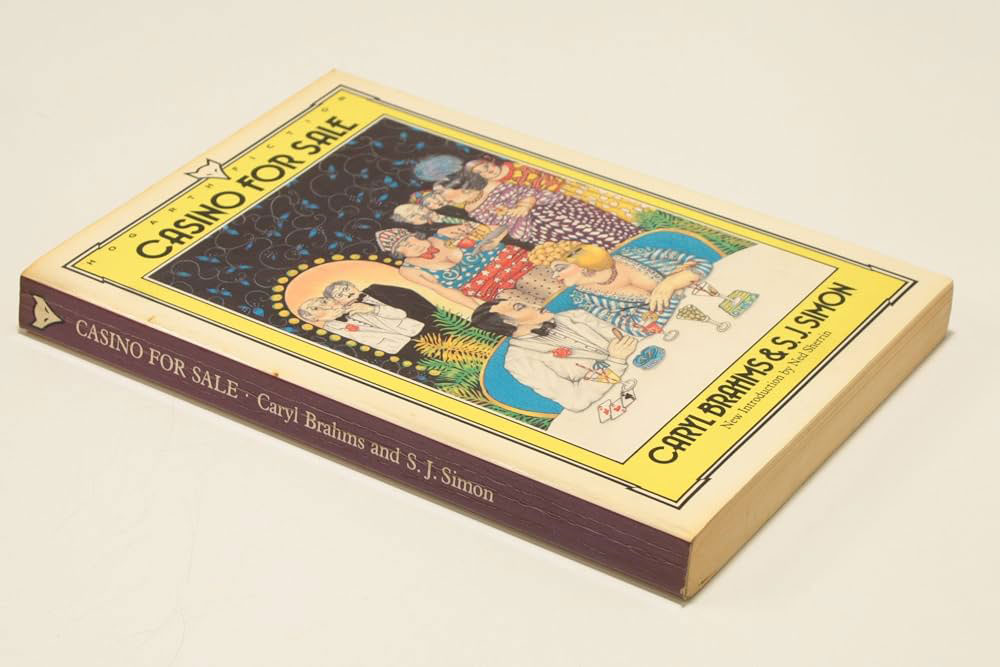
After the overwhelming grotesquerie of J K Rowling’s latest Cormoran Strike novel (written, I should have noted, as the others were, under the pseudonym Robert Galbraith), I thought I should return to the world of fun, and also a much shorter description since this thriller moves quickly without the layers of detail that Rowling engages in.
I then move to the second comic thriller by Caryl Brahms and S J Simon. This, their second story to feature Vladimir Stroganoff and Adam Quill, was Casino for Sale, as lunatic a romp as the first, though without the emphasis on the ballet that characterized A Bullet in the Ballet.
This one begins with the impresario Stroganoff buying a casino cheap from Baron Sam de Rabinovich, only to find that it was a rundown place, not the grand casino of La Bazouche, a resort on the Frenc+h Riviera, as he had initially thought. The grand one belonged to Lord Buttonhooke, and Stroganoff could not compete, until he thought of bringing the Ballet Stroganoff to the casino – which of course leads to Buttonhooke deciding to have ballet performances in his Casino too.
Stroganoff invites Quill to visit him, which Quill decides to do since he has left Scotland Yard, having come into a legacy. No one believes this, and he has to face questions as to what he did to have been sacked, with sympathy for having been found out.
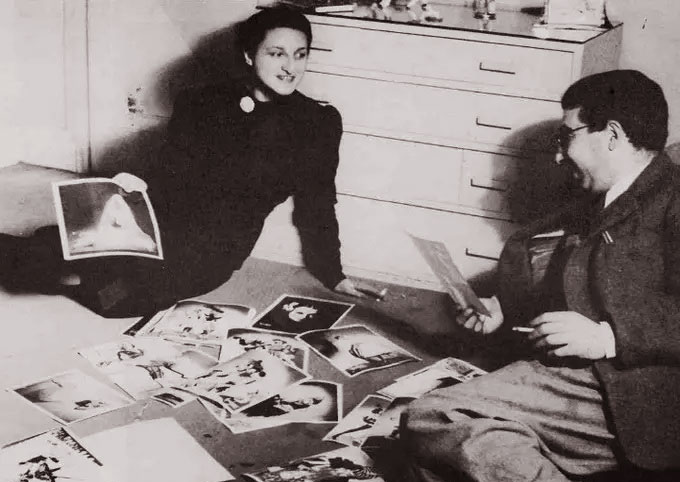
Caryl and Simon
The day he arrives in La Bazouche there is a murder, of a vitriolic critic called Citrolo, in Stroganoff’s office. He had been going to write a damning review of the opening night of the ballet and Stroganoff, when he realizes Citrolo cannot be swayed, drugs him and dictates the review himself to the papers. He leaves Citrolo sleeping and finds him shot the next morning, whereupon he decides to muddy the waters and leave a suicide note and lots of other murder weapons. So much overkill, as it were, of course ensures that he is arrested.
But the excitable French detective who makes the arrest follows up his suggestion that Buttonhooke was also involved, and so the two casino owners find themselves in cells next door to each other, with the detective Gustave quite happy to provide creature comforts for a fee.
Quill decides he must investigate, and finds Gustave most cooperative, since he has a laid back attitude to work. So it is Quill that finds a notebook which makes it clear Citrolo is an accomplished blackmailer, and that there are lots of possible murderers, including Stroganoff’s croupier, who was crooked, Rabinovich, who was now working for Buttonhooke, a confidence trickster called Kurt Kukumber, whose prospectus for a dud gold mine was found in the office and Prince Alexis Artishok who was engaged in a deal to buy diamonds from the ballerina Dyra Dyrakova.
Stroganoff had been trying to get Dyrakova to dance for him, but having done so previously she had refused. But then to Stroganoff’s chagrin she agreed to dance for Buttonhooke. The clearly crooked Artishok had told Buttonhooke’s mistress Sadie Souse, who was not very bright, that Dyrakova possessed diamonds she was willing to sell cheap, and Sadie was determined to have them.
Quill meanwhile finds out that there was a secret passage to Stroganoff’s office, the obvious solution to what had begun as a locked room mystery, and that this was known by almost everyone apart from Stroganoff himself. And then Rabinovich is murdered, just after Gustave had released his two original suspects, leading him to blame Quill for having insisted on that and thus allowing them to kill again.
Soon afterwards Dyrakova arrives, and the town is full of posters announcing that she will appear in the casinos, elaborate posters for either one, since Stroganoff is determined that she will dance for him, and if she does not come willingly, he has devised a scheme to make her do so unwillingly. So, though Buttonhooke has her taken off to his yacht immediately she arrives at the station, Quill along with Arenskaya gets her into a launch and to Stroganoff’s casino, where she performs to tumultuous applause, not knowing for whom she is dancing.
When Quill asked her about the diamonds, she said she had sold them long ago, and that gave Quill the solution to the mystery. Rabinovich had known about this, and Artishok had killed him to prevent Sadie learning it from him, he had killed Citrolo who had recognized him for an accomplished card sharper, not a Russian prince at all. But before he is arrested, he gets away in a boat, and the police launch that pursues him is on the point of catching him up when it runs out of petrol.
Again, lots of excitement, and entertaining references – Gustave grows marrows – and if not quite as brilliant as its predecessor, Casino was certainly a delightful read.

 It was a few years back that a former President of Sri Lanka took it on himself to pronounce SAARC ‘dead’. Since then there have been other sections of Sri Lankan opinion that have joined the critics of SAARC and taken the solemn stance that SAARC has indeed died what may be called a natural death.
Their fatalism is understandable. SAARC has failed to meet at heads of government or state level for the past several years to take the SAARC process notably forward. Regional cooperation has more or less been only an appealing idea. No substantive concrete projects have taken off to make the idea a hard reality. ‘Inner paralysis’ seems to be SAARC’s lot. Hence the fatalism in these circles.
However, being one of the worst cash-strapped regions of the world and a teemingly populated one with people virtually left to their devices, what choices do the ‘SAARC Eight’ have other than to try their best to band together and continue with their cooperation efforts, however small they may be?
There is no escaping the mounting debt trap for many of these countries and bankrupt Sri Lanka is a glaring example, but ‘throwing in the towel’ and abandoning themselves entirely to the diktats of the strongest economies and their agencies will prove a ‘living death’ for many countries in the SAARC fold.
The gains may be meagre but giving-up on SAARC cooperation in full would prove self-defeating for the organization and South Asia. Right now, the collective intention ought to be to salvage what the region could from the tenuous cooperative efforts. Moreover, such initiatives could go some distance to generate a degree of goodwill among the Eight and help in sustaining a dialogue process.
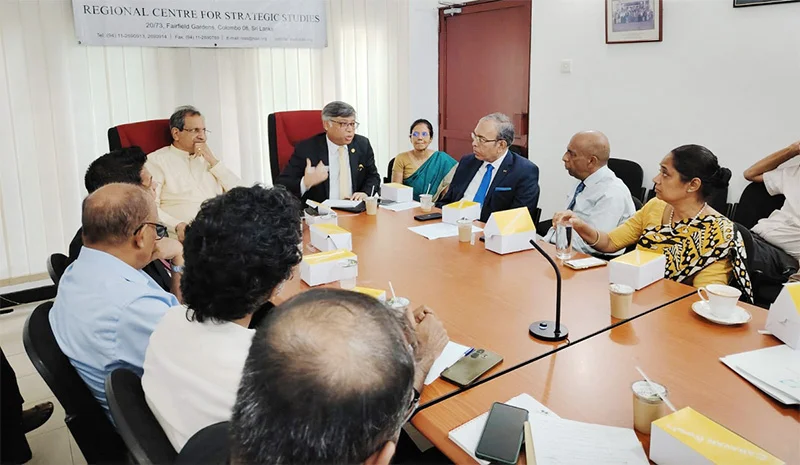
Given this backdrop it proved ‘a stich in time’ for the Regional Centre for Strategic Studies (RCSS), Colombo, to recently host the SAARC Secretary General Ambassador Md. Golam Sarwar to a round table discussion on the unifying potential of SAARC and its future possibilities, besides other related issue areas.
Held on June 24th and moderated by RCSS Executive Director and former ambassador Ravinatha Aryasinha, the forum brought together a vibrant, wide ranging audience comprising academicians, diplomats, senior public servants, civil society activists and many others. Following the presentation by Ambassador Golam Sarwar titled, ‘Reigniting SAARC: Achievements, Challenges and the Way Ahead’, a lively Q&A followed.
The above forum could be described as an act of lighting the proverbial ‘candle’ rather than ‘cursing the darkness.’ It surely is a ‘darkness’ that could be seen as daunting considering that the region’s pivotal powers, India and Pakistan, are failing to act in a spirit of accord but are engaged in bitter finger-pointing on a number of questions of vital importance to SAARC.
On the other hand, what is the rest of the region doing to bring the above sides together? It is disappointing that to date the rest of SAARC has failed to launch a major diplomatic drive to bring peace between the feuding regional heavyweights. It needs to act without delay and establish its earnestness and this effort would need to prove SAARC’s staying power in the unfolding months and even years.
In assessing SAARC’s seeming failure local opinion in particular has failed to factor in what could be described as weak leadership. Since Sheikh Mujibur Rahman of Bangladesh, the founding father of SAARC, the region has failed to produce a visionary leader who could advance the SAARC cause with charisma and drive.
Among other reasons, weak leadership accounts considerably for the faltering and stuttering status, as it were, of SAARC. Badly needed are leaders who could go the extra mile, think less of narrow national interests and work diligently towards the collective well being of the region but SAARC’s millions of ordinary people have been made to wait in vain for leaders of such stature. Instead, they have been burdened with politicians who seem to be relishing the apparently moribund state of SAARC.
Looking back, it could be said that it was the dynamic leadership factor that led to the launching of the Non-Aligned Movement and for its sustenance for a few decades. True, it could be seen in some quarters that NAM is no more, but as in the case of SAARC, the former too has been unfortunate to be burdened over the years with politicians who lack the vision and drive to unflaggingly advance the fortunes of the South. NAM and SAARC lack the dynamism and vision of leaders of the stature of Jawaharlal Nehru, for example, to give them the required guidance and intellectual depth.
The reasons are complex for there not being among us currently political leaders with the vision and the steadfast commitment to advance the legitimate interests of the South. However, it could be stated with conviction that the majority of Southern leaders have too easily caved in to the demands of the global North and its financial agencies.
These leaders have failed to see, for instance, that the largely market economy oriented Northern governments would not view with favour a centrist economic model that attaches priority to the interests of the dis-empowered publics of the South. This realization ought to have dawned on the current government in Sri Lanka, for instance, some while ago but it has no choice but to abide by IMF dictates since economic survival at present is unthinkable without the latter’s succour.
Accordingly for SAARC this should be the time for some soul-searching. Priority needs to be attached to ending the feuding between India and Pakistan since at present the material fortunes of the region hinge largely on these regional giants giving peaceful relations among them a try. This is no easy challenge to meet but some daring, visionary diplomacy needs to take hold among the rest of SAARC.
There is some sense in SAARC bringing the peoples of the region together through programs that address their best collective interests. A meeting of minds among SAARC nations could enable SAARC and its agencies to build a region-wide people’s movement for progressive political and economic change that could in turn lead to the region’s political leaders sensitizing themselves more to the neglected needs of their publics.
However, the time is ‘now’ for the initiation of these progressive changes and the voice of SAARC well wishers would need to drown out those of their critics.

Can Argentina and Messi beat Spain and Yamal to defend World Cup?

Anushka Sanjeewani, Vishmi Gunaratne return for Pakistan ODIs

Lennox stars again as New Zealand take series lead after West Indies collapse

Former IGP C.D. Wickramaratne found dead at his residence

Venezuela earthquake: Number of known dead rises to nearly 5,000 victims

A few showers may occur in the Western, Sabaragamuwa and North-western provinces and in Kandy, Nuwara-Eliya, Galle and Matara districts

‘Dates have the highest sugar content to fight Coronavirus’

Sunday Island 27 December – Headlines

#SundayIsland 17th December – Headlines

Sunday Island – 28th March

Sunday Island Headlines – 21 March

Sunday Island – 21st February – Headlines
-
 Features6 days ago
Prison riots and politics: NPP’s biggest challenge and Sri Lanka’s biggest opportunity
-

 Editorial7 days ago
What’s the world coming to?
-
 Features3 days ago
Dirty Money
-

 Editorial6 days ago
Much ado about crime: Fish or cut bait
-
 Features6 days ago
More on Saudi Arabia: ARAMCO and beyond
-
 Midweek Review3 days ago
The sordid tale of theft and tragedy at Finance Ministry
-
 Latest News3 days ago
Oil prices hit 1-month high as US-Iran attacks dim Strait of Hormuz outlook
-

 Features5 days ago
Deepening Democracy – Constitutions and Constitutionalism