
Features
Lion logo loses clout as Ceylon Tea marketing symbol


Very little pure Ceylon Tea in the packs sold
(Excerpted from the autobiography of Merrill J. Fernando)
The Lion symbol had been used to denote Ceylon Tea for a number of years until, in 1978, it was registered in the UK as a symbol belonging to the Sri Lanka Tea Board. It had also been registered in a dozen countries in Europe, as well as in Australia, South Africa, Pakistan, and in about 15 other countries in the Middle East.
Since the Lion symbol professed to represent quality Ceylon Tea, but without a quality benchmark being attached to the pack which carried the logo, the recommendation of the above committee was that a new symbol should be developed, for the use of the entire export sector, to denote packs containing 100% Ceylon Tea conforming to a specific quality standard. The committee also recommended the promotion of Ceylon Tea in particular geographical areas, such as the Middle East and Western Europe primarily and, secondarily, in the Philippines, Nigeria, and Japan.
Up to that time, as far as I am aware, the above was the most searching examination of Ceylon Tea export promotion carried, out in decades. Unarguably, it was the only evaluation which resulted in proposals giving primary consideration for the benefit of the local exporter.
Discouraging realities
The consumer soon loses interest in a product which does not live up to its projected quality image. As explained in detail above, the Lion logo lost its effectiveness as a promotional tool when the genuine, quality Pure Ceylon Tea packs were debased, by the gradual diminution of the Ceylon Tea content in the pack, and its replacement with cheaper, lower quality tea. My arguments on the matter were based on my firm conviction, that it is important to associate a generic symbol with a guarantee of good quality Ceylon Tea and not of any tea identified as Ceylon Tea. The Lion logo finally became meaningless, as it was available to any brand associated with the legend ‘Ceylon’ on the pack, however tenuous the link.
Another area in which the Secretariat failed was in the very necessary monitoring of rebates and other incentives, extended to exporters to develop their own brands, invest in plant and machinery, and to generate value-added exports, instead of persisting with the export of bulk tea. The concessions were meant to incentivise development and investment with the long-term benefit in view.
What actually happened was that, with very few exceptions, the majority of the exporters discounted these rebates to the benefit of the importers that they were serving, who, anyway, were already buying their tea at prices well below those obtained for finished tea products in their countries.
This highly-irregular strategy resulted in the development of a culture of cutthroat competition among exporters, fighting with each other for the importers’ patronage. Despite the fact that several instances of price-undercutting, through the irregular manipulation of rebates and incentives, were brought to the notice of the Secretariat, it did not take any corrective action. As a result the wide-ranging recommendations of the Advisory Committee, though accepted by the Government and implemented, failed to produce the desired results.
An indication of this type of damaging discounting was provided, in 1988, by no less a person than our Tea Commissioner in Egypt, Hasitha de Alwis, who revealed to the Advisory Committee that Indian and other origin teas were being imported to Egypt, at considerably higher CIF prices than comparable tea from Ceylon. Our research in to this matter confirmed that this was indeed the truth, with Indian tea being offered at around USD 0.50 on average higher than Ceylon Tea.
Quite obviously, the reason was that either the Ceylon Tea was being calculatedly discounted by the exporter, or the tea was of very inferior quality and, therefore, merited the lower price. Either way, it was a highly-detrimental situation for the cause of Ceylon Tea in general. This matter, along with a wide range of other relevant issues, was brought in writing to the attention of the Tea Board by me in July 1989.
`Price warfare’ is an ever-present feature in market competition, irrespective of the product. However, whilst acknowledging the indisputable value of free and healthy competition, it also pre-supposes a private sector which is sensitive to national objectives for the promotion of a product, which identifies the country globally, as in the case of Ceylon Tea.
One of the recommendations of the committee, was that the impact of the rebates and incentives be evaluated by the SLTB, at the end of three years. However, that was never done, and the concessions were allowed to remain, to be abused at will by most exporters. What resulted was a net loss to the industry.
The Tea Board then also supported meaningless and costly exercises, such as the promotion, at a cost of around Rs. 50 million over a period of about five years, between 1983 and 1988, for the marketing of Rabea Tea, a well-established brand in Saudi Arabia. At one point this brand was importing about 18 million pounds of tea, annually. Though the brand was registered in the name of an exporter in Sri Lanka, it was actually owned by a foreign company in Saudi Arabia, allowing it to import tea from any producing country and sell under the same label, if desired, labeled as ‘Ceylon Tea’.
Ideally and logically, the money channeled by the Tea Board to Rabea should have been spent on the development of fully Sri Lankan-owned brands. I predicted to the Board that once the owners established the market for the brand on the strength of the ‘Ceylon Tea Packed in Ceylon’ slogan, they would move to another destination, most likely Saudi Arabia itself, and that is exactly what happened a few years later.
I also became aware that whist I was struggling to secure funds for the promotion of Dilmah in Australia, the Board had actually funded the promotion of bulk tea in Canada, doling out a total of around USD 5,000 at different times, to a Sri Lankan living in Canada, who had imported a few thousand kilos of tea from Sri Lanka. This move begs the question, how on earth can one promote bulk tea and to what purpose?
Another instance of a futile, self-defeating exercise which the CTPB (Ceylon Tea Propaganda Board) indulged in was the funding of the promotion and advertising of Lipton Tea, at the 1980 Moscow Olympics. It was a very costly and self-defeating gesture from the organization, which was, ostensibly, responsible for the promotion of Ceylon Tea, but extending goodwill to a brand which did not originate in Sri Lanka.
Between the period 1977 and 1985, the SLTB (Sri Lanka Tea Board) funded 118 projects. An analysis of those ventures and their outcomes would reinforce my position in regard to the imprudent manner in which such funds were disbursed. In fact, Dilmah was the first major tea brand marketing project undertaken by the SLTB, in its history of overseas tea promotion activities.
It was also the maiden initiative to promote a totally Sri Lankan-owned brand in an overseas market. In that context alone the Dilmah, Pure Ceylon Tea project, was of great strategic significance as an export marketing project, to revitalize the position of Ceylon Tea in that part of the world, providing a launching pad in to New Zealand as well.
Square pegs in round holes
The SLTB Secretariat of the day had neither the talent nor the personnel to understand the intricacies and dynamics of international tea marketing. It tried to please every sector of the trade and be all things to all men, despite the fact that, with so many different agendas, there would invariably be wide-ranging conflicts of interests between involved parties. What was lacking then was a strong secretariat, educated in the ways of global tea marketing, and with a clear perception of the importance of Ceylon Tea in the context of the national economy, as a priority which needed to override parochial sectoral interests.
In 1977 the SLFP Government was swept out of power and the UNP, led by J. R. Jayewardene, took over the governance of the country. In 1979 my ex-father-in-law, Major Montague Jayawickrema, was appointed Minister of Home Affairs, Public Administration, and Plantation Industries, succeeding M. D. H. Jayawardena. One of Major Jayawickrema’s first proposals to me, as Minister, was to appoint me to the Tea Board. I advised him that on account of our previous family connections such a move would attract public criticism and refused to accept his offer. I suggested that, instead, he appoint Dr. Rienzie Peiris, as the latter had some knowledge of the industry.
One year later, without any prior notice to me, the Minister appointed me to the SLTB. Shortly afterwards, a group from the tea industry representing the brokers, tea traders, and planting fraternity had gone to N. G. Panditharatne, then Chairman of the UNP, and lodged a protest against my appointment as, according to them, I was not a ‘team player’ but a ‘rebel’. Panditharatne and I were not acquainted at that time.
However, according to reports, he had told this delegation that disruptors were useful in any society and that if my positions and proposals proved to be untenable, I would be automatically neutralized.
Since he refused to consider their request, this group had approached President JR, who also had turned them down, on much the same grounds as Panditharatne. This deputation had informed the President that Minister Jayawickrema had shares in my publicly-listed company. The President had spoken to the Minister and recommended that he sell those shares, which, in fact, he had bought three years before his appointment as minister.
Lost opportunity – Middle East market
In the early 1980s, the SLTB Chairman was the very competent Bradman Weerakoon and on the Board was I. O. K. G. (Oliver) Fernando, another man with a clear vision, who later became Chairman himself. However, other functionaries of the Secretariat, such as Agalawatte, Sambasivam, and Mrs. Jayatilleke, an Assistant Director of the CTPB then, were completely unhelpful and obstructed in the implementation of any creative policy.
After the Gulf Cooperation Council (GCC), comprising Bahrain, Kuwait, Oman, Qatar, Saudi Arabia, and the United Arab Emirates came into existence in 1981, I pointed out to the Tea Board that it presented an excellent opportunity for Ceylon to consolidate its hold on the Middle Eastern market in totality, and that we should move quickly to establish a monopoly on exports to those regions.
The common economic reforms which were being advocated by this alliance, combined with rising oil prices, would result in a significant increase in buying power across the GCC region, with its total population then of around 70 million. As I have said earlier, the general similarity of consumer preferences for tea, both loose and packeted, across the Middle Eastern countries, would enable us to address the entire region as a common market.
Though the Middle East was one of Sri Lanka’s strongest markets and an area in which Ceylon Tea sells for premium prices, with one or two exceptions in Saudi Arabia, Kuwait, and Jordan, Sri Lanka then had no established brands. Even the prominent Ceylon Tea brands popular in that market did not belong to Sri Lankan firms. Still, the native consumer in the Middle East generally remained loyal to Ceylon Tea for many years, despite the occasional influx of large volumes of Indian tea through bilateral trade agreements, as in the case of Tunisia and Iran.
The Middle East market then was dominated by Lipton in both tea bag and bulk supplies, which was the preference of the expatriate communities in the Gulf region. Much of that tea was sourced from India. Lipton also had in place a very professionally-managed marketing and promotional infrastructure in the region.
For decades, tea sales were conducted largely in the ‘souks,’ the native Arab bazaars, as there were few supermarkets in operation in most Middle Eastern countries. However, the affluence resulting from the oil boom of the 1970s exposed the Gulf world to Western culture and consumerism, and the region started moving swiftly towards more sophisticated marketing. With the growing popularity of tea bags in the Middle East being driven by the expanding supermarket culture, traditional Ceylon Tea started losing market share. Even the desert Bedouin was not immune to the advertising hype!
My point was that if we did not move fast to establish the supremacy of Pure Ceylon Tea in the Middle East sector, leveraging advantage we already had in the traditional popularity of Ceylon
in those regions, the multinationals, with their cheap, multi-origin brands, would soon completely take over those markets. The competition in the Middle East had already created openings for tea from China, Indonesia, and other, cheaper origins.
I advocated an initiative to build a strong, Pure Ceylon Tea brand, commonly owned by say 10 exporters, who would each contribute a reasonable sum of money to establish such a brand. Essentially, it would comprise a Joint Venture public company for the marketing of tea bags in the Middle East, as a single firm would not have the resources to fund such an exercise. That apart, with a common, Pure Ceylon Tea brand, being owned by a group of exporters, the sensitivity demonstrated by the SLTB and other connected State entities, as well as by other local exporters, in regard to sponsoring a single owner brand, would also be eliminated.
I urged that Sri Lankan exporters should quickly develop tea bag export operations, to counter the huge threat from Lipton, which had begun to dominate that segment of the market in the Middle East. I also pointed out that it would be futile to compete with Lipton on its strength, as what it was offering was a near 100% CTC tea with a component of Ceylon Tea. Our counter-initiative should be to offer, on the back of a strong marketing drive, a superior quality Pure Ceylon Tea at a reasonable price.
To this proposed ‘Common Brand Building Exercise,’ the Janatha Estates Development Board (JEDB) and the Sri Lanka State Plantations Corporation (SLSPC), then collectively responsible for managing the nationalized plantation sector, would also contribute in equal proportions. Ranjan Wijeratne, then Chairman of the SLSPC, and Pemsith Seneviratne, Chairman, JEDB, were both very supportive of this proposal, as was Victor Santiapillai.
Finally, it was agreed that the sub-committee to progress this initiative would comprise W. L. P. de Mel (Secretary, Ministry of Trade and Shipping), Mahinda Dunuwille (Chairman, Tea Tang Ltd.), Asoka de Lanerolle (EDB), and the writer. The committee co-opted Victor Santiapillai (Chairman, Export Development Board) and T. G. Peiris (Director, Promotion, Tea Board) as Convenor and Secretary.








‘The treason of the intellectuals’ in the age of populism – Part I
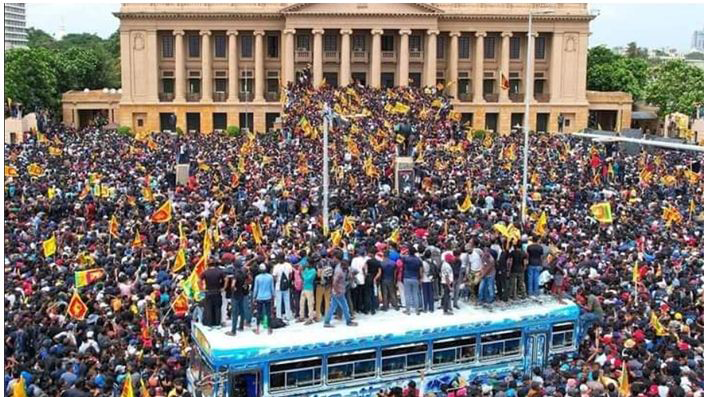
Sri Lankans recently celebrated the fourth anniversary of the Aragalaya, which, some believe, ushered in an era of Left populism in Sri Lanka. Left politics in Sri Lanka has been ravaged by a crisis, since the late 1970s. It was basically one of an inability to regain the mass basis the Left lost in the 1977 elections. The Left was pushed out of the coalition government, led by Sirimavo, by the right-wing forces, within it, in the context of the global oil crisis that led to the adoption of austerity measures by the government.
This crisis of the Left exploded with the mass uprising ,known as the Aragalaya, which began with the hashtag campaign ‘Gota Go Home’. The nature of its development has come under scrutiny by critics who allege that hidden international hands orchestrated the movement. Nevertheless, the Aragalaya—which developed into an authentic citizen action—ultimately ended in a counter-revolution. The current JVP/NPP government came to power by riding the wave of public awakening that accompanied the Aragalaya.
Is the JVP/NPP government Leftist?
Even though the Western international media, as part of a strategy to manipulate the JVP/NPP administration from time to time, calls it a left government, it works very closely with the right-wing local capitalist class and international financial agencies.
Subaltern or elite?
While there was some initial attempt to identify the JVP/NPP government’s class basis as ‘subaltern,’ in the face of criticism, this formulation was changed to ‘non-elite’. It is correct that, generally, members of the new regime do not belong to the strata of the political elite of the traditional aristocracy and bourgeoisie. However, it can be argued that those who are holding the leadership of the NPP government are those with the aspiration of becoming the new elite. They are the emerging political elite, representing both the rural and urban petty-bourgeois strata.
The leadership consists of those who have risen to the top in professional fields and the bureaucracy, led by those in the fields of academia, medicine, engineering and technology, law, management, business, accountancy, and administration, alongside those who have traditionally been political activists and trade union leaders. Political power has been captured by these petty-bourgeois class elements that have embraced a technocratic ideology. Rallied around them is the capitalist leadership that directs chambers of commerce and is tied in with international capital.
In essence, the current regime represents an alliance formed between the petty-bourgeois and capitalist groups and international finance capital—an alliance that, by now, has replaced the popular bloc formed with ‘janathawa’ (the people) during the election campaign, leading to the formation of the government.
The new elite represents the heirs of the nationalist-Left tendency of the generation of the ‘56 daruwo,’ represented by the JVP, a social force that Bandaranaike released in 1956. The mainstream of the political change of ’56 came to be represented by Bandaranaike’s own party, the SLFP, whose promise of building a common man’s era fizzled out with the regime, led by Mahinda Rajapaksa, coming to an end in 2015. At long last, true representatives of the rural and urban petty bourgeoisie have assumed political power after a long-drawn-out struggle, however, shedding their Left credentials in the process. This is the generation that Gunadasa Amarasekara, the doyen of jathika chintanaya, controversially hoped would take responsibility for the future of the country. While they have assumed political power, their formulation of, what they call, punarudaya (the Renaissance) seems to be at odds with Amarasekara’s wish to recover the ‘Sinhala Buddhist civilisational consciousness’—a point which requires a separate discussion, at another time.
Some of the leftists, who joined the NPP to form the government, seek to justify their choice by claiming that the new regime stands for the two-stage revolution ‘a la Lenin’—that is, first, the bourgeois-democratic stage and then the proletarian-socialist stage; Sri Lanka will achieve industrialisation in the first stage, under punarudaya, or the Renaissance. What is not made clear is how Sri Lanka could industrialise while being under the grip of international finance agencies whose actions, economists argue, from the very beginning of their involvement in the Sri Lankan economy, have preempted even the remotest possibility of the country becoming an industrialised one. With its claim to bringing about economic stability and growth, the government has moved away from serving the genuine interests of the people, and the country, in the fields of economy, polity, and culture, as its critics point out, as briefly outlined in the next section of this article.
It is claimed that the theory of left populism was formulated in opposition to right-wing populism, which furthered the neoliberal agenda. Going by what is outlined below, can the JVP/NPP government be identified as a left-populist one?
Not economic democracy, but autocracy?
Left political parties, groups, and individuals in Sri Lanka widely hold that the crisis of Left politics has been intensified with the current government assuming power. According to their criticisms, the JVP/NPP government is not a Left government.
The current government entered into an agreement on debt restructuring with the IMF based on the conditions imposed by them, despite the expectations of the masses that rallied around the JVP/NPP election campaign and the promises made in its own election manifesto to renegotiate it. Accordingly, placing the larger burden of the haircut of the debt restructuring on the EPF of the working people has been carried out by the JVP/NPP government without any changes to the original plan.
It is apparent that the current government’s economic programme, from its inception, has been directed by the leadership of the representatives of the capitalist class, led by the chambers of commerce. The government has been mainly formulating and implementing government policy, based on the debt provided and the conditions imposed by the IMF and its affiliated institutions, the World Bank and the ADB, rather than on the felt needs of the Sri Lankan people.
An unbearable tax burden is imposed on the people. The government boasts that it has filled the Treasury with trillions of rupees, including the wealth it has exploited, via those taxes. Not only the poor but also the middle classes are oppressed by the unbearable burden of an ever-rising cost of living.
Poverty and malnutrition, which are major determinants of living standards, remain at high levels under the current government. According to official reports, 25 percent of the population lives in extreme poverty, while 80 percent of them live in rural areas. The poverty of the Tamil community, living in plantations, is even higher. Neoliberal economists themselves say that if calculated according to the real cost of living, the population living below the poverty line would be one-third of the total population. Women and children—and among them, girls—suffer the most from all this.
Sri Lanka’s micro-finance and credit crisis has trapped hundreds of thousands of people, mainly rural women, in a deep debt trap through predatory high-interest loans, leading to over 200 reported suicides. Activists have already expressed fears that the Microfinance and Credit Regulatory Authority Act, recently passed by the government, is designed to blame victims and will contribute to the erosion of consumer protections in such a regulatory framework by placing the onus of protection on borrowers. They stress that the Act does not include sufficient provisions to protect micro-finance and credit consumers.
Critics point out that not only our economic sovereignty but also our political sovereignty and security have been compromised by the secret agreements signed by the current government with the global American empire (US-Sri Lanka Security Memorandum of Understanding/Government Partnership Program (2025)) and the regional Indian power (India-Sri Lanka Security Partnership Agreement (2025)).
This government is strengthening relations with Israel—a nation that has embarked on a policy of genocide against Palestinians—and is maintaining cooperation with Israeli intelligence agencies and the military.
The current government has declared the private sector and the market mechanism, not the state sector, as the engine of economic growth at a level surpassing previous governments.
The government has accepted the neoliberal vision of subjugating large areas of social life to the logic of commodification. By allowing the market to behave as it sees fit, people have been subjected to the ruthless control of the market, except in the case of a few essential goods.
Critics have accused the current government of subtly but carefully implementing the privatisation of state-sector institutions, a move that the previous government had withheld in the face of public opposition. Services, essential to the survival of ordinary people and the middle class, such as public healthcare and education, are increasingly being brought under the influence of the market. There is no clear attempt to free passenger transport from the clutches of a rapacious private sector. The energy sector—oil and electricity supply—continues to be driven towards privatisation through fragmentation.
It is instructive here to note what Bhaskar Sunkara, Editor of Jacobin—the popular Left magazine published in New York that strongly backed Zohran Mamdani’s bid for Mayor—has to say on social infrastructures:
“Health care, education, transportation, energy, and telecommunication are not consumer goods but social infrastructures on which participation in modern life depends.
Organizing them through profit-seeking intermediaries that ration by price rather than need introduces predictable distortions. The result is a system that undermines both equality and efficiency. Decades of comparative experience suggest that public provision in these sectors can deliver better outcomes at lower social cost, precisely because it aligns provision with social need rather than purchasing power.” (‘We Need a Socialism After Capitalism,’ Jacobin, April 2026)
Serious damage to the natural environment and biodiversity continues under the current government. Deforestation, fragmentation of wildlife habitats, and human-wildlife conflicts have intensified. The release of protected lands to local and foreign private investors for so-called development, ignoring environmental impact assessments (for example, the Mannar wind farm projects), and the failure to stop illegal land acquisition and sand mining, which have undermined biodiversity, especially in the dry zone, are continuing.
The introduction of a biometric national identity card, funded by an Indian grant, in conjunction with the massive digitalisation programme, launched under the private sector operation, poses a serious risk of being used to unnecessarily restrict individual freedoms and to be used by the Sri Lankan government and foreign states to suppress citizens when necessary. Overall, it is clear from global experience that digitalisation, in the name of national security, is building a surveillance state. (To be continued)
by Kumudu Kusum Kumara

For quite a few decades,we have nonchalantly operated under a comforting and standard assumption that our bodies are our ultimate legal deeds. The features of every human body are quite unique. We have been taught that while passwords can be guessed, documents can be forged, and keys can be stolen, the biological architectures of our physical selves remain fundamentally unassailable and distinctly foolproof. Your face, your fingerprints, the unique landscape of your eye, are nature’s barcodes, forged from an intricate mix of genetics and intrauterine chance, utterly distinct to each of us among billions of people. This absolute distinctiveness made “biometrics”; automated methods used to recognise, authenticate, or identify individuals based on their unique biological and behavioural characteristics, the golden child of universally accepted global security. Amongst many other things, they are even trusted to unlock smartphones, provide access to sensitive portals, secure multi-billion-dollar wire transfers, cross international borders, and even safeguard top-secret military complexes.
Yet for all that, a profound and deeply unsettling shift is occurring, even beneath our own feet. The rapid acceleration of generative Artificial Intelligence (AI) and digital cloning technologies has begun to split open this relationship between biological reality and identity confirmation. Today, sophisticated software can replicate human voices with terrifying accuracy using mere seconds of feed-in audio, synthesise flawlessly lifelike videos of public figures saying things they never ever verbalised, and generate artificial fingerprints or facial configurations designed specifically to trick electronic gatekeepers. The comforting illusion that our bodily metrics are fool-proof is perhaps dissolving to quite a significant extent, casting a real-time shadow across the infrastructure of modern trust, even in everyday life.
Beyond the Fingerprint: The Expanding Universe of Identity
To understand the intricacies and depth of the current risks, one must look beyond the traditional hallmarks of identity verification. Perhaps the average person is clearly and deeply familiar with standard facial recognition, thumbprints, and the striking, complex rings of retinal imagery. Indeed, human biology offers an incredibly vast and nuanced spectrum of unique identifiers. Science and industry have quietly harnessed a long list of alternative indices to verify the identities and details of exactly who we are.
Consider iris recognition, which maps the intricate, visible coloured ring surrounding the pupil of the eye, or palmprint authentication, which tracks the expansive system of major lines, wrinkles, and minute ridges across the entire hand. Beyond these lie vascular biometrics, often referred to as vein pattern recognition, which uses near-infrared light to capture the unique layout of blood vessels seen beneath the skin of a finger or palm, a map completely invisible to the naked eye.
Furthermore, behavioural traits have proven just as distinct as anatomical ones. Voice biometrics analyses the physical anatomy of the vocal tract, nasal cavities, and vocal cords to isolate distinct sound frequencies. Gait analysis evaluates the precise, rhythmic mechanics of how an individual walks, tracking joint angles and weight distribution. Even keystroke dynamics, the precise cadence and rhythm with which you type on a keyboard, and ear acoustic geometry, which measures the unique way sound waves echo back out of your specific ear canal, have been successfully deployed to establish undeniable proof of identity.
The Pro Side: Unmatched Convenience and Safety
The historical arguments in favour of biometric systems remain incredibly compelling, which explains their near-ubiquitous adoption. First and foremost is the argument of unmatched convenience. Biometrics elegantly solve the “human error” factor inherent in traditional security appliances. You cannot lose your iris on a crowded train; you cannot accidentally leave your unique vein patterns at home; and you cannot forget the complex “password” of your facial geometry. It is an identity architecture that is permanently attached to the user, eliminating the friction of remembering combinations of symbols or carrying physical keys.
From a general, social and systemic perspective, biometrics have provided an unprecedented layer of objective truth. In criminal justice, fingerprint and DNA databases have exonerated the wrongfully accused, reunited missing children with families, and brought dangerous fugitives to justice based on definitive physical evidence rather than fickle, unreliable human memory. At international borders, automated biometric gates process millions of travellers daily with high efficiency, flagging authentic security threats while speeding up travel for the public. In the financial sector, a glance at a smartphone or a press of a thumb could prevent billions of dollars from being fraudulently stolen in identity theft and sham transactions every year by ensuring the actual account owner is physically present.
The Dark Side: When Your Body Becomes a Vulnerability
Despite these immense benefits, the reliance on biological markers has always harboured a fundamental flaw: the absolute permanence of the data. If a hacker steals your credit card number or a critical password, you can easily log online, cancel the account, and generate a completely new string of random characters. The breach is a nuisance, but it is entirely correctable and is fixable. However, if a malicious actor steals the high-resolution digital file containing your retinal map, your facial architecture, or your voice print, you cannot change your body. You cannot reset your eyes; you cannot easily forge a new set of fingers. Once a biometric signature is compromised, it is compromised for the rest of your life.
This permanence creates a highly centralised vulnerability. Biometric authentication systems do not store your actual finger or face; they store a mathematical digital template derived from them. These templates are housed inside vast corporate and government databases, and even universal digital portals. As cyberattacks grow increasingly sophisticated, these databases represent high-value targets for digital thieves. The terrifying consequence is that a single security breach at a major technology company or a government agency could permanently expose the personal physical keys of millions of citizens simultaneously.
The AI Shadow: Faking even the Unforgeable
This brings us to a profound paradigm shift driven by modern artificial intelligence. The traditional and abiding defence of biometrics was that physical traits could not be replicated in real-time. A photograph of a face could not trick a system looking for depth, and a recorded voice lacked the dynamic shifts of live speech. However…, surprise, SURPRISE…, AI has completely shattered these firmly held conventions and inferences.
Generative Adversarial Networks (GANs), a class of AI models in which two neural networks compete against each other, are now capable of analysing thousands of images or audio clips of an individual and creating a near-flawless synthetic clone. A clone refers to an exact copy, duplicate, or true genetic replica of another organism, cell, or object. The term applies across several fields and implies an absolutely identical real-life descriptor. Using these tools, fraudsters can create “deepfake” videos that mimic the precise micro-expressions, skin textures, and even the blink rates of a targeted executive, acclaimed scientist, an economist of global repute or even a political leader. In 2024, an employee at a multinational firm in Hong Kong was tricked into paying out 25 million dollars after attending a video conference call where every other participant was an AI-generated digital clone of his real-world colleagues.
Similarly, voice cloning has become a weaponised tool for financial scams. With less than ten seconds of audio scraped from a social media post, AI can synthesise a voice that is indistinguishable from a loved one or a bank official, perfectly matching the acoustic biometrics used by telephone banking systems. Even more alarming is the concept of “Master Prints”: the AI-generated, synthetic fingerprints that combine the most common ridge patterns found across the human population. Much like a master key that can open many different locks, these synthetic prints can trick biometric sensors up to 20% to 30% of the time, completely undermining the premise of absolute individuality.
Implications for the Future: Rebuilding Trust
The realisation that biometrics can be systematically manipulated has immense implications for the future of global society, law, and security. We are stepping into an era where we can no longer trust our eyes or ears to verify the identity of the person on the other side of a digital connection. This breakdown of trust threatens to disrupt not only financial institutions but also the very foundations of democratic systems, where synthetic video and audio can be deployed to frame individuals or fabricate digital evidence.
To survive this environment, the security industry must completely abandon the concept of the commonly used single-factor biometric authentication. The future will require a multi-layered approach. Biometrics will likely be coupled with behavioural signals that change dynamically over time, or physical tokens like cryptographic hardware keys. Furthermore, security developers are engaged in an intense arms race to create “deepfake detectors”; AI systems designed specifically to analyse incoming files for the microscopic digital artefacts left behind by generative software, verifying that a human face or voice is biologically real and is happening in real-time.
Legally and ethically, this shift demands robust new frameworks. Governments worldwide are beginning to recognise that our biological signatures require the same, if not greater, legal protections, as our financial assets. Laws must be strictly enforced to punish the unauthorised creation of digital clones and to compel corporations to encrypt biometric data using advanced, non-hackable methods.
A Balanced Path Forward
Ultimately, and even surprisingly, biometrics are neither a flawless saviour nor an inherent curse. They are powerful tools caught in the crossfire of an abiding technological evolution. They continue to offer unparalleled efficiency and security when implemented correctly. However, the dangerous myth of their absolute infallibility must be permanently laid to rest.
As artificial intelligence continues to blur the line between the real and the synthetic, our approach to identity must become as dynamic as the technology threatening it. We must stop viewing our physical bodies as unshakable passwords. True security in the modern age will not come from blindly trusting our biological uniqueness. It can only come from our collective vigilance, technological adaptation, and the implementation of robust, multi-layered digital defences that protect the sacred boundaries of who we really are.
by Dr B. J. C. Perera
MBBS(Cey), DCH(Cey), DCH(Eng), MD(Paediatrics), MRCP(UK), FRCP(Edin), FRCP(Lond), FRCPCH(UK), FSLCPaed, FCCP, Hony. FRCPCH(UK), Hony. FCGP(SL)
Specialist Consultant Paediatrician and Honorary Senior Fellow, Postgraduate Institute of Medicine, University of Colombo, Sri Lanka.
An independent free-lance correspondent.

A groundbreaking international study, spanning 17 years, has revealed an alarming rise in human-caused deaths of the endangered Sri Lankan leopard, with the majority of fatalities concentrated in the tea estate landscapes of the Central Highlands.
The peer-reviewed study, titled “Human-Caused Leopard Deaths in Sri Lanka Are Concentrated in Central Highlands’ Estate Mosaics: Evidence From 17 Years of Mortality Records,” was recently published in the prestigious scientific journal Wiley’s Wildlife Letters.
The research team was led by conservation scientist Sanjaya Weerakkody and comprised a distinguished group of local and international researchers, including Vimukthi Gunasekara, Sethil Muhandiram, Try Surya Harapan, Kithmi R. Gunasekara, Bandini Jayasena, John B. Wilson, Prathiba M. Amugoda, Tharika de Silva, Chathuranga D. Hathurusinghe, Ahimsa Campos-Arceiz, and Enoka P. Kudavidanage.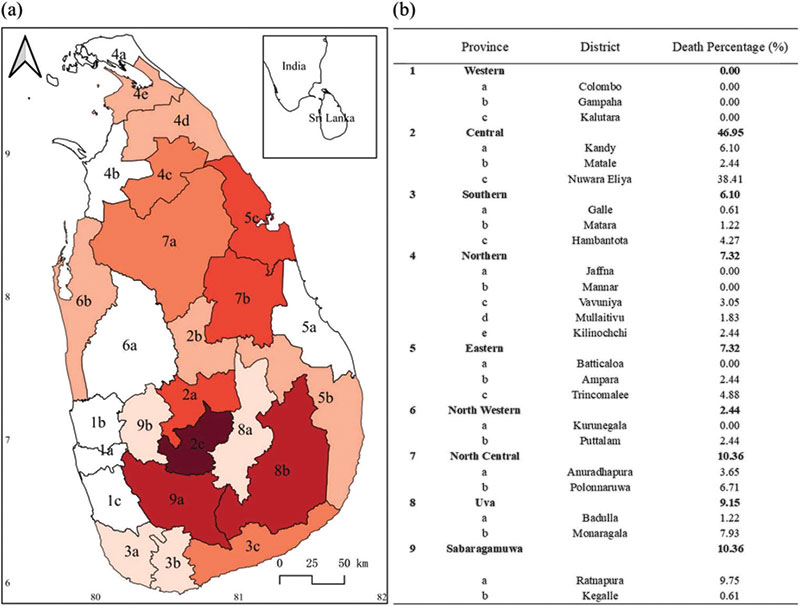
 The scientists represented a broad collaboration of institutions, including the Southeast Asia Biodiversity Research Institute of the Chinese Academy of Sciences, Yunnan Provincial Tropical Rainforest and Asian Elephant Conservation Innovation Team in China, LeopardCon Sri Lanka, Oklahoma State University in the United States, the Department of Natural Resources of Sabaragamuwa University of Sri Lanka, and the Tropical Ecosystems Research Network.
Speaking on the significance of the findings, researcher Sethil Muhandiram said the study provides the clearest picture yet of how human pressures are driving leopard mortality in Sri Lanka’s hill country landscapes.
“We found that plantation landscapes, especially tea estate mosaics in the Central Highlands, have become major hotspots for leopard deaths. Most concerning is the widespread use of wire snares, which continue to silently kill leopards and other wildlife,” Muhandiram said.
According to the findings, researchers analysed leopard mortality records from 2008 to 2024 and documented 164 human-caused deaths across the island, averaging nearly 10 deaths annually. More worryingly, the study found that leopard deaths have steadily increased over time, underscoring intensifying human-wildlife conflict in Sri Lanka.
The study identified wire snares as the leading cause of death, accounting for over 62 percent of cases where the cause was known. Many of these snares are believed to have been set for wild boar and other animals but ended up trapping leopards.
“Snaring is now one of the greatest threats facing the Sri Lankan leopard outside protected areas. Unless immediate action is taken to remove snares and strengthen enforcement, these deaths will continue to rise,” Muhandiram warned.
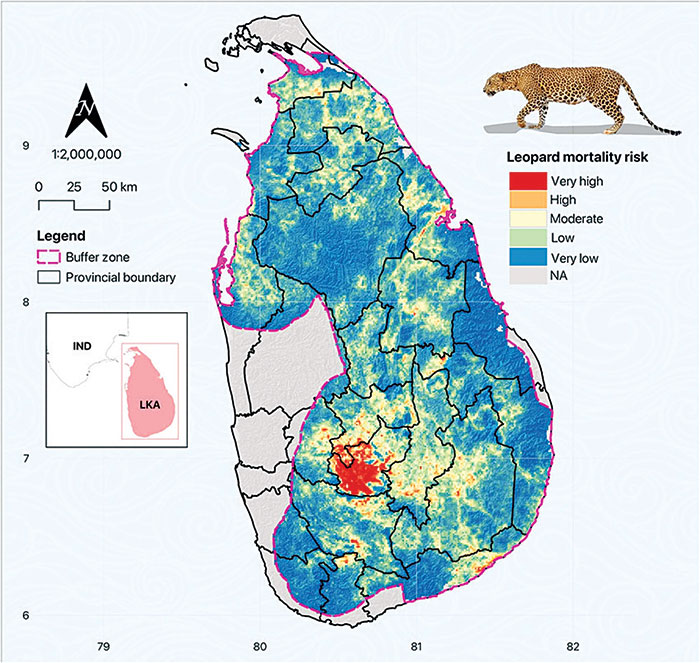
Plantation landscapes, especially tea estates in the Central Province, emerged as the most dangerous habitats for the country’s apex predator.
Researchers found that nearly 47 percent of all recorded leopard deaths occurred in the Central Highlands, while the Nuwara Eliya District alone accounted for 38.4 percent of fatalities, despite covering only a small portion of the leopard’s estimated range.
Researchers warned that the patchwork of tea estates, fragmented forests, villages, and agricultural lands has become a deadly landscape for leopards attempting to move between habitats.
The study also found that adult male leopards were disproportionately affected, a trend scientists caution could have serious implications for breeding populations and the long-term survival of the species.
Sri Lanka’s leopard, scientifically known as Panthera pardus kotiya, is an endemic subspecies found nowhere else in the world and is already listed as endangered.
Muhandiram stressed that conservation efforts must move beyond national parks and include estate landscapes where leopard-human interactions are increasing rapidly.
“Conservation cannot focus only on protected areas anymore. Leopards are surviving in human-dominated landscapes, and protecting them will require cooperation from estate communities, plantation companies, Wildlife authorities, and policymakers,” he said.
The study has further emphasised that leopard conservation in Sri Lanka can no longer focus solely on protected areas such as the Yala National Park, as significant leopard populations are increasingly surviving in estate and rural landscapes vulnerable to human pressures.
Researchers concluded that without immediate and coordinated action, Sri Lanka risks losing one of its most iconic and ecologically significant species to escalating human-induced threats.
By Ifham Nizam

Sri Lanka name Kusal Mendis as ODI and T20I captain for West Indies tour

Cambodia’s former opposition leader receives royal pardon for 27-year sentence

Death toll rises to four in Philippines building collapse; 17 missing

India gifts 134 cabs to Sri Lanka Police

Landslide Early Warnings issued to the Districts of Colombo, Gampaha, Kalutara, Kegalle, Nuwara Eliya and Ratnapura extended till 1600 hrs on Tuesday [26]

Attacks on Ebola centres intensify in eastern DRC amid outbreak fears

‘Dates have the highest sugar content to fight Coronavirus’

Sunday Island 27 December – Headlines

#SundayIsland 17th December – Headlines

Sunday Island – 28th March

Sunday Island Headlines – 21 March

Sunday Island – 21st February – Headlines
-
 Features6 days ago
Octopus, Leech, and Snake: How Sri Lanka’s banks feast while the nation starves
-

 Sports6 days ago
Sri Lanka women’s volleyball team ready for Central Asian challenge
-

 Opinion5 days ago
Murder of Ehelepola family, Bogambara Wewa and Sightings of Wangediya
-

 News5 days ago
Steps underway to safeguard Sri Lanka’s maritime heritage
-

 Features2 days ago
The NPP’s pivot to the past
-

 Business4 days ago
Historic launch of CCWE Fashion Week & International Summit 2026
-

 Editorial5 days ago
A play without its protagonist
-
 News21 hours ago
Police probe underway to ascertain links between criminals deported from UAE and local politicians