
News
Budget lacks creative solutions and exacerbates existing crisis – Dr. Godahewa

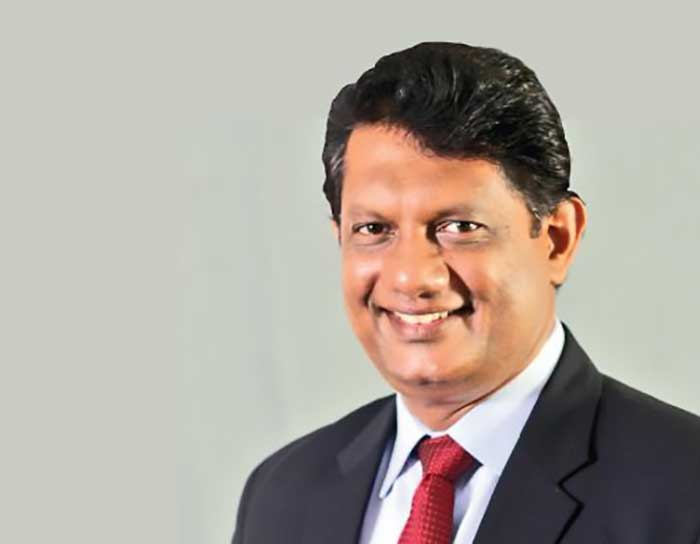
Budget 2024 is like a fairy tale rather than a pragmatic solution to pressing economic issues, SLPP MP Dr. Nalaka Godahewa has said.
Taking part in the current budget debate, former State Minister said: “Two paramount challenges loom large—the persistent economic contraction and the escalating national debt. A practical budget should provide answers to these challenges, addressing how the government plans to revitalize the economy and escape the debt trap. Unfortunately, the 2024 Budget falls short, lacking creative solutions and potentially exacerbating existing conditions.
The government, once again, presents optimistic revenue targets, reminiscent of the previous year. A notable income shortfall in 2023 raises concerns about the feasibility of the projected 45% increase in revenue for 2024, especially given the ongoing economic contraction. The Budget seems to harbor unrealistic expectations, and if history is any guide, the actual revenue may fall short, as evidenced by the 17% income deficit in 2023.
The Budget’s approach to expenditure compounds the issue. Despite potential revenue shortfalls, government expenditure for 2024 is estimated at 6978 billion rupees, reflecting a substantial 34% increase from the latest estimates of 2023. To meet revenue targets, the government resorts to tax hikes, exemplified by the recent VAT increase from 15% to 18%, affecting essential goods like fuel, electricity, and telephone charges.
This tax-heavy approach, a commonly accepted economic principle, can discourage entrepreneurs, decrease investments, and lead to tax evasion. Such consequences contribute to the 17% income deficit in 2023 and may persist in the coming year, rendering the 45% revenue increase target for 2024 unrealistic.
The Budget gap, arising when government revenue falls short of expenditure, is projected to be Rs 2851 billion in 2024. Bridging this gap through further borrowings or printing money is not a sustainable solution, particularly if the borrowed funds are directed toward consumption rather than income-generating development activities.
The breakdown of government expenditure for 2024 reveals a disproportionate focus on recurrent expenditure (Rs 5345 billion) compared to capital expenditure (Rs 1209 billion). This reflects an 11% increase in recurrent expenditure and a 1% decrease in capital expenditure for 2024. Despite promises to prioritize education and human capital development, the budgeted expenditure on education remains stagnant, and expenditure on women and social empowerment is halved.
The looming tax interest of Rs 2,634 billion, almost half of total recurring expenses, underscores the severity of the situation. Excessive borrowings have led the country into this crisis, and the trend continues, with the 2024 Budget proposing to borrow nearly Rs 3 trillion, exacerbating the existing debt burden.
The President’s grand ideas, articulated in the three main pillars of economic recovery—export-oriented competitive economy, environmentally friendly green and blue economy, and a digital economy—have not seen substantial progress after a year. The lack of consistency, evident in the shift towards a gig economy in the latest Budget, is a persistent issue.
Public trust in the government’s economic management and budgetary proposals has eroded. Citizens’ immediate concerns revolve around basic needs, rising utility bills, and the disparity between lofty economic goals and daily struggles. The prevailing crisis demands a unified and committed leadership capable of delivering tangible results.
The lack of coordination between ministries further compounds the challenges. Conflicting government actions, such as advocating for investment while raising production costs, or acknowledging the importance of the small and medium sector while undermining local producers through imports, highlight the need for cohesive decision-making.
To navigate the crisis successfully, the country requires a clear agenda, a consensus-driven roadmap led by competent leaders for effective implementation. Setting clear priorities with measurable targets in crucial areas like tax collection, tourism, export development, renewable energy, and foreign direct investment is imperative.
The proposed Budget for 2024, if implemented, not only fails to address critical issues but may exacerbate economic challenges. The country urgently needs a comprehensive economic development plan with clear goals, timelines, and accountability measures. The government must redirect its focus toward reactivating the economy, strengthening the export sector, fostering tourism, supporting small and medium businesses, attracting new investments, and addressing the root causes of the economic downturn.
In conclusion, at this darkest hour, a collective and committed leadership is essential to guide the nation out of the crisis. The time for experiments and ad hoc solutions has passed. It’s time for an integrated economic development plan to rebuild the country.”





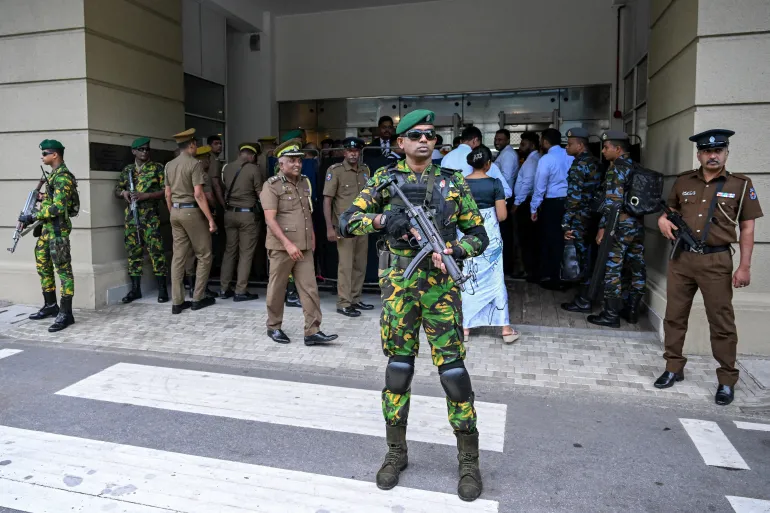
The High Court has convicted 14 of the 24 men accused of being directly involved in the 2019 Easter Sunday bombings, which killed 279 people.
The three-judge bench read out its decision on Tuesday after a five-year trial and said sentencing would take place later, the AFP news agency reported.
The charges included murder and conspiracy to commit terrorism.
Nine others were acquitted, while another defendant was found guilty of only some of the charges, the court said.
[Aljazeera]
By Shamindra Ferdinando
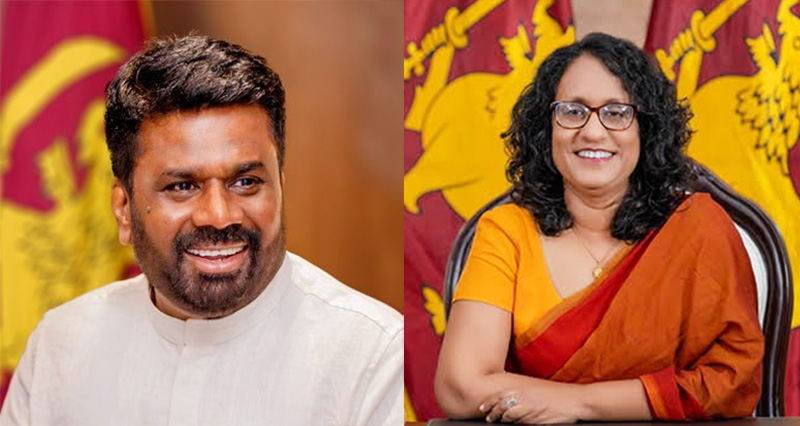
The ruling NPP yesterday (21) dismissed claims of a widening rift, within the government, over the proposed 22nd Amendment. Asked whether the NPP was concerned over a section of the Opposition alleging Prime Minister Dr. Harini Amarasuriya and two dozen MPs taking a view contrary to that of the party in this regard, authoritative party sources said some persons were propagating speculation for their own interest.
Declaring that there was absolutely no issue regarding the controversial Amendment, sources emphasised once it was tabled in Parliament, it would be passed with 2/3 majority.
Sources dismissed claims that out of its 159-member parliamentary group a section of NPPers was opposed to the government move. According to an influential Opposition activist, there are 57 JVPers and 66 NPPers in the government group and the rest contested the last parliamentary polls, having aligned with the JVP.
Ministerial sources told The Island that the government was confident of going ahead with the 22nd Amendment and Judicature (Amendment) Bills. Sources said that the NPP was not bothered about the Opposition protests in and outside Parliament.
Speaker Dr. Jagath Wickremaratne is expected to disclose the confidential ruling that he received from the Supreme Court in respect of more than 65 petitions for and against the 22nd Amendment and Judicial Amendment Bills. The enactment of the 22nd Amendment would pave the way for extending the retirement age of Supreme Court judges, from 65 to 67 years, and Court of Appeal judges, from 63 to 65 years.
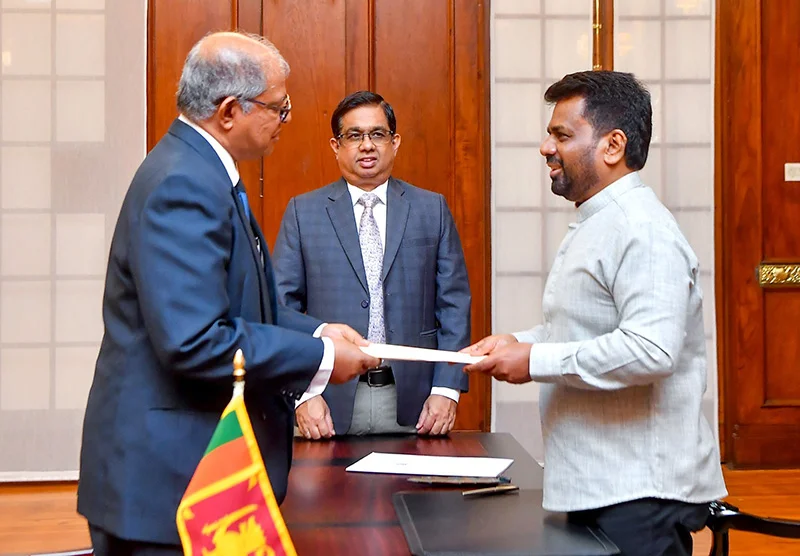
President Anura Kumara Dissanayake has appointed Court of Appeal Judge Mayadunna Sri Mevan Anthony Edirimannasuriya Corea as the Acting President of the Court of Appeal.
The appointment has been made as President’s Counsel Nalin Rohantha Abeysuriya, who currently serves as President of the Court of Appeal, will be overseas until the 24th.
Accordingly Justice Mayadunna Corea was sworn in as Acting President of the Court of Appeal before President Anura Kumara Dissanayake at the Presidential secretariat last morning (21).
Secretary to the President Dr Nandika Sanath Kumanayake was also present at the occasion.

High Court convicts 14 over deadly Easter bombings

Mandhana, Shafali and Ghosh lead dominant India to Asian Games gold

Fatima Sana and Umm-e-Hani secure bronze for Pakistan in Asian Games

India bat first in Asian games womens cricket final

Showers about 100mm will occur in the Western, Sabaragamuwa, Central and North-western provinces and in Galle and Matara Districts

Govt. confident of 2/3 majority despite NPP split speculation

‘Dates have the highest sugar content to fight Coronavirus’

Sunday Island 27 December – Headlines

#SundayIsland 17th December – Headlines

Sunday Island – 28th March

Sunday Island Headlines – 21 March

Sunday Island – 21st February – Headlines
-

 News6 days ago
US embassy won’t comment on IGP’s probe into joint drug raid
-

 News4 days ago
Shanakiyan urges urgent action over reported death sentence for Lankan in Saudi Arabia
-

 News5 days ago
Bid for Basil’s extradition nears final stage: Police
-

 Business6 days ago
All-new Bolero MaXX unveiled in Sri Lanka
-

 News3 days ago
Namal Rajapaksa Buddhist gambit fails, bail denied
-
 Opinion6 days ago
A journalist who wrote across the divide
-

 Editorial7 days ago
More fuel price shocks shrouded in secrecy
-

 Sports7 days ago
MAS Holdings, official clothing sponsor of Sri Lanka team at Aichi–Nagoya 2026 Asian Games