
Latest News
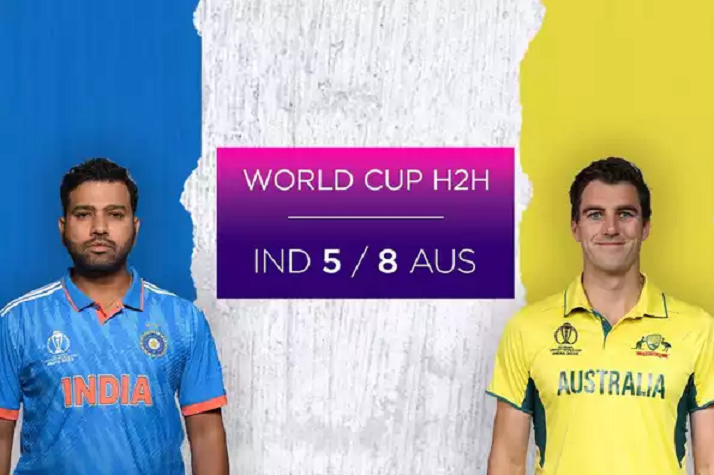
World Cup head to head: India vs Australia

13th June 1983: Trevor Chapell masterclass helps Australia overwhelm India
The first-ever match-up between the two teams came up only in the third edition of the tournament. It was a strange co-incidence that both teams came into the match with underdog status. India’s record in the previous two tournaments was abysmal while Australia themselves were trying to recover during the ‘post-Packer’ phase which had robbed them of several star players. In the era of 60-over games, this match didn’t quite leave up to its billing.
Batting first, Australia rode on the brilliance of Trevor Chappell, who made a fine 110. He was well supported by captain Kim Hughes (52) and Graeme Yallop (66) as they finished with an imposing total of 320 for 9, this despite Kapil Dev coming up with career-best figures of 5 for 43. India were never in the chase and only a swashbuckling 27-ball 40 from Dev saved them from falling to a two-digit score. They were bundled out for 158, losing the contest by a whopping 162-run margin. The highs of beating West Indies and Zimbabwe in the first two matches had come crashing down.
20th June 1983: Binny stars as India gain semis berth
Having been mauled when the two teams met a week back in Nottingham, India extracted sweet revenge with an equally convincing 118-run win at Chelmsford, which also helped them qualify for the semi-finals of the mega tournament. Opting to bat first, India rode on the combined contributions of the entire batting order – with nine batsmen reaching double figures as they posted a respectable 247 on the board, despite being bowled out with 26 balls to spare.
Five batsmen crossed 20, but none could top Yashpal Sharma’s 40. For the bowling side, Rodney Hogg and Jeff Thomson took three wickets each. Chasing 248, Australia collapsed from 46 for 1 to 78 for 7 and with that their hopes of qualifying to the semis were in tatters. Roger Binny was the star performer, finishing with four wickets and so did Madan Lal. India had not only emphatically beaten Australia, but they were through to their maiden World Cup semi-final.
9th October 1987: The Chenauk classic:
One year before the 1987 classic World Cup game between India and Australia, Chepauk had hosted the now famous tied Test. As the defending champions and playing at home for the first time in a World Cup match, India were the obvious favourites, but up against them were the steely Australians. Asked to bat first, the visitors rode on the back of a fine opening partnership worth 110 from David Boon and Geoff Marsh, with the latter going on and scoring a hundred. Dean Jones chipped in with a quick 39 and the eventual total got a two-run boost at the break after India captain, Kapil Dev, acceded to Australian claims that a shot from Jones, which was actually a six was erroneously declared as a four.
India were in no mood to give up though and at one stage were bossing the game, having reached 202 for 2 after 35 overs. The match though turned on its head as Craig McDermott came back to strike four times, his victims being NS Sidhu, Dilip Vengsarkar, Mohammed Azharuddin and Ravi Shastri. The ice cool Steve Waugh then held his nerve to dismiss Maninder Singh in the final over, with India ironically 2 runs short of the target.
22nd October 1987: All-round Azharuddin steers India home
India exacted sweet revenge for their opening Chennai debacle with a comprehensive 56-run win in New Delhi. Asked to bat first by Australia, India found several contributors with Sunil Gavaskar, NS Sidhu and Dilip Vengsarkar, all going past the half-century mark. Mohammed Azharuddin then provided the icing on the cake, making a 45-ball unbeaten 54 as India finished at an imposing 289 for 6. Australia started well in the chase with the iconic opening pair of David Boon and Geoff Marsh adding 88 for the first wicket. But the dismissal of Boon, for 62, derailed the chase and Allan Border’s men never really recovered, despite Steve Waugh’s battling 42. He was one of Azharuddin’s three victims as Australia eventually folded for 233.
1st March 1992: India lose a thriller at the Gabba
The rain rule, under which the 1992 World Cup was played, has had many nodding in disapproval and India became one of its earliest victims, having lost three overs in the chase for just two runs. Rain stopped play with India at 45 for 1 in the 17th over and when play resumed – the original target of 238 from 50 overs was reduced to 236 off 47 overs. Mohammed Azharuddin led a spirited chase, making a fine 93 and Sanjay Manjrekar made a rapid 42-ball 47.
However, both were dismissed run-out and it was left to Kiran More to score the 13 needed off the last over. He cheekily lapped the first two balls from Tom Moody to the long leg fence, but fell while trying to repeat it for a third time. Manoj Prabhakar ran himself out while trying a single off the penultimate ball and it left Javagal Srinath with the task of scoring four runs from the last ball.
The ace Indian pacer hoisted Moody wide of long-on but didn’t have the power to clear the long straight boundaries of Gabba. Steve Waugh, normally the coolest Aussie under pressure, fumbled with the catch, but recovered quickly to throw it back to the keeper – Boon whipped the bails off and found Venkatapathi Raju well short, as he was going back for the match-tying third run. India had lost the match by one run. Earlier, Dean Jones’ sparkling 90 had helped the hosts pile up 237 on the board, despite contrasting figures of 3 for 41 by both Kapil Dev and Manoj Prabhakar.
27th February 1996: Another cliffhanger, another win for Australia
The Wankhede turned up in full force to see an epic clash, to watch legends in action and finally to see Sachin Tendulkar ride India to victory. They got to see a bit of everything, but even a masterclass from Sachin Tendulkar wasn’t enough to give India a win. Batting first, Australia rode on a sensational 126 from Mark Waugh as they posted 258 on the board. When he was the fourth wicket to fall with the score on 232, his team looked poised for a big score, only for India to stage a fine comeback, taking the last six wickets for 26 runs.
The reply started shakily and India were two down in no time. It was then followed by a thrilling counter-attack, as Tendulkar dominated half-century partnerships with both Azharuddin and Manjrekar. It needed a cheeky wide from Mark Waugh to end Tendulkar’s dominance on 90 and that ended India’s fight, despite Manjrekar’s gutsy knock of 62. Eventually, India were bowled out for 242, 16 runs short of the target with Damien Fleming taking 5 for 36.
June 4th 1999: McGarth leaves India done and dusted
India’s chase of a stiff 283 target was all but over in 44 balls. The cream of their batting – which included Sachin Tendulkar, Saurav Ganguly, Rahul Dravid and Mohammed Azharuddin – were back in the hut with only 17 on the board. Ajay Jadeja made a century and Robin Singh chipped in with 75, but the damage had already been done and India fell short by a huge 77-run margin at the Kennington Oval. Asked to bat first under dark skies, Australians were welcomed to the crease by the sun which came out and Mark Waugh ensured that he cashed in on the gift. The elegant right-hander top-scored with 83 and found plenty of support down the order as Australia racked up a massive score on the board.
February 15th 2003: Australia pulverize abject India
An Australia v India World Cup has never been as one-sided as this one. Sample this, India were blown away for just 125, despite Sachin Tendulkar’s 36 and it was chased down with nine wickets and 166 balls to spare. India called correctly and that’s the only thing that went their way in Centurion. Brett Lee and Jason Gillespie took three wickets apiece to cripple India’s middle-order and only Harbhajan Singh’s feisty 28 let India get to the three-figure mark. Adam Gilchrist and Matthew Hayden then added 100 runs for the opening wicket to ensure that the victory was a mere formality.
March 23rd 2003: Ruthless Ponting decimates India
India won the crucial toss in the final of the 2003 World Cup and inexplicably asked Australia to bat first on a placid looking track. Perhaps, the wounds of Centurion hadn’t healed and Ricky Ponting and his team didn’t need a second invitation to make merry. Adam Gilchrist started the run-fest, making a 48-ball 57 and then Ricky Ponting took over. The Australian captain blasted a 121-ball 140*, one of the highlight innings of the tournament and together with Damien Martyn (84-ball 88*) added 234 runs for the third wicket as Australia finished with 359 for two.
The seeds of India’s nervousness were sowed in the first over with Zaheer Khan spraying wides and no-balls in a 15-run over and it ended with boundaries being splattered all over the Bull-ring. India’s chase depended largely on Sachin Tendulkar, but the master’s duel with Glenn McGrath was short-lived, the Aussie speedster sending the maestro back in the first over. Virender Sehwag’s 82 and some rain gave India hope, but they were snuffed up rather quickly as Australia marched to a comprehensive 125-run win at Johannesburg and back-to-back World titles.
24th March 2011: India stop Australia’s title winning run
There was plenty on offer ahead of India’s quarter-final clash against Australia at Ahmedabad. As co-hosts and with a team that never had been that strong, India were one of the perennial favourites and they were up against a team that was gunning for an unprecedented fourth straight world title. Australia were a team that was on the wane, but with the experience of winning three titles on the trot, it was a team that couldn’t be underestimated.
As such a quarter-final clash between two heavyweights was a tad too early in the tournament. Batting first, Ricky Ponting brought back memories of Johannesburg with a well-crafted hundred. Giving him good support was Brad Haddin (53), while David Hussey added the finishing touches with a 26-ball 38.
The target of 261 wasn’t daunting but in a winners-take-all game, it was challenging. Sachin Tendulkar and Gautam Gambhir led the chase with aplomb, but when MS Dhoni was dismissed in the 38th over with the score reading 190, it was left to Yuvraj Singh to guide the team from choppy waters. He found an excellent hand in Suresh Raina and the pair added an unbeaten 72-run stand for the sixth wicket to take India home. The loss ended Australia’s World Cup hegemony and further strengthened India’s position as the leading contender.
26th March 2015: Smith pilots Australia to another World Cup final
Steven Smith took over the controls from Ricky Ponting and India were on a hiding for nothing as they surrendered their defence of the World Cup crown with a massive 95-run loss at the Sydney Cricket Ground. Nothing much went right for the men in blue once they lost the toss. Smith (105) and Aaron Finch (81) added 182 runs for the second wicket and the rest of the order chipped in nicely with useful twenties as the hosts finished at 328 for 7 – a match-winning total in most 50-over contests.
India did stay in the hunt as their openers, Shikhar Dhawan and Rohit Sharma, added 76 runs from 77 balls, but it all went downhill once the pair was broken. MS Dhoni fought a lonely battle with 65, but it was clear that even the normally composed Indian skipper had given up the chase. Eventually, India were bundled out for 233 to bow out of the tournament.
9th June 2019: India produce a statement win
Opting to bat, it was an emphatic batting performance from India at the Kennington Oval. They scored just 41 runs off the first ten overs but ensured that they didn’t lose a single wicket in that phase. That laid the platform for the two-time champions to post a massive total on the board. Shikhar Dhawan top-scored with a terrific ton, Rohit Sharma and Virat Kohli notched up their respective fifties and that was followed by cameos from Haridk Pandya, MS Dhoni and KL Rahul. India finished on 352 for five – the highest-ever World Cup total against Australia.
In reply, the defending champions got off to a cautious start. A mix-up between Aaron Finch and David Warner resulted in the former’s dismissal. Warner and Steve Smith recorded their fifties but they never really threatened to take the game away from their opponents. The arrival of Glenn Maxwell increased Australia’s run-rate as he hit a flurry of boundaries but Bhuvneshwar Kumar pegged them back by dismissing Smith and Marcus Stoinis in the same over. Maxwell perished to Yuzvendra Chahal in the very next over. Alex Carey struck a 25-ball fifty but the Aussies kept losing wickets and ended up falling short of the target by 36 runs with Jasprit Bumrah and Bhuvneshwar picking three wickets apiece.
8th October 2023: Ruthless India start on a winning note
India started their 2023 World Cup hunt at home on the right note with a 6-wicket win over five-time champions Australia at the MA Chidambaram Stadium in Chennai. Pat Cummins won the toss and had no hesitation to bat first. On a slow and dry pitch, India played three spinners and reaped the benefits as they bowled out the Australians for 199. There were a few starts with Steven Smith and David Warner making 40s, but none of the starts were converted into a big score.
Everyone who bowled on that day took wickets for India, with Jasprit Bumrah and Kuldeep Yadav taking 2 each. A 200-run chase should have been straightforward, but India lost Rohit Sharma, Ishan Kishan and Shreyas Iyer, all for ducks as they slipped to 2 for 3. Australia smelt blood and could’ve taken further control had Mitchell Marsh not grassed a simple chance off Virat Kohli, when India’s score read 20. It proved to be a costly miss as Kohli teamed up with KL Rahul to add 164 for the 4th wicket. Rahul’s takedown of Adam Zampa was the talking point going further in the tournament. Kohli fell for 85, but KL Rahul took India past the line, fittingly hitting the winning six to remain unbeaten on 97.








Latest News
A new curriculum will be introduced for preschools in 2027, while steps will also be taken to train teachers accordingly – PM

Prime Minister Dr. Harini Amarasuriya stated that a new curriculum will be introduced for preschools in 2027, while steps will also be taken to train teachers accordingly and to regulate preschools through a regulatory authority.
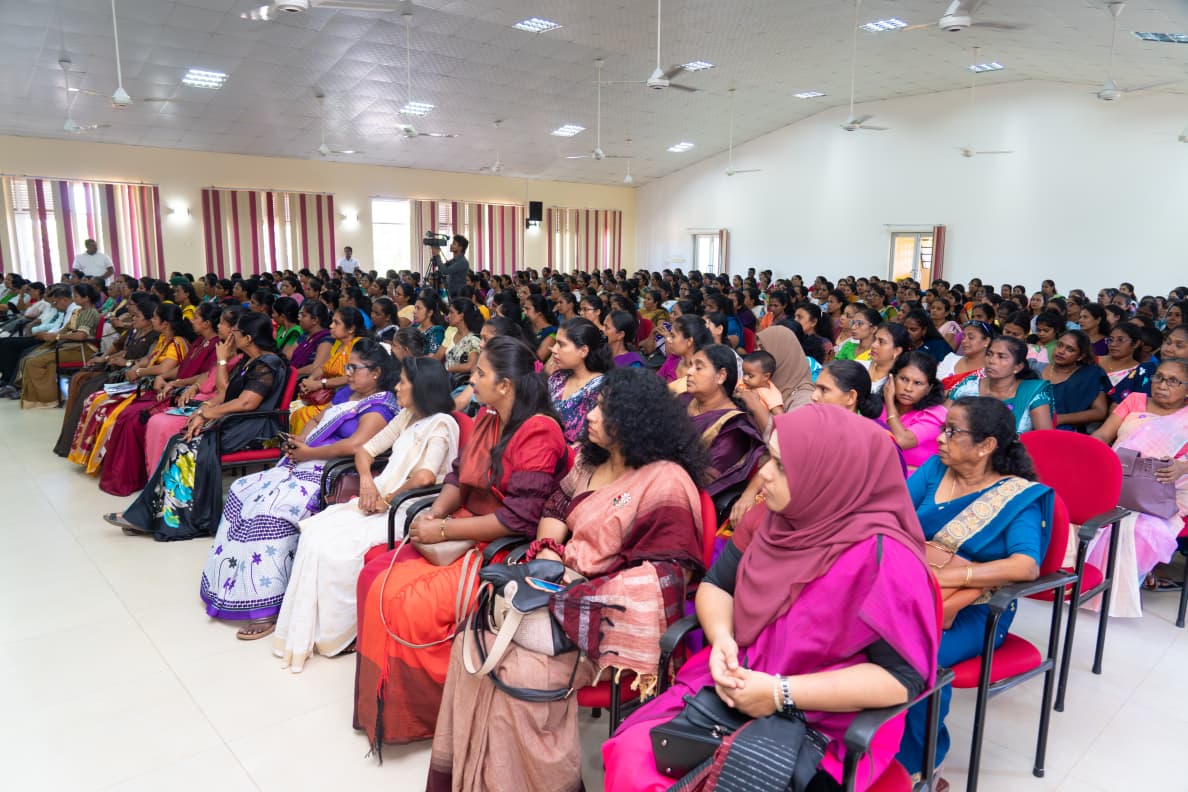
The Prime Minister made these remarks while addressing an awareness programme for preschool teachers in the Hambantota District on education reforms, held on Sunday (15) at the Ambalantota Pradeshiya Sabha Auditorium.
During the programme, preschool teachers briefed the Prime Minister about the challenges they currently face. Responding to their concerns, Dr. Harini Amarasuriya further stated:
“The issues within the preschool system cannot be discussed separately from the broader crisis in society and in the education sector. When we assumed office in 2024, our primary challenge was to free the country from its debt burden and to establish. a sound economic indicators.
Although 2025 was a challenging year, we were able to bring the country’s economy to a certain level of stability and manage the national budget accordingly.
While we were working towards economic recovery, the war in the Middle East began, which has had certain impacts on our country as well.
A significant amount of Sri Lanka’s foreign remittances come from our fellow citizens working in the Middle East. Today, both their livelihoods and employment are under threat. In addition, a large number of tourists travelled to Sri Lanka through Middle Eastern airspace, and the closure of those air routes and airports has reduced tourist arrivals. Another issue concerns fuel transportation. This problem has affected not only Sri Lanka but many countries around the world. If the war continues for a long period, it will have further impacts on us, and therefore we must be prepared. We also need to manage the economy carefully and reduce certain expenditures.
Although we have the ability to borrow, our intention is not to weaken the country’s economy by relying on loans.
You are aware that we have begun implementing education reforms. Within that policy framework, we are also taking steps to reform preschool education. So far, the establishment of preschools and early childhood development has not been carried out in a systematic manner. Therefore, we must regulate and standardize all preschools, which is not an easy task.
First, all preschools must be formally registered. We have already prepared a curriculum for teacher training. In addition, we plan to introduce a new curriculum for preschools in 2027, provide teacher training accordingly, and regulate preschools through a regulatory authority. A recognized curriculum has also been prepared for the preschool diploma. In the future, priority for preschool teachers will be given based on these qualifications. We will also take gradual steps to enhance the professionalism of preschool teachers and establish a proper salary structure”.
The Prime Minister further stated that preschools fall under the authority of Provincial Councils and Pradeshiya Sabhas, while the line ministry can only provide policy recommendations. She also emphasized that issues related to preschools should be addressed in a systematic manner through structural committees and District Development Committees.
Member of Parliament Nihal Galappaththi and other public representatives, along with preschool teachers from the Hambantota District attended the awareness program.
(Prime Minister’s Media Division)
Latest News
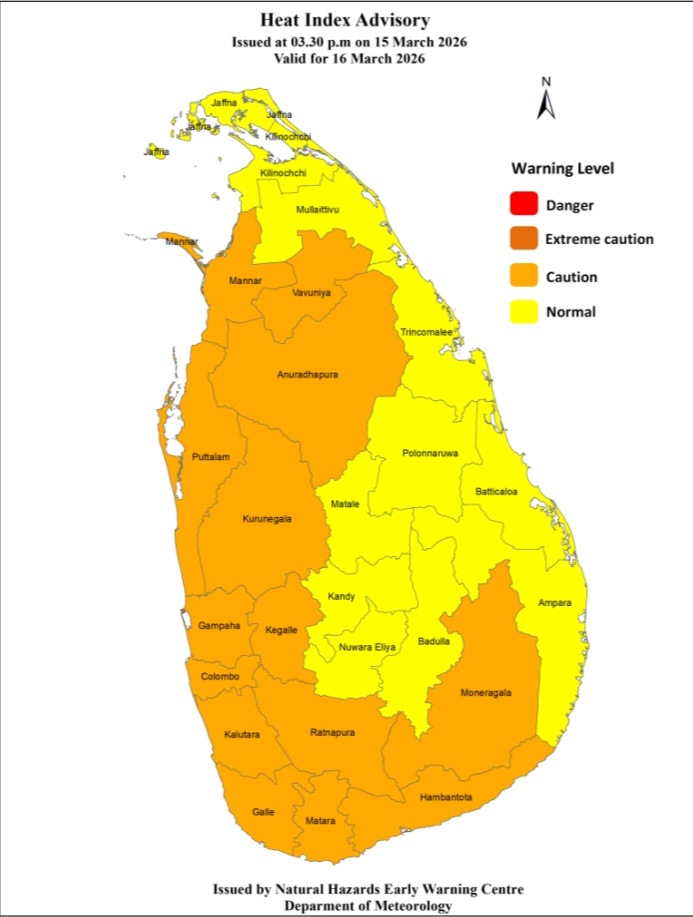
Heat Index at ‘Caution level’ at some places in the Western, Sabaragamuwa, Southern and North-western provinces and in Monaragala, Mannar, Anuradhapura and Vavuniya districts
Warm Weather Advisory
Issued by the Natural Hazards Early Warning Centre of the Department of Meteorology at 3.30 p.m. on 15 March 2026, valid for 16 March 2026.
The public is warned that the Heat index, the temperature felt on human body is likely to increase up to ‘Caution level’ at
some places in the Western, Sabaragamuwa, Southern and North-western provinces and in Monaragala, Mannar, Anuradhapura and Vavuniya districts.
The Heat Index Forecast is calculated by using relative humidity and maximum temperature and this is the condition that is felt on your body. This is not the forecast of maximum temperature. It is generated by the Department of Meteorology for the next day period and prepared by using global numerical weather prediction model data.
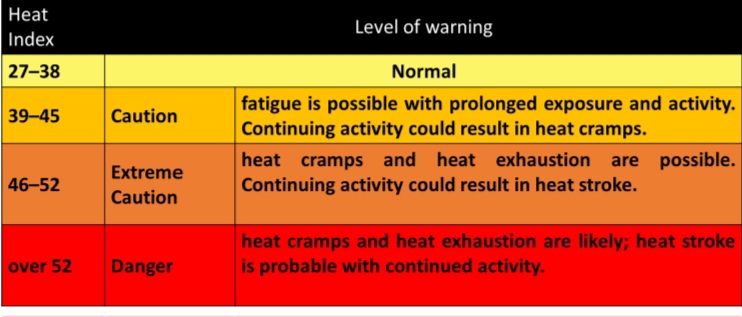
Effect of the heat index on human body is mentioned in the above table and it is prepared on the advice of the Ministry of Health and Indigenous Medical Services.
ACTION REQUIRED
Job sites: Stay hydrated and takes breaks in the shade as often as possible.
Indoors: Check up on the elderly and the sick.
Vehicles: Never leave children unattended.
Outdoors: Limit strenuous outdoor activities, find shade and stay hydrated.
Dress: Wear lightweight and white or light-colored clothing.
Note:
In addition, please refer to advisories issued by the Disaster Preparedness & Response Division, Ministry of Health in this regard as well. For further clarifications please contact 011-7446491
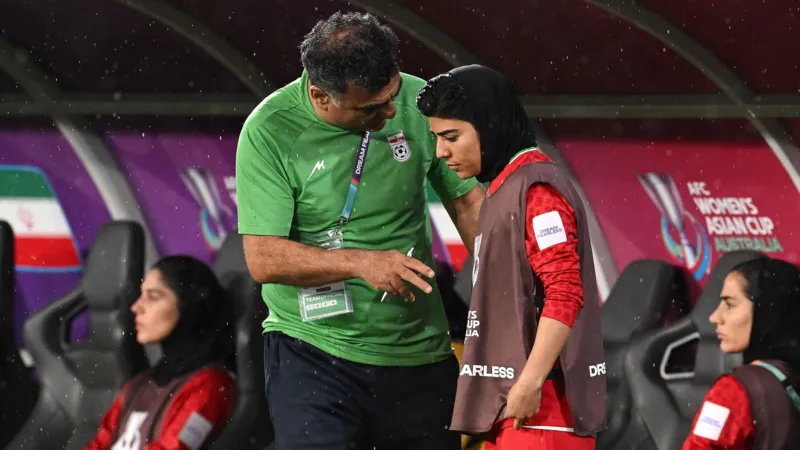
Three more members of the Iranian women’s football delegation – who were given humanitarian visas to stay in Australia – have changed their mind and will return home.
The trio have been named by human rights activists in the Iranian diaspora as Zahra Soltan Meshkehkar, Mona Hamoudi, and Zahra Sarbali.
Concerns grew for the Iranian team after they were silent for the country’s anthem in their opening Asian Cup match against South Korea on 2 March – which led to them being branded “war traitors” in Iran.
Confirming the decisions, Australia’s home affairs minister said his government had done everything it could to ensure the women were given the chance to have a safe future in the country.
“Australians should be proud that it was in our country that these women experienced a nation presenting them with genuine choices and interacted with authorities seeking to help them,” Tony Burke said in a statement.
“While the Australian government can ensure that opportunities are provided and communicated, we cannot remove the context in which the players are making these incredibly difficult decisions.”
Iran’s sports ministry also earlier confirmed the news, first reported by the Islamic Revolutionary Guard Corps-linked Tasnim News Agency, in a statement.
“The national spirit and patriotism of the Iranian women’s national football team defeated the enemy’s plans against this team,” the statement says, also accusing Australia’s government of “playing in Trump’s field”.
Tasnim said the three were on their way to Kuala Lumpur in Malaysia to join the rest of the squad and were “returning to the warm embrace of their families and homeland after withdrawing their asylum application in Australia”.
It said they had resisted “psychological warfare, extensive propaganda and seductive offers”.
It means that, of the seven who initially said they wanted to stay in Australia, only three now remain as defectors. One of the players made the same decision to return to Iran on Wednesday.
Hamoudi and Sarbali were among the original five who refused, after giving minders the slip at the team’s hotel on the Gold Coast, south of Brisbane, last Monday and being taken to a safe house by Australian Federal Police.
Zahra Soltan Meshkehkar, a member of the team’s technical staff, was one of two more women from the group to seek asylum the next day. The other – Mohaddeseh Zolfi – changed her mind hours after being given the right to stay. She is understood to have already rejoined the team.
There was concern in Australia that members of the team and their families might face repercussions in Iran after the players refused to sing the national anthem.
One conservative commentator on Iranian state media accused them of being “wartime traitors” and called for a harsh punishment.
The team did sing the anthem in their last two games before they were eliminated on Sunday, leading critics to believe they had been told to sing by government officials accompanying them during the tournament.
The remaining Iranian players left Australia on Tuesday night local time – two days after they were knocked out of the Asian Cup.
[BBC]

A new curriculum will be introduced for preschools in 2027, while steps will also be taken to train teachers accordingly – PM

Be mindful of the accuracy of information before sharing it on social media – PM

Heat Index at ‘Caution level’ at some places in the Western, Sabaragamuwa, Southern and North-western provinces and in Monaragala, Mannar, Anuradhapura and Vavuniya districts

Showers expected at several places in the Central, Sabaragamuwa, Southern, North-western, Eastern and Uva provinces after 2.00 pm.

Fuel rationing begins: Police deployed as queues return

GMOA warns fuel quota could disrupt health services

‘Dates have the highest sugar content to fight Coronavirus’

Sunday Island 27 December – Headlines

#SundayIsland 17th December – Headlines

Sunday Island – 28th March

Sunday Island Headlines – 21 March

Sunday Island – 21st February – Headlines
-

 News6 days ago
Prof. Dunusinghe warns Lanka at serious risk due to ME war
-

 News4 days ago
Historic address by BASL President at the Supreme Court of India
-

 Sports5 days ago
Royal start favourites in historic Battle of the Blues
-

 Sports4 days ago
The 147th Royal–Thomian and 175 Years of the School by the Sea
-

 Business5 days ago
BOI launches ‘Invest in Sri Lanka’ forum
-

 News5 days ago
CEBEU warns of operational disruptions amid uncertainty over CEB restructuring
-

 News4 days ago
Power sector reforms jolted by 40% pay hike demand
-

 Features5 days ago
Indian Ocean zone of peace torpedoed!