
Editorial
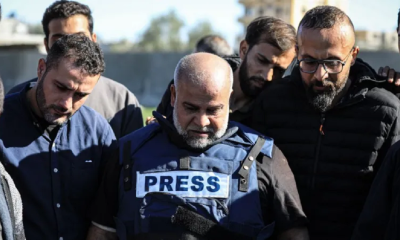
The continuing onslaught on Gaza

As many as 159 of Sri Lanka’s 225 Members of Parliament have signed a petition expressing support for the besieged Palestinian people, demanding an immediate halt to Israel’s disproportionate response to the atrocity committed by Hamas on October 7. This document, no doubt initiated by the Muslim MPs in the House, was duly delivered to the Palestine Embassy in Colombo with attendant publicity. The chances are there would have been many more signatories on the list had its promoters had the time and the reach to canvass all MPs.
Today’s communications being what it is, most of the world has been privy to dramatic images of the horror that have been unleashed and nobody, but nobody, would want the ongoing carnage to continue for a single second longer.
The support of the United States government to Israel is a given. But the number and size of the protests in the U.S. itself to what is happening in Gaza is an index of public opinion in that country and elsewhere to the ongoing carnage. Such protests are basically fueled by instincts of humanity, inherent in all humans, with other considerations largely ignored by the large mass of the people.
In fact, there was a release, on November 13, by TikTok, of Osama bin Laden’s “Letter to the American People” after the 9/11 terrorist attacks, which was originally translated and published by the Guardian in 2002. This letter, an attempt by bin Laden to justify the killing of nearly 3,000 Americans, went viral after it was posted by TikTok in the US, generating ammunition for many American antisemitic groups protesting the continuing carnage in Gaza.
The text of bin Laden’s letter was immediately withdrawn by the media on the grounds that it would provoke more antisemitic protests. Some TikTok users thought that “despite it being full of antisemitic garbage and Islamic-fundamental nuttery, bin Laden’s letter made some good points critiquing American foreign policy”.
American support for the Israelis after the October 7 attacks was overwhelming. President Biden visited Tel Aviv immediately after the attacks, and was warmly greeted by Prime Minister Netanyahu. Biden’s initial statement indicated complete support for Israel after they had suffered this brutal attack by Hamas.
“As long as the United States stand – and we will stand forever – we will never let you be alone”. He went on to say, “You are a Jewish state, but you are also a democracy. And like the United States, you don’t live by the rules of terrorists. You live by the rule of law. What sets us apart from the terrorists is we believe in the fundamental dignity of every human life – Israeli, Palestinian, Arab, Jew, Muslim, Christian – everyone”.
A typically sanctimonious statement which has not been true in the past, and is certainly not true today.
The Israel Defense Force (IDF) offensive since October 8, with support of the American government, has murdered Palestinian civilians in Gaza, men, women and children, 11,200 and counting, over the past five weeks. They had completely stopped humanitarian assistance to Gaza – water, food, medications, fuel – until last week, when they relented under UN and international pressure. They now allow a barely sufficient number of trucks carrying such aid to Gaza every day.
They have almost complete control of Gaza City, and refuse the ceasefire demanded by the international community. Instead, they have agreed to “Humanitarian Pauses”, a couple of hours respite daily, to enable Palestinian civilians escape to South Gaza with their families and what they can carry in their hands. Where they will be only marginally safer, as the IDF has regular airstrikes in South Gaza also.
And last week, the Israelis committed the ultimate war crime, attacking the Al Shifa hospital, the largest in Gaza City, endangering the lives of doctors, nurses and patients including infants, some in incubators. The IDF stated that they had uncovered, late last Thursday, a tunnel shaft beneath the hospital with weapons, but no independent verification has been made available to date.
A recent nationwide poll released Thursday showed that American sympathy, especially among younger voters, has been sinking during October, with over 50% saying their sympathies were more with the Palestinians.
King Abdullah II of Jordan, a close American ally, acknowledged a pretty reasonable but cynical opinion held by moderate Europeans and Americans: “The message is loud and clear. Palestinian lives matter less that Israeli ones. Our lives matter less than theirs. The application of international law is optional. And human rights have boundaries – they stop at borders, they stop at races, and they stop at religions”.
President Biden had warned Prime Minister Netanyahu, during his visit to Israel soon after October 7, not to make the mistake of getting “consumed by rage” as the Americans did after 9/11. A warning largely ignored by Bibi (as Netanyahu is known), the consummate Israeli hawk, whose one ambition is a one-state solution to the Palestinian problem. The Jewish State of Israel.
International indignation against the continuing carnage by the Israelis is reaching fever-pitch. The feeling is that despite Israeli claims that they target only Hamas terrorists, they are engaging in an all-out assault on the total population of Gaza. As an indication of the intense gravity of this assault, during just the first week after October 7, Israel dropped more than 6,000 bombs on Gaza in one week, nearly as many as the Americans dropped in Afghanistan in a full year.
The reality in Gaza mirrors all the components of genocide according to the statutes of the Geneva Convention. A federal complaint in the US has called for an end to the billions of military support given annually to the Israelis. President Biden has been sued, by the Center for Constitutional Rights (CCR), based in New York, on behalf of Palestine human rights organizations, for “failure to prevent and complicity in the Israeli government’s unfolding genocide”.
Too little, too late. Netanyahu’s ambitions for a one-state solution, with the “elimination” of the Palestinian people, is almost a done deal.






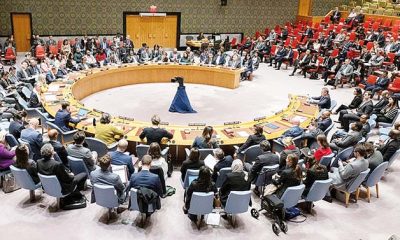


Republicans on Thursday postponed a vote on a Democratic-sponsored war powers resolution to rein in President Donald Trump’s military campaign in what could be seen as a missed opportunity to pave the way for a negotiated settlement of the Iran conflict. They did so as it became clear that the GOP would not be able to muster a majority to defeat the resolution which, if passed, would have compelled Trump to stop the Iran war. Republicans hold slender majorities in both chambers of Congress. They are doing everything in their power to scuttle the war powers resolution. However, they cannot go on postponing the vote on it indefinitely.
Some of the US legislators who voted to scuttle a previous war powers resolution have changed their position and expressed willingness to put Trump in a straitjacket to save lives, funds and America’s international image. This is believed to be the main reason for Trump’s decision to postpone US withdrawal from the current ceasefire and resume strikes on Iran. Three Republicans voted for the previous war powers resolution which was almost passed.
Trump’s decision to postpone military operations has also been attributed to the depletion of a substantial portion of America’s advanced missile defence inventory during the conflict with Iran, according to a report published by The Washington Post. This revelation is reported to have caused serious concerns in Washington over its capacity to sustain military commitments vis-a-vis multiple theatres simultaneously, particularly in the Indo-Pacific, where allies such as Taiwan, Japan and South Korea remain heavily dependent on the American security umbrella. Military inventories take years to replenish. US arms sales to Taiwan have already been paused to ensure that the Pentagon has enough munitions for the Iran war, according to media reports. Ukraine is likely to face a similar fate.
Congress members are becoming increasingly disillusioned with Trump’s war, which has driven domestic fuel prices up. Even the patience of Republicans who wholeheartedly backed Trump’s military campaign have had a change of heart due to the prolongation of the war and the unexpected consequences of it, such as Iran using the Hormuz Strait as a strategic lever to shift the war to the economic front. Besides, Iran has demonstrated remarkable resilience and a mindset that it is unconcerned about the consequences of its counterattacks. It has warned Washington that the Gulf of Oman could become a ‘graveyard’ for US Navy ships deployed in the region if it continues its military aggression. Tehran has so far sprung several surprises for the US and Israel, and its aforesaid warning cannot be dismissed as mere rhetoric.
It will be in the interest of global peace for Congress itself to step in to curb Trump’s war powers and de-escalate the West Asia conflict, without letting it spiral out of control.
An early end to the Iran conflict will benefit the entire world tremendously. Besides the colossal loss of lives and the destruction of assets, including oil infrastructure, the war has taken a heavy toll on almost all countries, and the developing nations are the worst hit. Economies around the world are reeling from massive oil price increases.
The war powers resolution is based on a law passed during the Vietnam war to enable Congress to regain power over external conflicts, but Trump has publicly called it unconstitutional. He has undermined vital US systems and institutions. When he failed to secure a consecutive second term, he claimed the election had been stolen by his political opponents and allegedly provoked the Capitol attacks in 2021. Now, he is trying to arrogate to himself some congressional powers related to war.
If the GOP continues to support Trump’s military campaigns, it will do so at the risk of losing its hold on Congress, for Trump’s popularity ratings are trending downward, with midterm elections drawing near. Even when the President is popular, his party tends to lose seats in midterm elections. Trump’s approval rating has plummeted to 35%, according to Forbes. Several polls have also found that 64% of US voters think it was wrong for Trump to go to war with Iran. Both the US and the rest of the world will gain if the war powers resolution is passed and Trump made to act with restraint.

Saturday 23rd May, 2026
SJB MP Mujibur Rahman has alleged in Parliament that on the eve of the announcement of a 50% customs duty surcharge on vehicle imports, Letters of Credit (LCs) for 1,782 vehicles had been opened by three close associates of President Anura Kumara Dissanayake. Previously, the Opposition claimed that the number of LCs opened on that day exceeded 4,000.
Rahman said the number of LCs opened during the week prior to the announcement of the surcharge mounted to 4,000. The government and the Opposition have locked horns over the issue. It has also been claimed in some quarters that some other vehicle importers also benefited from inside information.
It may not be fair to level sweeping allegations against all vehicle importers. They watch foreign exchange rates, particularly the depreciation of the rupee, global issues and trends, and respond accordingly without the benefit of inside information. When the rupee began to tumble, some vehicle importers may have expected the government to resort to drastic measures, such as import restrictions, to manage the situation. It is natural that traders place bigger orders when the rupee shows signs of continuous weakening. Vehicle importers are no exception.
When it became clear that the rupee free fall would last for a while, vehicle importers may have opened more LCs. That is the name of the game in the business world. It is a gamble, though. If the West Asia conflict goes away by any chance, with the global oil markets stabilising and prices returning close to the pre-war levels, the rupee will rally and the vehicles, imported during the rupee depreciation, may not fetch the desired prices and the importers may not get the expected returns on their investment in such an eventuality. Even ordinary consumers react in a similar manner and stock up on goods that are expected to be in short supply. Most filling stations hide their stocks on the eve of monthly fuel price revisions, for the trend is for the fuel prices to increase in this country. They have no need for inside information to do so. They go by market trends and act with impunity to profiteer. Some of them also place bigger fuel orders towards the end of every month, expecting price increases.
However, the possibility of some vehicle importers having benefited from their political connections and received inside information about the customs duty surcharge in advance cannot be ruled out. Even Budget secrets are leaked to some businesses in this country. Financiers of successive governments have earned billions of rupees in profit by hoarding cigarettes in the run-up to Budgets that increased tobacco prices. Political leaders are known to work hand in glove with business leaders.
As for the allegation that the incumbent government leaked information about the duty surcharge to its cronies, what needs to be examined is whether there were unusually large vehicle orders placed in the run-up to the announcement of the surcharge, and whether the importers concerned are known to have links to the ruling coalition. If only a few vehicle importers who backed the JVP-NPP election campaigns placed huge vehicle orders just days before the surcharge was imposed, it could raise questions of favouritism. A graph showing the number of vehicles imported by leading traders, especially the ones with political links, during the past month may reveal unusual patterns, if any.
Now that the Opposition has levelled a very serious allegation against the government and some companies, the burden is on it to support its claim with facts and figures. The government ought to make all necessary information available if it has nothing to hide.
Friday 22nd May, 2026
The depreciation of the rupee continues, and the government is accused of making only half-hearted attempts to arrest it. The UNP has said the country is facing a very serious issue due to the uncontrolled tumble of the rupee, and during the 20 months since the current administration assumed office, the exchange rate has moved from around Rs. 292 at the time former President Ranil Wickremesinghe handed over office to around Rs. 354 against the US dollar. It has attributed the current situation to the JVP-NPP government’s failure to continue economic policies introduced by the previous administration and pointed to what it describes as a lack of a clear economic plan and failure to strengthen foreign reserves. According to the UNP, these factors have contributed to the rising value of the US dollar. The SLPP-UNP government was lucky that it did not face a global oil price hike and increasing shipping costs.
However, the Joint Apparel Association Forum (JAAF) has argued that the depreciation of the Sri Lankan rupee should be examined in the context of global pressures, such as increasing world oil prices and shipping costs. The rupee depreciation should not be interpreted as a sign that Sri Lanka’s economy is underperforming, JAAF has said. It has been pointed out that the Sri Lankan rupee has depreciated by 4.8% against the US dollar, the Indian rupee by 6.4%, the Nepalese rupee by 6.2% and the Indonesian rupiah by 5.2%.
The JAAF statement reflects the global economic reality, but Sri Lanka’s situation is more serious than that in many other countries. Sri Lanka is still recovering from an economic crisis. The government will have to go beyond imposing a 50% customs duty surcharge on vehicle imports to curtail the forex outflow, strengthen the rupee and shore up foreign currency reserves.
President Anura Kumara Dissanayake has urged the public to cut down on fuel consumption and help boost the country’s foreign currency reserves and arrest the rapid depreciation of the rupee. But they have already cut down on fuel consumption due to soaring oil prices.
President Dissanayake has claimed that a litre of diesel costs as much a Rs. 720, and a government subsidy on diesel amounts to Rs. 100 a litre. If a litre of diesel costs Rs. 720, as the President claims, are the private fuel retailers incurring huge losses by selling diesel at the current price (Rs. 392 a litre)? Is the Ceylon Petroleum Corporation overpaying for fuel? The increasing national fuel bill and the country’s forex woes cannot be blamed on the fallout from the West Asia crisis alone. True, the Iran conflict and the closure of the Hormuz chokepoint have driven the world oil prices up. However, the huge rise in Sri Lanka’s fuel bill from USD 98 million in February to a projected USD 522 million in May, as the President says, is also due to a massive increase in the use of diesel, etc., to operate the oil-fired power plants to compensate for the generation loss caused by substandard coal at the Norochcholai power complex.
With the government struggling to maintain an uninterrupted power supply by burning costly diesel, scheduled power cuts may not be far away. The Opposition has told Parliament that unofficial power cuts are already underway.
The national fuel bill no doubt must be curtailed, but there are other avenues that the government should explore to arrest the rupee’s tumble. Exporters have gained from the depreciation of the rupee, which they themselves have to take responsibility for to some extent. It has been alleged that Sri Lanka is deprived of most export proceeds due to various rackets. Exporters unlawfully park foreign exchange abroad. This practice is linked to exchange control violations, tax evasion, capital flight and, in some cases, even trade-based money laundering. Common methods used by unscrupulous exporters to avoid the repatriation of most export proceeds include the following as we have reported over the years, quoting experts: under-invoicing exports, over-invoicing imports, keeping proceeds abroad through offshore entities, use of “open account” arrangements, multiple invoicing and phantom shipments. Some fraudsters use hawala or informal settlement systems. The media has exposed these malpractices over the years, but in vain.
These export-related rackets have prompted many countries to require exporters to repatriate export proceeds within a relatively short period, submit shipping and banking documentation, and convert part or all export earnings into local currency. Sri Lanka has adopted some of these methods but no government has had the courage to go the whole hog to ensure compliance, for exporters have huge slush funds to bankroll election campaigns. The JVP-NPP government must get tough with the errant exporters who resort to malpractices and deprive the country of much-needed forex. Ensuring the repatriation of export proceeds in a proper manner is half the battle in breaking the back of the forex problem.
The need for a holistic approach to rupee depreciation cannot be overstated, but stringent measures are necessary to curb the outflow of foreign currency.

All-round Archer helps Rajasthan Royals secure last playoffs spot

Suicide car bomb attack on train in Pakistan kills at least 24

Landslide Early Warnings issued to the Districts of Colombo,Gampaha, Kalutara, Kegalle, Nuwara Eliya and Ratnapura

PM concludes official visit to UK

Suspect killed after shooting at Secret Service agents, officials confirm

Trump says Iran deal ‘largely negotiated’ including reopening Strait of Hormuz

‘Dates have the highest sugar content to fight Coronavirus’

Sunday Island 27 December – Headlines

#SundayIsland 17th December – Headlines

Sunday Island – 28th March

Sunday Island Headlines – 21 March

Sunday Island – 21st February – Headlines
-
 Features5 days ago
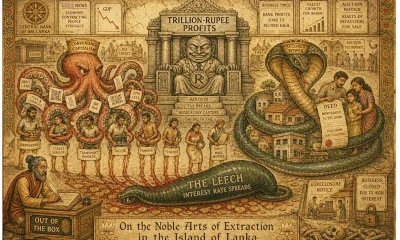
Octopus, Leech, and Snake: How Sri Lanka’s banks feast while the nation starves
-

 Opinion4 days ago
Murder of Ehelepola family, Bogambara Wewa and Sightings of Wangediya
-
 News4 days ago
Steps underway to safeguard Sri Lanka’s maritime heritage
-

 Sports5 days ago
Sri Lanka women’s volleyball team ready for Central Asian challenge
-

 Editorial4 days ago
A play without its protagonist
-
 Midweek Review5 days ago
Overall SLPP failures stressed in new Aragalaya narrative
-

 Opinion3 days ago
The need to reform Buddhist ecclesiastical order
-

 Features23 hours ago
The NPP’s pivot to the past