
Opinion
Are we so bad? – A reply


Many years ago, when I was still in school in fact, this is what a foreigner told my friends and me: Comparing India with Sri Lanka, he said: In India, leaders are good but the people are bad. In Sri Lanka, people are good but the leaders are bad. Leaving India aside, I have never had reason to disagree ever since, about his view of Sri Lankans; the escalation of crime notwithstanding. If crime has been increasing in the country, the politicians have much to explain.
What can the people do if these leaders cling on even when they are thrown out lock stock and barrel? They find a way to crawl back manipulating the laws and closing ranks throwing out principles and ethics and opening the gate to externalize internal problems.
The one and only leader who did not come back after losing at the polls is Sir John Kotalawala. In 1956, he lost to Mr S.W.R.D. Bandaranaike. After a few months, when mayhem was reigning in the country, and Mr B losing his life at the hands of his own supporters, some people went to Sir John and requested him to come back to politics. His reply was: “My people said they don’t want me. I will not come back.” He never did. I know of no other political leader in Sri Lanka who stood so tall. Even Dudley Senanayake returned to politics.
At a time when corruption is rife in the country, another two stories about Sir John are worth mentioning for the benefit of the younger generations who may not know, especially those in the universities. He built a school in his electorate. On the opening day, people were making speeches thanking him. In his reply, he said words to this effect: “Don’t thank me for this school. I did not build it with my money. I got a commission from the French company that was awarded a contract in the harbor. I built this school with that money.” Sir John was the Minister of Ports at the time.
Even though the people rejected him, he nevertheless, donated his walauwa, Kandawela to the people. It is a university today. I know of no other leader of the country who was so magnanimous as to donate his walauwa.
In stark contrast is the political culture of UK, the country where Dr Upul Wijayawardhana (UW) has chosen to live, forsaking his motherland, the country whose people, he says he feels so “strongly” for. In UK, when a party loses at the polls, its leader resigns, allowing the party to choose the next leader. This is a well-established political practice of the UK which has continued unbroken for well over seventy years except in one instance. Harold Wilson was PM from 1964 to 1970 and again from 1974 to 1976. Since the end of World War Two, UK has had no less than seventeen prime ministers. UK has moved further: The present Prime Minister is Rishi Sunak, a Hindu Indian, neither a white man nor a Christian.
Those agitating for constitutional reforms in Sri Lanka should take note and propose measures to raise the level of political morality to this level of UK. Leaders of mainstream parties who lead their parties to defeat at the polls should be required to return the baton back to their parties and go home, just like Sir John Kotalawala did.
If healthy political customs or practices such as these were current in our country’s politics, we’d never have had a thirty-year war and the country won’t be bankrupt today.
Living in cozy comfort, enjoying the freedom that UK provides and able to write without fear, UW will be doing a great service to the poor suffering people struggling to live in the land of his birth by writing on practices such as these and strive to improve Sri Lanka’s political morality, instead of writing to revive parties that are accountable for Sri Lanka’s racial and religious conflicts and corruption ultimately ending bankrupt.
I am pleased to hear UW supports a comprehensive investigation on the Channel 4 allegations. But he asks why it should be international? Not only must justice be done, justice must also appear to be done. The credibility of the government, both domestic and foreign, is so low, nobody will have any confidence that justice will be done if the government appoints another commission to inquire into the Channel 4 allegations or any other allegation. It’s only a waste of taxpayers’ money that must be collected for the coming elections. A study of the outcomes of commissions appointed by the government so far will prove this beyond reasonable doubt to any reasonable person capable of looking at issues objectively, desirous of creating a united Sri Lankan nation and not through politically coloured or sectarian glasses.
When Ranil and Mangala cosponsored the UNHRC resolution in question, they were acting as the true representatives of and echoing the consensus of the sovereign people of Sri Lanka for the betterment of all Sri Lankans. I do understand why this is beyond UW’s comprehension. He needs to change glasses and embrace the virtues of a secular, plural Sri Lankan nation. Yes, “Ranil and Mangala achieved uniqueness;” but not in the sense UW means. They won back respect for Sri Lanka as a nation that strives against great odds, to provide a level playing field for all the people of the country, whatever their race or religion and not just one community.
I explained the meaning of sovereignty as understood by me, namely that it belongs to all the people of Sri Lanka irrespective of their race or religion. UW says this implies that I said that the LTTE fought a just war. UW’s interpretation is his own. Other interpretations are possible. Whether LTTE fought a just war not, history will decide. Neither UW nor me. People beheaded as traitors are martyrs today. Think Keppetipola. There are several other examples all over the world.
In those early days of the “war,” –please note the inverted commas – there were two schools of thought. Some discussed the merits and demerits of a military solution; others of a political solution. I belonged to the latter school. The “war” ended in 2009. Several elections have been held. The people of the areas affected by the war never endorsed the military solution. The “war” winning party never won a single seat in those areas. The firefight ended; but the problem lives on. The war is a major reason for the country’s economic collapse.
Medicine is a highly disciplined study that trains medical students to think scientifically, logically objectively and not emotionally. It trains them to treat both friend and foe alike. Remember the Hippocrates’ oath. When I was stationed in Vavuniya, I used to visit the field hospital of the Indian Peace Keeping Force (IPKF). There, I saw LTTE soldiers being treated by doctors of IPKF injured in battle fighting the IPKF. UW will be surprised to hear this even though he is also a doctor.
India is actually twenty-seven different countries. Her people speak nearly 2000 languages, dialects. India has terrorist problems and separatist problems too. When I went to India for counter terrorist and jungle warfare training, I found their instructors never used the word “enemy” to refer to their terrorists. They train their soldiers to call them “hostiles.” Why? Because they are their own people and have to be brought back to the fold. This is how India preserved and preserves her unity. We have three communities and three languages only. Our leaders are so incapable and weak, they are unable to preserve the country’s unity without an army, navy and an air force. I could say more. But the editor will have difficulties allocating space for me.
Brigadier (Rtd.) Ranjan de Silva
rpcdesilva@gmail.com


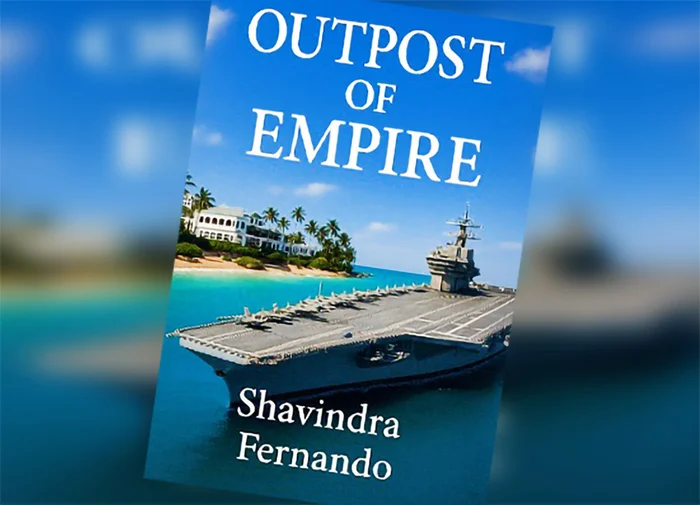
Review
by Colleen Figg, Editor
and Reviewer – Amazon, New Voices Publishing
“Fernando echoes Macbeth with the line, “There is judgment here.” It captures the question running through the novel: can anyone participate in corruption and remain untouched by it? Beneath this satire is a dark story about power and the danger of believing, that someone else will always pay the price.”
Shavindra Fernando’s Outpost of Empire is a political novel set in the fictional country of Lackadasia. At its heart is a strong idea: an exploration of world politics, terrorism and the ways in which powerful countries manipulate smaller ones. Fernando is clearly writing about political issues that matter deeply to him.
The names immediately establish the book’s satirical character. Lackadasia, Burgherbugaria and the various Klowns suggest a world in which the people and places are exaggerated, but the issues beneath the exaggeration are recognisable. The playful language allows Fernando to approach terrorism, religious conflict and political corruption from an unusual angle.
Henry Stockwell is a central character: an ambassador who arrives in Lackadasia presenting himself as a friend of the country. He believes he understands how power works and treats the country, its politicians and its people as pawns on his personal chessboard. In his arrogance, he never doubts that he controls events rather than being controlled by them. This confidence makes him a compelling figure and in him, we explore the workings of political influence and the potential traps contained therein.
As the story develops, Fernando reveals a political world where causes are adopted when they are useful, people are exploited and discarded, and the truth becomes whatever those in power need it to be. Ordinary people suffer the consequences of decisions made far beyond their reach or knowledge, while those making those decisions continue to justify their actions. Even the people who help keep this world running may not be as important or as safe as they imagine.
Stockwell brings this idea into focus. He recognises corruption in others and willingly takes part in it himself, yet he cannot see that he might also suffer its consequences. Ultimately, he thinks his position will keep him safe. He is intelligent enough to understand the game, but not insightful enough to grasp the limits of his place within it. This blindness gives the novel a strong sense of irony.
The satirical approach gives Fernando room to criticise political hypocrisy without turning the novel into a direct political argument. By using fictional countries and exaggerated names, he creates some distance from specific governments and events while still making the larger targets of the book clear. The humour does not take away from the seriousness of the subject; instead, it makes the cruelty and self-interest beneath the political performance stand out more sharply.
Near the end, Fernando echoes Macbeth with the line, “There is judgment here.” It captures the question running through the novel: can anyone participate in corruption and remain untouched by it? Beneath this satire is a dark story about power and the danger of believing that someone else will always pay the price.
I came away feeling that Outpost of Empire is a valuable and thought-provoking book, particularly in today’s political and social climate. It has a distinctive voice, and the questions it raises about power, responsibility and foreign interference remain relevant far beyond the fictional borders of Lackadasia.
About the Author
Shavindra Fernando has worked as a reporter. He read English & Classics at the University of Peradeniya in Sri Lanka, and took International Relations & Ethnic Politics as a Reuter Fellow at the University of Oxford in England. The Vague Poetess (1999)was his first novel.
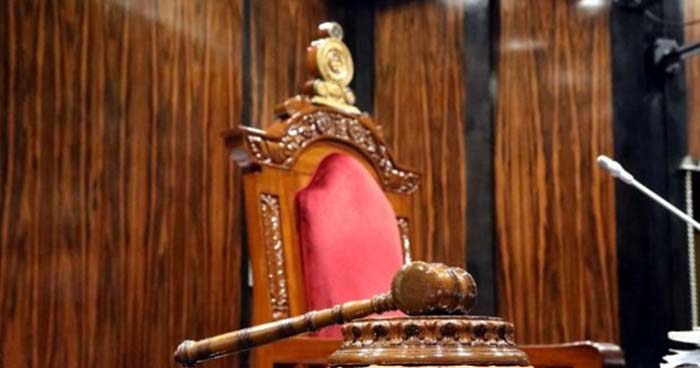
The Opposition, in its wisdom (or perhaps stupidity), has submitted yet another No-Confidence Motion (NCM) against the Speaker of Parliament. Perhaps it hopes to score some brownie points in the eyes of the public, which is hardly indifferent to such developments. Yet, knowing full well that the motion is unlikely to succeed, the exercise may well prove futile — akin to banging one’s head against a solid rock.
Nevertheless, the nearly fifty allegations levelled against the Speaker, whether justified or mere mudslinging, cannot simply be brushed aside. Such allegations may well have a bearing on the individual concerned, particularly where it matters most — his conscience — and few would dispute that possibility.
From a protocol standpoint, the Speaker occupies one of the highest positions in the country, ranking third in the hierarchy of state. He consequently belongs to the uppermost echelons of public life, with acquaintances and associates extending across a wide spectrum of society, including diplomats and other distinguished personalities. Such a position carries with it not merely prestige and privilege, but also an onerous responsibility to uphold the dignity and integrity of the office.
As the guardian of Parliament, the Speaker is expected to maintain standards of conduct, impartiality and discipline that are beyond reproach.
Whether the allegations are justifiable or not may be of little consequence to members of the ruling party, who will undoubtedly defend their colleague to the hilt. Nevertheless, the stigma arising from such allegations may prove difficult to erase, particularly in the eyes of his family, close associates and, ultimately, the voters who placed their trust in him. Of course, it is common knowledge that politics can be a dirty game and that, as Lord Acton famously observed, “power tends to corrupt, and absolute power corrupts absolutely.”
Yet, nothing could be more devastating than a person losing his own soul in the process. On the one hand, stepping down could be construed as an admission of responsibility for the allegations levelled against him. On the other, allowing the No-Confidence Motion (NCM) to proceed could expose him to further public scrutiny and potentially inflict lasting damage on his character, dignity and reputation. Thus, he finds himself caught between two unenviable choices, each carrying consequences that may extend far beyond the immediate political fallout.
The Speaker is therefore confronted with a classic Hobson’s choice, with neither option likely to be without consequences. After all, in politics, there are no permanent friends or enemies—only permanent interests.
WILLIAM

I write this with a sense of profound disappointment, rather than as a critic of the government or any individual public official. For several months, I have been drawing public attention to what I consider one of the most serious long-term challenges facing Sri Lanka—the country’s rapidly changing demographic structure, declining fertility, population ageing and the consequent contraction of the working-age population.
I have written several articles on this subject, believing that informed public discussion could encourage policymakers, academics and relevant institutions to examine the issue before its consequences become irreversible. I went a further step by addressing a detailed letter to the President on 28 August 2026, seeking consideration of a National Demographic Action Plan.
That letter was not merely an expression of concern. It contained practical proposals: long-term demographic projections, assessment of the consequences for labour supply and productivity, examination of declining fertility and delayed family formation, reassessment of education and employment policies, consideration of migration, and the establishment of continuous demographic monitoring.
I deliberately addressed the matter to the highest level because demographic change is not the responsibility of one ministry. It cuts across Finance and Planning, Education, Labour, Health, Higher Education, migration, social protection and national human-resource planning.
Yet, after sending that registered letter, I have not even received an acknowledgement.
This is what troubles me most. I fully appreciate that government has numerous urgent problems to address. Economic recovery, disaster management, employment, education and many other immediate concerns understandably demand attention. But demographic change is different. It operates slowly, almost silently, while steadily narrowing the choices available to future governments.
By the time the shortage of workers, accelerated ageing, increased dependency and the economic consequences of very low fertility become impossible to ignore, remedial action may be enormously more difficult and expensive. What is equally disappointing is the apparent silence of the institutions that should be at the centre of this discussion.
The latest Census has provided the country with an invaluable body of demographic evidence. My own published work has attempted to connect those findings with national development, productivity, education, employment and human-resource planning. On the top of these endeavours, I have seen voluminous articles written by Professor Manori Weerathunga, of the Population Department of the Colombo University, President Population Association of Sri Lanka, and Director Centre for Ageing Studies of University of Colombo. Yet I have seen little evidence of a visible national policy response from the relevant planning and statistical authorities.
Given the multiplicity of the roles and the credentials she possesses, I would strongly urge her to take the bull by the horns and formulate a draft national demographic policy with the expertise of the demographic scientists. This task cannot be delegated to the SLAS or Planning panjandrums. The government should seriously think why the thinktanks are abdicating their mandatory responsibilities and playing a passive role when the country is confronted with burning issues. Are there any sinister plans by disgruntled senior officers to derail the development plans is the question that begs an answer? Alternatively, the government should seriously enlist the support of the IMF or the World Bank, before the demographic bomb explodes!
Are we treating the Census merely as a statistical exercise, rather than as an early-warning the system for national planning? This question deserves a public answer.
I went even further by writing on “Educational Delays, Biological Clock and Sri Lanka’s Fertility Crisis.” My purpose was not to blame the education authorities. I sought to draw attention to the possibility that prolonged delays in university education, examinations, admissions and graduation may interact with delayed family formation and the biological realities of childbearing. I had hoped that this would stimulate examination by the Education sector and other relevant stakeholders.
Unfortunately, I have yet to see any meaningful response. My concern is therefore not whether my own articles have been acknowledged. That is completely irrelevant. The issue is whether the substantive national questions raised in those articles are being examined by anyone in authority.
A citizen who spends considerable time studying a national problem, writing about it publicly and then submitting a constructive proposal to Government should not necessarily expect agreement. But surely an acknowledgement—or better still, a response indicating that the matter is being examined—is not too much to expect.
There is also another dimension which I recently highlighted in discussing Sri Lanka’s transition from an “Age of Longevity” towards an “Age of Experience”. Sri Lanka is simultaneously facing a shrinking younger workforce and an expanding reservoir of older citizens possessing decades of professional and institutional experience.
The demographic challenge, therefore, should not be viewed only through the lenses of pensions, healthcare and elderly care. The country must also ask how the accumulated knowledge, expertise and institutional memory of its experienced citizens can be mobilised for national development.
This is precisely why I find the present silence so difficult to understand. I have no personal or political agenda. I have spent decades working in human resources, productivity and management specialist, and I have chosen in the later stage of my professional life to devote my writing to contemporary national issues which I believe deserve national attention.
Perhaps my concerns are misplaced. Perhaps the government already has a comprehensive demographic strategy under preparation. The relevant institutions have already initiated studies that are not yet public.
If that is the case, I would be delighted to be proved wrong. But if no such comprehensive process exists, then I respectfully ask: how much longer can Sri Lanka afford to remain silent?
The demographic clock does not stop while governments deliberate.
My appeal is therefore not for recognition of my efforts. It is for recognition of the problem. I hope the relevant authorities will prove that the silence I have encountered is not indifference, but merely the silence before meaningful action.
Sri Lanka cannot afford to discover, ten or twenty years from now, that the warnings were visible, the evidence was available, the proposals were made—and nobody acted.
The time to respond to the demographic crisis is now, while choices still remain.
Over to you, the President, the Prime Minister, the Minister of Finance and National Planning, Vice Chancellor of Colombo, Director General of Census and Statistics.
Athula Ranasinghe
Productivity Specialist and Management Consultant

Heavy showers (100-150) mm likely at some places in the Western, Sabaragamuwa, Central, Uva and Southern provinces showerss above 75 mm are likely in the other areas of the island.

Presidential pardons: Govt. studying Justice Thurairaja’s recommendations – Minister

Mahinda and Shiranthi hospitalised

Monks must be allowed to wear robes when produced in court: Mahanayake Theras

Jt. Opp. seeks presidential pardon for Ven. Gnanasara

Shiranthi’s anticipatory bail application rejected

‘Dates have the highest sugar content to fight Coronavirus’

Sunday Island 27 December – Headlines

#SundayIsland 17th December – Headlines

Sunday Island – 28th March

Sunday Island Headlines – 21 March

Sunday Island – 21st February – Headlines
-

 Features5 days ago
The Sri Lankan who made Scottish history
-

 Sports5 days ago
Nissanka absence opens door for Sri Lanka’s young guns
-

 News6 days ago
Gnansara Thera to be assigned to prison printing section: Officials
-

 News4 days ago
NDB fraud Rs 60mn more than reported
-

 News4 days ago
Removing monk’s robes matter for Sangha to decide: Mahanayake Theras
-

 Features5 days ago
Future of Sri Lanka’s state university system: Should it be shut down and reopened?
-
 News6 days ago
OIC of FCID summoned before Maligakanda Magistrate
-
 News5 days ago
Shiranthi R remanded until 13 Oct.