
News
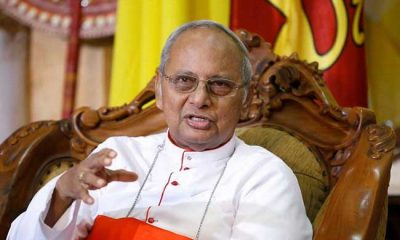
Catholic Church moves SC against ‘Online Safety Bill’

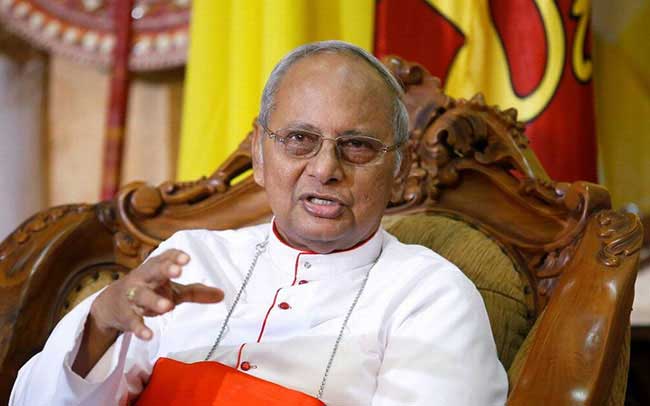
Archbishop of Colombo Cardinal Malcolm Ranjith has moved the Supreme Court against the ‘Online Safety’ Bill. The Catholic Church has sought the SC intervention in terms of Article 120 read with Articles 121 & 78 of the Constitution &/or Article 134 of the Constitution.
The Cardinal’s petition is the latest in a series of cases filed against the Bill. The petition named the Attorney General as the respondent. The Church appealed to the SC to Declare and determine that Clauses 3, 5, 7, 8, 11, 12, 13, 14, 15, 16, 17, 18, 19, 20, 21, 22, 23 22, 25, 26, 37, 49 and 56 of the Bill titled ‘Online Safety’ and/or the Bill in its totality, is inconsistent with Article 3, Article 4(c), Article 10, Article 12, Article 13 (3), Articles 14(1)(a),(b),(c),(e),(f), and (g) and Article 14A(2) of the Constitution.
The Church also requested the SC to declare and determine that, Clauses 3, 5, 7, 8, 11, 12, 13, 14, 15, 16, 17, 18, 19, 20, 21, 22, 23 22, 25, 26, 37, 49 and 56 of the Bill, titled ‘Online Safety’ and/or the Bill in its totality, require the following of the appropriate procedure laid down in Article 83 as read with Article 80 of the Constitution for enactment into law, and couldn’t be enacted into law except unless approved by the people at a Referendum, in addition to a two-thirds vote of the whole number of the members of Parliament in favour.
The petitioner pointed out that the ‘Online Safety Bill’ blatantly violated a series of International Laws and Conventions pertaining to United Nations promotion, protection and enjoyment of human rights adopted at the 38th Session of the United Nations Human Rights Council (SF)






… stresses need for action if claims were proved false
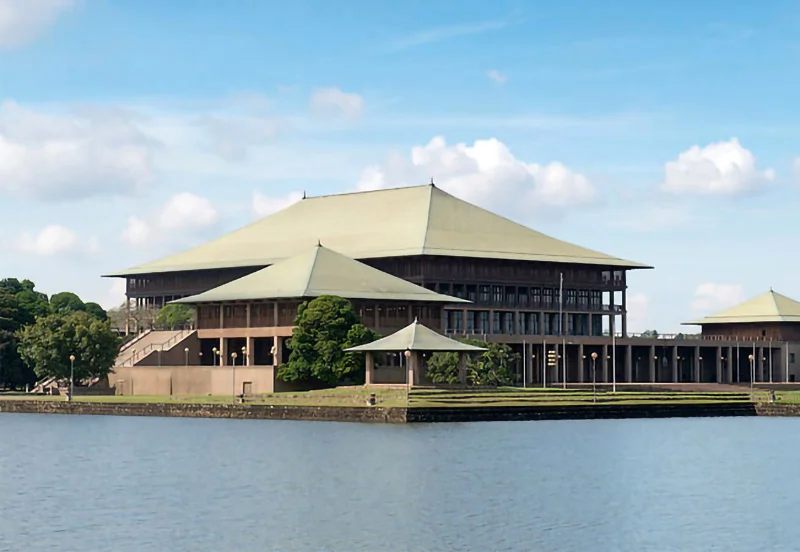
Samagi Jana Balawegaya (SJB) MP Dayasiri Jayasekera has sought a clarification from Speaker Dr. Jagath Wickremaratne regarding several allegations against Chief Justice Preethi Padman Surasena, in Parliament, recently.
In a letter dated 31 August, Jayasekera has asked the Speaker whether he received any documentary evidence from MPs in support of the allegations at issue. The SJB MP has also inquired about the steps taken by the Speaker regarding the allegations and whether the issue had been taken up with the relevant agencies authorised to probe the assets of the CJ and members of his family.
MP Jayasekera confirmed that he had raised the issue with the Speaker, following the accusations relating to the high profile X-Press Pearl case, which received significant public attention in the recent past.
The Kurunegala District MP has also asked the Speaker whether the latter contemplated taking action in case the allegations were proved false to ensure that the dignity of the Chief Justice and the judiciary was safeguarded.
Among the issues raised by MP Jayasekera are the acquisition of valuable property in Colombo by the CJ’s son, the circumstances in which he was able to procure the property, as well as accusations regarding the CJ’s birth certificate, marriage certificate and birth certificates of his children.
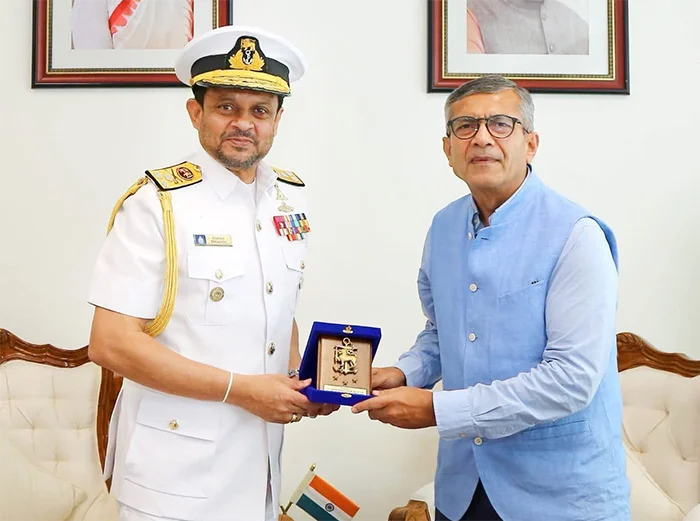
Navy Chief Vice Admiral Damian Fernando held a series of strategic-level discussions with senior Indian defence and military officials during a three-day official visit to New Delhi. He returned on Sunday (30).
Navy Headquarters said that the two sides discussed ways to further strengthen maritime security cooperation between the two Navies in support of security in the Indian Ocean region. They also exchanged views on expanding training opportunities and capacity-building programmes, as well as other areas of bilateral importance.
During his visit to New Delhi, Vice Admiral Fernando also held official discussions with India’s Chief of Defence Staff, General N.S. Raja Subramani, Defence Secretary Rajesh Kumar Singh and Vice Chief of the Air Staff, Air Marshal Ashutosh Dixit and defence industry representatives. Discussions at these meetings focused on bilateral defence cooperation, joint training programmes, and opportunities to enhance air and maritime cooperation in the Indian Ocean Region.
As part of efforts to further expand cooperation in naval training and professional development, Vice Admiral Fernando also met Vice Admiral Sameer Saxena, Flag Officer Commanding-in-Chief of India’s Southern Naval Command, at its headquarters in Kochi, Kerala. The two sides discussed existing naval training exchange programmes and opportunities for introducing and expanding further training initiatives. The meeting followed the Commander of the Sri Lanka Navy’s visit to INS Dronacharya, the Indian Navy’s training establishment where he previously completed the Long Gunnery and Missile Course.

The ICRC mission in Colombo said on Sunday (30), they honoured the thousands of people around the world who are either missing or separated from their families due to armed conflict, violence, disasters and migration, standing in solidarity with families who endure the pain of not knowing the fate of their loved ones.
The text of the statement: “In Sri Lanka, thousands of families of missing persons from all communities across the country are still waiting for answers. Families of missing persons have the right to know what has happened to their loved ones. Unable to grieve, find closure or rebuild their lives, these families often struggle to meet the emotional, economic, legal, administrative, and social challenges posed by the absence of their missing loved one and the uncertainty that comes with it.
Addressing the needs of families of missing persons is a complex, multi-faceted process. Families are key partners and rights-holders and they are at the heart of this process. While national authorities have the primary responsibility to address their needs, local stakeholders can contribute to a broader, sustained response by building a comprehensive framework of support to address the diverse needs of families. Central to this is the search itself, a vital step toward the clarification of the fate and whereabouts of missing persons, involving collaborative action by multiple stakeholders.
Presently in Sri Lanka, the ICRC implements the Missing Persons Project which aims to foster a sustainable response to the issue of missing persons by supporting families, strengthening national and local capacities and enabling coordinated, state-led and community-based efforts to clarify the fate and whereabouts of the missing.
Addressing the issue of missing persons is also crucial for peace and reconciliation. Unresolved cases can perpetuate trauma, deepen grievances and hinder community healing long after violence has ended. Sustained political commitment is necessary to resolve the issue in the long-term, even decades after an armed conflict.”

SJB asks what Speaker intended to do about allegations against CJ

Navy Chief attends strategic-level discussions in Delhi

ICRS: Sustained and collective efforts critical to address issue of missing persons

US, SL military exercise underway here

Collapse of section of building forces closure of Colombo District Courts

From the missing to the missing truth and beyond

‘Dates have the highest sugar content to fight Coronavirus’

Sunday Island 27 December – Headlines

#SundayIsland 17th December – Headlines

Sunday Island – 28th March

Sunday Island Headlines – 21 March

Sunday Island – 21st February – Headlines
-

 News4 days ago
Eight politicians in drug kingpin probe
-

 Features2 days ago
“Wrap Me Up in My Blazer”— A Gentlemanly Bradby Reminiscence
-

 Business4 days ago
Sri Lanka opens up: A new season of direct connectivity
-
 Features6 days ago
Insights from Chieftains of Uva: Genealogy of two Kandyan Families – Part II
-

 Features4 days ago
Redefining ageing in Sri Lanka
-
 Latest News5 days ago
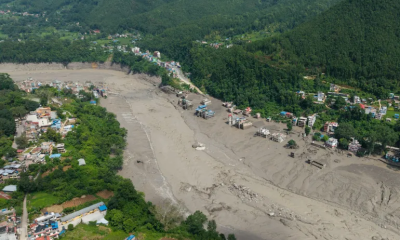
Nepal-Tibet floods: What happened, what caused them and who is missing?
-

 Editorial6 days ago
Warning of power cuts: El Niño and corruption
-

 Features6 days ago
Export diversification: Missing the wood for the trees – Part I