
News
Deep concerns arise as UNDP report reveals 55.7% of Lankans vulnerable to economic risk

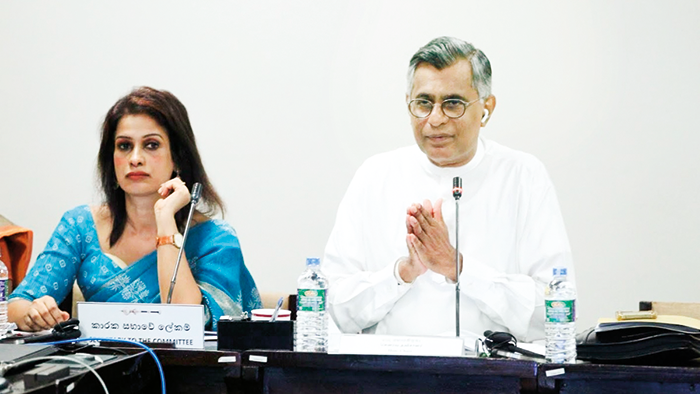
Chairman of Parliament’s Ways and Means Committee, MP Patali Champika Ranawaka, has voiced profound apprehension about the current state of affairs and the looming prospect of heightened risk in the coming year. Alarming estimates from the United Nations Development Programme (UNDP) suggest that up to 8 out of 10 individuals in the country could fall into the risk zone.
This disquieting revelation arises from the UNDP’s latest report titled ‘Navigating Vulnerability: Insights from Sri Lanka’s Multidimensional Vulnerability Index’ for 2022-23, which has exposed startling statistics. The report indicates that a staggering 55.7% of Sri Lanka’s population, equating to over half of the nation’s inhabitants, grapples with multidimensional vulnerability.
Addressing a committee meeting held at the parliamentary complex, MP Ranawaka has underscored the immediate necessity to establish a structured and robust social safety net to safeguard the interests of the vulnerable segments of society, according to parliamentary sources.
The UNDP report elucidates various contributing factors to vulnerability, including a notable percentage of households lacking individuals who have attained Ordinary Levels (OL) in education. Furthermore, it reveals that 35.6% of the population lacks access to piped water in their residences, underscoring the critical need for equitable and widespread provision of safe water.
Ranawaka’s deep concerns extend not only to the present circumstances but also to the anticipated escalation of risks in the forthcoming year. His emphasis on the urgency of a formal and sturdy social safety net aligns with the report’s findings.
The comprehensive assessment within the report encompasses twelve crucial factors, encompassing aspects such as school attendance, health, access to sustenance and clean water, disaster preparedness, adaptability, quality of life, property ownership, employment status, and indebtedness.
Officials from various governmental bodies, including the Department of Social Services, Social Security Board, Welfare Benefits Board, and the Ministry of Finance, attended the meeting and engaged in discussions pertaining to the government’s social welfare programs and the social security network.
The Chairman of the Ways and Means Committee also pinpointed certain shortcomings in the beneficiary selection process for the ‘Awaswasuma’ benefit programme. Issues flagged include the inclusion of inappropriate criteria, improper data collection practices, and procedural intricacies within the appeals process. In response, he proposed the involvement of experienced officers, such as Grama Niladhari Officers, development officers, and agrarian research officers, to enhance the process’s efficiency and effectiveness.
This alarming revelation has stirred a renewed focus on addressing vulnerabilities within Sri Lanka and fortifying mechanisms for economic resilience among its citizens.







Latest News
Sun directly overhead Madampe, Thorayaya, Thotagamuwa, Rattota and Kalavanchikudy about 12.09 noon today (03)


The sun is going to be directly over the latitudes of Sri Lanka from 28th of August to 07th of September due to its apparent southward relative motion.
The nearest places of Sri Lanka over which the sun is overhead today (03) are Madampe, Thorayaya, Thotagamuwa, Rattota and
Kalavanchikudy about 12.09 noon.

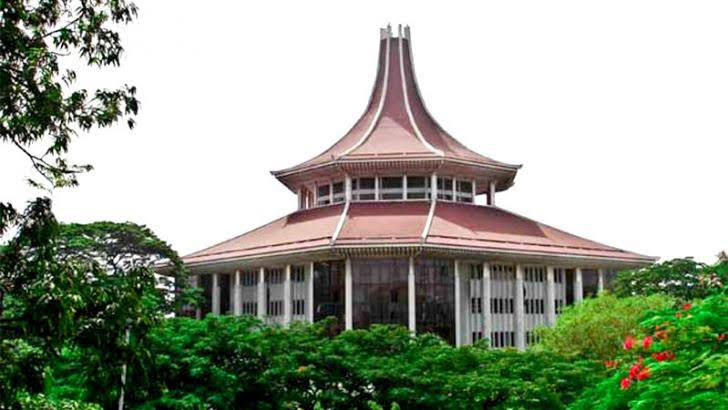
Attorney-at-Law Sugandhika Fernando, on behalf of the Vinivida Foundation, petitioned the Supreme Court yesterday (02), seeking a full bench, excluding Chief Justice Preethi Padman Surasena, to hear the petitions challenging the 22nd Amendment Bill. She also requested that the hearing be suspended immediately until the matter was fully heard and determined.
Among the respondents are Chief Justice Surasena, the first respondent, and Attorney General Parinda Ranasinghe. Justices Yasantha Kodagoda, Shiran Gooneratne, Achala Wengappuli and Priyantha Fernando have also been named as respondents.
The petitioner has sought to have quashed the decision of the first respondent to appoint a five-member bench, which she alleged was made in violation of the norms of public law. She also sought a bench comprising all Supreme Court judges, excluding those cited as respondents, to hear the special determination applications on the 22nd Amendment.
The petitioner further contended that Chief Justice Surasena, who is due to retire on December 1, 2026, would be the main beneficiary of the 22nd Amendment.
The hearing of the petitions continued for a second day yesterday (02) before a five-member Supreme Court bench comprising Chief Justice Preethi Padman Surasena and Justices Achala Wengappuli, Arjuna Obeyesekere, Sampath Abeykoon and Gihan Kulatunga.
The hearing, which commenced on Tuesday morning, continued for nearly 12 hours, until 10:30 p.m.
Solicitor General Viraj Dayaratne, appearing for the Attorney General, submitted yesterday that the Government had presented the 22nd Amendment Bill to the Constitution and the Judicature (Amendment) Bill with the objective of expanding and streamlining the country’s judicial system.
After the Solicitor General’s submissions concluded, counsel representing the petitioners requested an opportunity to respond to the Solicitor General and the intervening petitioners. However, the Chief Justice declined to allow the petitioners’ counsel to make further oral submissions, concluded the determination hearing and directed them to file written submissions instead.
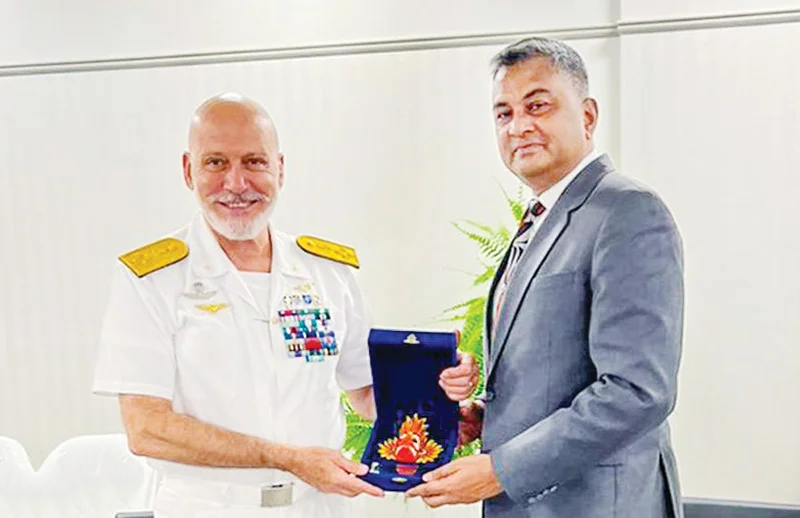
Sri Lanka has formally requested assistance from the North Atlantic Treaty Organisation (NATO).
According to a press release issued by the Defence Ministry, Defence Secretary Air Vice Marshal (retd) Sampath Thuyakontha has discussed defence cooperation with NATO, with discussions focusing on military modernisation, advanced technology, cyber capabilities and disaster response.
This was during talks between AVM Thuyakontha and NATO Military Committee Chairman Admiral Giuseppe Cavo Dragone on the sidelines of the Chiefs of Defence Conference in Victoria, Canada.
During the meeting, Secretary Thuyacontha outlined Sri Lanka’s defence requirements and areas of interest, including the modernisation of military hardware, acquisition of advanced technologies, and strengthening cyber capabilities and surveillance platforms, the Ministry of Defence said in a statement.
The two sides also discussed opportunities for greater technical cooperation, including the exchange of military personnel, expanded education and training programmes, and increased sharing of expertise and information.
Humanitarian Assistance and Disaster Relief (HADR) was also identified as an area for potential cooperation. The discussions included the exchange of expertise and the effective use of unmanned aerial vehicles (UAVs) in disaster response and related operations.
Defence Secretary Thuyacontha invited NATO to further strengthen its engagement with Sri Lanka, emphasising sustained dialogue, information sharing and practical cooperation in areas of mutual interest.

Sun directly overhead Madampe, Thorayaya, Thotagamuwa, Rattota and Kalavanchikudy about 12.09 noon today (03)

Afternoon thundershowers in the Northern, North-central, Eastern and Uva provinces in next few days, starting from today (03).

22A: SC urged to suspend hearing, appoint full bench

Govt. seeks NATO assistance

Recent ‘Ice’ detection at the Colombo Port made on US intelligence – Embassy

Sri Lanka launches National Food Safety Policy with support from FAO and EU

‘Dates have the highest sugar content to fight Coronavirus’

Sunday Island 27 December – Headlines

#SundayIsland 17th December – Headlines

Sunday Island – 28th March

Sunday Island Headlines – 21 March

Sunday Island – 21st February – Headlines
-

 News6 days ago
Eight politicians in drug kingpin probe
-

 Features4 days ago
“Wrap Me Up in My Blazer”— A Gentlemanly Bradby Reminiscence
-

 Business6 days ago
Sri Lanka opens up: A new season of direct connectivity
-

 Features3 days ago
When Sri Lankan stories find their own voice
-
 Latest News7 days ago
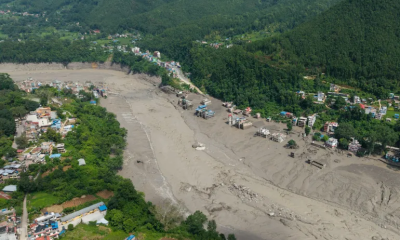
Nepal-Tibet floods: What happened, what caused them and who is missing?
-

 Features6 days ago
Redefining ageing in Sri Lanka
-

 Editorial6 days ago
The toxic legacy of two lakes
-
 Business6 days ago
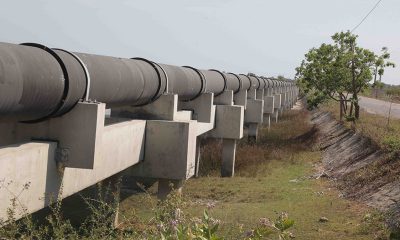
Jaffna Teaching Hospital secures lifeline water supply via ADB-funded Thalaiyadi sea water desalination plant