
News
Ex-AG backs IMF bailout conditions


reminds how Yahapalanaya diluted National Audit Bill to appease corrupt lot
By Shamindra Ferdinando
Former Auditor General Gamini Wijesinghe yesterday (06) said that the weakening of the National Audit Bill, before Parliament endorsed the new law in early July 2018, too, had contributed to the collapse of the national economy. Alleging that the then Sirisena-Wickremesinghe coalition and influential public servants sabotaged their efforts to introduce a new law that could have been effectively used against corruption at all levels, Wijesinghe pointed out that the recently issued IMF’s Governance Diagnostic Assessment report on Sri Lanka demanded that the National Audit Act should be amended.
Although the Act provided for the powers, duties and functions of the Audit Service Commission and the establishment of the National Audit Office and the Sri Lanka State Audit Service and specified the role of the Auditor General over public finance, the then government ensured it lacked key provisions to deal with public sector waste, corruption, irregularities and mismanagement, Wijesinghe said.The IMF’s 16-point preconditions for the resumption and continuation of USD 2.9 bn bailout package exposed our entirely corrupt political party and public administration system, the retired Auditor General said. Those in Opposition couldn’t exploit the IMF’s demands for their advantage because they, too, were responsible for ruination of the national economy.
Wijesinghe said so responding to SJB lawmaker Dr. Harsha de Silva’s declaration that the failure on the part of the government to address deep-rooted corruption hampered financial recovery. Wijesinghe, who served as the AG from Nov. 2015 to April 2019, emphasized that economist Harsha represented the UNP at the time that party sabotaged the National Audit Bill. “What was finally enacted by the UNP and SLFP combine didn’t address primary concerns,” the outspoken official said, adding that the original Bill was meant to rein in top public sector management responsible for massive corruption.
Responding to another query, Wijesinghe said that the enactment of the new National Audit Bill was a key pledge made by the UNP-led coalition that backed Maithripala Sirisena at the 2015 January presidential election. Actually, it was to be introduced on 19 Feb., 2015, at the commencement of their 100-day Yahapalana programme, the present day civil society activist said, adding that the UNP and those who now represented the main Opposition SJB and the then divided UPFA worked against their effort.
Wijesinghe alleged that major political parties feared offending the public service. According to Wijesinghe, political parties pursued strategies in collaboration with the top management of the public administration for their benefit. “The position taken by the IMF should be appreciated and supported though the country was humiliated”, but such external pressure from lending bodies and bilateral donors were required to compel the parliament to take remedial measures the ex-AG said.
Declaring whatever the lame excuse trotted out by the government the IMF had suspended the second tranche amounting to USD 330 mn pending fresh staff-level agreement with Sri Lanka, Wijesinghe said that regardless the country being in such a precarious situation, the Parliament continued to turn a blind eye. “Allegations traded by government and Opposition members do not serve any purpose.
Whatever happens they are still committed to continue with the same system,” Wijesinghe said, pointing out that no political leader had the courage to tackle corruption. Referring to Treasury bond scams that had been perpetrated in Feb. 2015 and March 2016, the former Auditor General said that the Parliament’s response proved the public couldn’t depend on the legislature. Wijesinghe said that Sri Lanka should have acted two decades ago when corruption emerged as a major threat to political, economic and social stability.
The IMF’s demands (1) Establishment of an Advisory Committee by November 2023 to nominate commissioners for the Commission to Investigate Allegations of Bribery or Corruption (CIABOC), (2) Disclosure of asset declarations of senior officials by July 2024, (3) Enactment of proceeds of crime legislation by April 2024, (4) Amendment of the National Audit Act, (5) Finalization of implementation of regulations for beneficial ownership information and creating a public registry by April 2024, (6) Enactment of Public Procurement Law by December 2024, (7) Publishing reports on increasing competitive tendered procurement contracts, targeting agencies with low levels of competition, (8) Requiring the publication of all public procurement contracts above LKRs 1 billion, (9) Implementing the State-Owned Enterprise Reform Policy to ensure ethical management, (10) Abolishing or suspending the Strategic Development Projects Office Act until a transparent process for evaluating proposals is established, (11) Amending tax legislation to prevent unilateral tax changes without parliamentary approval, (12) Implementing short-term anti-corruption measures within revenue departments to enhance oversight and sanctions, (13) Exploring options for new management arrangements for the Employees Provident Fund to avoid conflicts of interest, (14) Revising legislation, regulations, and processes for stronger oversight in the banking sector, (15) Establishing an online digital land registry and ensuring progress in registering/titling-state land and (16) Expanding the resources and skills available to the Judicial Services Commission to strengthen justice.










News
Showers will occur in the Western and Sabaragamuwa provinces and in Galle, Matara, Kandy and Nuwara-Eliya districts


WEATHER FORECAST FOR 02 SEPTEMBER 2026
Issued at 05.30 a.m. on 02 September 2026 by the Department of Meteorology
The atmospheric conditions are getting favorable for afternoon thundershowers in the Northern, North-central, Eastern and Uva provinces in the next few days.
Several spells of showers will occur in the Western and Sabaragamuwa provinces and in Galle, Matara, Kandy and Nuwara-Eliya districts. Showers or thundershowers may occur at a few places in the Eastern and Uva provinces and in Mullaitivu district after 2.00 p.m.
Fairly strong winds of about (30-40) kmph can be expected at times over the Western slopes of the Central hills, the North-central and North-western provinces and in Hambantota and Matale districts.
The general public is kindly requested to take adequate precautions to minimize damage caused by temporary localized strong winds and lightning during thundershowers.
Latest News
Sun directly overhead Anamaduwa, Moragollagama, Dambulla, Manampitiya and Valaichchenai, at about 12.10 noon today (02)

The sun is going to be directly over the latitudes of Sri Lanka from 28th of August to 07th of September due to its apparent southward relative motion.
The nearest places of Sri Lanka over which the sun is overhead today (02) are Anamaduwa, Moragollagama, Dambulla, Manampitiya and Valaichchenai, at about 12.10 noon.

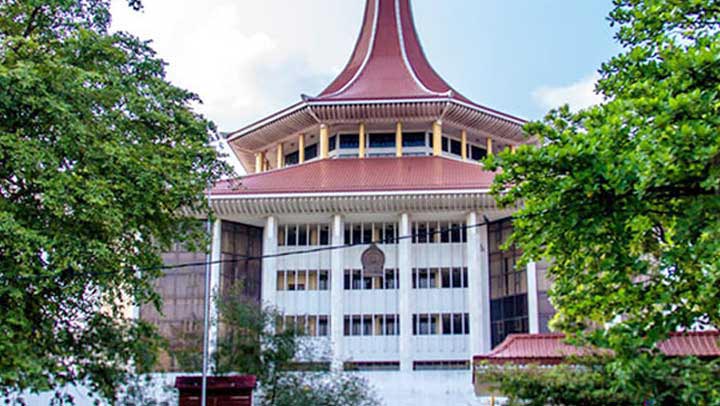
The Supreme Court yesterday rejected a request that the petitions challenging the 22nd Amendment to the Constitution be heard by a full bench of the Supreme Court.
Rejecting the request, Chief Justice Preethi Padman Surasena said the consideration of the petitions would proceed before the five-judge bench.
Appearing on behalf of one of the petitioners, President’s Counsel M. A. Sumanthiran made the request when the petitions were called for hearing yesterday before a five-judge bench of the Supreme Court, headed by Chief Justice Surasena.
President’s Counsel Saliya Pieris, Ali Sabry, Geoffrey Alagaratnam, Eraj de Silva, Srinath Perera, Anura Meddegoda, and Maithri Gunaratne, along with other counsel appearing for several other petitioners, also made the same request.
Solicitor General Viraj Dayaratne, appearing on behalf of the Attorney General, pointed out that the authority to determine the composition of a judicial bench rested with the Chief Justice. Refering to Article 132(3) of the Constitution, the Solicitor General argued that the discretion to determine the number of judges on a bench lay with the Chief Justice and that no other party had the authority to interfere in the matter.
Counsel including President’s Counsel Nigel Hatch, appearing for an intervening petitioner, also made submissions pointing out that the discretion to determine the composition of a bench rested with the Chief Justice.

Showers will occur in the Western and Sabaragamuwa provinces and in Galle, Matara, Kandy and Nuwara-Eliya districts

Sun directly overhead Anamaduwa, Moragollagama, Dambulla, Manampitiya and Valaichchenai, at about 12.10 noon today (02)

SC rejects petitioners’ request for full bench

Seven years RI for former Civil Aviation Minister Piyankara Jayaratne

40 professional organisations and TU oppose proposed 22A

Ai-CHA expands Lankan footprint with new Negombo outlet

‘Dates have the highest sugar content to fight Coronavirus’

Sunday Island 27 December – Headlines

#SundayIsland 17th December – Headlines

Sunday Island – 28th March

Sunday Island Headlines – 21 March

Sunday Island – 21st February – Headlines
-

 News5 days ago
Eight politicians in drug kingpin probe
-

 Features3 days ago
“Wrap Me Up in My Blazer”— A Gentlemanly Bradby Reminiscence
-

 Business5 days ago
Sri Lanka opens up: A new season of direct connectivity
-

 Features5 days ago
Redefining ageing in Sri Lanka
-
 Latest News6 days ago
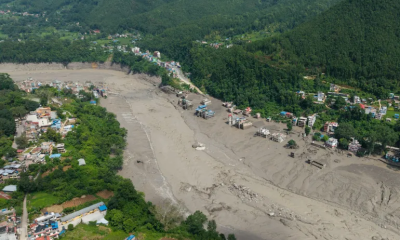
Nepal-Tibet floods: What happened, what caused them and who is missing?
-

 Editorial6 days ago
Unfolding El Niño and burning issues
-
 Foreign News7 days ago
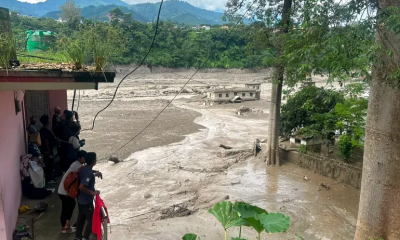
At least eight killed, hundreds missing after Nepal flash flood
-
 Latest News7 days ago
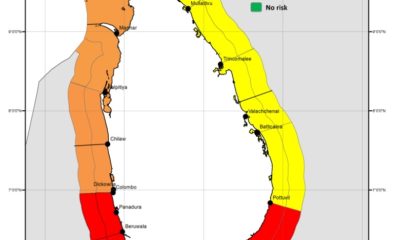
Advisory for High Waves for the sea areas extending from Colombo to Pottuvil via Galle, Matara and Hambantota