
Sports
Royal’s powerful display at the Bradby Shield leaves Trinity in tatters

By A Special Sports Correspondent
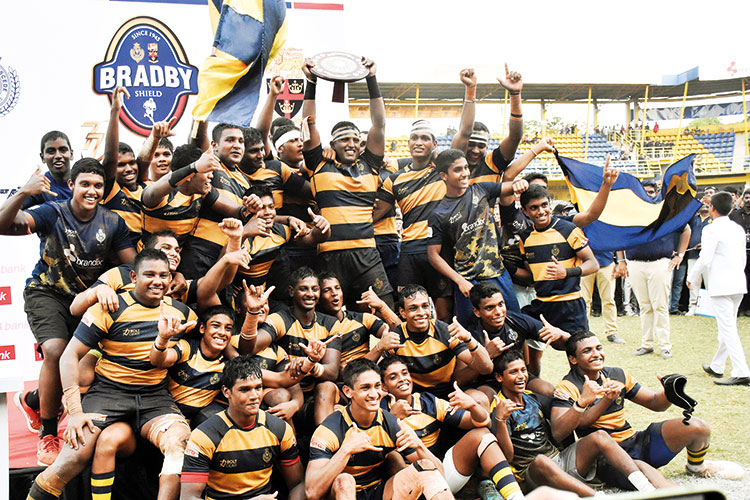
Royal College proved on yet another occasion that they have the knack and the resources to prepare better than their opponents when it comes to the Bradby Shield in rugby. Last Saturday (August 5) they proved it on yet another occasion when they produced a thumping 27-17 win in the second leg of their annual encounter and took home the shield with an aggregate win of 37-30. For the record Royal take the shield once again to their trophy cupboard at school for the sixth time after having given it away to Trinity in 2014.
This encounter between the two schools is undoubtedly the ‘big match’ in the school rugby scene because of the rich history associated with the encounter and the interest in the game shown by players of the two schools, their parents and the entire rugby fraternity of the island. In the past years, most school rugby administrators ensured that no other rugby match was played on the day the Bradby was played. Before the television became better organized and the internet was born rugby fans caught the action from the Bradby by keeping their ears glued to the radio; a medium of communication that gave listeners the feel that they were at the ground itself. That was the level of skill displayed by radio commentators in the 1980s and 1990s, but not necessarily by commentators who aired their commentaries on television in the selected few years the Bradby was shown on television.
Coming back to this year’s encounter Royal really prepared for Trinity in the return leg and undid their opponents with resolute tackling and a defence that was so hard to break. Trinity earned just one try through their own efforts and played with some aggression only in the first half. The visitors’ first try came very early in the game through the efforts of SachinduWanasekara. But Royal responded with three brilliant tries in the first half; one coming off their famous rolling maul with Farook Akram carrying the ball over the try line. The winners led 17-10 at the short whistle of referee GihanYatawara who many thought controlled the game well; given the pressure cooker atmosphere in the middle.
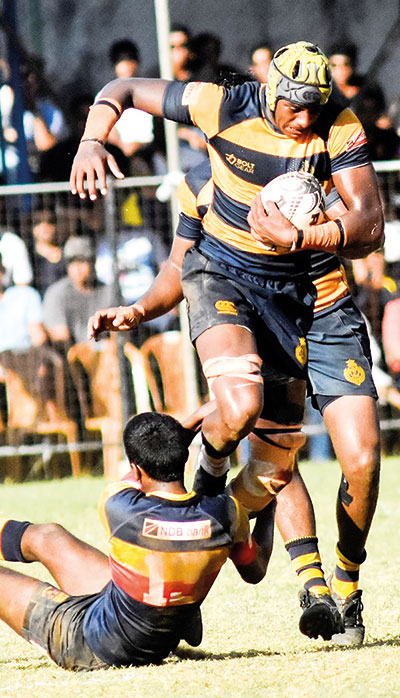
There seems to be no stopping this Royal forward in the second leg of the Bradby Shield encounter which the lads from Reid Avenue won 27-17.
Royal, despite the control they had in the game, gave away a penalty try early in the second half. A Trinity player was almost over the line, but he was forced to let go of the ball when a stiff arm from a Royalist caught him in an illegal tackle. That was a yellow card offence by the defender and the Royalists were reduced to fourteen men for the second time in the game. All in all, Royal gave away three yellow cards while Trinity gave away one in the first half. Royal also had some anxious moments in the game when they gave away their third yellow card five minutes from the end. However, they didn’t suffer any damage to their goal line despite playing with a player disadvantage in the last five minutes of the game.
Royal skipper Randul Senanayake had a memorable game scoring a hat-trick of tries while Thiven Perera, Farook Akram and Nabeel Yehiya crossed the Trinity goal line once each. Royal’s kicking at goal was flawed throughout the game with their kickers missing four conversions.
Many a critic opined that Trinity could have made the game tighter if they had opted for kicks at goal instead of opting for set pieces when penalties came their way. First-leg hero for Trinity fly half Shan Althaf had his hands on the ball on many occasions, but he couldn’t do anything significant in the second leg of the Bradby.
Royal skipper Senanayake received the Bradby Shield from Feroze Suhaib who graced the occasion as the chief guest. Suhaib is a former Royalist and last played for the Reid Avenue boys in 1987. Former Trinity skipper and scrum-half Ashan Ratwatte, who captained the side in 1983, was the chief guest in the first leg of the Bradby.
Trinity last won the shield in 2014 after which Royal retained it in the years 2015, 2017, 2018, 2019, 2022 and 2023. There was a tie in 2016 and the match was not played in the years 2020 and 2021 due to the COVID pandemic. This year marked the 77th rugby encounter between the two schools.


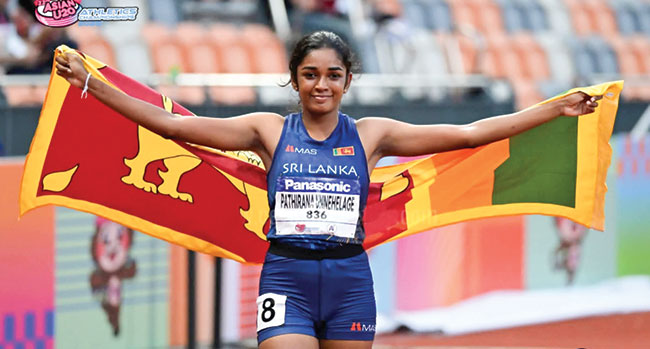
Asian Junior Athletics Championships
Sri Lanka concluded a successful campaign at the Asian Junior Athletics Championship in Hong Kong on Sunday, finishing eighth in the medals table with an impressive haul of eight medals comprising two gold, two silver and four bronze medals.
The four-day championship was highlighted by outstanding performances from Ransini Perera and Tharushi Abhisheka, who delivered Sri Lanka’s two gold medals.
Sprint sensation Ransini Perera produced a thrilling finish in the girls’ 200 metres to secure the gold medal in a time of 24.07 seconds. The athlete from Dharmapala College, Pannipitiya edged out her rivals in a dramatic photo-finish, becoming the first Sri Lankan to win the Asian Junior 200 metres title since former sprint queen Susanthika Jayasinghe captured the crown during her junior years in Jakarta in 1994.
Middle-distance runner Tharushi Abhisheka opened Sri Lanka’s gold-medal account on the first day of competition. The former Wickramabahu National School, Gampola athlete, now representing Lyceum International School, Wattala, clocked 4:31.41 to win the girls’ 1,500 metres at the Kai Tak Youth Sports Ground. She later added a bronze medal in the girls’ 800 metres, finishing in 2:07.10 on the final day to complete an impressive double-medal achievement.
Sri Lanka’s silver medals came through Dineth Liyanage and high jumper Tharusha Mendis. Liyanage produced a powerful finishing burst in the boys’ 800 metres to clock 1:49.22 and finish second behind the winner while narrowly edging Japan’s Atsuki Watanabe for silver. Mendis lived up to expectations in the boys’ high jump, clearing 2.14 metres to secure the runner-up position.
The country’s bronze-medal tally was boosted by Sadew Rajakaruna in the boys’ 200 metres, Mihinsa Dewmini in the girls’ high jump with a clearance of 1.72 metres, Tharushi Abhisheka in the girls’ 800 metres and the mixed 4×400 metres relay team.
Despite the medal success, Sri Lanka also experienced a measure of disappointment as the men’s 4×400 metres relay team narrowly missed a podium finish. Rajakaruna and Omel Shashintha also fell just short of medals in their individual 400 metres events, finishing outside the top three.
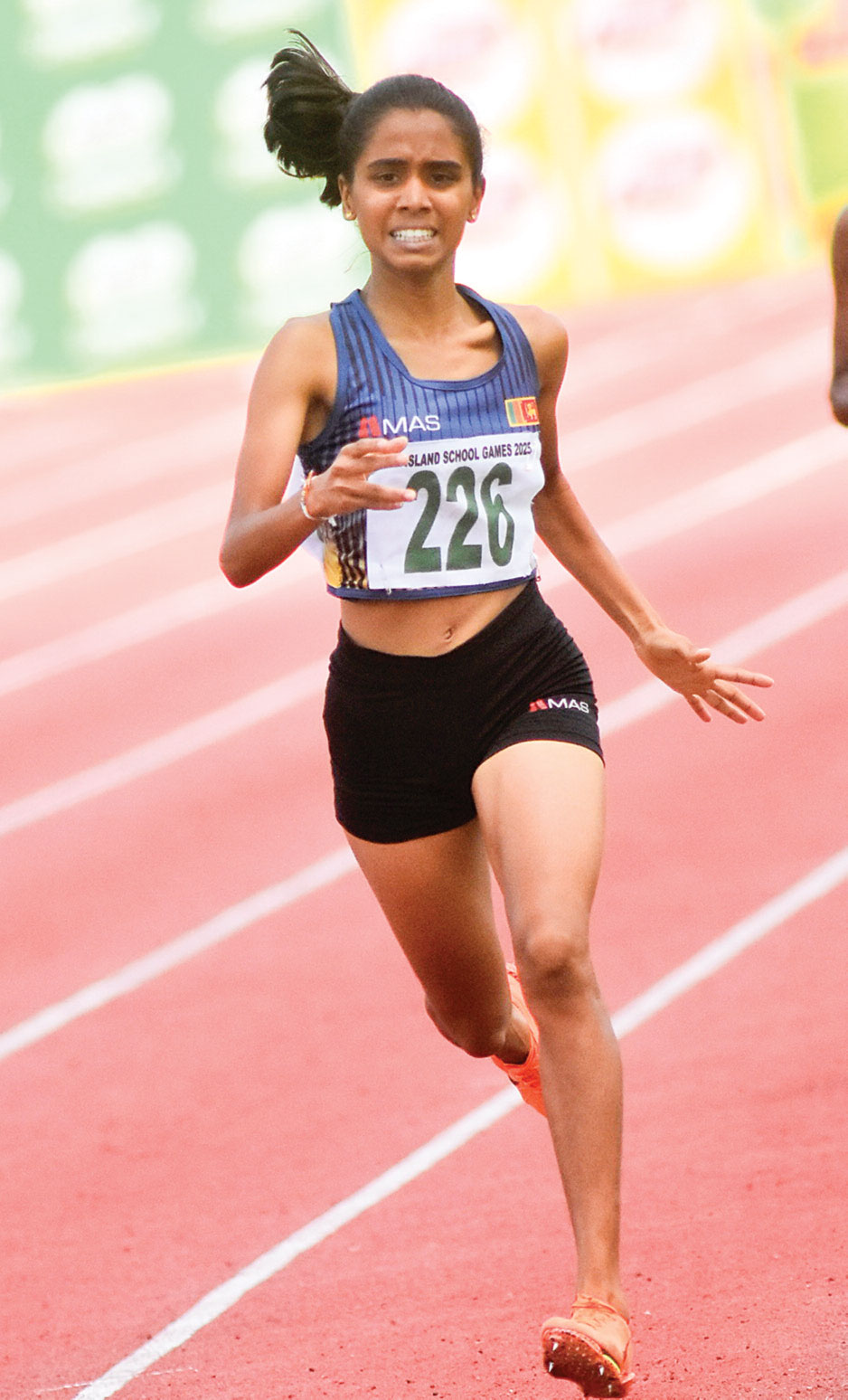
Tharushi Abhisheka
Nevertheless, Sri Lanka’s eight-medal haul and eighth-place finish underlined the country’s growing strength in junior athletics and provided several encouraging performances for the future. (RF)
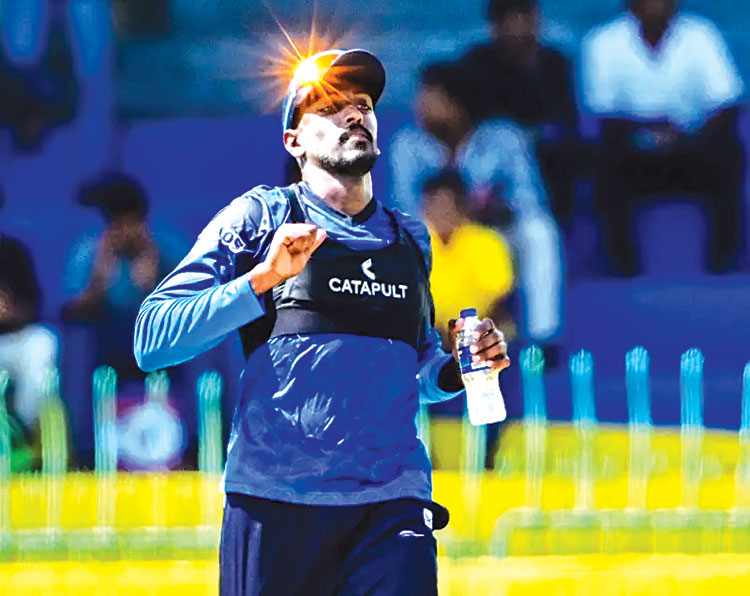
Any cricket tour of the Caribbean stirs a sense of excitement. It is not just about the cricket; it is also about experiencing the unique cultures, rhythms and ways of life that make these islands unlike any other place in the world.
Take Barbados, for instance. Home to just 300,000 people and spread across a mere 430 square kilometres, the island has produced a remarkable assembly line of cricketing talent. If it is opening batsmen you seek, they gave the world Gordon Greenidge and Desmond Haynes. If fast bowlers are your thing, then Malcolm Marshall and Joel Garner stand tall among the game’s greatest. And if you are searching for the ultimate all-rounder, there is only one answer – Sir Garry Sobers.
Over the next six weeks, Sri Lanka’s cricketers will be immersed in this cricket-loving corner of the world as they take part in a series comprising three ODIs, three T20 Internationals and two Test matches.
For the major part of the tour, Sri Lanka will be based in Jamaica, where both the ODI and T20I series will be contested. The teams will then head to Antigua for the two-match Test series.
These are two evenly matched sides and the Test series, in particular, carries added significance with valuable World Test Championship points at stake. After years of underachievement in the longest format, the West Indies have become far more competitive and difficult to beat. Sri Lanka, therefore, can expect a stern examination
With both Dimuth Karunaratne and Angelo Mathews having retired from Test cricket, opportunities have opened up for the next generation. It remains to be seen who will seize them. Incidentally, Sri Lanka will be playing their first Test match in exactly a year, their previous appearance in the format having come in June 2025.
The white-ball leg of the tour gets underway with the ODIs before attention shifts to the T20Is. Kusal Mendis has been entrusted with the leadership of both limited-overs sides. While his batting form in both formats over the last two years has been exceptional, there are concerns that the selectors may be demanding too much from him. The right-hander is expected to captain the side, keep wickets and open the batting – three demanding responsibilities rolled into one.
With the World Cup in South Africa only 15 months away, this Caribbean tour could provide valuable clues about the combinations Sri Lanka should pursue for cricket’s biggest event. The lively pitches expected in the West Indies should offer a fair indication of how the side might fare in South African conditions.
There will be considerable focus on seam-bowling all-rounder Milan Rathnayake, whom many regard as a player tailor-made for South African conditions. The tour could well prove to be an important stepping stone in his development.
The opening ODI on Wednesday is a day game and will commence at 8 p.m. Sri Lanka time. The next two ODIs, both day-night encounters, will begin at 1 a.m. The T20Is are scheduled at a far friendlier hour for local fans, with first ball at 6 a.m. The two Test matches, meanwhile, will get underway at 7.30 p.m. Sri Lanka time.

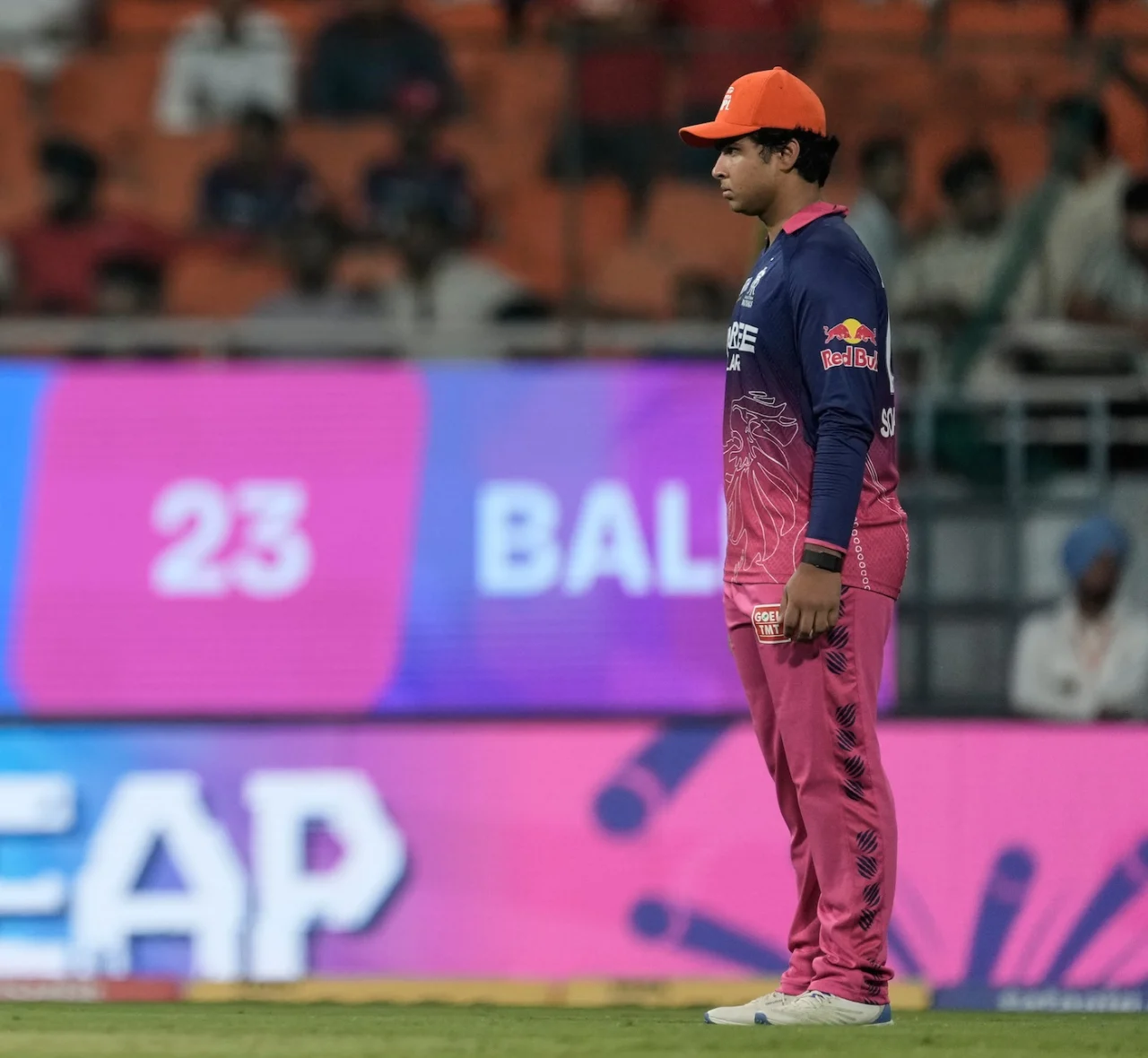
Rajasthan Royals (RR) batter Vaibhav Sooriyavanshi has won the Most Valuable Player (MVP), Orange Cap (most runs), and Emerging Player awards in IPL 2026 after amassing 776 runs in 16 innings at a strike rate of 237.30.
Gujarat Titans (GT) quick Kagiso Rabada won the Purple Cap for topping the wickets chart. He took 29 wickets from 17 games at an economy rate of 9.68. This was the second time he won the Purple Cap, having done so previously in IPL 2020 when he took 30 wickets for Delhi Capitals. Royal Challengers Bengaluru’s Bhuveneshwar Kumar was a close second with 28 wickets.
Sooryavanshi, 15, is the first player to win both the MVP and Emerging Player awards in the same season. He was the first since Chris Gayle in 2011 to top both the runs and strike rate charts (min. 20 balls faced) in the same season. Sooryavanshi hit 72 sixes in IPL 2026, breaking Gayle’s record of most sixes (59) in an IPL season, and played a key role in RR making it to the playoffs. They eventually lost to GT in Qualifier 2 in New Chandigarh.
“It feels nice, but there is pressure because I am doing interviews. It is a proud moment and I will try and do well next season too,” Sooryanvashi said after collecting his awards at the end of the final. “I try to back my game and if the ball is there to be hit, I go all out for it and just try to play that way.
“How to play the pressure game, how to change myself every game, you can’t play every game in one mode, you need to read the game situation and play according to the team’s requirements. These are my learnings from this season. [On fitness] Yes, my focus is on that. If I have to play long, I have to stay clear of injuries and work on my fitness and have to focus more.”
GT captain Shubman Gill was second on the Orange Cap list with 732 runs. He was followed by his team-mate and opening partner B Sai Sudharsan, who finished with 722.
At the Cricinfo Honours awards on the eve of the IPL final, Sachin Tendulkar had said Sooriyavanshi was “truly special”.
“Everyone is talking about Sooryavanshi, and I watched him bat – it was magnificent. I mean he is something truly special. And not just the ability to hit the ball, but what also fascinated me was the wrist work that he has. To be able to play in all directions of the ground, you need good wrist work. And he is not slogging the ball. He is just picking the line and length earlier than the rest of the guys and he is able to clear the rope comfortably.”
[Cricinfo]

Showers will occur at times in the Western, Sabaragamuwa and North-western provinces and in Galle, Matara, Kandy and Nuwara-Eliya districts

Harsha flays govt. over plan to pass coal, Treasury losses to public

PM opens Vesak pandals

UNP challenges NPP move to amend Vihara – Devalagam Act

Fuel price increases: Bus and trishaw operators demand fare hike

Govt. halts e-passport project

‘Dates have the highest sugar content to fight Coronavirus’

Sunday Island 27 December – Headlines

#SundayIsland 17th December – Headlines

Sunday Island – 28th March

Sunday Island Headlines – 21 March

Sunday Island – 21st February – Headlines
-
 News2 days ago
IMF urges Lanka not to meddle with exchange rate
-
 News6 days ago
Easter Sunday carnage: Court told Maulana’s statement cannot be accepted without cross-examination
-
 News6 days ago
UK passport holder hiding here wants to have deportation order rescinded to leave without blemish
-
 Opinion6 days ago
Undermining the democratic political framework
-
 Business3 days ago
Sri Lanka’s construction industry losing ground while no one watches
-
 Features3 days ago
The Division Bell Mystery
-
 Midweek Review5 days ago
Israeli-US aggression won’t go unanswered -Iranian Ambassador
-
 News2 days ago
State of emergency extended