
Features
Will a Trump Re-election Pose a Global Threat?


by Kumar David
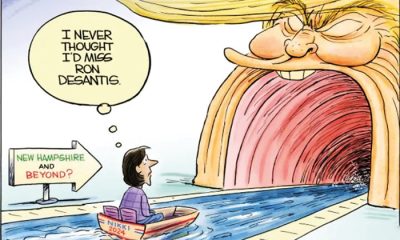
Nearly 60 percent of US Republicans support Donald Trump and about 30 percent favour Ron DeSantis; only about 10 percent would like to see another candidate, including Vice President Mike Pence nominated by their party for the November 2024 presidential election. The choice is skewed on the Democratic side as well with about 50% of Democrats favouring Biden, 30% wanting him to step aside for reasons of age.
Others in the running are Elizabeth Warren, the also aged Bernie Sanders. Pete Buttigieg and Kamala Harris trail behind. These are still early days and preferences, especially on the Democratic side, are likely to change. But the Democrats are not my topic today. Since the US is and will remain the premier global power for a few decades I decided that it would be useful to keep my readers dated on recent events in America and have made use of a short visit to draft this piece.
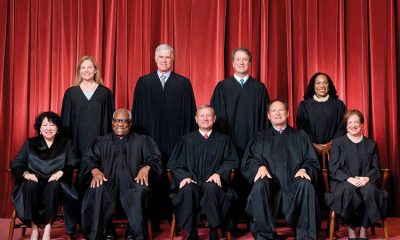
The Supreme Court of the United States (SCOTUS) is largely a Trump creation (Obama’s nominees were repeatedly blocked by Republican majorities in the US Senate). It is the most reactionary in decades and certainly the most bigoted in my lifetime. Its recent decisions, give a whiff of what it will do in the next period and a presumptive Trump presidency may have a significant impact on international affairs and SCOTUS will be a collaborator or fixer in the context of America’s failing international role I need to devote a few paragraphs to a brief discussion two topics – (i) the recent decisions of this blinkered SCOTUS and (ii) gridlock in the US global financial and political agenda where Trump may lean on SCOTUS to push forward his plans.
In a stunning blow to women’s reproductive rights SCOTUS reversed Roe vs Wade, landmark bipartisan legislation which has had stood since 1976. The Court struck down several Texas laws which had criminalised abortion and declared that they imposed an undue burden on a woman’s right to abortion. The Roe vs Wade victory was a cornerstone of US feminism; the decision made in June 2022 overturning it is egging women’s movements worldwide into action.

In June 2023 the Court took another reactionary turn when it prohibited affirmative action in admission to American universities. Affirmative action refers to policies aimed at increasing educational opportunities for people who are under-represented in various areas of society and focuses on demographics with historically low representation. The Court quite happily allowed the disproportionally large number of blacks in the US armed forces to continue. This bigoted Court opined that Blacks, Browns and the underprivileged are eligible to die for the defence of US Imperialism but not to be educated!
In a one-two-punch against Blacks, Browns and underprivileged communities this Court also struck down bipartisan measures to ensure affirmative action in government contract awards, employment and enrolment in education endorsed or enacted in bipartisan efforts over the last seventy years. Biden correctly described this as an “abnormal” court. These rulings have defined Biden’s campaign issues for the 2024 presidential polls and one can already see the Democrats girding their loins and polishing their canons for the campaign.
SCOTUS appointment is for life and an incumbent can depart from office by retirement, impeachment or keeping an appointment with the Almighty. The only Justice ever to be impeached was Samuel Chase in 1805. The House of Representatives impeached him; however, he was acquitted by the Senate. It is necessary therefore to say a few words about the composition of this court.
The Chief Justice John Roberts inspires no confidence in the hearts of racial minorities, women or liberals. Clarence Thomas, would if he were on any Sri Lankan court have been impeached for accepting handsome gifts from business organisations. Brett Kavanaugh, a Bush protégé in his climb up the ladder and a Trump appointee to SCOTUS is a religious immoderate. Interestingly six of the nine justices (both reactionaries John Roberts, Clarence Thomas, Kavanaugh and Samuel Alito and progressive minded Sonia Sotomayor) are Catholics.
The progressive minority on SCOTUS led by Sotomayor includes Elena Kagan and Ketanji Brown Jackson, all women. The Court is dominated by WASPs but many white Anglo Saxon Protestants abhor Trump and count him as crude, dishonest and a pervert. This summary I think is enough to give my readers a thumb-nail sketch of the current situation on SCOTUS.
An allied matter is that SCOTUS is the final authority in the interpretation of the Constitution and amending it is virtually impossible since the process involves very complex bargaining with the States, which means it must be a bipartisan process. This was the case to a large degree with the historic 13th Amendment of 1865 which abolished slavery, the 19th Amendment of 1920 giving women the vote and the 22nd Amendment of 1951 which imposed a two-term limit on the Presidency.
The Trump camp understands that with 40 million students losing out in some way by the Court’s decision to eliminate student financial support, women fired up by the abolition of the right to abortion and blacks, browns and underprivileged communities infuriated by the abolition of affirmative action, the stage is set for a no holds barred show-down in the 2024 election campaign. How this will pan out is anybody’s guess. My guess is that it will be to Trump’s disadvantage and therefore Republicans will try to defuse it.
Let me move on to the threats posed by a second Trump presidency in the international arena. I will comment on three aspects, financial challenges to global dollar supremacy, Israel and strategic-nuclear concerns in the Middle East and the big one, China. There are numerous subordinate issues attached to each but were I to deal with everything I would have to write a book!
The dollar has been king, the medium of global financial transactions, the medium in which most trade transactions are concluded and the currency in which most savings, private, corporate and government are held. This was the story since Bretton Woods Conference in July 1944. (Bretton Woods is a sleepy little town in New Hampshire, USA). The Bretton Woods deal was hugely fortified by the Petrodollar deal which Richard Nixon constructed with Saudi Arabia in 1973, the system was a deal between the US and Saudi Arabia whereby they agreed to price and trade oil in US dollars.
In exchange the US promised the Saudis military protection against all threats. Hence any country that purchased oil from Saudi Arabia would have to use dollars; soon it became the practice for the entire global oil trade; transgressors would incur American opprobrium. This arrangement has been challenged only in the last few years by Sino-Russian gas and oil transactions and India’s large oil purchases in defiance of American pressure. Now even Saudi Arabia is willing to enter into oil sales outside the Petrodollar ambit. There is nothing that a putative Trump presidency can do about any of this.
The dollar remains to world’s reserve currency in that it is the medium of payment for most international trade and most private, corporate and governmental bonds are held in dollars. Global payments systems such as SWIFT are still relatively unchallenged. Donald Trump and his advisors are not sophisticated enough to interfere with any of this.
The Eurozone id growing and the Chinese are attempting to cobble together a Yuan based global international system but this is far from adequate as yet. One can safely conclude that despite China becoming the world’s largest economy within two decades (it already is in PPP terms) the US dollar will continue to remain the primary financial medium for a another decade or two.
Therefore it is my view that it is in the strategic-military domain that the idiosyncratic Trump is a threat to global order. Surely his generals will veto any foolish actions in the Taiwan arena and even the Indian Ocean, but it is the arrogance of New Mandarin Overlords in Beijing that is provocative. Beijing has enunciated a Nine-Dash line of Chinese suzerainty in the South China Sea that reaches right up the rectal orifice of smaller littoral states – Philippines, Malaysia, Brunei, Indonesia, Vietnam and Taiwan (which to China) is a province of the PRC. A flare-up in the region is what Trump idiosyncrasy could provoke.
More serious are the strategic concerns in the Middle East. Trump may blindly support Israel and its rape of Palestine. Tensions between the extreme right-wing and others in Israel society is mounting and a two-state solution is the last thing on Israel’s, the US or Western agendas. The outlook is bleak; ideal breeding ground for clueless Trump’s confused impulses.
Mind you I strongly support Iran’s ambitions to acquire nuclear weapons. It is utterly unacceptable that Israel is the only nuclear power in the region. A strategic balance is unconditionally essential. Trump’s blunder in withdrawing from the agreement with Iran has expedited its progress in this direction. Good! Maybe he will blunder creatively again.
The final matter which I need to explore is the Thucydides Trap that yawns in front of America as it confronts China; the directive role of the state, Deng Xiaoping’s thinking and the essential role of the invisible hand of markets in establishing economic efficiency. But that’s too much for me today.











Tales of Mystery and Suspense 3
The murder, in a private dining room in the house, is of a financier with whom the government was negotiating a loan. When this seemed difficult the Minister of Home Affairs agreed to lead discussions, since he had known Mr Oissel the financier when they were young. Hence the private dinner, but when the Minister stepped out for a vote, Oissel was shot just as the Division Bell rang.
The Brahms and Simon detective novels, the first of which I wrote about last week, were amongst several books by the pair that Robert Scoble gave me when I was in Australia towards the end of last year. Amongst them was another thriller of a very different sort, though that too was written and set between the wars.
Called The Division Bell Mystery, it was set in the House of Commons, the first such book I believe, and was by Ellen Wilkinson, a Labour MP who became Minister of Education in Attlee’s government after the war, having served previously as Parliamentary Private Secretary to several ministers. Her hero Robert West is also a PPS, but a conservative, and his Minister, of Home Affairs, is an old style aristocrat, not much loved by the less orthodox Prime Minister, who nevertheless needs his support on many occasions.
The murder, in a private dining room in the house, is of a financier with whom the government was negotiating a loan. When this seemed difficult the Minister of Home Affairs agreed to lead discussions, since he had known Mr Oissel the financier when they were young. Hence the private dinner, but when the Minister stepped out for a vote, Oissel was shot just as the Division Bell rang.
West was just outside the door when the shot was heard, and when he opened it saw only the dead body with a revolver beside it. The assumption that this was suicide was however challenged by Oissel’s grand-daughter Annette, who was his heir, on the grounds that he would never have killed himself. But her view was given greater credence by the Inspector put in charge of the case who said there were no burn marks on the body which would have been the case had Oissel fired the pistol himself.
Matters are complicated by the fact that Oissel’s flat had been burgled while he was at dinner, and Jenks the policeman allocated to him, who had served the Home Secretary and seemed more acceptable to Oissel than someone from the Security Service, had been killed. Matters get even more complicated when Annette says her grand-father’s notebook in which he wrote his secrets in cipher was missing.
That was found in Jenks’ pocket, and then a photographer came to West to say he had been asked by Jenks to photograph this. More worryingly for West, he finds in the Home Secretary’s drawer a few pages from the notebook with what appears to be an interpretation of the cipher.

Ellen
Overwhelmed by all this he confides in a recently created peer who knows all about the business world, who insists that they leave the house party at which they had met over dinner and discuss the matter with the Prime Minister who promptly summons the Home Secretary.
But the Home Secretary had gone to Scotland to launch a ship over the weekend, so the meeting could take place only on the morning of the Monday, when difficult questions were expected on the adjournment motion. He admits at the meeting that he had got Jenks to take the notebook, and also that he knew the code since it had been created by him and Oissel when they were young.
He thought he should resign, and even contemplated suicide, but the Prime Minister told him that that would be even worse for the government, and that he should go home to bed. The Prime Minister said that he himself would handle the question, which he did with aplomb, insisting that confidentiality was needed until the inquest. What had happened would be made clear then, he declared, leaving West and Inspector Blackit and Lord Dalbeattie what seemed the impossible task of solving the murder.
Dalbeattie had suggested that West ask a female Labour MP who was very fond of him to get what information she could from the staff. That there was some involvement there had become clear when West, going back late one night to collect a briefcase he had left in a dining room, found someone lurking in the dark in the corridor outside the private rooms. Room J, where the murder had happened, was meant to be guarded throughout by a policeman, but he had left the room having felt dizzy, and it seemed that his coffee had been drugged. West’s sudden appearance however had prevented anyone else getting into the room.
Dalbeattie decides to recreate the scene of the murder and has a dinner party in Room J on the Tuesday night, inviting West and Annette and the society hostess at whose house he had met, and also Patrick Kinnaird, an MP who was engaged to Annette, as well as the Permanent Secretary to the Home Ministry.
After coffee Inspector Blackit comes in with Grace, the Labour MP who had got the confidence of the staff, and a journalist who had also been helpful, and just as they say they think they are on the track the division bell rings. Grace jumps up and tells the Inspector that that provides the solution and they get a ladder, and sure enough find the revolver in the space where the bell is. Directed at the place where Oissel had sat, it had been primed to go off with the ringing of the bell. The waiter who had helped to set things up made clear who the murderer had been.
The reason for the murder and the confused motives of all those involved made for a fascinatingly intricate mix. But also impressive in the book were the descriptions of the isolation possible in the crowded premises of the house, the forceful characterization of the members – Grace based on the writer, the society hostess based on Nancy Astor, the first female MP – and the laid back nature of senior politicians which West realized had to change in the brave new world of high finance.

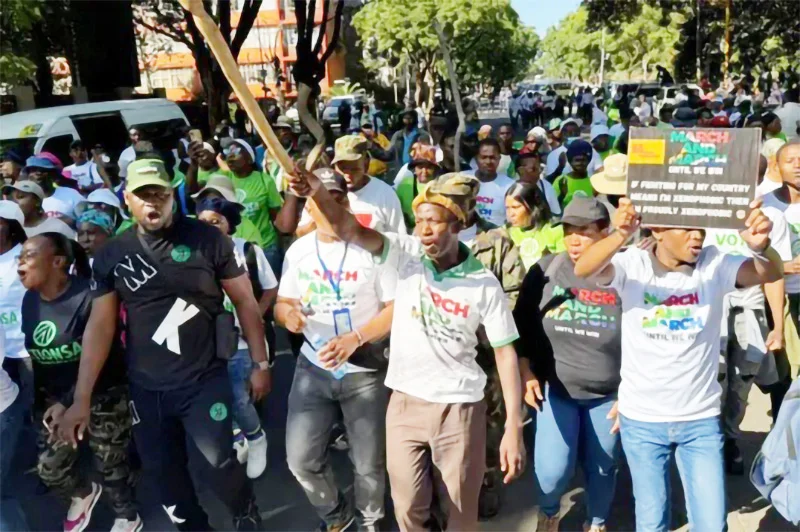
 The current outbreak of anti-immigrant protests in Durban, South Africa is bound to have taken many a subscriber to value-based politics or political idealism quite by surprise. After all, this is evidence that despite the historic accomplishments of nation-builders of the stature of the late President Nelson Mandela it cannot be taken for granted that identity politics, including racism in its worst forms, is no more in South Africa.
At the time of this writing details are scarce on the substantive root causes of the protests but it could very well be that economic grievances, particularly on the part of the majority community in South Africa, are contributing considerably to the disaffection. Shrinking employment and material prospects are likely to figure majorly among the factors igniting the unrest.
Fortunately, the local authorities in Durban are losing no time in calling for peaceful co-existence among the relevant communities and are pointing to the vital importance of stepping-up national integration processes. Apparently, immigrants in sizable numbers from neighbouring countries are present in Durban. However, international TV footage of the protests quoted some local authorities as saying that the majority of the immigrants in some centres that housed them were not illegal migrants and had the documents that entitle them to be in Durban.
In the Durban protests the world has fresh proof of the socially divisive consequences of the gathering globe-wide economic disaffection, touched off particularly by the continuing crisis in West Asia. Going ahead, the world would need to brace for increasing identity-based unrest of the kind it is just witnessing in South Africa.
Considering that the material lot of ordinary people everywhere could only aggravate progressively, with the US and Iran showing no signs of negotiating an end to their confrontation any time soon, it will be left to the more democratic and progressive sections of the world community to initiate positive measures collectively to bring a measure of relief to the discontented.
The swiftness with which such relief will be provided would depend crucially on the importance those sections taking up these undertakings attach to value-based politics as opposed to Realpolitik of power politics.
Going by these yardsticks, Italy could be considered to be moving in the right direction. Recently Italy came to the fore in initiating the collective named, ‘Rome Coalition for Food Security and Access to Fertilizer’, which has as one of its aims the swift provision of fertilizer to economically weak African countries.
In a recent statement Italian Minister of Foreign Affairs and International Cooperation, Antonio Tajani, said that a principal aim of the project was to ensure that the farmers of Africa gained easy access to fertilizer, considering that food security is a growing concern among some of Africa’s economically vulnerable countries.
The statement went on to mention that some 30 countries hailing from the Mediterranean region, the Middle East, the Balkans as well as the FAO had been invited to join the coalition. The venture is far-seeing in that food security is main among the reasons for social discontent which in turn could degenerate into endemic political turmoil and bloodshed. Separatist violence and geographical fragmentation of countries wouldn’t be too far behind these developments, as Africa itself has often proved.
It is hoped that more G7 countries would take the cue from Italy and do what they could to ease the hardships of economically distressed countries, particularly of the global South. In these efforts they would need to break rank with the US, which is today brutally indifferent to the consequences of its policy of making ‘America First’, come what may.
Going by current developments, the Trump administration seems to be blithely oblivious to the wider, deleterious effects of its policy course in West Asia. Besides rendering Iran militarily and otherwise impotent nothing else seems to matter to Washington, as regards West Asia. This is policy short-sightedness of an extreme kind. After all, right now West Asia could be said to be sitting on the proverbial powder keg.
On the other hand, Iran is not giving the world the impression that it is doing anything constructive to get out of the policy straitjacket that it wove for itself decades ago. Rather than enter into a policy of ‘live and let live’ in relation to Israel in particular and initiate a process of reconciliation with the latter, it has chosen to operate within policy parameters that continue to damn Israel. This has put Israel always on the ‘defensive’ so to speak and prevented the opening up of space for meaningful dialogue.
That said, Israel is obliged to explore the possibilities of entering into a negotiatory process with the Arab-Islamic world that could lead to a de-escalation of tensions and bloodshed. It cannot continue to look at its neighbours through lenses that distort them as archetypal enemies who should be ‘wiped off completely from the face of the earth.’
In other words, the need is urgent for Realpolitik to give way to value-based politicks. Italy is beginning to prove that the latter approach could be pursued with some success. May be the EU and the UK could throw their weight behind these initiatives as well and establish that international politics could be refashioned on the basis of humane, civilized norms. The UN would need to be fully supportive of these moves and prove an organizational nucleus of the operations that follow.
In fact the time is ripe for people of conscience to collectively stand up on the side of peace and say ‘No’ to war and violence. Organizations such as the ICRC, the WHO and Medicines Sans Frontiers have already taken up this call. Referring to the widespread destruction of health facilities and their dehumanizing results these organizations have said, among other things, that ‘This is not a failure of the law. It is a failure of political will.’
True, ‘failure of political will’ among those powers that matter accounts for the runaway, uncontrollable nature of war and destruction in contemporary times, but more fundamentally it is a failure of the human conscience. It could very well be that the phenomenal levels to which violence and war have been unleashed today have had the effect of deadening consciences. This is a matter for urgent study and wide discussion.

 I would describe Indunil Kaushalya Dissanayaka as innovative and creative, and she operates under the name of Cuteefly.
Indunil always comes up with something novel to celebrate special occasions, and she does it with candles … and that’s her profession.
She was in the spotlight when she created a happening scene, with candles, for Christmas, Sinhala and Tamil New Year, and Valentine’s Day.
As lanterns light up Sri Lanka for Vesak, the Colombo-based candle maker is quietly turning wax and wick into little pieces of the festival.

Candles reflecting Vesak themes
Her candles reflect Vesak themes – light, peace, remembrance, giving, etc., to enable you to fill your Vesak celebration with devotion and beauty.
Among her Vesak creations is a lotus-shaped soy candle, scented with sandalwood, lavender, etc., meant to burn during this Vesak Poya Day.

Indunil Kaushalya Dissanayaka: Customers
praise her for her creativity
These handcrafted Vesak candles are perfect for offering at the temple, she says.
What makes her creations so novel is that they come in different shapes, scents, themes, and all are handmade.
What’s more, her customers have heaped praise on her for her creativity.
According to Indunil, her creations are perfect as a thoughtful gift … to bring beauty, unity, and light into every moment.
Says Indunil: “Our beautifully handcrafted Unity candles are designed with premium detail and love, making them perfect for celebrations, gifts, and meaningful occasions.”
Cuteefly, says Indunil, is available online.
Readers could contact Indunil on 0778506066 for more details.
He Facebook Page is: Cuteefly.

Handmade with love

Tickner five-for wraps up innings win for New Zealand

Ambidextrous spinner Shashini Gimhani in Sri Lanka’s T20 World Cup squad

Pakistan’s famous cheerleader ‘Chacha Cricket’ to retire this year

South Africa Women’s maiden tour to Zimbabwe to feature five T20Is

Navy renders assistance to bring injured fisherman ashore

Applications called to recruit 400 public officers as Digital Champions for the Public Impact Champions Network

‘Dates have the highest sugar content to fight Coronavirus’

Sunday Island 27 December – Headlines

#SundayIsland 17th December – Headlines

Sunday Island – 28th March

Sunday Island Headlines – 21 March

Sunday Island – 21st February – Headlines
-

 News6 days ago
All-New GRAVITE launches at LKR 6.99 Mn
-

 Features6 days ago
The NPP’s pivot to the past
-

 News5 days ago
Police probe underway to ascertain links between criminals deported from UAE and local politicians
-
 News4 days ago
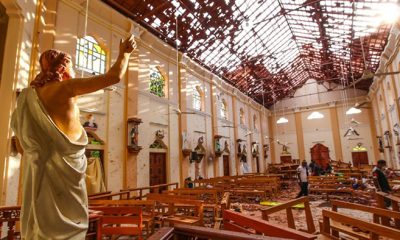
Easter Sunday carnage: Court told Maulana’s statement cannot be accepted without cross-examination
-
 Features6 days ago
End of Peacekeeping
-
 Opinion4 days ago
Undermining the democratic political framework
-
 News4 days ago
UK passport holder hiding here wants to have deportation order rescinded to leave without blemish
-
 News5 days ago
Dickoya double murder suspect arrested