
Features
TWENTY FIFTH DEATH ANNIVERSARY OF DR.DHARMAWANSA SENADHIRA(1944-1998)


RICE BREEDER PAR EXCELLENCE
That fateful day was July 7, 1998, some 25 long years ago and no one expected the hale and hearty Dr. Dharmawansa Senadhira, reputed Rice Breeder, to meet with such an untimely death in a split second that day. As Program Leader of the International Rice Research Institute’s (IRRI) Flood Prone Rice Research Ecosystem, he was in a group of around 40 scientists attending a Workshop on “Evaluation and Dissemination of New Technologies for increasing the production of flood-prone rice Lands of South and Southeast Asia”, scheduled to be held on July 8 – 9,1998, in Dhaka, Bangladesh. The scientists were returning to Dhaka in two buses after a field trip to the research site at Kuliachan in Kishereganj district.
The two buses were swiftly plying on the Narasingdi-Dhaka Highway. Fatefully, one bus which was also carrying Dr. Senadhira (Sena as we affectionately called him) had overtaken another vehicle, but had not completely returned to the correct lane when an oncoming truck approaching from the opposite direction on the middle of the road, collided head on with the bus, sideswiping it and reportedly drove away without even stopping. The bus driver had tried to return to his lane, but could not completely get out of the truck’s path. The accident happened in Narasingdi at 5.15 p.m. and the location was just two hrs. drive from Dhaka, the destination of the return journey.
Sena was pinned in between the seats and Dr.M.P.Dhanapala (Dhane-Sena’s colleague and Award winning Rice Breeder) who was seated next to him had no injuries except the ensuing terrible shock, and he could not do much except feel Sena’s pulse and see him pass away within a few minutes. Thus ended the life of a great human being and a world renowned scientist that shocked the whole rice world and the scientific community, sheerly due to rash split second driver negligence.
A quarter of a century has passed since this tragic event and memories about Sena still linger on at least among those of us who knew him and some who had heard about him. I thought it is nothing but right to place on record an appreciation about Sena, as a tribute to him, as he was a good friend of mine and that of many others, and had selflessly contributed so much toward rice research in Sri Lanka and the rice world, with his focus on the neediest of the rice growers and consumers. In this endeavor, I got the able assistance of my batch-mate and good friend Dhane as a source of information since he knew much more about Sena and what he did, than I and my sincere thanks are due to him.
Having entered the then University of Ceylon, Peradeniya in 1963, from Hanwella Rajasinghe Central College, his alma mater, Sena graduated in 1967 with a B.Sc (Agriculture), upper second classr degree. Soon after graduation he joined the Whittal Boustead Farm Group, that had a large farm off Hembarawa, Mahiyangana. He worked there during the period 1967/68, as Assistant Manager, involved in land development and large scale rice farming, probably to get some hands-on exposure soon after graduation. In 1968, he joined the Department of Agriculture for his chosen profession as a Research Officer and was attached to the then Central Rice Breeding Station( CRBS), Bathalagoda, as a Rice Breeder.
Sena was a research scholar at IRRI in 1969 and during his stint there, the IRRI scientists reportedly had been impressed with his hard work, dedication and friendly personality and had in fact identified him as a researcher with much potential, at that early stage in his career. In 1972, under a Rockefeller Foundation Fellowship arranged by late Mr. William` Golden, an alumnus from IRRI, he proceeded to the University of California, Davis, where he earned his M.S.degree in Genetics(1974) and Ph.D degree in Genetics (1976) in record time. In 1976, Sena returned to the Department of Agriculture and was posted as Senior Plant Breeder at CRBS (1976-79), before being appointed as Deputy Director of Agriculture for Research (1980-84), in charge of the CRBS.
Dr. Senadhira was one of the most successful rice breeders in Sri Lanka and his initial mentor was Dr. Hector Weeraratne, Senior Plant Breeder at the CRBS, of “H4” fame, and Sena took over the leadership of the rice breeding programme in Sri Lanka in 1976.Since then he began to build up a good system of research management at the CRBS. Responsibilities were allocated to researchers, each of whom had a co-researcher working with him or her in order to ensure continuity of the work being carried out.
Dr. Senadhira was also a great believer in team work for research activities to be successful. Also, he never expected to receive any personal glory for the work he carried out and said that it is all team work, of course with everyone giving his or her best. He carried out regular review meetings and made any necessary mid course corrections in the programs, arriving at such decisions through consensus and also provided the much needed professional guidance to the researchers as and when needed. Sena provided an effective peer leadership to his team in, a) selecting parents for crosses considering desirable traits, b) executing such crosses and c) progeny selection based on accepted plant breeding criteria. .
Sena also continued and further built up the culture and work ethics that prevailed at the CRBS from the time of Dr.Hector Weeraratne, whereby it was customary for the researchers to be present at the ” muster” or “roll-call” of workers at 7 a.m and to start the day’s work at that early hour. Of course, all researchers were resident at the CRBS those days.
In addition he did not make any changes to the allocation of research fields that Dr.Weeraratne had made, based on the relevant soil conditions and the divisions he made for different age classes, for systematization of research work. Dr. Senadhira continued with these practices owing to the systematic screening of breeding populations to different soil conditions that it facilitated and did not make any changes just for the sake of doing so upon taking over the CRBS.
An important new research activity that Dr. Senadhira commenced was to earmark a block of about half an acre getting irrigation water direct from the Bathalagoda tank for a long term trial growing a four month variety without fertilizer but with all other management practices, to find out an indication of the yield levels that can be achieved with zero fertilizer and only natural nitrogen fixation. This plot was continued for around 40 years at a stretch and the yield level achieved was approximately 40 bushels per acre (two metric tons per ha.).
A special noteworthy breeding activity that Dr. Senadhira launched was the breeding of a 75 day paddy variety, the outcome of which was BG 750. The purpose was to have a variety to play the role of a catch crop in some situations where the regular crop has failed early due to some reason and also to adopting the same for cultivation in the rain-fed lands in the intermediate zone during the yala season, where water stagnation is a problem to the farmers for establishing a legume crop during the yala season. Variety BG 750 fitted this role.
Regarding Dr.Senadhira’s field work per se, which he loved so much, I do remember that he always went barefoot, most of the time wearing a beret type hat, which was like some sort of a marker of Sena in the field. It so happened that once (in the early 1980s) Dr.Senadhira and Dr.Dhanapala had gone on a field visit to the land at Boyavalana of late Hon.
Lalith Athulathmudali, then Minister of Science and Technology, for an inspection of the large scale Varietal Adaptability Trial for BG 380 (Mudali wee as called by the farmers) which was laid out in that land. After the inspection and discussion with the Hon. Minister in view of his keen interest in agriculture and paddy farming in particular, the two researchers who were personally served tea by the Hon. Minister had returned by the CRBS car (Nissan Sedan bearing no.31 SRI 1060) and upon reaching the station, Sena had noted that he had forgotten his beret type hat at the Minister’s place. Just then a vehicle sent by the Minister ground to a halt at the CRBS, and the driver was carrying Sena’s hat. This story is narrated here, just to place on record, the high esteem and regard that the late Minister had for Dr.Senadhira in his capacity as a Rice Breeder and head of the CRBS, as they did not have any other association with each other or any familiarity.
Getting back to the CRBS fields, it was such a pleasing sight to see those fields during the season, especially while driving through on that centre road. It will augur well for the present Rice Research and Development Institute (RRDI), Bathalagoda, to revive and build up on the good practices and working culture of the CRBS those days, if they are not adopted now, as it is important to continue with whatever good aspects of the past programs considering their benefits. Another beneficial strategy that Sena consciously implemented was to develop the next line of command that will have to be in place following him (or any one), in order to ensure sustenance of the envisaged programs.
Accordingly, he facilitated the development of the professional capabilities of the rice breeders and also researchers of other disciplines, through appropriate technical training. He was also a firm believer in interdisciplinary research for the total research effort to be successful. Dr.M.P. Dhanapala, his immediate junior colleague and late Mr. C.A.Sandanayake were two senior researchers who had worked with Sena from the start and were moulded closely by him, among others.
Let me quote from an Appreciation on Dr.Senadhira, recorded by his good friend, late Dr.Nimal Ranaweera, Additional Secretary, Ministry of Agriculture & Lands, published in the ‘ISLAND’ of 04 Oct.1998.”During the period, 1976 through 1985,he developed the Bathalagoda Rice Research Station to being not only the leading Rice Research Institute in Sri Lanka, but also the best in the Asian Region. It was not unusual for visiting scientists from international and National Research Agencies around the world to compliment the manner in which the station was run and the research conducted. As an outcome of his efforts at Bathalagoda, Sena was able to develop through a team effort, the BG stream of varieties which are really called Bathalagoda. In the International Rice Testing Program(IRTP), these varieties, particularly BG 34-8, BG 94-2 and BG 90-2 out-yielded all other varieties that were introduced to the IRTP for that age class. This was one of the many contributions of Sena to the rice program in Sri Lanka”
Sena accomplished this task through utilizing plant breeding technology and his inherent knack for rice plant selection from among the progenies that were generated, in association with his team of scientists at Bathalagoda. The rice varieties thus developed were widely adopted in Sri Lanka and some of them spread across to several countries in Asia and Africa.
The wide scale adoption of the new improved rice varieties in Sri Lanka was a very significant factor that contributed to phenomenal increases in rice production in the country, pushing up production of rice from 0.8 million tons in 1966 to 3.2 million tons in 1985, a four fold increase over a 20-year period. In recognition of Dr.Senadhira’s invaluable contributions to rice production in Sri Lanka, which were substantial, even though he may not be widely known here, he was honoured with the President’s Award for Scientific Achievement in 1982, followed by the CERES Medal from the UN Food and Agriculture Organization in the same year.
In late 1985, IRRI, which had identified Sena’s potential when he was a research scholar there way back in 1969, and followed up on his achievements in Sri Lanka, invited him to join IRRI as an Associate Plant Breeder in the Plant Breeding Department. The Government of Sri Lanka, consented to release him, for work at IRRI, in view of the benefits that could accrue to rice farmers in the whole of Asia inclusive of Sri Lanka through his envisaged work at the international level through IRRI.
Before moving over to Manila, Dr.Senadhira made doubly sure that Dr.M.P. Dhanapala, another award winning Rice Breeder, who was mentored by him was there to take his place, specially considering the deep commitment that he (Dr.Senadhira) had towards the planned progress of the CRBS nurtured by him over the years, to bring it to the high level of recognition that it had achieved by 1985. In fact, I personally knew that Sena almost planted Dhane at the official residence of the Head of CRBS, before he bid good bye.
Having moved to IRRI, Sena really got on to inter disciplinary and international collaboration through appropriate liaison with the National Agricultural Research Systems of the Asian countries, to identify their problems pertaining to rice and seek solutions. His focus was on growing rice in problem soils, mostly occupied by extremely poor people and also developing more nutritious rice varieties for the poor, such as rice varieties high in iron and zinc.
While being engaged at IRRI, Sena continued to support the rice program in Sri Lanka, and made sure that germ plasm would be sent on time, training opportunities arranged and due to his efforts the IRRI-GOSL collaborative program of 1990-1995 got under way and was successfully completed. He visited Sri Lanka at least twice a year and after seeing his mother, brothers and sister at Ranala, he used to spend more time in Bathalagoda, visiting and walking in the fields, talking to researchers and helping them out, meeting workers and farmers in the area. I used to meet him in the evenings at Bathalagoda as and when possible during his visits and he loved these meetings in which other friends too joined.
In recognition of his work at IRRI, Dr.Senadhira was promoted as Plant Breeder in 1990 and was also appointed as Program Leader of the Flood-Prone Rice Research Ecosystem in 1995 and he concurrently served as Liaison Scientist for Thailand. Sena also served as research adviser of 10 MS and seven Ph.D scholars from various countries.
Dr. Senadhira’s achievements over the 13 years that he served IRRI were remarkable. He spearheaded the institute’s rice breeding program for less favourable lands with soil problems, flood prone environments as well as for areas subject to low temperature conditions. He initiated a major effort to develop high yielding varieties for problem soils. viz. saline, acid-sulphate and peaty.
For his outstanding contributions to rice improvement, Dr.Senadhira was honoured with the Honorary Fellowship of the Crop Science Society of the Philippines and named as an Honorary Senior Scientist of the Rural Development Administration of Korea. Moreover, the Award of the Fukui International Koshihikari Rice Prize offered by Japan, for which he was nominated in June, 1998, prior to his death and was bestowed posthumously in November,1998,is a fitting tribute to Dr.Senadhira’s lifelong contributions to the rice world during his 13 years’ service at IRRI and before that during the 17 years at the CRBS, Bathalagoda of the Department of Agriculture. With courtesy of Dr.Senadhira’s family members, the prize money (approximately USD 2,500) has been deposited in the ‘Biennial Dr.Senadhira Rice Research Award Fund’, which is being executed by the IRRI Secretariat.
On a personal level, Sena was known to me from 1965 onwards as a senior colleague at the Faculty of Agriculture, of the then University of Ceylon, Peradeniya. He was a very simple and an unassuming person with humane qualities and was a popular figure at the Faculty of Agriculture, as well as at Marrs Hall where we resided. He was kind hearted, very helpful and never in a mighty hurry and always calm and quiet, ever willing to provide advice to fellow students on request. Sena was also a man of a few words, which were made to the point and very specific and he lent a quiet efficiency to whatever he did. He carried these inherent desirable qualities on to his working life as a great scientist.
For those of us who visited Los Banos when Sena was there, I am sure happy memories of Sena’s lavish hospitality at his home will stay forever. I have had the good fortune of meeting Sena during the few times I got the opportunity of visiting the Philippines, except on July 9, 1998, by which date Sena had tragically passed away, by the time I set foot on Manila.
As per tributes placed on record by international scientists in his memory, let me quote one made by world renowned Indian scientist, Dr. M.S.Swaminthan, to indicate the high esteem in which he was held.
· M.S Swaminathan, Chairman, M.S.Swaminathan Research Foundation and former Director General,IRRI
“He was truly an outstanding rice breeder and endeared himself to everybody by virtue of his humility, humour and vast knowledge. He fulfilled the early expectations I had of him when I appointed him as rice breeder at IRRI. His contributions to the rice world during the last 14 years at IRRI and earlier 16 years in the Sri Lanka Department of Agriculture are truly monumental.”
It is hard to replace a man like Sena, who was humane to the core and his untimely and premature demise during the peak of his career as a truly international scientist was a big loss not only to Sri Lanka, but also to all rice producing countries and the rice research community worldwide and most of all to those of us who knew him as a friend who was humane and down to earth and were in constant touch with him. His surviving brothers at the time of hi death (Irwin, Walter and Stanley) and sister Sandamali, all of whom have passed away by now, the last to be laid to rest being Sena’s one and only beloved sister, about whom he was concerned so much.
With that, the chapter of the Senadhira family of Ranala that has contributed so much through their youngest sibling Sena closes as far as their physical presence is concerned, but there is sustenance that has to be achieved for whatever Sena established in terms of Rice Research in Sri Lanka and the whole of Asia, and it is very much in the hands of the rice researchers of the present day and the future, to ensure that the noble intentions and objectives of Dr. Senadhira, the Rice Breeder, for rice research could be realized for the benefit of the rice producers and consumers without losing focus on the down trodden growers and consumers as per his wish.
Dear Sena, May God Bless you and may you attain whatever eternal peace that you yearned for as a true Buddhist.
A.BEDGAR PERERA
Retd.Director/Agric.Development
Ministry of Agriculture

Features
‘There are no private universities in Sri Lanka’ – some considerations for higher education reform
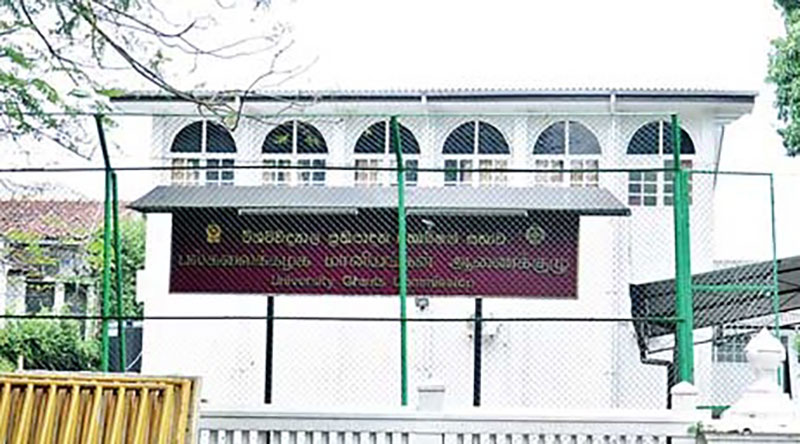
 Academics involved in education policy like to say that there is no such thing as a private university in Sri Lanka. The only ‘universities’ in the country are state universities; anything else offering degrees is a private higher education institution (HEI). This position is technically accurate. Yet, in the discourse and imagination of the public, private universities are very real – people teach in them, students register in them, families pay fees, and such degree holders enter job markets in Sri Lanka and outside.
For decades, activists concerned for public higher education have ignored or resisted looking at private HEIs, as if such scrutiny would taint them. Others have worked in both types of institutions, carrying practices from each to the other. The apex body governing state universities, the UGC, has, meanwhile, ignored the concept of conflict of interest and appointed individuals in private higher education in committees and leadership positions. It is unsurprising then that some of the ideologies informing private higher education appear in reform agendas in the state sector.
This is a good time then to consider the varying types of private HEIs around us, and to take a look at some of the issues within them in the hope that higher education reform agendas will include private, as well as state higher education.
What is a ‘private university’?
First, some clarifications. In the public imaginary, a ‘private university’ is typically an institution that provides a foreign or local degree for which the student makes a payment. But this broad classification encompasses a host of diverse institutions and types of degrees which I detail below.
The Non-State Higher Education Division (NSHE) of the Ministry of Education has recognised 295 degrees by 32 institutions. Most of these are private companies and include a handful of established, well-known private HEIs that are ‘university like’. The degrees are local degrees conferred by the institutions accredited by the NSHE Division. While private HEIs conferring local degrees must be accredited by the NSHE Division, there appears to be no legal consequence for not doing so. In addition, there are several permutations of the private degree that miss the net of this Division and the Standing Committee on Accreditation and Quality Assurance (SCAQA) that assists this Division.
For one, degrees conferred by foreign universities offered, via these same private HEIs, are not vetted by the NSHE Division. Secondly, there is a growing plethora of private HEIs which have either no physical presence locally or only a dubious presence. The University Grants Commission has notified the public, through their website, that foreign universities listed in the Commonwealth Universities Yearbook and the World Higher Education Database are recognised, but refrained from giving any other details – which degrees? Offered by what modes? These details are not known. Some of the foreign universities in the lists may be legitimate entities in their own land but the degrees conferred locally, in their name, may not adhere to curriculum or teaching specifications of the NSHE Division or the UGC.
Another troubling phenomenon is the ‘top up degree’, which appears to work on the same principle as that of a pre-paid mobile connection: if I have a Diploma or an HND of a sort, I am eligible to complete a course of study which provides me with a degree, usually from a foreign university. The idea that someone who does not initially qualify for a degree programme should be able to work their way towards one is a progressive notion. This is the concept that open and distance learning (ODL) was based on initially, but which is now sadly exploited. ODL models are expected to provide opportunity for learning for those who may be excluded from traditional learning institutions. In Sri Lanka, however, we have seen ODL become a marketplace offering easy to obtain, for-fee qualifications by institutions with little commitment to superior teaching and learning.
Finally, a perusal of the many types of private HEIs and their varied degrees bring to mind another question – how should the private degrees, provided by state institutions (that are not educational institutions), be regulated? Who should do so?
All of these create a host of problems for the public – for hopeful students and parents and trusting employers. For the higher education sector, recruitment of academic staff, too, has become difficult due to this plethora of ambiguous higher education qualifications, as I discussed in a previous Kuppi article (‘Recruiting academics to state universities’).
Some issues in private HEIs – a bellwether for change in state universities
In this second part of this article, I will discuss some aspects of work in private HEIs – albeit the more established institutions – given that such issues may appear in reform agendas in future.
Across state universities, all permanent staff of a specific category are paid according to the same criteria. The picture is not so clear when it comes to private HEIs since they are different entities legally, typically companies. Private HEIs have salary scales and financial incentives that are different to each other. The more established private HEIs reportedly have attractive renumeration packages, possibly a reason for academics of state universities migrating eagerly to such institutions during sabbatical years and on retirement. This may not of course be the case with other less established, or improperly registered HEIs of which we know little. Academic staff of these more accepted private HEIs seem to value the high financial remuneration they receive (in comparison to state universities) as something that makes their work rewarding.
Attractive remuneration is important to sustain the good life and is at times seen as the institution’s way of encouraging good work. Yet, this has implications for the future of the institution: to continue to deliver on promised financial packages, institutions must continue to have large profit margins. One strategy has been to enroll multiple cohorts of students per year, even up to three or four intakes per year. This can result in exploitative work conditions, since staff must cater to all these cohorts in that same year. If there is inadequate staff, employees are further burdened. On the other hand, if there is a sudden drop in enrolments (degrees can go out of fashion) unexpected layoffs occur. Similar to other sectors that employ short-term contract staff – including state universities – in private HEIs, too, individual teachers, who are on short term contracts that need regular renewal, can feel pressured to work under difficult or exploitative conditions.
At the same time, even in the more established private HEIs, work norms differ from those of state universities in that they include promotional work that keeps the institution’s name in the eye of the public. The Marketing (or similarly named) unit comes up in conversations as one of the most important departments. It appears to weigh in on decision-making related to the number of staff, the amount of re-sits per exams, and other pedagogically important matters. This is a worrying example of how financial rationales interfere with pedagogically or academically sound processes, resulting in problematic results in the classroom. On the plus side, junior colleagues, who had experience in both state and private HEIs, also felt that they faced less harassment in private HEIs – primarily due to the private HEIs ability to take swift action in reported cases of harassment. This is a real indictment on state institutions and their reluctance to address chronic issues of harassment in our universities.
Yet, while we hear much about problems in state universities, we hardly hear of problems that staff in private HEIs face. One rationale for a lack of public expressions by staff is that expressions of discontent might lead to trouble given the importance of reputation for private HEIs. The worry about reputational damage is a growing concern in state universities, too, as evidenced by social media policies and internal conversations on reputational damage, consequent to negative publicity. Institutional worries of reputational damage are harmful in the long run since these impact not only freedom of expression by student and staff, but also research that is possible in and about the education sector.
Some thoughts at the end…
A close look at the private higher education sector is important given its strong presence in the country. Impending reform needs to regulate this diverse array of higher education offerings in the private sector, as well as the state institutions that offer privately-funded options of higher education (a topic for a separate Kuppi on its own). It is time we carefully considered how to build a whole system of higher education out of this broken mess.
Kaushalya Perera is a senior lecturer at the University of Colombo.
Kuppi is a politics and pedagogy happening on the margins of the lecture hall that parodies, subverts, and simultaneously reaffirms social hierarchies.
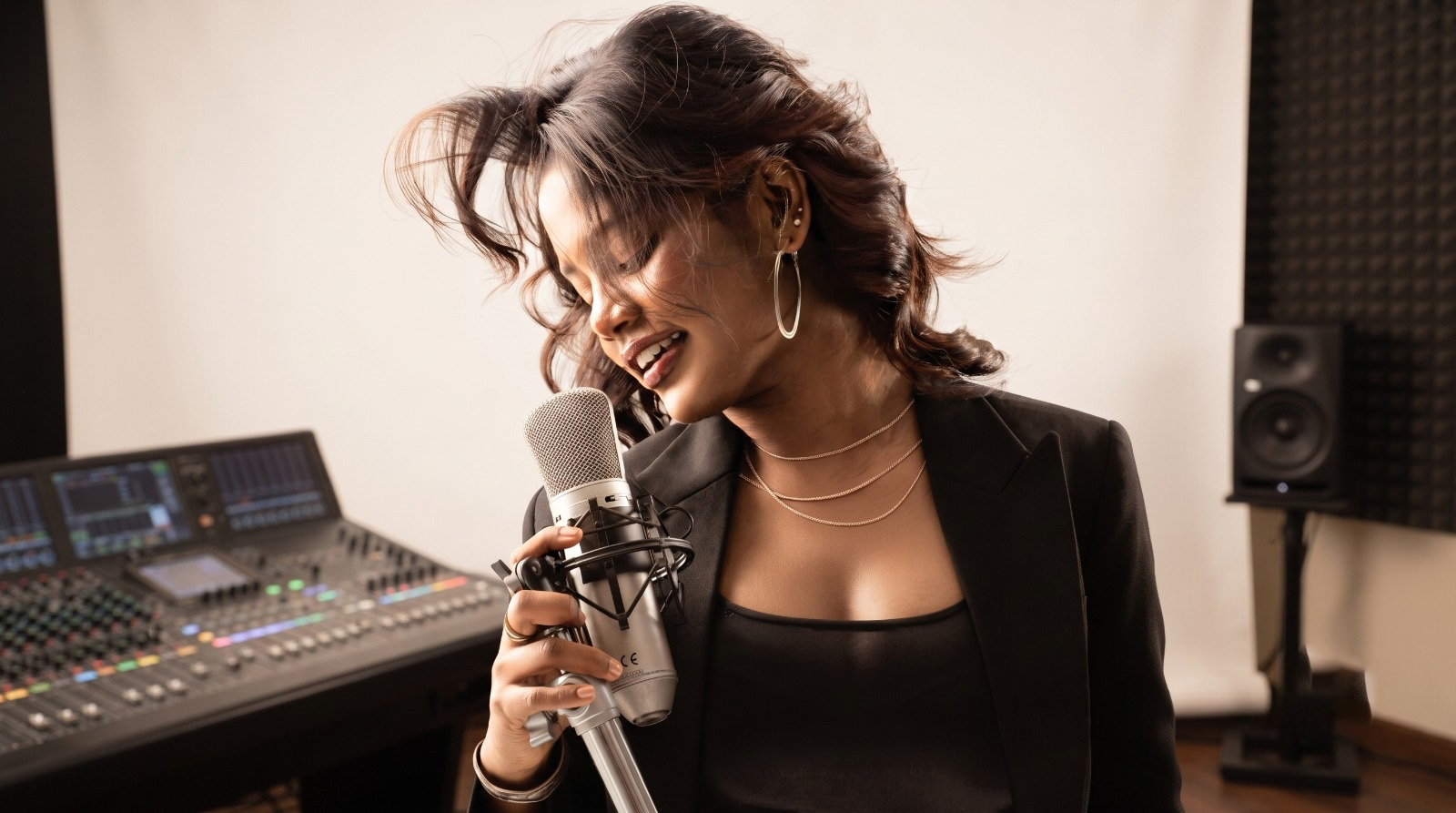
Singer Nish Peiris is set to take the next big step in her music journey.
The talented vocalist, who has been seen and heard in the scene here for a short while, and was also featured with the now-defunct band, Inner Vision, has announced that she will be fully committing to her solo career, after completing her degree this year.
“I’m finishing my degree this year, and after that I’ll be fully committing to my solo music career,” Nish told The Island.
“I’ve already got a few tours lined up for next year, so I’m really excited for what’s ahead.”
Fans, no doubt, will remember Nish for her smooth voice and stage presence, and the good news is that she is now ready to chart her own path and bring new music to audiences at home and abroad.
With tours already planned for 2027, the year 2026 promises to be an exciting year for the young artiste as she steps into the spotlight on her own.
We wish Nish every success in this new chapter!
 While Sri Lankan music lovers, in Dubai, are eagerly looking forward to being a part of the action on Saturday, 25th July, with Rajiv Sebastian in the limelight, Sri Lankans, in Toronto, Canada, are equally excited and are anxiously awaiting the arrival of Sri Lanka’s famous singer/entertainer Sohan Weerasinghe.
Having done the needful with The X-Periments, the legendary performer has now embarked on an exciting new chapter – a solo career – and Toronto, Canada, will see him do the needful, on Friday, 31st July, 2026, from 8.00 pm to 12.00 am, at the Angus Glen Golf Club.

Sohan Weerasinghe: In Canada, and ready to do the needful on 31st July
Reports indicate that it’s a ‘sold out’ event – naturally with Sohan in the spotlight.

Gamini Hemalal: Creating all the excitement for Sri Lankans in Toronto
Having built his reputation through years of unforgettable performances, and hits that became part of our musical fabric, Sohan is ready to bring his own vision, sound, and stories directly to the audience, in Toronto, Canada, backed by the phenomenal Toronto Ceymphony Live Band.
Says Gamini Hemalal, who has been instrumental in reviving the Sri Lankan entertainment scene, in that part of the world:
“The countdown begins for the most exclusive musical event of the summer! Join us for a premium night of incredible music, elite hospitality, and a lavish buffet as the legendary Sohan Weerasinghe takes the stage live in Toronto!
“This is a high-end event, designed for those who appreciate exceptional entertainment and great food.”
Gamini, who is also a member of the Toronto Ceymphony Live Band, mentioned that it’s going to be an intimate musical evening with the celebrated Sohan Weerasinghe.
From packed auditoriums to intimate shows, Sohan continues to prove why he remains one of Sri Lanka’s most beloved entertainers.
For decades, Sohan Weerasinghe has been a household name in Sri Lankan entertainment.
Known for his captivating smooth voice and charismatic stage presence, Canada will experience it all on Friday, 31st July.
Next on the list of events, Gamini Hemal is working on, is Halloween night and he says “what we plan to do will be very interesting and unique … with a surprise guest star, as well!”

Charted Computer Institute of Sri Lanka to be established
Drug Dependent Persons (Treatment and Rehabilitation) Act No 54 of 2007 to be amendmend
Mrs. O. T. M. I. Thilakarathne appointed to the Post of Surveyor General
Purchase of 600 buses for intercity / long distance services of the Sri Lanka Transport Board
Protection of Historical, Cultural, and Traditional Intellectual Property related to the Kandy Esala Perahera
Development of roads which are not under the Road Development Authority

‘Dates have the highest sugar content to fight Coronavirus’

Sunday Island 27 December – Headlines

#SundayIsland 17th December – Headlines

Sunday Island – 28th March

Sunday Island Headlines – 21 March

Sunday Island – 21st February – Headlines
-
 Business3 days ago
‘Giving up was never an option’: The fisherman who fought back after losing millions in SL
-
 Features3 days ago
Two memorable excerpts from a former SLAF commander’s memoir
-
 Latest News3 days ago
Davis cup Asia/Oceania Group IV 2026 to be held in Colombo from 20th to 25th July
-
 Features3 days ago
Erdoğan’s New Republic
-
 Life style3 days ago
Taste of the Swiss Alps comes to Colombo
-
 Features7 days ago
Dirty Money
-
 News4 days ago
Dengue outbreak gallops ahead: Infections surpasses 73,455, leaving 50 dead
-
 News4 days ago
Evidence recorded in money laundering case against Yoshitha Rajapaksa