
News
Governance issues, etc., will have to be sorted out to avert further debt restructuring: Verité Research

By Rathindra Kuruwita
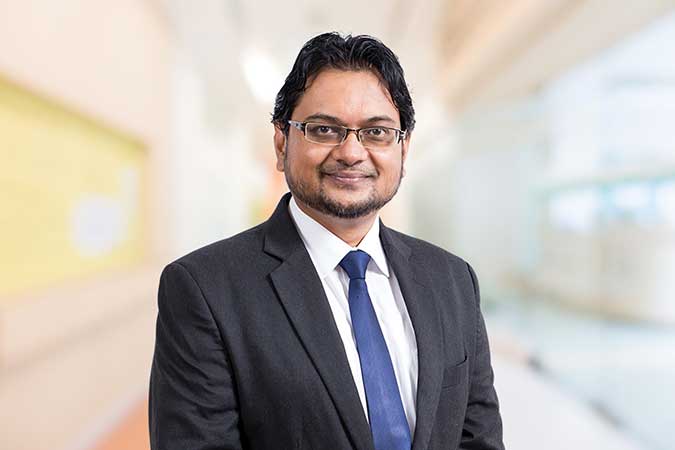
Unless Sri Lanka addressed its governance issues, the country would have to restructure its debt again like most countries that had unsustainable levels of corruption, Executive Director of Verité Research Nishan de Mel said in a recent televised interview.
Dr. De Mel said that as the government had decided to pay the Employees’ Provident Fund (EPF) only 9% for its investment until 2038 instead of the average Treasury bond interest rate of 13.5 percent, it would lose 12 trillion rupees.De Mel also said that Domestic Debt Optimization (DDO) was a phrase that the Sri Lankan government coined.
“Domestic debt restructuring usually means making credit owners take a loss for the benefit of the government. The word commonly used for this is restructuring, optimisation is a word that we have come up with,” he said.
De Mel said that the government’s proposal was to reduce the interest paid on the money at EPF and other such funds to 9.1 percent until 2038. However, the average interest paid for Treasury bonds over recent years was 13.5 percent, which is almost 50 percent more than the proposed interest for EPF, he said.
“We know the interest rates for Treasury Bonds because the government has released information about the interest rates of bonds issued because foreign creditors have been asking for transparency. By the end of 31 May this year, the average interest rate given to bondholders was 13.5 percent,” he said.
There had been years when interest rates for Treasury bills were below 9.1 percent. However, it was unlikely that the interest rates offered on Treasury bills would fall below 9.1 percent, he said. Sri Lanka was going through an uncertain time and governments could only lure people into buying bonds by offering attractive interest rates, de Mel added.
“We still can’t borrow from bond markets. So, the government will offer higher interest rates when it borrows from the domestic market. During the past two years, the government has paid about 30 percent interest to borrow from the domestic market. It is unlikely that interest rates for bonds will be less than 13.5 percent in the future,” he said.
De Mel said that at present there are 3.4 trillion rupees at the EPF, and it will reach about 25 trillion by 2038 at 13.5 percent interest. However, EPF funds would only grow to 13 trillion at 9.1 percent interest.
“That’s 12 trillion rupees less at 9.1 percent,” he said.
The Central Bank had a Monetary Board taking decisions on the EPF and there was a conflict of interest as CBSL was also entrusted with restructuring debt, de Mel said.
“A lot of people ask me why I am using 13.5 percent to calculate the losses. They tell me that the EPF already receives less than 13.5 percent in interest. The EPF is late in producing annual reports. The last available report was for 2020. The Central Bank produces its annual reports every year, but the EPF reports are delayed. There are many allegations about what happened. If someone tells me that EPF receives lower interest rates than the market rate for treasury bonds, that is another serious problem. All private sector employees are compelled to be a member of the EPF, so why are EPF beneficiaries receiving less than market rates?” he asked.
There are several pension funds, and CBSL workers have a special pension fund. De Mel said he was not aware if that pension fund, too, had been restructured.Although the parliament had approved a resolution on the domestic debt restructuring, the government could not change the interest rates given to EPF without changing some laws, he said.
“The laws governing the EPF say that the Central Bank must publish all investments it makes with EPF money. However, when we look at EPF’s financial statements, they have misinterpreted the above clause. Instead of listing out every investment, they are listing out every type of investment. This way, people can’t figure out what’s going on,” he said.
Those who are EPF beneficiaries will lose about 70 percent of the real value of their money because of inflation and the lower market rate of interest. However, foreign investors are only getting a 30 percent loss, he said.
“This is unequal treatment. There are two factors needed for sustainable domestic debt restructuring. One is that foreign creditors must take a deep haircut—over 50 percent. Secondly, the governance issues in a country must be addressed. Most countries have to restructure their debt more than once. And these countries have serious governance issues. So, to attain sustainability, we need foreign creditors to get a deeper haircut and we have to address our serious governance issues,.”









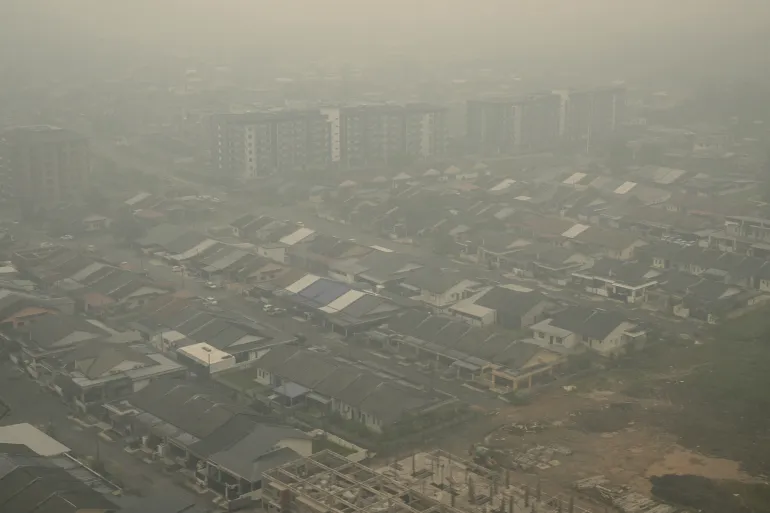
Malaysia has declared a state of emergency in a district in Sarawak state after haze caused by wildfires in neighbouring Indonesia increased air pollution to “hazardous” levels.
King Sultan Ibrahim “has consented to the declaration of emergency throughout Serian Division, Sarawak, following haze conditions that have reached air pollution levels hazardous to public health and safety”, Prime Minister Anwar Ibrahim’s office said in a statement on Thursday.
The declaration followed a formal request from the Sarawak Disaster Management Committee after the region’s Air Pollutant Index reached levels warranting consideration of a local emergency.
Under the order, 647 schools in Serian will close from Monday until at least the end of next week, alongside government and private offices, plantations, construction sites and quarries, with only essential services continuing to operate.
The state’s disaster management authorities said a three-day cloud-seeding operation launched on Thursday would be extended to at least Monday, citing forecasts of “more conducive cloud formations” during that period.
Sarawak State Disaster Management Committee chairman Douglas Uggah Embas, speaking at a news conference in Kuching, stressed that the emergency applied only to Serian, not the entire state, but urged residents there to take the situation seriously.
“Please minimise outdoor activities and avoid strenuous activities outdoors,” he said.
Sarawak, in the northern part of Borneo island, has been heavily affected by haze for weeks, as have the neighbouring states of Sabah and Peninsular Malaysia.
(Aljazeera)
Latest News
Sun directly overhead Moratuwa, Kesbewa, Handapangoda, Idalgashinna, Yudhaganawa, Kotiyagala and Panama about 12.08 noon today (05)


The sun is going to be directly over the latitudes of Sri Lanka from 28th of August to 07th of September due to its apparent southward relative motion.
The nearest places of Sri Lanka over which the sun is
overhead today (05) are Moratuwa, Kesbewa, Handapangoda, Idalgashinna, Yudhaganawa, Kotiyagala and Panama about 12.08 noon
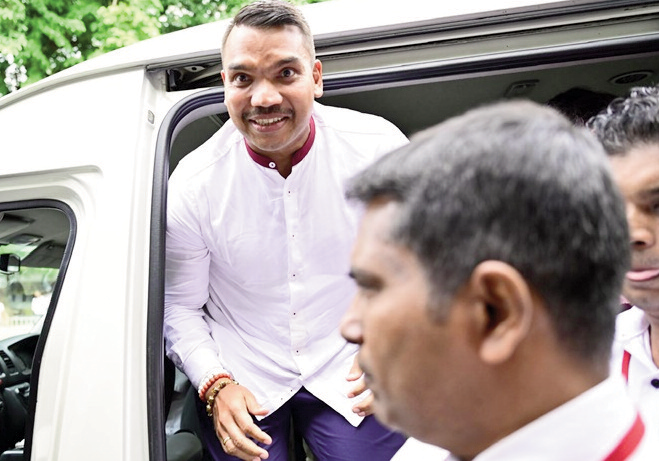
Sri Lanka Podujana Peramuna (SLPP) National Organiser and Parliamentarian Namal Rajapaksa was yesterday remanded until September 18 by the Colombo Chief Magistrate’s Court following his arrest by the Commission to Investigate Allegations of Bribery or Corruption (CIABOC) in connection with an investigation into the controversial SriLankan Airlines Airbus aircraft transaction.
Rajapaksa appeared before the CIABOC at around 9.15 am yesterday to record a statement after being summoned over the transaction. He was taken into custody following several hours of questioning and subsequently produced before the Colombo Chief Magistrate.
The investigation centres on allegations surrounding the acquisition of six Airbus A330 and eight A350 aircraft by SriLankan Airlines in 2013, in connection with an alleged USD 2 million bribe.
Former SriLankan Airlines Chief Executive Officer Kapila Chandrasena and his wife, Priyanka Niyomali Wijenayake, had previously been named in connection with the alleged bribery.
Chandrasena was arrested on March 12 as part of an investigation launched by the CIABOC under the Anti-Corruption Act and was subsequently released on bail. He was later found dead on May 8 while on bail, with police suspecting that his death was a suicide.
Open warrants have been issued for the arrest of Wijenayake, who is named as the second suspect, and Shamindra Rajapaksa, named as the third suspect, in the case pending before the Fort Magistrate’s Court in connection with the Airbus transaction.
The investigation has also received assistance from Airbus, with a delegation from the company’s parent group in France visiting Sri Lanka during the first week of August. The delegation provided statements and other assistance to the CIABOC as part of the ongoing inquiry.
Rajapaksa’s arrest and remand yesterday mark a further development in the widening investigation into the controversial aircraft deal.

Malaysia declares emergency in Sarawak as haze from Indonesia worsens

UAE keep semi-final hopes alive after convincing win over Indonesia

Sun directly overhead Moratuwa, Kesbewa, Handapangoda, Idalgashinna, Yudhaganawa, Kotiyagala and Panama about 12.08 noon today (05)

Showers above 75 mm are likely at some places in the Uva, Central and Eastern provinces and in Polonnaruwa and Mullaittivu districts after 2.00 p.m

Namal remanded until Sept. 18 over Airbus deal investigation

Dengue cases surpass 96,000 this year

‘Dates have the highest sugar content to fight Coronavirus’

Sunday Island 27 December – Headlines

#SundayIsland 17th December – Headlines

Sunday Island – 28th March

Sunday Island Headlines – 21 March

Sunday Island – 21st February – Headlines
-

 Features6 days ago
“Wrap Me Up in My Blazer”— A Gentlemanly Bradby Reminiscence
-

 Features5 days ago
When Sri Lankan stories find their own voice
-

 Features6 days ago
JVP/NPP government as seen from outside by Lionel Bopage now domiciled in Australia
-

 News5 days ago
BASL takes exception to Justice Ganepola being denied a place in SC
-

 Features6 days ago
Prof. Savitri Goonesekere: What has she done?
-

 News2 days ago
Denied of promotion to SC despite vacancies, justice Gurusinghe retires
-

 Latest News3 days ago
Grade 5 scholarship exam results released
-

 News2 days ago
22A: SC urged to suspend hearing, appoint full bench