
Editorial
Making sense of the U.S. election


To many of us in Sri Lanka, born and bred in the Westminster tradition of ‘One Man One Vote’, the Electoral College system of electing the President of the United States makes little sense. The USA is a country that prides itself as the cradle of democracy, condemning other systems of elections as inferior, authoritarian, even dictatorial. Proponents of the Electoral College claim, according to a Google search, that “the nationally popular system promotes political stability, preserves the Constitutional role of the states in presidential elections; and fosters a broad-based, enduring and generally moderate political party system”.
This theory does not seem to reflect the real problems of a system which was created in a bygone era with a vastly different political and racial climate. The Electoral College is not only unique to the United States, but the system is only used to elect the presidency, and is the only election in the US in which the candidate who gets the highest number of votes does not necessarily win. They have in 90% of the elections, proponents claim. But who can forget Trump won last time round after polling nearly three million fewer votes than Hillary Clinton.
The origin of the system is also unique in its purpose, which was hardly democratic. It was designed to ensure that the president of the United States would come from the then largest state, Virginia, and the slave states would be able to use their slave population to influence the election of the president. The Electoral College is made up of representatives of each of the 50 states, and the District of Columbia. When the American voter casts his ballot for his choice of the president, he is really voting for a candidate of his party in the state, known as an elector. There are 538 such electors nationwide, who then cast their votes for the president on behalf of the voters in the state.
These electors are chosen on the basis of the number of congressional districts in each state, plus two additional votes representing the state’s Senate seats. Washington D.C., though not a state, is also assigned three electoral votes. The total number of electoral votes is supposed to reflect the populations of these states; however, the least populous states, like the Dakotas and the states of New England tend to be over-represented because of the mandatory minimum of three votes for each state. The most populous states, like California, Texas and Florida are under-represented in the electoral college.
Also, the Electoral College operates on a winner-take-all system, where the candidate with a majority of votes in the election in each state is awarded all of that state’s electoral votes. As an example, Donald Trump won Florida in 2016 with a margin of 2.2% over Clinton, and claimed all of Florida’s 29 Electoral College votes. Two of the four presidential elections held in this century have resulted in the candidate who won the popular vote losing the presidency; Clinton beat Trump by 2.9 million national votes and Al Gore beat Bush by approximately 500,000 votes. If the archaic Electoral College had been retired to the dustbin of history, Democrats would have very likely had consecutive presidents for the past 20 years.
The election of Donald Trump with a minority vote proved to be a tragic outcome, not only for the United States, but also for the world outside. Trump has earned universal contempt, and relinquished America’s mantle as the Leader of the Free World. Strangely, the 2020 elections which are currently in progress shows that Trump’s popularity in the United States has not been overly diminished. Biden currently has a popular vote lead of over four million votes, but Trump has also exceeded the 60 million votes he received in 2016. To paraphrase one of our regular columnists who makes no secret of his hatred for Donald Trump, the demographic composition of American society has been undergoing rapid changes, and the “brown invasion” touted by Trump has made for a large swathe of white Americans fearful of losing the white privilege they had enjoyed for centuries.
Although the official result of the election will be known only sometime next week, Biden’s success, both in terms of the popular vote and the Electoral College, have been accepted. Though not by Trump, who has been ranting and tweeting that the election was a fraud and has been rigged. He has demanded recounts in states like Michigan and Wisconsin, which Biden has won fairly comfortably. He has already filed a slew of lawsuits contesting the election in many of the battleground states, some of which have admittedly been very close. He is also inciting his “militia” of white supremacists and the alt-right Proud Boys to post-election violence, which some alarmists have predicted would end in a second civil war.
The strange concept of a Lame Duck presidency, also unique to the United States, where the defeated president remains in office, with all the awesome powers of the presidency from the date his defeat is announced to the inauguration of the newly elected president on January 21, 2021, may cause unforeseen legal problems, even violence. A hostile Republican Senate, with a pliant six/three majority in the Supreme Court, will only help Trump in his efforts to subvert and destabilize the political process. Sri Lanka has also had sporadic instances of post-election violence in the past. But the violence which could be wrought in the USA, with private militia armed to the teeth with military style weapons, will make anything we have encountered in the past seem like a walk in the park.



Saturday 30th May, 2026
The Joint Opposition (JO) has submitted a petition to the Commission to Investigate Allegations of Bribery or Corruption (CIABOC), calling for the suspension of CIABOC Director General Ranga Dissanayake and a high-level probe into his allegedly arbitrary and biased conduct. It has claimed that Dissanayake is misusing his position to further the interests of the ruling NPP led by the JVP, and the integrity of the CIABOC investigations has been undermined by his political bias and arbitrary actions.
There are arguments for and against the Opposition’s campaign against the CIABOC DG. Dissanayake himself has denied the allegations against him as baseless, and it is being argued in some quarters that he is in the Opposition’s crosshairs because of the ongoing investigations into corrupt deals under the previous governments. The JO has cited in support of its petition against Dissanayake an affidavit the late SriLankan CEO Kapila Chandrasena submitted to court through his lawyers, claiming that Dissanayake intimidated him.
Allegations against Dissanayake have not been substantiated, but they have adversely impacted the image of the CIABOC. Hence the need for a thorough investigation into the charges contained in the JO’s petition, which is now in the public domain.
There are various allegations against many state officials in key positions. Some officials of the Attorney General’s Department, the police top brass and some secretaries to ministries have also been accused of misusing their authority to advance the government’s political agenda. Some public officials’ partiality and servility to the government in power severely erode public trust in the institutions they represent and make a mockery of the constitutional safeguards in place to ensure their independence. Constitutional provisions alone cannot depoliticise public institutions; state officials in key positions must assert their independence from politicians and be above reproach.
The JVP was instrumental in having the 17th Amendment to the Constitution introduced in 2001, paving the way for the establishment of the Independent Commissions to safeguard the independence of key state institutions vis-a-vis political interference. In 2015, it campaigned really hard to have the 18th Amendment replaced with the 19th Amendment to restore the 17th Amendment in all but name. In 2022, it joined forces with other Opposition parties and civil society groups to do away with the 20th Amendment and bring in the 21st Amendment, which revived the constitutional mechanisms the 19th Amendment had put in place to free the state service from the clutches of politicians.
But today the JVP-led NPP government stands accused of manipulating the Constitutional Council to elevate its loyalists among public officials to key positions in the state service and pressuring officials to toe its line. The Sri Lanka Association of Divisional Secretaries and Assistant Divisional Secretaries has protested against a controversial government decision to provide “Clean Sri Lanka” coordinators, who are said to be JVP cadres, with offices inside Divisional Secretariats. It has written to President Anura Kumara Dissanayake opposing the government move and warning that such deployment of “Clean Sri Lanka” operatives will only undermine the independence of the public service. The JVP/NPP is accused of trying to establish a parallel administration as part of a strategy to perpetuate its hold on power.
It is imperative that the CIABOC conduct a thorough probe into the JO’s allegations against DG Dissanayake, in a transparent manner. That is the only way it can clear its name, if at all. If the allegations at issue go uninvestigated, they will undermine the integrity of the CIABOC, and provide a fresh impetus to the Opposition’s campaign.

Friday 29th May, 2026
How long the Provincial Councils (PCs) will remain unelected is anybody’s guess. All of them are currently under the provincial Governors appointed by the President. There have been five Presidents and four governments since the conclusion of the last PC elections held on a staggered basis between 2012 and 2014. The JVP-NPP government is under increasing pressure to hold the much-delayed PC polls. The NPP’s National Policy Framework, A Thriving Nation: A Beautiful Life, promises to hold the PC elections within one year of forming a government. But the government is now wary of holding elections because its performance at last year’s local LG polls fell below its expectations just seven months after its spectacular win at the 2024 general election.
The Opposition has sought to capitalise on what is described as the government’s fear of elections. It is cranking up pressure on the JVP/NPP to stop trotting out lame excuses and hold the PC elections.
JVP General Secretary Tilvin Silva caused quite a stir the other day by declaring that funds allocated by Budget 2026 for the PC elections had been spent on disaster relief and therefore PC elections could not be held this year. The Opposition and Election monitors lashed out at the government for its efforts to postpone the PC polls on some flimsy pretext. The NPP politicians have since claimed there are funds for elections but stopped short of specifying when the PC polls will be held.
Now, the Election Commission says it is ready to conduct the PC polls soon if Parliament passes a law, enabling it to do so under the PR system instead of the Mixed Proportional system. The Treasury says it is ready to release funds. The Opposition says it is ready to face an election, but the JVP/NPP is not ready. It is unbecoming of a government that flaunts its two-thirds majority in Parliament to postpone elections.
Ironically, the Opposition political parties that castigate the JVP-NPP government for delaying the PC polls helped the UNP-led Yahapalana government amend the Provincial Council Elections Act in a deplorable manner and postpone the PC polls indefinitely. The JVP fully backed the Yahapalana administration, which avoided an election in 2017 for fear of suffering a midterm electoral defeat.
At a Joint Opposition media briefing on Wednesday, the UNP proposed that all Opposition parties close ranks and form a common electoral front to defeat the government in the next PC polls. That strategy has worked in the cooperative society elections, where the Opposition turned the tables on the government in many areas. Those contests serve as electoral weather vanes, indicating the direction of political winds. Opposition parties have gained control of many cooperative societies by preventing a split in the anti-government vote. That is no mean achievement for the Opposition.
However, the dynamics of contests and voting patterns do not remain constant at different elections, and therefore the question is how advisable it is to extrapolate a trend from the cooperative society elections and political alignments related to them.
The difficulty of bringing Opposition parties under one banner became evident on Wednesday itself. The SJB and the SLPP were not represented at the Opposition media briefing, according to press reports. It may be too early to say whether they, too, will join the grand Opposition alliance in the offing, but bringing a diverse group of politicians together to contest elections is a Herculean task.
Electoral alliances, formed by strange bedfellows with competing ambitions and espousing different ideologies are fissiparous and fragile. They tend to collapse even after being elected to power, plunging political institutions into chaos. History is full of such instances. The fate that befell the so-called National Unity government, or the Yahapalana administration, as it was popularly known, is a case in point. Three years into office, the uneasy alliance between the UNP and the SLFP collapsed, rendering that government dysfunctional to the extent of endangering national security. It is hoped that the government will muster the courage to hold the PC polls before long and that no councils will end up hung.

Thursday 28th May, 2026
The JVP-NPP government would have the public believe that the economy is resilient enough to absorb external shocks, and the rupee is stabilising. True, the rupee has staged a countertrend rally recently, but the situation is far from rosy. Anything is possible in this topsy-turvy world, with US President Donald Trump acting whimsically. Much more therefore needs to be done to strengthen the rupee. This requires a truly national effort. Sadly, the government and the Opposition are at daggers drawn, and do not see eye to eye even on crucial economic issues.
Opposition politicians parade their supposed knowledge of economic affairs in Parliament, which is full of backseat drivers who claim to know the way but cannot drive. They keep on telling the public what they think is wrong with the economy. There is absolutely no need for them to do so, for the country’s economic problems and their root causes are all too well known. What the public wants to know is how the Opposition proposes to solve them.
Interestingly, the SLPP, which mismanaged the economy and bankrupted the country, is also critical of the incumbent government’s economic performance. Its leaders are lecturing the government on how to run the economy. What it is doing is like a bankrupt businessman conducting lectures on business management.
While out of power, the JVP/NPP also lectured previous governments on how to manage the economy. Its leaders would even brag that raising funds to settle the country’s external debt was child’s play, but now they are struggling to increase the forex inflow and navigate a host of other economic issues. Some of them even claimed they would be able to build the country’s foreign currency reserves by asking their supporters residing overseas to send in dollars. Between saying and doing, many a pair of shoes is said to be worn out.
The JVP was prominent among the political parties that resisted President Ranil Wickremesinghe’s modus operandi to put the economy back on an even keel during the previous government. It also berated the IMF and pledged to renegotiate the ongoing bailout programme if voted into power. It opposed tax and tariff increases and demanded that relief be granted to the public even at the expense of the economic recovery measures. It insulted Wickremesinghe, claiming that he was too old to rule the country and derisively called him Seeya (grandpa). Today, in a strange twist of fate, the JVP-led NPP government has chosen to pursue Wickremesinghe’s economic policies (‘Seeyanomics’?). It is jacking up taxes and tariffs and curtailing state expenditure in a desperate bid to boost revenue.
President Wickremesinghe got his act together on the economic front, and made tough decisions, regardless of their political consequences, and straightened up the economy, but he could not win the last presidential election because he succumbed to the arrogance of power and blundered on the political front, shielding as he did crooks of all sorts. Other political leaders, especially President Anura Kumara Dissanayake should learn from Wickremesinghe’s experience.
The Opposition’s right to criticise the government and its policies, economic or otherwise, cannot be questioned. It must act as a countervailing force against the party in power, but it should stop playing politics with the economy and allow the government to do what needs to be done to shore up the country’s foreign currency reserves and strengthen the rupee.
A strategy to mitigate the adverse impact of external pressures on the country’s foreign currency reserves consists in curtailing the foreign exchange outflow. The need for import restrictions, etc., cannot be overstated. Governments usually fight shy of adopting such drastic yet essential measures, fearing political consequences and protests by their political rivals. Procrastination worsens crises. This is why a consensual approach is needed to resolve existential issues facing the nation.

Let us dispel the roots of greed, hatred, and delusion, and transform our lives into a nobel period that brings peace and serenity – PM

Prime Minister and United Nations Resident Coordinator discuss post-Ditwah recovery and humanitarian cooperation

Further embrace the values of Buddhism founded upon non-violence, compassion and boundless loving-kindness towards all living beings – President

Showers will occur at times in the Western, Sabaragamuwa and North-western provinces and in Galle, Matara, Kandy and Nuwara-Eliya districts

IMF urges Lanka not to meddle with exchange rate

Court orders arrest of Basil in Rs. 7.8m poll funds case

‘Dates have the highest sugar content to fight Coronavirus’

Sunday Island 27 December – Headlines

#SundayIsland 17th December – Headlines

Sunday Island – 28th March

Sunday Island Headlines – 21 March

Sunday Island – 21st February – Headlines
-

 News7 days ago
All-New GRAVITE launches at LKR 6.99 Mn
-
 Features7 days ago
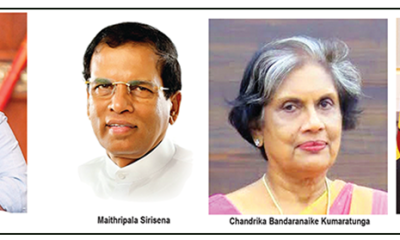
The NPP’s pivot to the past
-
 News6 days ago
Police probe underway to ascertain links between criminals deported from UAE and local politicians
-
 News5 days ago
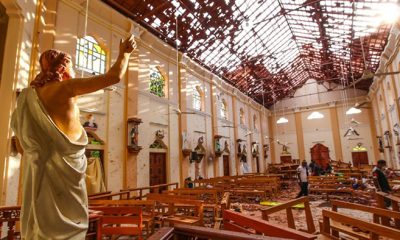
Easter Sunday carnage: Court told Maulana’s statement cannot be accepted without cross-examination
-
 Features7 days ago
End of Peacekeeping
-
 Opinion5 days ago
Undermining the democratic political framework
-
 News5 days ago
UK passport holder hiding here wants to have deportation order rescinded to leave without blemish
-

 Features2 days ago
The Division Bell Mystery