Connect with us

Latest News

Sri Lanka survive Edwards scare to defend 213

Published

on

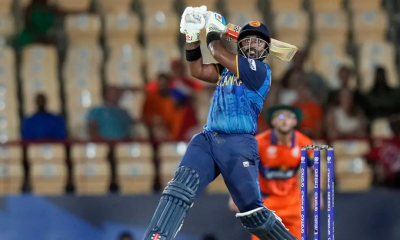
Dhananjaya de Silva propped up a shoddy Sri Lanka batting performance
Sri Lanka survived an almighty scare as they scraped past Netherlands by 21 runs to kickstart their Super Six campaign on a nervy but winning note. It was a victory built on the back of a career-best 93 from Dhananjaya de Silva and a backs-against-the-wall bowling effort led by the excellent Maheesh Theekshana, who picked 3 for 31.
But every inch of this win was contested by a persistent Netherlands outfit, who first restricted Sri Lanka to a subpar 213 and then nearly pulled off a nail-biting chase. Better sides than them have fallen foul of the twin threats of Theekshana and Wanindu Hasaranga, who picked up five wickets between them on the day. Two run-outs, when the required rate throughout was essentially less than four an over, only adds credence to this notion. Netherlands captain Scott Edwards was left stranded on an unbeaten 68-ball 67, as he ran out of partners on a sticky surface that was taking turn and displaying some uneven bounce.
The result means Sri Lanka join Zimbabwe on six points at the top of the table, with the winner of their clash on Sunday guaranteed qualification to the World Cup. As for the Netherlands, they can still get up to a maximum of six points but will now need one of Sri Lanka or Zimbabwe to lose both their remaining games.
Theekshana also made an impact with the bat, sticking it out in the middle with Dhananjaya during a vital 77-run eighth wicket stand. With the game won by 21, the importance of Theekshana’s gritty 28 cannot be overstated, especially seeing that it came after Sri Lanka had been reduced to 131 for 7.
Netherlands did all the running for much of the game. Starting with the very first delivery of the game, when Pathum Nissanka slashed wildly at one outside off stump to be caught at cover. That would be one of three wickets for the excellent Logan van Beek, who would also send Sadeera Samarawickrama and Charith Asalanka packing – all before the end of the first powerplay.
Nissanka’s wouldn’t be the only questionable stroke by a Sri Lankan batter, as several were dismissed trying to hit out. This though was down to Netherlands persisting with nagging lines and lengths, allied with Sri Lanka’s inability to find singles and rotate strike consistently. The build up of pressure had batters falling while attempting to break the shackles. And, if not, the odd one that kept low would do the trick.
This was essentially the tale of Sri Lanka’s innings, as Netherlands bowled wicket to wicket and refused to allow for easy runs. It was only Dhananjaya who showed the patience to thrive on this surface. He stitched together successive stands of 33, 29, 35 and 77 with Dimuth Karunaratne, Dasun Shanaka, Wanindu Hasaranga and Theekshana respectively, to drag Sri Lanka to a defendable total.
In defence of their target, Sri Lanka knocked over both openers for ducks inside the first two overs. But then the game began to slip away. Wesley Barresi and Bas de Leede – who had grabbed three wickets earlier – put on 77 for the third wicket, in a partnership that was highlighted by its industrious nature. The pair found boundaries frequently, but more than that they scrambled for every run.
By the start of the 15th over they were going at a rate beyond six an over. But it would be their exuberance to grab every advantage that would be their downfall, as an ill-advised second would see Barresi run out. Barresi’s wicket would be followed by Teja Nidamanuru five balls later. De Leede and Edwards then put on a 41-ball 36.Theekshana returned to go through a gap between de Leede’s bat and pad to clean him up. He then executed a double-wicket maiden to send Netherlands tumbling to 133 for 7.
From that point on it was a lone hand from Edwards, who employed the sweep to great effect and found ones and twos with ease. This would bring the target closer, but Sri Lanka were into the tail and so they chipped away. After an incredible throw to the non-striker’s end by keeper Kusal Mendis saw Shariz Ahmad run out, Hasaranga castled Klein with a googly.
Edwards then looked to farm the strike alongside Dutt, but an inswinging yorker from Shanaka dispatched the latter. That Shanaka was even bowling at that stage was only down to the fact that Lahiru Kumara had been able to complete just two overs before being withdrawn with a side strain.
Brief scores :
Sri Lanka 213 in 47.4 overs (Dimuth Karunaratne 33, Dhananjaya de Silva 93, Wanidu Hasaranga 20, Maheesh Theekshana 28; Logan van Beek 3-26, Basde Leede 3-42) beat Netherlands 192 in 40 overs (Scott Edwards 67, Wessley Barresi 52, Bas de Leede 41; Maheesh Theekshana 3-31, Wnidu Hasaranga 2-53) by 21 runs


Latest News

BCB receives investigation report on sexual misconduct allegation

Published

on

By

Jahanara Alam had alleged being sexually assaulted by a member of the team management [Cricbuzz]
The Bangladesh Cricket Board received the investigation report into allegations of misconduct in women’s cricket raised by former national captain Jahanara Alam, a member of the five-member inquiry committee confirmed to Cricbuzz on Monday.

Jahanara had alleged being sexually assaulted by a member of the team management which forced BCB to form an investigation committee to probe into the matter.

Initially BCB announced that that the investigation committee will be chaired by Justice Tariq ul Hakim, former judge of the Appellate Division of the Supreme Court of Bangladesh while its other members were BCB Director Rubaba Dowla and senior Supreme Court lawyer and President of the Women’s Sports Association Barrister Sarwat Siraj Shukla.

Later, BCB expanded the committee by adding two more members- Professor Dr Naima Huq, former Chair of the Department of Law at the University of Dhaka and current Member of the Law Commission, Bangladesh and Barrister Muhammed Mustafizur Rahman Khan, Senior Advocate of the Supreme Court.

When contacted, Barrister Sarwat Siraj Shukla told Cricbuzz on Monday that they have submitted the report to the board. The BCB has extended the deadline for this incident several times despite forming an investigation committee.

Deciding to extend the time for the first time on December 2, BCB said that Jahanara had asked the committee for some time to submit a written complaint and had been given another 15 days to submit the report. Then on December 21, the BCB again said that the independent investigation committee would submit the investigation report by January 31.

The announcement came hours after High Court issued rule over BCB’s silent role in probe into cricketer Jahanara’s allegations. On February 2, the High Court issued a rule asking why the silent role of the BCB should not be declared illegal in the probe based on the allegations of misconduct in women’s cricket raised by former national captain Jahanara Alam.

The HC bench of Justice Ahmed Sohel and Justice Fatema Anwar delivered the order on Monday (2 February) following a writ petition. Senior lawyer of Bangladesh Supreme Court Barrister Nasir Uddin Ahmed Asim, along with some other lawyers, took part in the hearing for writ petition in the court.

The lawyers said that the HC bench asked the BCB to show cause as to why its indifference and inaction in the Jahanara issue should not be declared illegal. The BCB has also been directed to inform the court about the steps it has taken or will take in this regard.

The writ petition states that if the authorities concerned remain silent in the case of any complaint, then not only one victim but many other potential victims would not dare to come forward due to fear or distrust, which hinders justice.

The court said that ensuring transparency and accountability is the responsibility of every institution – be it an educational institution, workplace, factory, hospital or sports ground. Such allegations should be considered with great seriousness in all cases.

Continue Reading

Latest News

Trump confirms talks with Iran as US military shoots down Iranian drone

Published

on

By

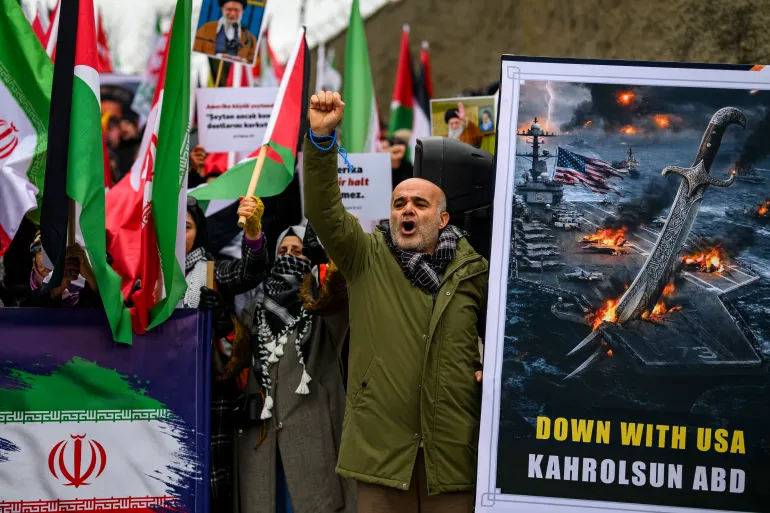
People take part in an anti-USA demonstration in support of the Iranian regime in front of the US consulate in Istanbul on February 1, 2026 [File: Aljazeera]

United States President Donald Trump has confirmed that talks with Iran are continuing to try to de-escalate tensions in the Gulf, even as the US military announced shooting down an Iranian drone that approached its aircraft carrier in the Arabian Sea.

Trump told reporters at the White House on Tuesday that Washington was negotiating with Iran “right now”, but declined to say where the talks were taking place.

“[The talks] are all over. But they are negotiating. They’d like to do something, and we’ll see if something is going to be done,” he said.

“They had a chance to do something a while ago, and it didn’t work out. And we did ‘Midnight Hammer’, I don’t think they want that happening again,” he added, referring to the operation last June in which the US Air Force and Navy struck three Iranian nuclear facilities.

Trump, who has been  pushing Teheran to agree to talks over its nuclear programme, has repeatedly threatened to attack the country again over a recent crackdown on antigovernment protests. The US president sent the USS Abraham Lincoln to the Gulf last week, leading to fears of a possible military confrontation.

The carrier strike group, which brought roughly 5,700 additional US troops, joined three destroyers and three littoral combat ships that were already in the region.

Tensions have been easing in recent days amid a push by regional powers for a resolution.

Iranian President Masoud Pezeshkian said earlier on Tuesday that he had instructed the country’s foreign minister to “pursue fair and equitable negotiations, guided by the principles of dignity, prudence, and expediency”, provided that a “suitable environment exists”.

“These negotiations shall be conducted within the framework of our national interests,” Pezeshkian added

[Aljazeera]
Continue Reading

Latest News

Seven million cancers a year are preventable, says report

Published

on

By

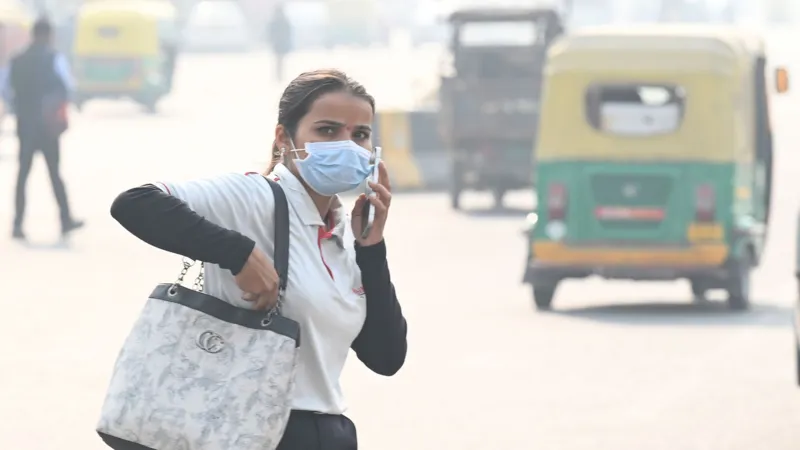
Air quality around the Delhi region of India reached 'severe' levels in November [BBC]

Seven million people’s cancer could be prevented each year, according to the first global analysis.

A report by World Health Organization (WHO) scientists estimates 37% of cancers are caused by infections, lifestyle choices and environmental pollutants that could be avoided.

This includes cervical cancers caused by human papilloma virus (HPV) infections which vaccination can help prevent, as well as a host of tumours caused by tobacco smoke from cigarettes.

The researchers said their report showed there is a “powerful opportunity” to transform the lives of millions of people.

Some cancers are inevitable – either because of damage we unavoidably build up in our DNA as we age or because we inherit genes that put us at greater risk of the disease.

But researcher Dr Isabelle Soerjomataram said “people are surprised to hear” that nearly four in 10 cancers can be prevented as it is “a substantial number”.

The International Agency for Research on Cancer, part of the WHO, analysed 30 preventable factors known to increase the risk of cancer.

These include smoking and ultraviolet (UV) radiation which can directly damage our DNA; obesity and too little physical activity which alter inflammation and hormones in the body to raise cancer risk; and air pollution which can wake up dormant cancer cells.

The agency’s report also looked at nine cancer-causing infections including HPV, hepatitis viruses which lead to liver cancer and the stomach bug H. pylori.

The team used data on cancer cases from 2022 and from the 30 risk factors a decade earlier – across 185 countries – to perform their statistical analysis.

The big three contributors to more than 18 million cancer cases around the world were found to be:

  • smoking tobacco which caused 3.3 million cancers
  • infections causing 2.3 million cancers
  • alcohol use leading to 700,000 cancers

Getty Images Nine people, mostly women, in a line at a bar, smoking cigarettes and holding alcoholic drinks. They all look dressed up for a fun night out.
Smoking and alcohol were two of the main causes of preventable cancers [BBC]

However, the overall figures mask a nuanced picture of cancer risk around the world.

There is a stark sex-divide with 45% of men’s cancers being preventable compared with 30% in women, partly down to higher levels of smoking among men.

In women living in Europe, the top three preventable causes of cancer are smoking, closely followed by infection and then obesity.

While in sub-Saharan Africa, infections dominate and account for nearly 80% of preventable cancers in women.

This means any measures to tackle these cancers would need to be tailored to each region or country.

“This landmark study is a comprehensive assessment of preventable cancer worldwide, incorporating for the first time infectious causes of cancer alongside behavioural, environmental, and occupational risks,” said Soerjomataram, the deputy head of the IARC Cancer Surveillance Unit.

“Addressing these preventable causes represents one of the most powerful opportunities to reduce the global cancer burden.”

The report, published in the journal Nature Medicine, showed lung cancer (linked to smoking and air pollution) stomach cancer (linked to H. pylori infection) and cervical cancer (linked to HPV infection) made up nearly half of all preventable cases of cancer.

Dr Andre Ilbawi, team lead for cancer control at WHO, said the study was “good news” as it showed something could be done and he pointed to the success of countries that have introduced policies to tackle smoking or vaccinate against HPV.

“The percentage of preventable cancers can change over time and our goal is to get it as close to zero as possible,” he said.

[BBC]

Continue Reading

Trending