
Opinion
Proposed Penal Code amendment and threat of promotion of sexual abuse of children – VIII


by Kalyananda Tiranagama
Executive Director
Lawyers for Human Rights and Development
(Part VII of this article appeared in The Island of 20 June 2023)
Although there is no public annoyance, under S. 63 (j) of the Police Ordinance any Police officer has the power to arrest without a warrant ‘any person who wilfully and indecently exposes his person or any offensive deformity or disease’ in any street or road, thoroughfare or passage within the limits of any town, if the offence was committed within his view.
However, if S. 365 and S. 365A are repealed as proposed in the Bill, there will be no legal bar whatsoever for any groups to display their sexual orientation in public without directly engaging in a sexual act.
S. 365A of the Penal Code dealt not only with persons committing acts of gross indecency, but also with any person who procures or attempts to precure the commission by any person, of an act of gross indecency with another person. With the repeal of S. 365A, procuration of a child above 16 years of age to another person for commission of an act of carnal intercourse against the order nature or gross indecency or grave sexual abuse will no longer be an offence.
Tourism can be promoted with children, both male and female, above the age of 16 years procured for engaging in sexual acts with foreign tourists, without any fear of being prosecuted.
LGBT persons will be able to openly display their sexual orientation by engaging in acts preliminary to having carnal intercourse. For instance, two men or two women can publicly embrace each other intimately, touching their bodies and kissing each other. It may not cause any public annoyance, according to the proposed law. Other than the LGBT groups, there may be others who are dreaming of western moral values on Sri Lankan society appreciating.
Though there is no legal bar, it will certainly have a pernicious influence on children on the younger generation causing, an irreparable harm.
Inevitable Consequences of the Passage of the Bill – Promotion of Sexual Abuse of Children and Youth
Let us see what will be the plight of children and youth of this country if this Bill is passed by Parliament:
When S. 365 of the Penal Code dealing with the offence of carnal intercourse against the order of nature (anal sex and oral sex) with any man or woman and S. 365A dealing with the offence of gross indecency (acts of same-sex of men and women both) are repealed, making these sexual activities no longer offences punishable under the law, it will result in the removal of protection afforded to children by these two Sections against sexual abuse in respect of these offences.
The ASG had submitted to Court that no lacuna in law will be caused by the amendments proposed in the Bill, as S. 365B of the Penal Code dealing with the offence of grave sexual abuse will provide adequate protection to the children against sexual abuse.
On an analysis of S. 365B, it clearly shows that S. 365B will not provide any protection to children in the most vulnerable age group against sexual abuse.
Grave sexual abuse dealt with by S. 365B is an act committed by any person, for sexual gratification, using his genitals or any other part of the human body or any instrument on any orifice or part of the body of any other person, being an act which does not amount to rape under S. 363 of the Penal Code.
Unlike in the case of carnal intercourse against the order of nature and gross indecency, in grave sexual abuse the act itself is not an offence.
It becomes an offence only where it is committed (a) with or without consent on a person under 16 years of age; or (b) without consent of the person; or (c) with the consent of the person obtained while such other person was (i) in lawful or unlawful detention, or (ii) by use of force, or intimidation or threat of detention or by putting such other person in fear of death or hurt; (iii) with the consent obtained at a time the other person was of unsound mind or was in a state of intoxication induced by alcohol or drugs.
This section provides protection against sexual abuse only to children under 16 years of age. What is the protection available for children in the age group of 16 – 18? Any person can commit any of the sexual acts mentioned in S. 365B – anal sex, oral sex, fingering, homosexual acts – with any child over 16 years of age with the consent of the child.
Under the Convention of the Rights of the Child (CRC) ratified by Sri Lanka in 1991, every person under 18 years of age is a child entitled to all the rights guaranteed by the Convention including the right to protection from sexual abuse. The Penal Code (Amendment) Act No. 22 of 1995 and the Penal Code (Amendment) Act No. 16 of 2006 provide protection to all children under 18 years of age against abuse sexual or otherwise in respect of most of the offences dealt with by them: – S. 286A – Using children for obscene or indecent publications or shows; S. 286B – Duty of a person providing computer services to prevent sexual abuse of a child; S. 286C – Duty to inform use of premises for child abuse; S. 308A – Cruelty to children; S. 360B – Sexual exploitation of children; S. 360C – Trafficking of children; S. 360E – Soliciting a child. In all these sections the word ‘child’ is defined to mean a person under 18 years of age.
The International Convention on Civil and Political Rights (ICCPR) Act No. 57 of 2007, while recognising a person under 18 years of age as a child, by S.5(1)© has guaranteed the rights of every such child to be protected from abuse.
If any person commits an act of grave sexual abuse with a person over 16 years of age with consent obtained by adopting any of the methods mentioned in the Section such as use of force, intimidation, or threats or while in a state of intoxication, then it becomes an offence punishable under the law.
What is the position if consent is obtained through deceit or offering some benefits or presents or some promises? There are numerous other ways to obtain the consent of children and youth, inexperienced in life, for committing sexual acts with them such as developing a close friendship, or offering some presents like a mobile phone or offer of a foreign trip or other deceitful conduct. Then it will not be an offence punishable under S. 365B.
S. 365B will not provide any protection to children belonging to the age group of 16 to 18 years and they will be left without any protection and open to abuse.
Who are these children belonging to the age group of 16 to 18 years? They are mostly children studying in O Level and Advanced Level Classes in schools. In any given year there are more than 500,000 thousand students studying in these classes. They belong to the most vulnerable age group, amenable to the influence of social and other media promoting this type of conduct. All this time these activities remained grave crimes, punishable with deterrent penalties. When this Bill becomes law, when these activities are decriminalised, as persons over 16 years of age they will be able to openly and freely discuss about these things and freely engage in any of these activities of their choice.
Within a few years of the passage of the Bill, it will be almost impossible to maintain discipline in schools and other higher education institutes. It is no secret that homosexual connections are observed to certain extent among students in hostels in schools and universities. At present it is frowned upon as conduct illegal and unacceptable. When homosexuality is legalised, one can see the number of human rights violation applications coming before the Human Rights Commission of Sri Lanka against the hostel Wardens and heads of institutions who try to maintain discipline in them.
It will certainly result in two or three-fold increase in the number of complaints of sexual abuse of children which remains continuously increasing over the years.
It will result in the destruction of moral, cultural and ethical base of our society.
Duty and Responsibility of Parliament to Protect the Rights of all Children
Even Sanjaya Jayawardana, PC, appearing for the proponent of the Bill MP Dolawatta admitted in his submissions that even if the Court was of the view that repealing S. 365A would encourage persons of whatever sexual orientation to behave in an indecent manner in public and whether such conduct is, in the view of the Court, morally repugnant and against the social and cultural ethic of this country, that would not be a matter for the Court but one that is entirely left to the Legislature.
The Supreme Court has expressed its opinion on this matter in the Determination on the Bill in these terms: ‘‘That does not mean that men or women or transgender persons can frequent public places in a manner that creates a nuisance to others using such public places, or that they can engage in any other illegal acts or behave in a manner that affects the rights, health or property of others. However, we must reiterate that it is a matter that comes within the legislative policy of the State which shall be guided by the provisions of Art. 75 and 27. It is a matter that comes within the legislative power of the people which shall be exercised by Parliament in trust for the People.’’
Under Article 75, the Parliament has the power to enact or repeal any law; In enacting laws the Parliament is exercising the legislative power of the people in trust for the People. Article 27 contains the Directive Principles of State Policy that shall guide the Parliament in the enactment of laws. In the enactment of this Bill the Parliament should be guided by the Directive Principles in Article 27 (12) and (13): 27(12) The State shall recognize and protect the family as the basic unit of society. 27(13) – The State shall promote with special care the interests of children and youth, so as to ensure their full development physical, mental, moral, religious and social and to protect them from exploitation and discrimination.
Instead of promoting with special care the interests of children and youth, this Bill has the effect of jeopardising the interests of children and youth exposing them to sexual abuse and retarding their physical, mental, moral, religious and social development.
Every Member of Parliament must understand that it is their duty and responsibility to exercise their legislative power entrusted to them by the People with due diligence in the best interests of the people and the country, protecting and promoting the rights of vulnerable groups like women and children, without carrying out foreign agendas and being moved away by slogans.
(Concluded)








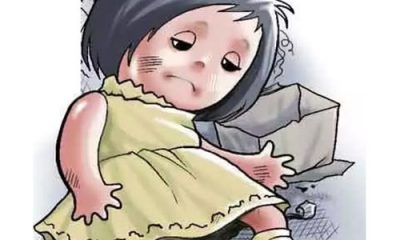



Children are the future of every nation, and the values they learn during childhood shape the society they will eventually lead. In Sri Lanka, where family traditions, respect for elders, and social responsibility have long been important cultural values, the way children are raised remains a topic of great interest. In recent years, many parents and educators have moved away from traditional forms of punishment and embraced more child-friendly approaches to discipline. While protecting children from physical and emotional harm is essential, an important question arises: can a child who grows up without any form of punishment or consequences become a threat to Sri Lankan society?
To answer this question, it is necessary to understand the difference between punishment and discipline. Punishment is often associated with penalties imposed for wrongdoing, while discipline refers to teaching children self-control, responsibility, and respect for rules. Modern child psychology generally discourages harsh physical punishment because it can cause fear, anxiety, and resentment. However, completely removing consequences for inappropriate behavior may create a different set of problems.
Sri Lankan society has traditionally emphasized discipline within the family. Parents, grandparents, and teachers have often played active roles in guiding children’s behavior. Respect for elders, obedience, and good manners have been considered important virtues. While some traditional disciplinary methods may no longer be acceptable, the underlying principle of teaching accountability remains relevant.
A child who never faces consequences for wrongdoing may struggle to understand the boundaries that exist in society. For example, if a child is allowed to insult others, damage property, or ignore rules without correction, they may develop the belief that their actions have no consequences. Such attitudes can become problematic when the child enters school, the workplace, or the wider community.
Sri Lankan schools already face challenges related to student discipline. Teachers often report difficulties in managing classrooms where some students refuse to follow instructions or respect school regulations. When children are not taught accountability at home, educational institutions may find it harder to maintain a productive learning environment. This can affect not only the individual student but also classmates whose education is disrupted.
Another concern is the development of entitlement. A child who is never told “no” may come to believe that personal desires should always be fulfilled. In a society where cooperation and mutual respect are essential, such attitudes can lead to conflicts with peers, teachers, employers, and even family members. Sri Lanka’s social fabric depends heavily on community relationships, and individuals who fail to respect others can weaken these bonds.
The influence of social media and modern technology has added another dimension to this issue. Today’s children have access to information and entertainment on an unprecedented scale. Without proper guidance and consequences, some may misuse technology, engage in cyberbullying, spread misinformation, or develop unhealthy habits. Parents who avoid setting limits may unintentionally expose children to risks that affect both personal development and social well-being.
The workplace offers another example of why accountability is important. Sri Lanka’s economic development depends on a workforce that is disciplined, responsible, and capable of working with others. Employers value punctuality, respect, and professionalism. Individuals who grow up without learning responsibility may find it difficult to meet these expectations, affecting both their personal success and the productivity of organizations.
However, it is equally important not to interpret this argument as support for harsh punishment. Research has shown that excessive physical or emotional punishment can have serious negative effects on children. Fear-based parenting may produce obedience in the short term but can damage confidence, trust, and mental health in the long term. Therefore, the solution is not stricter punishment but more effective discipline.
Positive discipline provides a balanced alternative. It involves setting clear rules, explaining expectations, and applying fair consequences when those rules are broken. For instance, if a child neglects schoolwork, they may lose certain privileges until responsibilities are fulfilled. If they damage property, they can be required to help repair or replace it. Such consequences teach accountability while preserving the child’s dignity.
Sri Lankan parents, teachers, and community leaders all have a role to play in nurturing responsible citizens. Families should create environments where children feel loved and supported but also understand that actions have consequences. Schools should encourage character development alongside academic achievement. Religious and community organizations can reinforce values such as honesty, compassion, and respect for others.
A balanced approach is especially important in a rapidly changing society. As Sri Lanka continues to modernize and integrate with the global community, young people must learn not only their rights but also their responsibilities. Freedom without responsibility can lead to selfishness, while discipline without compassion can lead to fear. The challenge is to find the middle ground.
A punishment-free child can become a concern for Sri Lankan society if the absence of punishment also means the absence of discipline and accountability. Children who never learn consequences may struggle to respect rules, authority, and the rights of others. However, harsh punishment is not the answer. The most effective approach combines love, guidance, clear boundaries, and fair consequences. By raising children who understand both freedom and responsibility, Sri Lanka can build a future generation that strengthens society rather than threatens it.
Saumya Aloysius
(An essayist, children’s writer and freelance writer who holds a Master’s Degree in Sociology from the University of Kelaniya)

On Friday 12 June, 2026, a SriLankan Airlines Airbus 330 was en route from Colombo to Sydney, Australia was about 45 minutes into its flight when a loud bang was heard, accompanied by a blinding flash. In what was assumed to be a lightning strike, the airplane’s left (No. 1) engine was damaged, forcing the aircraft to return to BIA-Katunayake, where it landed safely.
Lightning travels from cloud to cloud or cloud to ground. Because the aircraft is not electrically ‘grounded’, or ‘earthed’, it must have been in the path of the thunder bolt purely by chance. There is also a phenomenon whereby the aircraft may travel through an electrically charged atmosphere (for example a cloud) where an electrical charge could build up and strike, or be emitted, as lightning. In such an instance, pilots hear electrical static in their headsets before the strike. Usually, when lightning strikes an aircraft in flight, the electrical charges remain on the outside, as on a ‘Faraday’s Cage’ apparatus, and the passengers and crew are perfectly safe.
To help the efficient and safe discharge of static electricity from the airplane’s structure, static wicks, or static dischargers, are fitted at the trailing (rearmost) edges of the wings and tail surfaces. When an airplane has landed after a lightning strike, ground engineers count the number of wicks that may have been burnt out to ensure that a minimum (recommended) number is available for a subsequent flight. Sometimes, there is minor damage, like pitting of the paintwork at the points where the charges left the aircraft.
The last instance in the USA of an airplane believed to have been lost due to a lightning strike was on December 8, 1963, when a Pan Am Boeing 707-121, en route from Baltimore, Maryland to Philadelphia, Pennsylvania, suffered a fuel tank explosion, later determined to have been the result of a lightning strike. Since then, aircraft have been rendered immune from lightning damage thanks to extensive research conducted by manufacturers using high-voltage currents.
Interestingly, modern airliners have electronic instrument displays which don’t even flicker when the aircraft is struck by lightning. By a process of connecting all the metallic parts, known as ‘bonding’, the entire fuselage effectively becomes a protective cocoon, so electrical charges caused by lightning will always reside on the outside of the aircraft.
What is unusual in the recent SriLankan Airlines incident is the extent of damage to the left engine. Did it encounter hail or ingest something?
Only a thorough, independent inquiry by aviation safety investigators will reveal the cause.
GUWAN SEEYA

“Vision without execution is hallucination.” – Thomas Edison
Introduction: Stabilisation Is Not Transformation
Sri Lanka has come a long way since the economic collapse of 2022. Inflation has been brought under control. Foreign reserves have improved. Debt restructuring has advanced. Government revenue has increased significantly through taxation reforms. The exchange rate has stabilised, and confidence has gradually returned to financial markets.
These achievements deserve recognition.
However, stabilisation should not be confused with economic transformation. A patient discharged from intensive care is not necessarily healthy. Likewise, an economy that has escaped collapse has not necessarily achieved sustainable prosperity.
The central economic question facing Sri Lanka today is no longer how to avoid another crisis. Rather, it is how to achieve sustained economic growth of at least 7% per annum by 2029.
Unfortunately, much of the current policy debate remains trapped in economic diagnosis. Policymakers, economists, and commentators repeatedly identify familiar problems: (i) low productivity, (ii) weak exports, i(iii) Inadequate innovation, (iv) poor competitiveness, and (v) insufficient investment. While these diagnoses are correct, they are not new.
Sri Lanka now needs economic engineering.
The country requires a clear, measurable, and actionable National Growth Strategy for 2026-2029 that identifies (i) where growth will come from,(ii) what investments are required,(iii) which institutions will lead implementation, and (iv) how success will be measured.
The difference between diagnosis and engineering is the difference between describing a problem and solving it.
The Missing National Growth Target
One of the most striking weaknesses in Sri Lanka’s economic discourse is the absence of a publicly articulated growth target supported by a detailed implementation framework.
Successful economies establish measurable objectives.
Sri Lanka should adopt the following growth trajectory:
2026 – 4%
2027 – 5%
2028 – 6%
2029 – 7%
Such targets would provide direction to investors, public institutions, universities, exporters, and development partners. Without a destination, even the best policies risk becoming disconnected initiatives.
Today, many policy interventions appear fragmented—valuable in isolation but lacking integration into a broader national growth framework.
Growth Will Not Come From Consumption
For decades Sri Lanka relied heavily on consumption, imports, remittances, tourism, and external borrowing.
That model has reached its limits.
No country has achieved sustained prosperity through consumption-led growth alone.
The countries that transformed themselves—Singapore, South Korea, Ireland, Vietnam, and China—generated growth through productive investment, exports, industrialisation, and integration into global markets.
Sri Lanka’s future growth must therefore be driven by investment and exports rather than domestic consumption.
The challenge is not increasing spending but increasing productive capacity.
Export-Led Growth: The First Pillar of Transformation
Every successful Asian growth story has one characteristic in common: exports.
Exports generate foreign exchange, create jobs, attract investment, encourage innovation, and improve productivity.
Sri Lanka should establish an ambitious target of doubling export earnings within the next decade.
This requires moving beyond traditional exports and expanding into:
High-value agriculture
Food processing
Information technology services
Logistics services
Advanced manufacturing
Professional services
Export growth must become a national mission comparable to post-war reconstruction efforts seen elsewhere in Asia.
Without a major expansion of exports, sustained 7% growth will remain elusive.
Manufacturing: The Forgotten Growth Engine
Manufacturing remains the single most important source of rapid economic transformation worldwide. Vietnam provides perhaps the best recent example.
Through (i) industrial zones, (ii) trade agreements, (iii) infrastructure development, and (iv) targeted investment attraction, Vietnam became deeply integrated into Asian production networks.
Sri Lanka possesses strategic advantages:
A prime Indian Ocean location
Strong port infrastructure
Educated labour force
Proximity to India
The country should establish specialised manufacturing clusters focusing on:
Electronics assembly
Medical devices
Processed food products
Boat building
Rubber-based products
Engineering components
Rather than attempting to compete with every country, Sri Lanka should specialise in selected niches where competitive advantages can be developed.
RCEP: The Strategic Door to Asia
Sri Lanka’s future lies increasingly in Asia.
The Regional Comprehensive Economic Partnership (RCEP) represents the largest trading bloc in the world and includes many of the fastest-growing economies.
Membership or closer integration with RCEP supply chains could provide Sri Lankan exporters with access to markets, investment, technology, and production networks that are currently beyond reach.
Unfortunately, discussion on RCEP remains limited compared with its strategic significance.
A dedicated national roadmap for RCEP engagement should become a top economic priority.
The question is not whether Sri Lanka can afford to integrate more deeply into Asia.
The question is whether Sri Lanka can afford not to.
Knowledge Economy: Turning Universities Into Growth Institutions
Sri Lanka’s universities produce thousands of graduates annually, yet their contribution to commercial innovation remains limited.
Globally, universities have become engines of economic development.
Research institutions should not merely produce graduates; they should produce patents, technologies, startups, and commercial solutions.
A national innovation framework should:
Link universities with industry
Encourage commercialisation of research
Support technology transfer
Expand startup financing
Reward innovation and entrepreneurship
Knowledge must become an economic asset rather than an academic exercise.
Dairy, Agriculture, And Import Substitution
Export growth alone is insufficient.
Sri Lanka must also reduce unnecessary import dependence.
The dairy sector offers a compelling example.
For decades, billions of rupees have left the country through dairy imports despite favourable climatic conditions and substantial agricultural potential.
A comprehensive dairy development strategy should focus on:
Improved genetics
Feed production
Commercial farming
Processing investment
Farmer productivity
The objective should be import substitution combined with rural income growth.
The same principle can be applied selectively to other sectors where domestic production is economically viable.
Creating A National Investment Targeting Agency
Sri Lanka does not need another bureaucracy.
It needs a professional institution dedicated exclusively to investment targeting.
Instead of passively waiting for investors, this agency would actively identify and attract strategic investments aligned with national priorities.
Its mandate would include:
Identifying priority sectors
Marketing opportunities globally
Coordinating approvals
Monitoring outcomes
Facilitating technology transfer
Singapore’s Economic Development Board and Ireland’s Industrial Development Agency demonstrate how targeted investment institutions can transform national economies.
Sri Lanka requires a similar mechanism adapted to local realities.
From Economic Diagnosis To Economic Engineering
The next stage of Sri Lanka’s recovery requires a fundamental shift in thinking.
The policy debate must move beyond identifying problems. The country already knows its problems.The challenge is implementation.Every policy proposal should be evaluated against a simple question:
Will this contribute to achieving 7% growth by 2029?
If the answer is no, resources should be redirected.
Economic engineering requires focus, prioritisation, accountability, and measurable outcomes. The era of fragmented initiatives must give way to a coherent national growth strategy.
Summary
Sri Lanka has achieved significant macroeconomic stabilisation, but stabilisation is only the first step toward sustainable prosperity.
To move from recovery to transformation, Sri Lanka should adopt a National Growth Strategy for 2026-2029 built around five pillars:
Export-led growth
Investment-led growth
Manufacturing expansion
Knowledge-economy development
Regional integration through RCEP and Asian supply chains
Supporting sectors such as dairy, tourism, logistics, and information technology should be strategically developed within this framework.
Most importantly, investment must be targeted rather than scattered, supported by specialised institutions and measurable performance indicators.
Conclusion
History demonstrates that no nation has become prosperous by accident. Economic success is rarely the product of isolated policies or short-term political initiatives. It is the outcome of a deliberate strategy pursued consistently over many years.
Sri Lanka stands at a crossroads.
One path leads to modest growth, periodic crises, recurring debt challenges, and continued vulnerability. The other leads to transformation through investment, exports, innovation, manufacturing, and regional integration.
The choice is ultimately strategic.
The time has come for Sri Lanka to move from economic diagnosis to economic engineering.
The future will not be determined by how successfully the country stabilised after the crisis. It will be determined by how effectively it builds the foundations for sustained growth thereafter. If Sri Lanka can articulate and execute a coherent investment-led growth strategy today, achieving 7% growth by 2029 need not be an aspiration.
It can become a national objective—and a national achievement, economic Engineering
The writer, among many, served as the Special Advisor to the Office of the President of Namibia from 2006 to 2012 and was a Senior Consultant with the UNDP for 20 years. He was a Senior Economist with the Central Bank of Sri Lanka (1972-1993). He can be reached via asoka.seneviratne@gmail.com

Cricket journalist and broadcast legend Qamar Ahmed dies aged 88

Stafanie Taylor, spinners help West Indies overcome Scotland threat

Showers will occur at times in the Western, Sabaragamuwa and North-western provinces and in Galle, Matara, Kandy and Nuwara-Eliya districts

Thirty-five killed as gunmen attack Niger’s biggest airport

Creditor receives USD 2.5 mn as Lankan public bears loss from theft of Treasury funds

Former Minister Nalin raises defence of double jeopardy

‘Dates have the highest sugar content to fight Coronavirus’

Sunday Island 27 December – Headlines

#SundayIsland 17th December – Headlines

Sunday Island – 28th March

Sunday Island Headlines – 21 March

Sunday Island – 21st February – Headlines
-

 News4 days ago
Release of 2025 O/L results likely to be delayed
-

 Sports4 days ago
Tharanga set for high-profile javelin clash in Ostrava
-

 Features5 days ago
Politics of protected species
-

 News3 days ago
Beijing Capital Airlines to resume flights to Colombo signalling boost to tourism
-

 News4 days ago
Theft of USD 2.5 mn from Treasury: CoPF accused of complicity in NPP cover-up
-

 News6 days ago
Commonwealth lawyers urge Lanka to uphold rule of law
-

 Opinion4 days ago
Decoding Trump’s 12.5% “Forced Labor Tariff” on Sri Lanka
-

 Opinion4 days ago
Palm leaf manuscripts of Sri Lanka – Part V