
News
Most bribery cases fall through owing to CIABOC’s lapses

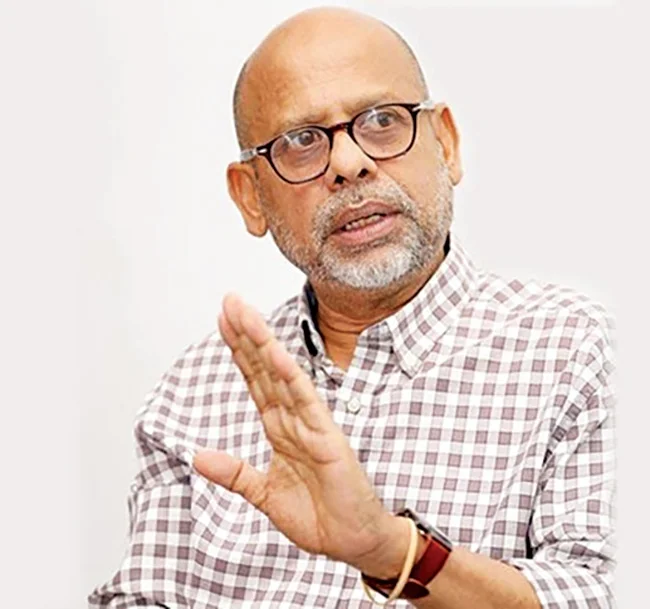
Viyangoda points out President silent on AG
By Shamindra Ferdinando
The majority of cases filed by the CIABOC (Commission to Investigate Allegations of Bribery or Corruption) had been withdrawn primarily on technical grounds, mainly the absence of sanction of all three commissioners, those familiar with the process told The Island.
In terms of the previous bribery Act, the sanction of all commissioners was a must, sources said. The Act made written sanction of three commissioners compulsory before an indictment was drafted, sources said, adding that remedial measures were taken through the new bribery act.
The then Justice Minister Dr. Wijeyadasa Rajapakse, PC, introduced Anti-Corruption Act No 09 of 2023.
Sources said so responding to harsh criticism of the CIABOC by President Anura Kumara Dissanayake at the ‘International Anti-Corruption Day National Celebration at the Bandaranaike Memorial International Conference Hall (BMICH).
President’s Media Division (PMD) quoted National People’s Power (NPP) leader who is also the chief of Janatha Vimukthi Peremuna (JVP) as having disclosed that of 69 cases that had been filed in 2021, 40 were later withdrawn. Similarly, in the following year of 89 cases that had been filed, 45 were later withdrawn, the President was quoted as having said at the Dec 09 event.
Declaring that the public had a right to know the circumstances under which so many cases were withdrawn within two years, President Dissanayake called for an explanation from CIABOC as to why investigating officers failed to appear as witnesses in these cases.
President rapped the CIABOC in the presence of its new leadership. The then President Ranil Wickremesinghe appointed W.M.N.P. Iddawala, former Judge of the Court of Appeal and Deputy Secretary General of Parliament as the new Chairman. Its other members are Bernard Rajapakse, former Senior Deputy General Manager of People’s Bank, and Chethiya Goonesekera, President’s Counsel and Additional Solicitor General of the Attorney General’s Department. They assumed duties on January 01, 2024.
Responding to The Island queries, sources emphasised that the responsibility for creating a situation that led to the withdrawal of so many cases-a staggering 85 cases out of 158 within two years lies with the respective commissions. Sources explained that the indictments that had been filed and later withdrawn in 2021 and 2022 weren’t moved by the commissions in place during that period.
Sources also questioned the role of the Director General of the CIABOC in the crisis created within the set up.
Commissioners are appointed on the recommendation of the Constitutional Council headed by the Speaker of Parliament.
As a result of political compulsions some commissioners had been in an indecent hurry to indict targeted persons hastily, sources said. There had been cases where indictments had been filed before the completion of inquiries, sources added, pointing out that when the defendants’ side took up objection in court, CIABOC had no option but to withdraw cases.
The new government couldn’t be unaware that the CIABOC had refiled some of the indictments. But, unfortunately in some cases there was no evidence to file an indictment, sources said.
Due to covid-19 eruption, the CIABOC suffered and during 20/21 period there hadn’t been any fresh indictments, sources said, adding that those filed during the yahapalana administration (2015-2019) were pursued.
Sources said that the powers that be needed to seriously examine the gradual weakening of the system overwhelmed by the political party system.
Civil society activist Gamini Viyangoda who on behalf of Purawesi Balaya raised the withdrawal of high profile cases that had been filed during yahapalana administration yesterday (25) told The Island that culpability of the CIABOC couldn’t be discussed without examining the conduct of the Attorney General’s Department.
The President, in his criticism of the failure on the part of CIABOC hadn’t referred to the AG’s Department at all, Viyangoda pointed out.
Viyangoda alleged Sri Lanka never had an apparatus that honestly pursued cases of waste, corruption and irregularities. Those assigned the task instead of fulfilling their objectives sought to appease their political masters and other interested parties at the expense of good governance and accountability.
Viyangoda emphasised that both CIABOC and AG’s Department had been neglected, resulting in extremely careless and serious shortcomings on the part of the two vital bodies. But, the primary issue is nothing but political interference and those in key positions of the above mentioned bending backwards to facilitate political agendas, he alleged.
Viyangoda asserted that a change couldn’t be expected as long as the government took tangible measures to end political interference in the judiciary, police, CIABOC and AG’s Department.
A major drawback is that successive governments had failed to adhere to the laws of the land, Viyangoda said, urging the parliament to address the issues at hand pertaining to corruption without further delay.



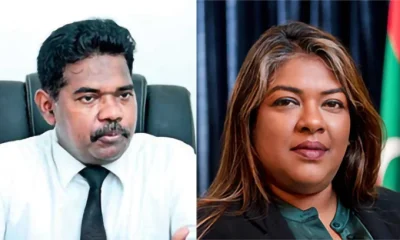
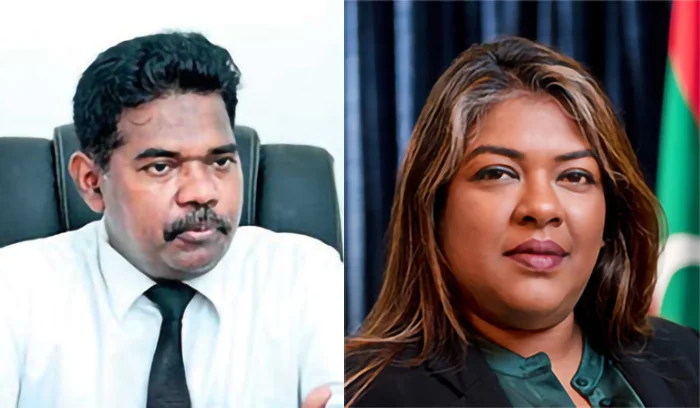
The Committee for Protecting Rights of Prisoners (CPRP) has complained to the UN regarding custodial deaths.
Executive Director of the Committee, Attorney-at-Law Senaka Perera told The Island that they had submitted written submissions to the visiting UN Subcommittee on Prevention of Torture (SPT) on Monday (15). “We are confident that they’ll take up the issues at hand with the government and take tangible measures to improve the conditions in prisons and detention facilities,” Perera said.
The SPT is here from 15 to 24 June. The visiting delegation consists of Aisha Shujune Muhammad, Head of Delegation (Maldives), Jakub Julian Czepek (Poland), Nika Kvaratskhelia (Georgia), Anica Tomsic (Croatia) and two human rights officers from the Office of the High Commissioner for Human Rights.
Claiming that there had been 184 prison deaths in 2024, the Committee asserted that though there was a drop in the number of cases, the deaths caused by underlying health complications and systemic issues weren’t available at the moment.
According to a copy of the submissions made to the SPT, received by The Island, there had been seven custodial deaths this year alone, reported from various parts of the country.
The Committee took a very critical position, while Foreign Minister Vijitha Herath assured the visiting delegation that the government didn’t tolerate torture at all.
The Ministry statement Monday night quoted Herath as having described the government response as zero tolerance policy.
The Committee for Protecting Rights of Prisoners also dealt with several other contentious issues, including special treatment granted to those with political connections and privileged backgrounds. Perera alleged that in spite of a change of government, in 2024 September, the much anticipated improvements failed to materialise and the continuing custodial deaths highlighted the crisis in the prisons and detention facilities.
According to the Committee, the situation was so bad and further deteriorating in overcrowded prisons, the national overcrowding rate has reached an unsustainable 286.6%, with some facilities, like the Vavuniya Remand Prison, exceeding capacity by 300%.
A significant portion of this population (65.4%) consists of persons not convicted awaiting trial, the Committee said, urging the SPT to look into the pathetic situation.
The Committee also complained of torture and ill-treatment at some detention facilities. There had been cases of lawyers, visiting detention centres at Welisara and Boossa, been subjected to degrading and humiliating searches, including forced removal of clothing.
The Committee also brought to the SPT’s notice how the Supreme Court, on 14 December, 2023, held the former Inspector General of Police (IGP), Deshabandu Thennakoon, personally responsible for torture. The failure on the part of prison authorities to grant inmates a fair hearing during internal investigations, too, has been raised by the Committee.
Among the other issues that had been raised were enforced disappearances, health and medical conditions, food, water and sanitation, corporal punishments and the operation of detention facilities within military bases.
Referring to the enforced disappearance of Gonapinuwala Kapila Kumara de Silva on 27 March, 2024, the Committee alleged that the Attorney General failed to take action against the perpetrators, believed to be members of the Special Task Force (STF)
The Committee alleged that in spite of them submitting formal complaints and an urgent letter to the Attorney General demanding prosecution under the International Convention for the Protection of All Persons from Enforced Disappearances Act, No. 5 of 2018, the AG took no meaningful action.
Consequently, CPRP filed a Writ of Mandamus petition in the Court of Appeal (CA/WRIT/185/26) against the Attorney General and other officials, seeking judicial intervention to compel investigation and prosecution. The case remains pending
by Shamindra Ferdinando
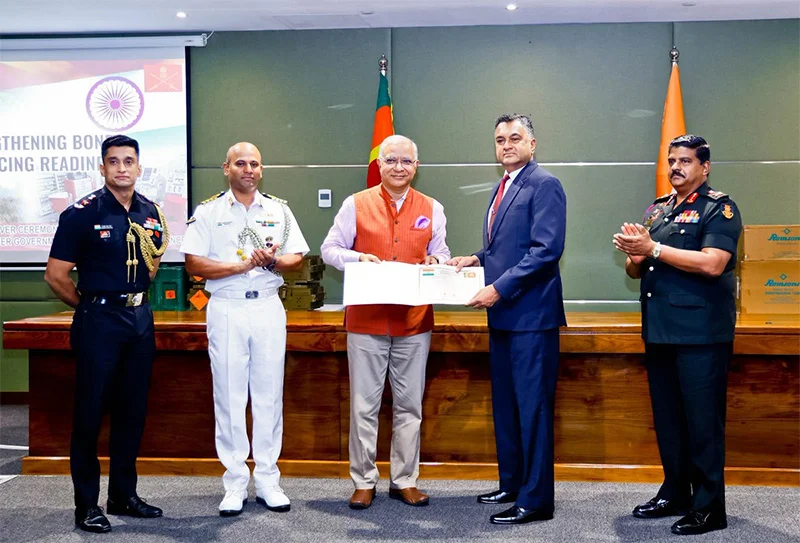
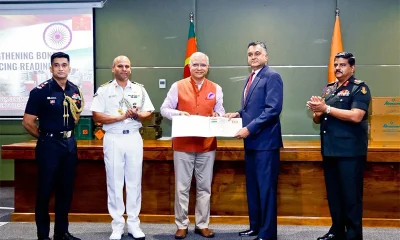
Responding to Sri Lanka’s request, India has approved military stores worth USD 5.5 million to Sri Lanka Army on gratis basis from Indian Army’s operational stocks.
The IHC spokesperson said: “The Sri Lanka Army faced shortage of these military stores, thereby affecting its operational preparedness. The Government of India agreed to meet this urgent requirement within a month and it also agreed to transship these stores onboard Indian Naval Ship Sharda, which was specially detailed to transport these stores to Colombo on gratis basis. The handing over ceremony was attended by H.E. Santosh Jha, High Commissioner of India, Colombo, Air Vice Marshal SampathThuyacontha (Retd), Secretary Defence, Government of Sri Lanka and Lt Gen Lasantha Rodrigo, Commander of the Sri Lanka Army.”
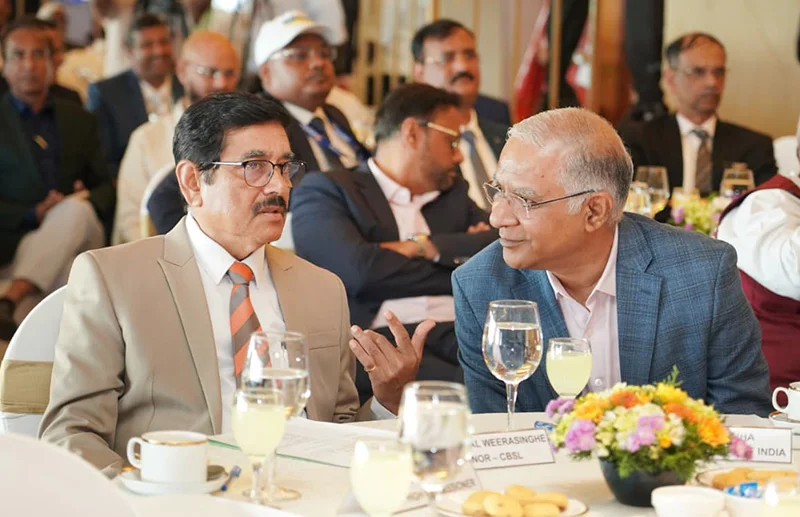
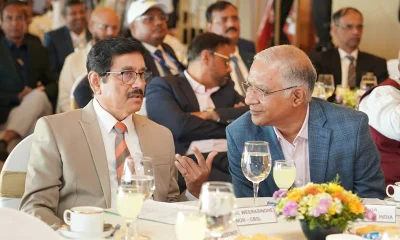
Central Bank Governor Dr. Nandalal Weerasinghe on Monday (15) outlined the recent policy measures undertaken to strengthen the financial framework supporting INR-LKR transactions and emphasized the need to strengthen trade and investment linkages between both countries.
Dr. Weerasinghe said so in his keynote opening remarks at a roundtable on “Rupee to Rupee Strengthening the India-Sri Lanka Commercial Corridor” held in Colombo.
The High Commission of India in Sri Lanka organised the roundtable that brought together senior representatives from government institutions, banking and financial sector organisations, industry leaders, importers, exporters, and business stakeholders from both countries to discuss opportunities for deepening India-Sri Lanka economic and commercial engagement through enhanced use of local currencies.
The Roundtable commenced with welcome remarks by Indian High Commissioner to Sri Lanka Santosh Jha, who highlighted the growing economic partnership between India and Sri Lanka and underscored the importance of local currency settlement mechanisms in facilitating bilateral trade, investment and financial connectivity.
Presentations were subsequently made by State Bank of India and Indian Bank, focusing on the operational aspects of INR-LKR trade settlements, available banking solutions, and recent policy guidelines permitting the disbursement of Indian Rupee-denominated loans through Authorised Dealer Banks in Sri Lanka.
A dedicated industry panel brought together leading voices from Sri Lanka’s banking and corporate sectors, including representatives from Commercial Bank, Seylan Bank, Standard Chartered Bank, AMW, DHT Cement, Lanka Spin Pvt. Ltd., Nithya Paper and Boards Lanka Pvt. Ltd.
Representatives shared practical experiences, benefits, challenges and opportunities related to the use of local currencies in trade and investment transactions, and explored pathways for further strengthening the commercial corridor between India and Sri Lanka.
Discussions during the Roundtable highlighted the growing acceptance of the INR-LKR settlement mechanism and its potential to facilitate smoother cross-border transactions, improve liquidity management, lower transaction costs, and enhance resilience in bilateral trade. Participants also emphasized the need for continued awareness-building, stronger banking linkages, and greater private sector participation to unlock the full potential of local currency settlements.

Nilakshika, Nuthyangana stun New Zealand to seal famous win for Sri Lanka

Showers will occur in the Western, Sabaragamuwa and North-western provinces and in Galle, Matara, Kandy and Nuwara-Eliya districts.

Tharanga heads to Doha as athlete to beat after Ostrava victory

Complaint of custodial deaths and torture submitted to UN

India provides military stores worth USD 5.5 mn to SL

India promotes INR-LKR settlement mechanism

‘Dates have the highest sugar content to fight Coronavirus’

Sunday Island 27 December – Headlines

#SundayIsland 17th December – Headlines

Sunday Island – 28th March

Sunday Island Headlines – 21 March

Sunday Island – 21st February – Headlines
-
 News5 days ago
CIABOC summons Yoshitha over his participation in British Navy training programme
-

 Sports2 days ago
Tharanga set for high-profile javelin clash in Ostrava
-

 News5 days ago
Justice Minister responds to social media claims he represented Easter Sunday ringleader
-

 News4 days ago
Commonwealth lawyers urge Lanka to uphold rule of law
-

 Features3 days ago
Politics of protected species
-

 News2 days ago
Theft of USD 2.5 mn from Treasury: CoPF accused of complicity in NPP cover-up
-

 News1 day ago
Beijing Capital Airlines to resume flights to Colombo signalling boost to tourism
-

 Features3 days ago
Of Whales and Submarines: Sri Lanka’s Security Dilemma