
Business
Sampath Bank maintains a strong value proposition to all its stakeholders amidst ongoing economic challenges

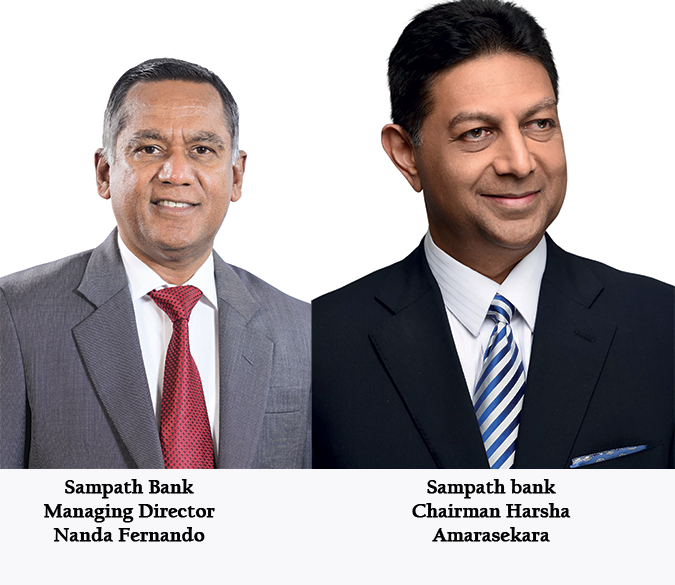
Sampath Bank continued to reinforce its commitment to all stakeholders notwithstanding the ongoing economic challenges. Stepping in to support the customers affected by the prolonged economic downturn, the Bank continued to offer tailormade options and alternative repayment plans to help its customers sustain their businesses while staying true to its ethos of customer value creation. Similarly, the interests of another stakeholder group of the Bank, the shareholders, were kept in mind by paying the industry’s highest cash dividend of Rs 3.45 per share and a further Rs 1.15 per share in the form of scrip dividend.
The Bank also continues to honor its commitments towards the community via the “Weweta Jeewayak” tank restoration initiative as well as the Oceanic Ecosystem Restoration initiative titled “A Breath to the Ocean” which includes coral restoration, mangrove planting, and turtle conservation programs. The Bank continues to honour its commitment towards the community by focusing on environmental sustainability and towards that end completed the restoration of the Halgahawala forest reserve which it will continue to support even after the project’s conclusion.
The Bank succeeded in raising Rs 10 Bn in Tier 2 capital via a debenture issue in February 2023. Despite the depressing economic outlook in the Country, the issue was oversubscribed – a testament to the investor confidence placed in Sampath Bank and widespread acceptance of the stability and prudent governance of the Bank. The newly obtained capital will enable the Bank to rise above and prevail as one of the Country’s pre-eminent Bank.
Sampath Bank registered a profit before tax (PBT) of Rs 4.5 Bn and a profit after tax (PAT) of Rs 2.6 Bn for the three months ended 31st March 2023, indicating a decline of 30.5% and 44.3% respectively from the figures reported in 1Q 2022. This decline was mainly attributed to the exchange losses recorded during the quarter as a result of the appreciation of LKR by Rs 39 against the USD on its foreign currency reserves. All other income lines recorded performance well above the previous period.
Key highlights of financial results declared by Sampath Bank and the Group for 1Q 2023 compared to 1Q 2022:
* Strong NII buttressed by the higher AWPLR.
* 19% increase in net fee and commission income driven by trade-related operations
* As a result of the appreciation of LKR against USD by Rs 39 in 1Q 2023 vs depreciation of Rs 93.75 in 1Q 2022, the exchange income declined by Rs 10.9 Bn.
* 27% increase in impairment provision on loans and advances.
* The high inflationary conditions resulting in 22% increase in operational expenses.
* The upward revision in Income Tax rate and the introduction of SSCL resulting in higher tax expenses.
* Group’s PBT and PAT for 1Q 2023 was Rs 5 Bn and Rs 3 Bn respectively, reflecting a decline of 27% and 38% respectively.
Impairment charge on loans and advances: In the first quarter of 2023, the impairment charge for loans and advances increased by 27% compared to the same period in the previous year.
Impairment on Individually Significant Loan (ISL) Customers:
During the first quarter of 2023, the Bank evaluated a substantial portion of its loans and advances under the ISL category, taking into account both their financial strength and external macroeconomic pressures. Consequently, Rs 4.6 Bn was charged as impairment provisions against ISL customers in the first three months of 2023, an increase of Rs 1.3 Bn compared to the same period in 2022.
Even though a slow recovery was witnessed in some vulnerable industries, the Bank prudently maintained the previous level of impairment provisioning against ISL customers in these industries as it did not deem that the industry risk had significantly declined.
Collective Impairment: Impairment models used in 2022 were continued in 1Q 2023 to ensure adequate buffers were in place to absorb any potential credit risk that could arise in future. This cautious strategy was in response to the uncertain economic conditions witnessed both locally and globally. The Bank continued to maintain in 2023, the allowance for overlay which it applied in 2022. The probability weightage applied to the worst-case economic scenario remained unchanged during the reporting period.
During the period under review, the Bank also proceeded to reclassify customers from Stage 1 to Stage 2 considering their potential credit risk. Meanwhile customers operating in Risk Elevated Industries were also reclassified under Stage 2, with additional provisions recognized against them.
Impairment charge on other financial instruments:
The impairment charge on other financial instruments amounted to Rs 0.4 Bn for 1Q 2023, a 95% reduction compared to Rs 6.7 Bn reported in the corresponding period of the previous year. In 1Q 2022, the Bank recognised a substantial impairment charge against FCY denominated government securities in response to the downgrade of Sri Lanka’s sovereign rating in April 2022 and the announcement by the Government of Sri Lanka (GoSL) on the restructuring of the country’s external debt through an IMF-supported economic adjustment program. No such provisioning was deemed necessary in 1Q 2023 as substantial provisioning had already been recognized against the said instruments as at 31st December 2022.
Operating Expenses.
Operating expenses in 1Q 2023 showed a 22% increase in comparison to the first quarter of 2022. The 41% increase in other expenses could be attributed to the prevailing inflationary conditions and other factors such as LKR depreciation, increased taxes and import restriction. Personnel costs too grew by 7.4% in 2023 mainly owing to annual salary increases.
Tax Expenses
Total effective tax rate of the Bank increased to 57% in 1Q 2023 from 42% reported in 1Q 2022, owing to the combined effect of the newly introduced Social Security Contribution Levy (SSCL) and the increase in income tax rate.
Key Ratios
The Return on Average Shareholders’ Equity (after tax) decreased to 8.37% as at 31st March 2023 from 10.95% reported at the end of the year 2022. Return on Average Assets (before tax) stood at 1.38% as at 31st March 2023 as against the 1.16% reported as at 31st December 2022.
Capital Ratios
The Bank’s latest capital adequacy ratios improved further in 1Q 2023 from the figures reported in the previous quarter in addition to their being well above the regulatory minimum requirements. As at 31st March 2023, Sampath Bank’s CET 1, Tier 1 and total capital ratios were at 12.51%, 12.51% and 16.12% compared to 11.92%, 11.92% and 14.27% respectively at the end of 2022. These increases are attributed to two main reasons – Rs 10 Bn worth of Tier 2 capital infusion in February 2023 and decline in risk weighted assets resulting from the LKR appreciation.
Assets and Liabilities
Total assets of the Bank declined by Rs 18 Bn (by 1.4%) from Rs 1.32 Tn as at 31st December 2022 to Rs 1.31 Tn as at 31st March 2023. This decline was mainly the result of the Rupee value reduction in foreign currency denominated assets on the back of the LKR appreciation against the USD.
Similarly, the total Advances declined by Rs 22 Bn (by 2.4%) in the first three months of 2023 from Rs 920 Bn as at 31st December 2022 to Rs 898 Bn at the end of the reporting period due to the LKR appreciation against the USD.
Sampath Bank’s total deposit book declined from Rs 1.1 Tn reported at the end of 31st December 2022 to Rs 1.07 Tn at the end of 31st March 2023, a decline of Rs 32 Bn (by 2.9%). The CASA ratio at the end of 1Q 2023 was 32.8% compared to 32.7% reported at the end of 2022.
Dividend
The Shareholders of Sampath Bank at the Annual General Meeting held on 30th March 2023 approved the final Cash Dividend of Rs 3.45 per share and Scrip Dividend of Rs 1.15 per share for the financial year 2022. In its 1Q 2023 Financial Statements, the Bank made a provision of Rs 5.3 Bn to facilitate the payment of the approved final dividend, while Rs 1.1 Bn was capitalized for the purpose of creating shares under scrip dividend. The Bank paid the dividend in April 2023.












Sri Lanka should mainly focus on upgrading its trade and investment facilitation system while identifying the paramount importance of the issue, South Korean Ambassador to Sri Lanka Miyon Lee said.
The bureaucratic matters—from Customs clearance to tariff lines, licensing, and registration—should be streamlined, she said at a round table forum recently held at the Colombo Club of the Taj Samudra, Colombo. The forum was organized and conducted by the Pathfinder Foundation Sri Lanka and was presided over by its Chairman, Ambassador (Retd) Bernard Goonetilleke.
Ambassador Lee said that the Sri Lankan government and companies must focus on tourism sector development and also find businesses opportunities with Korea.
She also said that if Sri Lanka wants to attract Korean investment into Sri Lanka, Sri Lanka should highly develop its digital sector.
‘On top of that, If Sri Lankan is to sign a FTA or trade agreements, she should focus on niche markets to supply to Korean companies, she explained.
Ambassador Lee added: ‘Korea is highly digital and AI enabled and Sri Lanka needs to concentrate on that as well.
‘Further, it is going to be very important if you will be able to implement all the obligations that are laid out under a WTO agreement.
‘A single window is part of the overall trade architecture that Sri Lanka has to follow.
‘ I think that also follows with the FTA (Free Trade Agreement) negotiations. From Korea’s experience, when we had the financial crisis in 1997, we only pursued WTO negotiations. FTA negotiations came after the financial crisis.
‘The Asia-Pacific Trade Agreement (APTA) is important in this regard.
‘The APTA arrangement includes China, India, Korea, Nepal and Mongolia and 50 percent of Sri Lankan exports to South Korea benefit from the APTA.
‘But other than that, there is not much trade between the two countries. That’s why I think it is going to be very important for Sri Lanka to pursue the RCEP (Regional Comprehensive Economic Partnership) arrangement.
‘Unfortunately, there is not much appetite for upgrading the APTA because we already have separate FTAs with India and China.
‘ We have huge investments in India and in ASEAN countries. I think it would be very important that Sri Lanka uses that kind of opportunity to see if there is any initiative for Sri Lankan companies to provide supplies to Korean companies working in other countries.’
By Hiran H Senewiratne

USD 2.5 million Treasury cyber heist has escalated into a full-blown financial security crisis, with the government scrambling to contain international fallout amid growing fears that multiple foreign debt repayment channels may have been compromised.
In the strongest indication yet of the gravity of the breach, Deputy Finance Minister Dr. Anil Jayantha Fernando told Parliament that investigators had uncovered suspicious irregularities linked to other external payment transactions, including one involving India, suggesting that the cyber intrusion may have extended far beyond the original fraudulent transfer.
The revelation has sent shockwaves through financial and political circles at a time when Sri Lanka is struggling to restore credibility after its historic sovereign default and painful debt restructuring process.
The controversial transfer involved funds earmarked for a debt repayment to Australia Export Finance. However, the money was allegedly diverted into a fraudulent account after what authorities now believe was a sophisticated cyber infiltration targeting Treasury communication and payment authentication systems within the External Resources Department (ERD).
With international confidence hanging in the balance, the Government has moved swiftly to reassure creditors that the incident would not be treated as a sovereign debt default.
Fernando informed Parliament that international debt restructuring advisors had assessed the situation and concluded that the theft constituted a criminal financial breach rather than a deliberate failure by Sri Lanka to honour debt obligations.
Behind the scenes, however, the crisis has triggered an unprecedented multi-agency investigation involving the Criminal Investigation Department (CID), Sri Lanka Computer Emergency Readiness Team (SLCERT), Financial Intelligence Unit (FIU) and foreign law enforcement authorities, including Australian agencies.
Investigators are now carrying out forensic examinations of official email systems, payment authorisation trails, digital devices and Treasury transaction records amid mounting concerns that critical State financial infrastructure may have been exposed to external manipulation.
The scandal has also intensified political tensions, with opposition parties accusing the Government of attempting to downplay the seriousness of the breach while demanding an immediate parliamentary debate and an independent inquiry into Treasury security failures.
Pressure mounted further following the sudden death of an interdicted Finance Ministry official reportedly connected to the ongoing investigation.
Although authorities have not officially linked the death to the fraud probe, the incident has fuelled widespread speculation and heightened public suspicion surrounding the case.
The latest disclosures have raised troubling questions about the vulnerability of Sri Lanka’s public financial systems, particularly as billions of dollars in foreign debt repayments, aid flows and restructuring transactions continue to pass through Government channels under intense international scrutiny.
Financial analysts warn that while creditors may refrain from categorising the incident as a formal default, the cyber heist could still damage Sri Lanka’s credibility unless authorities demonstrate swift accountability, institutional transparency and robust corrective measures.
The Treasury breach is now being viewed not merely as an isolated fraud, but as a major national financial security threat with potentially far-reaching implications for Sri Lanka’s economic recovery and global standing.
By Ifham Nizam

John Keells CG Auto (JKCG Auto), the authorised distributor of BYD and DENZA in Sri Lanka, has launched a campaign in partnership with Bank of Ceylon (BOC) and Sri Lanka Insurance Corporation General Ltd. (SLIC) to accelerate New Energy Vehicles (NEV) adoption among government sector employees.
The initiative, which will run from 4 May to 31 July 2026, is designed to improve accessibility and affordability of NEVs for public servants through a structured set of financing, insurance and ownership support mechanisms.
Open to employees across the government sector, the programme reflects a coordinated effort between industry and national institutions to enable a gradual and practical transition towards cleaner transport options.
As part of the collaboration, JKCG Auto will extend a set of ownership support measures across its BYD and DENZA portfolio, including introductory price considerations, access to home charging infrastructure, and aftersales service support. These are complemented by preferential leasing arrangements facilitated by the Bank of Ceylon, alongside tailored insurance solutions and customer support services from Sri Lanka Insurance Corporation.

Showers above 100 mm are likely at some places in the Western, Sabaragamuwa, Southern, North-western and Northern provinces and in Trincomalee district.

Death of infant at Trinco District General Hospital: Suspended docs were at private hospital performing operation: Govt.

Moves to strengthen environmental law after 24 years

US-supported GeoAI Exhibition on disaster resilience opens on 14 May

About 84% percent of Lankans willing to donate eyes

Special prison helps prevent jailed criminals from running crime syndicates

‘Dates have the highest sugar content to fight Coronavirus’

Sunday Island 27 December – Headlines

#SundayIsland 17th December – Headlines

Sunday Island – 28th March

Sunday Island Headlines – 21 March

Sunday Island – 21st February – Headlines
-

 News5 days ago
MIT expert warns of catastrophic consequences of USD 2.5 mn Treasury heist
-

 News2 days ago
Lanka Port City officials to meet investors in Dubai
-

 Editorial5 days ago
Clean Sri Lanka and dirty politics
-

 Editorial4 days ago
The Vijay factor
-

 News3 days ago
SLPP expresses concern over death of former SriLankan CEO
-

 News6 days ago
Development Officer bids Rs. 48 mn for CPC’s V8 at auction
-
 News3 days ago
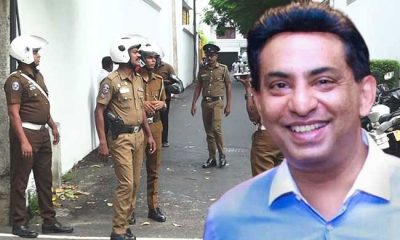
Police inform Fort Magistrate’s Court of finding ex-CEO of SriLankan dead under suspicious circumstances
-
 Opinion6 days ago
Postmortem reports and the pursuit of justice