
Features
Passage of 20A:

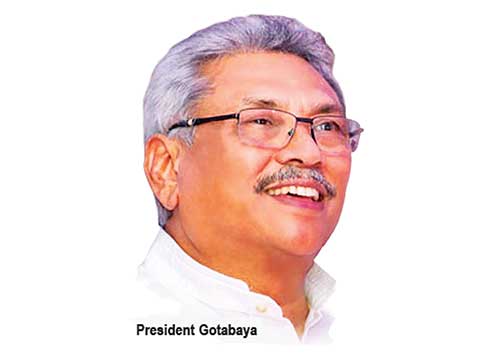
Auspicious prelude to creation of a New Constitution
By Rohana R. Wasala
The Sinhalese in independent Sri Lanka have been nationalistic, but never narrowly communalistic; they have never illtreated non-Sinhala minorities on the basis of race or religion. Those who are wallowing in a sea of misinformation having been swept there by tides of hostile propaganda over the decades, may bristle at this, but the truth must be stated. The nationalism of the Sinhalese is not a construct of the last colonial era. Contrary to what Eurocentric theorists, their local clones, imperialist lackeys and their modern dupes believe, it is an inclusive nationalism. In their long history, the nationalism of the Sinhalese has been synonymous with patriotism or the love of their country, their island homeland. The JVP of 1971 and 1987-89 shed blood in the name of the country, not in the name of a race or a religion unlike respectively the defeated LTTE and the recent NTJ. To point this out is not being communalistic; it is only reacting to a false criticism. The racists and the extremists among the minorities raise false allegations of communalism against the majority community to justify their own communalism.
Today, even a section of the Sinhalese polity, including some young members of the FB generation, seem to think that to be a nationalist is the same as being a racist. That misconception is largely because they are not well enough informed about their own true history and truly admirable, multifaceted heritage, a legacy that is enjoyed by all communities in common: the still functional parts of the ancient hydraulic system, archaeological remains that attract foreign tourists and earn foreign exchange for the public coffers,and many other treasures. But anti-national individuals and agencies still censor Anagarika Dharmapala, the pioneer national revivalist of the colonial era, as a hate figure for ideologically rekindling, around the beginning of the 20th century, the nationalist spirit of the patriotic Sinhalese that had been choked in the course of a number of popular uprisings by force of arms by colonial invaders following the 1815 British intrigue. All the Sinhalese leaders who caused the 1948, 1956, 1972, 2009, and 2019 restorative revolutionary watersheds to happen were inspired by Dharmapala and were opposed by the real racists and received little support from non-Buddhist religious extremists.
The ‘divide and rule’ policy of the British imperialists was naturally to the greater disadvantage of the majority community than to the minorities, who in fact stood to gain from it. The British exploited the minorities to weaken the historical defenders of the land. It may be plausibly argued that they used them as tacit allies to restrain the Sinhalese from rebellion, in return for privileged treatment (although this was limited to an elite that politically mattered to them, while the majority of the dispossessed mixed masses consisting of common Sinhalese, Tamils and Muslims shared the rigours of colonial exploitation without discrimination).
Particularly, the racist leaders of the Tamil minority feared that a parliamentary system of government where the Sinhalese would hold power because of their numerical superiority would mean a loss of their privileged status (hence the notorious 50-50 seat allocation demand of G.G. Ponnambalam which was contemptuously rejected by the Soulbury Commissioners in 1946. All the overtures that Sinhalese leaders, from D.S. Senanayake to Gotabaya Rajapaksa, made to the few but powerful racists (among the minority politicians) who somehow manage to hoodwink their people and persuade them to vote for them have failed to convince them to cooperate wholeheartedly with the majority in making unitary Sri Lanka a strong sovereign state where they harbour equal stakes and enjoy equal rights and share equal responsibilities.
The false allegation of Sinhala communalism finds a convenient platform in the demand for the constitutional emasculation of the institution of the executive presidency (if complete abolition is not possible). This is because it is usually a Sinhalese who stands a chance of getting elected as president by the pan-Sri Lanka electorate. These minority politicians (the extremist few, not all minority politicians) propagate the idea that all Sinhalese are communalists, and that every president will be biased against their people. But this is a fallacy. Though, at present, there is no likelihood of a minority politician becoming president because the minority polities are still mostly under the sway of racists and religious extremists, it is not an impossibility. If the non-racist, non-extremist politicians that there are among them are allowed to emerge dominant, they certainly will find more favour with the average Sinhalese voters than a conceited Premadasa or a clueless Sirisena, and a correspondingly modest and knowledgeable Tamil or Muslim president will no longer be just a dream. There are many examples from the past to illustrate the possibility of such an eventuality, but this is not the time for dwelling on the subject.
Unwarranted dilution of the powers of the executive presidency was what was achieved by the controversial 19A, which, effectively divided people’s sovereign power between the President, the Prime Minister and the Speaker. It was a three-headed monster, as a government minister recently said. As a result of it the sovereign people had to put up with a severely dysfunctional parliament that brought disaster to the country for an interminable four and a half years before it was finally dissolved by the President and a fresh Parliament elected. The potential for the continuation of such a corrupt malfunctioning parliament is greater when the executive power of the President to dissolve it is curtailed or is completely taken away. That provides a situation open to exploitation by the Rishads and Hakeems of this world.
The Island
editorial/October 20, 2020 made the following comment, which suggests the despicable way they are ready to cock a snook at the sovereignty of the people:
‘Bathiudeen brought down the hurriedly formed Sirisena-Rajapaksa government, in 2018, by refusing to vote with it in Parliament. That administration crashed, unable to raise a simple majority in the House. This time around, Bathiudeen can give the present regime the kiss of death by voting for the 20A. If he and his four MPs vote for 20A, as expected, those who claim that he and the government have struck a secret deal will be vindicated. The only way the government can avert such a situation is to engineer the crossover of some other Opposition MPs so that it does not have to depend on Bathiudeen…..’
Who is this Bathiudeen? He was one of the Muslims forcibly evacuated from the North as a result of Prabhakaran’s ethnic cleansing policy. When Bathiudeen came down to Colombo he was a penniless youth with nothing but the worn out clothes on his body, it is said. Today, he is a billionaire with palatial houses here and there, and thousands of acres of land in his possession, with some more lands given to his relatives. He was able to help himself to such great wealth and also indulge in philanthropy at the expense of the state because he became a politician and managed to join the winning side continuously from the previous MR government to the end of Yahapalanaya, and battened on the suffering of the fellow members of his own displaced community. During the near decade in power, he was charged by environmental groups with the devastating deforestation of the Wilpattu forest reserve; he was rumoured to be complicit in importing cocaine hidden among goods in CWE containers, illegally exploiting the ilmenite containing mineral sand deposits at Pulmudai for personal profits, abusing the CWE to propagate extremist Islamist ideology, and he was even accused of having connections with the Jihadists who carried out the Easter Sunday attacks on churches and hotels. When the police finally started looking for him to arrest him on the charge of having abused state/public property by transporting by SLTB buses some 10,000 voters from their new places of residence to their old (for casting their vote a second time it was alleged in the media) on the day of the presidential election in November last year. How is it that an extremely unscrupulous, originally insignificant penurious politician has been allowed to invest himself with such power as The Island editorial has described?
This is because the minority communalists who stick that label on the majority have been empowered by the existing faulty electoral system being abused, and the majority community effectively disenfranchised in the process. Having to strike a deal with political criminals or to ‘engineer the crossover of some other Opposition MPs’ as The Island editorial suggests in order to get 20A or any other nationally important piece of legislation through parliament, is a wretched proposition for any sovereign nation even to contemplate. But, isn’t there any prospect for the nation to reverse this unfortunate self inflicted anomaly? In my opinion, there is. It is to get rid of our own fear of adopting strategies that might run the risk of being attacked as racist, Sinhala Supremacist, discriminatory towards minorities, contrary to international standards, etc. We have to learn not to give a fig to such unfounded accusations.
At present, the Sinhalese are scrupulously guiltless in this respect. Still they are treated as if they were the worst racists, human rights violaters, xenophobes, chauvinists in the world. Sometimes their own leaders criticise them for being jaatiwadin, or racists as Premadasa and Sirisena have already done:
Former President Sirisena was heard, at the Easter Sunday Attacks inquiry recently, referring to racists among the Sinhalese. In a Twitter message, which was only in English and Tamil, but not in Sinhala, during the presidential election campaigning period, SJB leader Premadasa charged that Muslims were subjected to discrimination at the hands of the Sinhalese! He toured the North, presumably to show the northern Tamils that he was a champion of Tamil rights. He was given a heroic welcome in Jaffna and he garnered many Tamil votes, too. But it is not that they fell for stratagems; they knew that he was ready to betray his own people for a mess of (electoral) pottage.
Could a person who doesn’t care about his own kind be concerned about other people?
The alleged Sinhala racists are none other than the few monks and some young Sinhala activists who are merely reacting to proven cases of harassment, aggression, and subversion against them by some extremist elements from among the minorities. Considerable numbers of young Tamils and Muslims are also among their supporters. Had the successive governments taken them seriously, the slaughter of innocents on April 21 could have been avoided. They represent millions, but are they taken notice of? Are they given proper media coverage? Global media (international TV channels such as Al Jazeera, CNN, BBC, etc) broadcast distorted news about them.
There’s no place for them on the You Tube, either.
The true situation in the country is different from what is usually reported in these media. Why did the nationalists win very nearly two thirds of parliamentary seats, with the racists and religious extremists getting fewer than what they usually win? The result surprised even the nationalists. This shows that the Sinhalese electorate can decide the future of the country by themselves. But they naturally prefer to do so with the participation of the minorities. If the Sinhalese MPs in parliament forget their partisan divisions and remember the patriotism of their ancestors who shed their blood to save their motherland for all its inhabitants, they will voluntarily help the government to muster the two thirds majority required or even more for introducing a completely new constitution when the time comes for that.
Not less than the survival of the unitary state, the nation, the dominant Buddhist culture and the island territory is at stake. The America-led West and India seem to have found a deus ex machina opportunity to further crank up pressure on economically doddering Sri Lanka in the fast expanding mysterious Brandix Covid-19 cluster and in a court judgement given in UK that is favourable to the LTTE rump still active there: It was reported in the media on Wednesday (October 21, 2020) that UK’s Proscribed Organisations Appeal Commission has concluded that the Home Office decision to keep the LTTE as a proscribed terrorist organisation was flawed and unlawful. So, the British parliament is likely to lift the ban on the organization in that country. Britain is one of the forty countries that proscribed the terror outfit. As far as Sri Lanka is concerned, this will make little difference to the status quo, because the UK has practically always allowed its members to behave as if there was no ban on it.
So, all MPs in parliament, please forget your party, ethnic, religious and interpersonal differences in the name of our motherland. At the time of writing, the ad hoc 20A is to be put to the vote. It will be passed with necessary amendments. It is good if this was carried out without the government having to strike secret deals with communalists or to engineer crossovers from the Opposition (which would be a slap in the face of the voting public). The more momentous responsibility that you are going to fulfill is to create a sound new constitution for our country that will save our nation from squabbling geopolitical powers who are promoting their own separate national interests at our expense, leaving us in perpetual political instability and endless economic misery. You Hon. MPs, especially the fresh thinking young ones, owe our resplendent island homeland no less.
(PS: The 20A was passed in parliament with 156 voting for it and only 65 against. The votes cast in favour exceeds the required two thirds majority by 6 votes. It is obvious that the government did not have to make undue special overtures towards Muslim MPs. There were only 6 Muslim votes but they were not critical, they were dispensable. It is clear that the Muslim MPs thrust themselves on the government side without being asked. Probably, they did this on the prior instructions of Hakeem (and Rishad as well). I think so because, about two weeks ago, Hakeem told media men that he wouldn’t vote for 20A but that the other members of his party would probably do so. The government had better be careful: Beware of Greeks bearing gifts. Only Faustian bargains can be made with fundamentalists. No reasonable democratic dialogue is possible with Islamists. The government, it seems, was short of only 2 votes for acquiring the required number of votes, which was 150. Those two votes came from Tamil MP Aravind Kumar and SJB’s Diana Gamage. The latter violated her leader’s injunction, for which she must be praised. In my opinion, it is obvious that the former president, Sirisena, didn’t take part in the voting, not because the controversial NGO drafted and promoted 19A was passed under his presidency, but because he couldn’t any longer get associated with the hypocrisy of its defenders.
The drafting of a completely new constitution commenced two or three weeks ago. The process will get into top gear now. The multiethnic drafting committee is headed by the renowned PC Romesh de Silva, and includes other legal luminaries such as Manohara de Silva and experts in related fields such as geologist and geopolitical analyst and commentator Prof. Gerald H. Peiris. They who love Sri Lanka as their beloved motherland can be expected to collectively produce a document that will be as much acceptable to the minorities as it is to the majority.)





The appointment of former minister Eran Wickremaratne to chair the Sri Lanka Cricket Transformation Committee is significant for more than the future of cricket. It signals a possible shift in the culture of governance even as it offers Sri Lankan cricket a fighting possibility to get out of the doldrums of failure. There have been glorious patches for the national cricket team since the epochal 1996 World Cup triumph. But these patches of brightness have been few and far between and virtually non-existent over the past decade. At the centre of this disaster has been the failures of governance within Sri Lanka Cricket which are not unlike the larger failures of governance within the country itself. The appointment of a new reform oriented committee therefore carries significance beyond cricket. It reflects the wider challenge facing the country which is to restore trust in public institutions for better management.
The appointment of Eran Wickremaratne brings a professional administrator with a proven track record into the cricket arena. He has several strengths that many of his immediate predecessors lacked. Before the ascent of the present government leadership to positions of power, Eran Wickremaratne was among the handful of government ministers who did not have allegations of corruption attached to their names. His reputation for financial professionalism and integrity has remained intact over many years in public life. With him in the Cricket Transformation Committee are also respected former cricketers Kumar Sangakkara, Roshan Mahanama and Sidath Wettimuny together with professionals from legal and business backgrounds. They have been tasked with introducing structural reforms and improving transparency and accountability within cricket administration.
A second reason for this appointment to be significant is that this is possibly the first occasion on which the NPP government has reached out to someone associated with the opposition to obtain assistance in an area of national importance. The commitment to bipartisanship has been a constant demand from politically non-partisan civic groups and political analysts. They have voiced the opinion that the government needs to be more inclusive in its choice of appointments to decision making authorities. The NPP government’s practice so far has largely been to limit appointments to those within the ruling party or those considered loyalists even at the cost of proven expertise. The government’s decision in this case therefore marks a potentially important departure.
National Interest
There are areas of public life where national interest should transcend party divisions and cricket, beloved of the people, is one of them. Sri Lanka cannot afford to continue treating every institution as an arena for political competition when institutions themselves are in crisis and public confidence has become fragile. It is therefore unfortunate that when the government has moved positively in the direction of drawing on expertise from outside its own ranks there should be a negative response from sections of the opposition. This is indicative of the absence of a culture of bipartisanship even on issues that concern the national interest. The SJB, of which the newly appointed cricket committee chairman was a member objected on the grounds that politicians should not hold positions in sports administration and asked him to resign from the party. There is a need to recognise the distinction between partisan political control and the temporary use of experienced administrators to carry out reform and institutional restructuring. In other countries those in politics often join academia and civil society on a temporary basis and vice versa.
More disturbing has been the insidious campaign carried out against the new cricket committee and its chairman on the grounds of religious affiliation. This is an unacceptable denial of the reality that Sri Lanka is a plural, multi ethnic and multi religious society. The interim committee reflects this diversity to a reasonable extent. The country’s long history of ethnic conflict should have taught all political actors the dangers of mobilising communal prejudice for short term political gain. Sri Lanka paid a very heavy price for decades of mistrust and division. It would be tragic if even cricket administration became another arena for communal suspicion and hostility. The present government represents an important departure from the sectarian rhetoric that was employed by previous governments. They have repeatedly pledged to protect the equal rights of all citizens and not permit discrimination or extremism in any form.
The recent international peace march in Sri Lanka led by the Venerable Bhikkhu Thich Paññākāra from Vietnam with its message of loving kindness and mindfulness to all resonated strongly with the masses of people as seen by the crowds who thronged the roadsides to obtain blessings and show respect. This message stands in contrast to the sectarian resentment manifested by those who seek to use the cricket appointments as a weapon to attack the government at the present time. The challenges before the Sri Lanka Cricket Transformation Committee parallel the larger challenges before the government in developing the national economy and respecting ethnic and religious diversity. Plugging the leaks and restoring systems will take time and effort. It cannot be done overnight and it cannot succeed without public patience and support.
New Recognition
There is also a need for realism. The appointment of Eran Wickremaratne and the new committee does not guarantee success. Reforming deeply flawed institutions is always difficult. Besides, Sri Lanka is a small country with a relatively small population compared to many other cricket playing nations. It is also a country still recovering from the economic breakdown of 2022 which pushed the majority of people into hardship and severely weakened public institutions. The country continues to face unprecedented challenges including the damage caused by Cyclone Ditwah and the wider global economic uncertainties linked to conflict in the Middle East. Under these difficult circumstances Sri Lanka has fewer resources than many larger countries to devote to both cricket and economic development.
When resources are scarce they cannot be wasted through corruption or incompetence. Drawing upon the strengths of all those who are competent for the tasks at hand regardless of party affiliation or ethnic or religious identity is necessary if improvement is to come sooner rather than later. The burden of rebuilding the country cannot rest only on the government. The crisis facing the country is too deep for any single party or government to solve alone. National recovery requires capable individuals from across society and from different sectors such as business and civil society to work together in areas where the national interest transcends party politics. There is also a responsibility on opposition political parties to support initiatives that are politically neutral and genuinely in the national interest. Not every issue needs to become a partisan battle.
Sri Lanka cricket occupies a special place in the national consciousness. At its best it once united the country and gave Sri Lankans a sense of pride and international recognition. Restoring integrity and professionalism to cricket administration can therefore become part of the larger task of national renewal. The appointment of Eran Wickremaratne and the new committee, while it does not guarantee success, is a sign that the political leadership and people of the country may be beginning to mature in their approach to governance. In recognising the need for competence, integrity and bipartisan cooperation and extending it beyond cricket into other areas of national life, Sri Lanka may find the way towards more stable and successful governance..
by Jehan Perera

Court vacation this year came with an unexpected lesson, not from a courtroom but from the streets of Dhaka — a city that moves, quite literally, on three wheels.
Above the traffic, a modern metro line glides past concrete pillars and crowded rooftops. It is efficient, clean and frequently cited as a symbol of progress in Bangladesh. For a visitor from Sri Lanka, it inevitably brings to mind our own abandoned light rail plans — a project debated, politicised and ultimately set aside.
But Dhaka’s real story is not in the air. It is on the ground.
Beneath the elevated tracks, the streets belong to three-wheelers. Known locally as CNGs, they cluster at junctions, line the edges of markets and pour into narrow roads that larger vehicles avoid. Even with a functioning rail system, these three-wheelers remain the city’s most dependable form of everyday transport.
Within hours of arriving, their importance becomes obvious. The train may take you across the city, but the journey does not end there. The last mile — often the most complicated part — belongs entirely to the three-wheeler. It is the vehicle that gets you home, to a meeting or simply through streets that no bus route properly serves.
There is a rhythm to using them. A destination is mentioned, a price is suggested and a brief negotiation follows. Then the ride begins, edging into traffic that feels permanently compressed. Drivers move with instinct, adjusting routes and squeezing through gaps with a confidence built over years.
It is not polished. But it works.
And that is where the comparison with Sri Lanka becomes less about what we lack and more about what we already have.
Back home, the three-wheeler has long been part of daily life — so familiar that it is often discussed only in terms of its problems. There are frequent complaints about fares, refusals or the absence of meters. More recently, the industry itself has become entangled in politics — from fuel subsidies to regulatory debates, from election-time promises to periodic crackdowns.
In that process, the conversation has shifted. The three-wheeler is often treated as a problem to be managed, rather than a service to be strengthened.
Yet, seen through the experience of Dhaka, Sri Lanka’s system begins to look far more settled — and, in many ways, ahead.
There is a growing structure in place. Meters, while not perfect, are widely recognised. Ride-hailing apps have added transparency and reduced uncertainty for passengers. There are clearer expectations on both sides — driver and commuter alike. Even small details, such as designated parking areas in parts of Colombo or the increasing standard of vehicles, point to an industry slowly moving towards professionalism.
Just as importantly, there is a human element that remains intact.
In Sri Lanka, a three-wheeler ride is rarely just a transaction. Drivers talk. They offer directions, comment on the day’s news, or share local knowledge. The ride becomes part of the social fabric, not just a means of getting from one point to another.
In Dhaka, the scale of the city leaves less room for that. The interaction is quicker, more direct, shaped by urgency. The service is essential, but it is under constant pressure.
What stands out, across both countries, is that the three-wheeler is not a temporary or outdated mode of transport. It is a necessity in dense, fast-growing Asian cities — one that fills gaps no rail or bus system can fully address.
Large infrastructure projects, like light rail, are important. They bring efficiency and long-term capacity. But they cannot replace the flexibility of a three-wheeler. They cannot reach into narrow streets, respond instantly to demand or provide that crucial last-mile connection.
That is why, even in a city that has invested heavily in modern rail, Dhaka still runs on three wheels.
For Sri Lanka, the lesson is not simply about what could have been built, but about what should be better managed and valued.
The three-wheeler industry does not need to be politicised at every turn. It needs steady regulation — clear fare systems, proper licensing, safety standards — alongside encouragement and recognition. It needs to be seen as part of the solution to urban transport, not as a side issue.
Because for thousands of drivers, it is a livelihood. And for millions of passengers, it is the most immediate and reliable form of mobility.
The tuk-tuk may not feature in grand policy speeches or infrastructure blueprints. It does not run on elevated tracks or attract international attention. But on the ground, where daily life unfolds, it continues to do what larger systems often struggle to do — show up, adapt and keep moving.
And after watching Dhaka’s streets — crowded, relentless, yet functioning — that small, three-wheeled vehicle feels less like something to argue over and more like something to get right.
(The writer is an Attorney-at-Law with over a decade of experience specialising in civil law, a former Board Member of the Office of Missing Persons and a former Legal Director of the Central Cultural Fund. He holds an LLM in International Business Law)
by Sampath Perera recently in Dhaka, Bangladesh

 According to reports coming my way, the entertainment scene, in Dubai, is very much opening up, and buzzing again!
After a quieter few months, May is packed with entertainment and the whole scene, they say, is shifting back into full swing.
The Seven Notes band, made up of Sri Lankans, based in Dubai, are back in the spotlight, after a short hiatus, due to the ongoing Middle East problems.
On 18th April they did Legends Night at Mercure Hotel Dubai Barsha Heights; on Thursday, 9th May, they will be at the Sports Bar of the Mercure Hotel for 70s/80s Retro Night; on 6th June, they will be at Al Jadaf Dubai to provide the music for Sandun Perera live in concert … and with more dates to follow.
These events are expected to showcase the band’s evolving sound, tighter stage coordination, and stronger audience engagement.
With each performance, the band aims to refine its identity and build a loyal following within Dubai’s vibrant nightlife and event scene.

Pasindu Umayanga: The group’s new vocalist
What makes Seven Notes standout is their versatility which has made the band a dynamic and promising act.
With a growing performance calendar, new talent integration, and international ambitions, the band is definitely entering a defining phase of its journey.
Dubai’s music industry, I’m told, thrives on diversity, energy, and audience connection, with live bands playing a crucial role in elevating events—from corporate shows to private concerts. Against this backdrop, Seven Notes is positioning itself not just as another band, but as a performance-driven musical unit focused on consistency and growth.
Adding fresh momentum to the group is Pasindu Umayanga who joins Seven Notes as their new vocalist. This move signals a strategic upgrade—not just filling a role, but strengthening the band’s front-line presence.
Looking beyond local stages, Seven Notes is preparing for an international tour, to Korea, in July.

Bassist Niluk Uswaththa: Spokesperson for Seven Notes
According to bassist Niluk Uswaththa, taking a band abroad means: Your sound must hold up against unfamiliar audiences, your performance must translate beyond language, and your discipline must be at a professional level.
“If executed well, this tour could redefine Seven Notes from a local band into an emerging international act,” added Niluk.
He went on to say that Dubai is not an easy market. It’s saturated with highly experienced, multi-genre bands that can adapt instantly to any crowd.
“To stand out consistently you need to have tight rehearsal discipline, unique sound identity (not just covers), strong stage chemistry, audience retention – not just applause.”
No doubt, Seven Notes is entering a critical growth phase—new member, multiple shows, and an international tour on the horizon. The opportunity is real, but so is the pressure.
However, there is talk that Seven Notes will soon be a recognised name in the regional music scene.

Members of Sri Lanka Cricket Transformation Committee Officially Appointed

Three prison guards arrested following the death of an inmate

Showers or thundershowers will occur at most places of the island after 1.00 pm.

CJ urged to inquire into AKD’s remarks on May 25 court verdict

ITAK MPs representing East take their woes to Canadian HC

People demand release of Keppapilavu land

‘Dates have the highest sugar content to fight Coronavirus’

Sunday Island 27 December – Headlines

#SundayIsland 17th December – Headlines

Sunday Island – 28th March

Sunday Island Headlines – 21 March

Sunday Island – 21st February – Headlines
-
 News6 days ago
Treasury chief’s citizenship details sought from Australia
-

 News5 days ago
Rooftop Solar at Crossroads as Sri Lanka Shifts to Distributed Energy Future
-
 News4 days ago
“Three-in-one blood pressure pill can significantly reduce risk of recurrent strokes”
-

 News6 days ago
Central Province one before last in AL results
-

 Sports6 days ago
Well done AKD!
-

 News4 days ago
Alarm raised over plan to share Lanka’s biometric data with blacklisted Indian firm
-
 News2 days ago
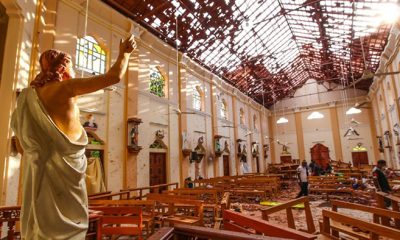
Easter Sunday Case: Ex-SIS Chief concealed intel, former Defence Secy tells court
-
 News3 days ago
Ten corruption cases set for court in May, verdict ordered in one case – President