
News
SJB will seek to expel Assistant Secretary Gamage from the Party – spokesman


The main opposition Samagi Jana Balavegaya will initiate disciplinary proceedings against its Assistant Secretary Diana Gamage who broke ranks and voted with the government to pass the second reading of the proposed 20th Amendment to the Constitution.
A party spokesman, MP Ravi Jayawardena said that the SJB will seek to expel the MP from the party and that means Gamage will lose her seat. She is a National List MP and one of two women Members from the SJB.
She was among five MPs from the group which supported the move to vest extraordinary power to the Executive, making President Gotabaya Rajapaksa an all-powerful Head of State with power over the Judiciary as well as the Legislature.
The other MPs are members of the Sri Lanka Muslim Congress (SLMC) from the Eastern Province as well as Puttalam. Some members from the SLMC contested the elections under the SJB banner.
The Deputy Leader of the party Naseer Ahmed voted with the government.
One MP who is a supporter of former Minister Rishad Bathiudeen also voted for the amendment. Bathiudeen who was brought out of quarantine and Remand to Parliament opposed the motion.
After the vote, Gamage told reporters that she had “voted with her conscience” as she had “faith in President Gotabaya Rajapaksa.”
She also denied that she had been paid money or given any privileges to vote for the government. (ECONOMYNEXT)


The Auditor General has warned that delays in coal procurement and continued reliance on suppliers of questionable standards could disrupt the supply of electricity.
The special audit report on coal imports was presented to Parliament on Tuesday (07) by Bimal Ratnayake, Leader of the House, at the commencement of proceedings.
However, Opposition MPs complained to Speaker Dr Jagath Wickramaratne that copies of the report had not been distributed to Members of Parliament. Responding to the complaint, the Speaker said it was the responsibility of the Parliamentary Secretariat to ensure the report was provided to MPs.
The special audit, requested by the Committee on Public Enterprises (COPE), examined the coal procurement process of the Lanka Coal Company for the Lakvijaya Power Plant and purchases planned for the 2025/2026 season.
The audit revealed several irregularities in the tender process. It found that the laboratory issuing quality reports at the loading port for the controversial supplier Trident Company had its licence cancelled. The report also disclosed that at the time advertisements were published calling for tenders,the company had not completed its registration but was awarded the tender. In addition, three other suppliers who had not confirmed their registration were allowed to submit bids.
Coal shipments for the Lakvijaya Power Plant are tested at both loading and unloading ports. According to the audit, Mitra SK South Africa had been appointed to conduct testing at the loading port, but due to the absence of accreditation the task was assigned to PT Mitra SK Analisa Testama Samarinda, an Indonesian firm whose licence had been cancelled on December 29, 2025. Auditor General S. Jayarathne has noted that the audit could not confirm whether the licence had been renewed by March 31, 2026, and that all 12 shipment reports issued at the loading port lacked accreditation.
The report has further pointed to discrepancies between loading port laboratory reports and data recorded at the plant’s main control unit. Despite the availability of alternative verification methods, the Lanka Coal Company failed to use them to confirm the accuracy of the reports.
The audit also highlighted that no coal shipments were brought to Sri Lanka between November 13 and December 30, 2025, despite the need to secure maximum stocks during that period.
As a result of the shortage, an emergency procurement was carried out on March 18 this year, selecting Taranjot Resource Pvt Ltd. as the supplier. However, the Auditor General revealed that this company had failed within the previous 36 months to supply coal with the required calorific value of 5,900 or above to the Lakvijaya Power Plant.
The report warns that delays in coal imports and dependence on suppliers with questionable standards could adversely affect the continuous supply of electricity from the plant.
The National Audit Office of Sri Lanka has further estimated that the use of substandard coal has caused losses amounting to nearly Rs. 2.24 billion.
According to the report, losses incurred from individual shipments included more than Rs. 160 million from the first vessel (consignment No. 456), over Rs. 90 million from the second vessel (No. 457), more than Rs. 310 million from the third vessel (No. 458), and over Rs. 150 million from the fourth vessel (No. 459). Additional losses included nearly Rs. 180 million from the fifth vessel (No. 460), about Rs. 30 million from the sixth vessel (No. 461), over Rs. 240 million from the seventh vessel (No. 462), more than Rs. 390 million from the eighth vessel (No. 463) and over Rs. 390 million from the tenth vessel (No. 464).
The report has also noted that because the available coal stocks cannot generate electricity at the plant’s full capacity of 300 megawatts, additional power may have to be obtained from alternative sources. The estimated additional energy requirement for this purpose is 76,354,087 kilowatt-hours, the report has pointed out.
By Saman Indrajith
In the wake of the National Development Bank (NDB) PLC having to publicly acknowledge a loss of as much as Rs 13.2 bn due to internal fraud, the priority is to maintain confidence of the public in the financial sector to minimise risk of any type of contagion, sources familiar with banking operations told The Island.
Speaking on the condition of anonymity, sources said that the challenge was to see how processes, systems and internal oversight could be improved in the banking sector. The Central Bank, as the regulator, should consider whether supervision and regulation could be further improved.
Listed lender NDB has informed both the Colombo Stock Exchange and the Central Bank of the fraud. Having initially estimated the loss at Rs 380 mn, the NDB, within days, asserted the losses amounted to Rs. 13.2 billion rupees.
The Central Bank, in a statement posted on its website, revealed that it has already carried out a preliminary assessment of the financial impact on the basis of the information provided by NDB and is satisfied that notwithstanding the reported loss, the prudential ratios relating to capital adequacy and liquidity continue to be at levels above the minimum regulatory requirements.
The regulator assured the situation was under monitoring and would take necessary measures, depending on the requirement. While acknowledging the NDB, in spite of the loss, met the required ratios relating to capital adequacy and liquidity, continue to be at levels above the minimum regulatory requirements, the regulator declared in case of necessity NDB would also be able to access temporary liquidity available from Central Bank in terms of the provisions of the relevant laws and schemes already in place.
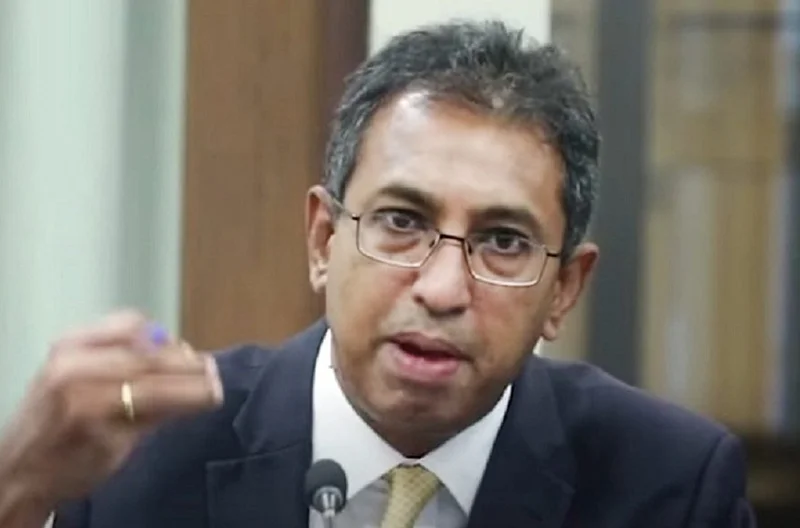
Committee on Public Finance, Chairman Dr. Harsha de Silva, told The Island that the issue at hand was raised with the Central Bank on Tuesday (07) when then top management appeared before the parliamentary watchdog regarding some other matter. The lawmaker described the issue as a serious breach in governance in the banking sector.
Major shareholders of the NDB PLC include BoC, Sri Lanka Insurance Corporation, Norwegian Investment Fund, Employees’ Provident Fund and Metrocorp.
By Shamindra Ferdinando

Sri Lanka’s power sector is bracing for a steep electricity tariff hike, with senior officials confirming that a revised proposal seeks an additional 53% increase, just weeks after the last revision took effect on 01 April.
The move follows a deepening cost crisis, triggered by substandard coal imports and ongoing fossil fuel supply constraints, which, officials say, have already imposed a burden exceeding Rs. 20 billion for the April–June period.
“The numbers are alarming. This is not a marginal adjustment but a structural cost shock,” a senior energy sector official told The Island. “The tariff filing reflects a requirement of around Rs. 40 billion, and roughly half of that is directly linked to the coal issue.”
According to internal estimates, coal-based generation has dropped by nearly 250 gigawatt-hours (GWh) during the three-month period due to poor-quality fuel, forcing greater reliance on costly diesel generation.
“Replacing that lost capacity with diesel costs in the region of Rs. 25 billion,” another official said. “Even after accounting for about Rs. 4.5 billion in reduced generation costs, the net additional burden exceeds Rs. 20 billion.”
The National System Operator (NSO) has projected a total additional cost of approximately Rs. 42 billion for the quarter, forming the basis of the latest tariff application now under review.
Former Energy Minister Eng. Patali Champika Ranawaka also weighed in, warning against transferring the burden to consumers.
“To increase tariffs by Rs. 41 billion under these circumstances is deeply concerning. Around Rs. 20 billion of that is due to the coal issue,” Ranawaka said.
He urged the Public Utilities Commission of Sri Lanka not to approve measures that would pass inefficiencies and losses directly onto the public.
Ranawaka called on the government to take firm action against those responsible instead of deflecting accountability. “The focus must be on accountability and recovery, not on shifting blame or burdening the people,” he said, in an apparent reference to past attempts to attribute power sector failures to external or trivial causes.
Officials acknowledged that the proposed increase, if approved, would place additional strain on households and businesses already grappling with high living costs.
“What is particularly concerning is the contradiction between assurances and actual filings,” a senior official noted, referring to earlier claims that losses from the coal issue would not be passed on to consumers. “The tariff submission clearly suggests otherwise.”
The crisis is expected to intensify in the coming months. Diesel prices are likely to rise, further escalating generation costs, while high-priced heavy fuel oil (HFO) shipments expected from April will add to overall expenditure.
“These pressures are cumulative,” an official said. “The system has very limited capacity to absorb them without tariff adjustments.”
Questions have also been raised about the feasibility of recovering losses from the coal supplier. Officials pointed out that the estimated financial damage is nearly equivalent to the total invoiced value of the first 11 coal shipments—around Rs. 21 billion—making full recovery unlikely.
Energy analysts warn that the financial impact could extend beyond June, as the affected coal stocks are expected to remain in use until at least August, prolonging inefficiencies and elevated costs.
The unfolding situation has intensified calls for transparency and accountability in the energy sector, with growing concern that consumers may ultimately bear the cost of systemic failures.
“This is about the credibility of the system,” a senior official said. “Without accountability, these crises will continue—and the public will keep paying the price.”
By Ifham Nizam

AG: Coal procurement full of irregularities

Rs 13.2 bn NDB fraud: House committee declares serious breach in banking system

Tariff shock looms as coal crisis drives Rs. 40 bn cost surge

Sajith responds to AKD’s low-quality coal admission

Ravi: Outdated regulations hindering tourism inflows, digital services, SME-led exports

Croospulle stars as Sri Lanka ‘A’ clinch one-day series against Kiwis

‘Dates have the highest sugar content to fight Coronavirus’

Sunday Island 27 December – Headlines

#SundayIsland 17th December – Headlines

Sunday Island – 28th March

Sunday Island Headlines – 21 March

Sunday Island – 21st February – Headlines
-

 Features4 days ago
Ranjith Siyambalapitiya turns custodian of a rare living collection
-

 News4 days ago
Global ‘Walk for Peace’ to be held in Lanka
-

 News2 days ago
Lankan-origin actress Subashini found dead in India
-
 Opinion6 days ago
Hidden truth of Sri Lanka’s debt story: The untold narrative behind the report
-

 Features4 days ago
Beyond the Blue Skies: A Tribute to Captain Elmo Jayawardena
-

 Features6 days ago
The Ramadan War
-

 Features4 days ago
Aspects of Ceylon/Sri Lanka Foreign Relations – 1948 to 1976
-

 Editorial5 days ago
Brouhaha over a book