
News
Ravi: Outdated regulations hindering tourism inflows, digital services, SME-led exports


National Democratic Front MP Ravi Karunanayake yesterday (08) urged the Government to modernise Sri Lanka’s foreign exchange and payment systems, warning that outdated regulations were hindering tourism inflows, digital services and SME-led exports.
Raising the issue in a special statement in Parliament, Karunanayake said Sri Lanka was attempting to rebuild its external sector, through tourism and digital entrepreneurship, but there was a “significant mismatch” between evolving global payment practices and the country’s foreign exchange framework.
Full text of the statement:
“Sri Lanka is striving to rebuild its external sector through tourism inflows, digital services and SME-led exports.
However, there appears to be a significant mismatch between evolving global payment practices and the Country’s foreign exchange and payments framework.
Despite increasing tourist arrivals and the rapid rise of digital entrepreneurship among Sri Lankan youth, restrictions and inefficiencies in currency acceptance, payment platforms and exchange mechanisms continue to hinder inflows, distort markets and impose undue costs on citizens and businesses. In order to modernise Sri Lanka’s foreign exchange ecosystem and support emerging sectors, I ask the Minister of Finance the following:
1) What are the officially recognised and accepted “hard currencies” in Sri Lanka for transactions, settlements, and reserves and what criteria are used to determine such classification?
2) Given the significant inflow of Tourists, why has the Government not operationalised or encouraged the acceptance of currencies such as the Russian Ruble, Indian Rupee, Chinese Yuan and Japanese Yen for domestic transactions through banks, hotels and digital payment systems?
3) What are Central Bank, policy, regulatory or operational constraints that prevent the wider use of these currencies in both cash transactions and card-based payments within Sri Lanka?
4) Why is there a substantial spread between the buying and selling rates of foreign currencies offered by banks and financial institutions? What oversight mechanisms are in place to ensure that such spreads are fair and not exploitative to consumers and businesses?
5) Advice total profits earned by licensed Banks and Central Bank from foreign exchange transactions with the Government and the public during the years 2023, 2024 and 2025 to date?
6) Why are globally recognised digital payment platforms such as PayPal, Wise and Skrill not fully enabled or interoperable in Sri Lanka for receiving export proceeds, freelance income and service payments?
7) What steps has the Government taken to facilitate seamless inward remittances and digital payments for SriLankan freelancers, startups and SMEs engaged in cross-border trade in services?
8) While digital currencies are not legally recognised, it is widely reported that cryptocurrency transactions continue to take place outside the formal financial system; What measures are being taken to regulate, monitor and bring such activities within the tax net?”
The government asked for two weeks’ time to respond to MP Karunanayke’s questions.
By Saman Indrajith

Latest News
Landslide Early Warnings issued to the Districts of Colombo,Gampaha, Kalutara, Kegalle, Nuwara Eliya and Ratnapura


The National Building Research Organisation [NBRO] has issued landslide early warnings to the Districts of Colombo, Gampaha, Kalutara, Kegalle, Nuwara Eliya and Ratnapura effective from 1700 hrs today [24th May 2026] to 1700 hrs on Monday [25th May 2026].
Accordingly,
LEVEL II [AMBER] landslide early warnings have been issued to the Divisional Secretaries Divisions and surrounding areas of Dehiowita, Deraniyagala, Ruwanwella and Yatiyanthota in the Kegalle district and Kuruwita, Ratnapura, Ayagama and Eheliyagoda in the Ratnapura district.
LEVEL I [YELLOW] landslide early warnings have been issued to the Divisional Secretaries Divisions and surrounding areas of Seethawaka and Padukka in the Colombo district, Attanagalla in the Gampaha district, Palindanuwara, Mathugama, Bulathsinhala, Agalawatta, Ingiriya and Horana in the Kalutara district, Bulathkohupitiya in the Kegalle district, Ambagamuwa in the Nuwara Eliya district and Kiriella, Pelmadulla, Nivithigala, Elapatha and Kalawana in the Ratnapura district.
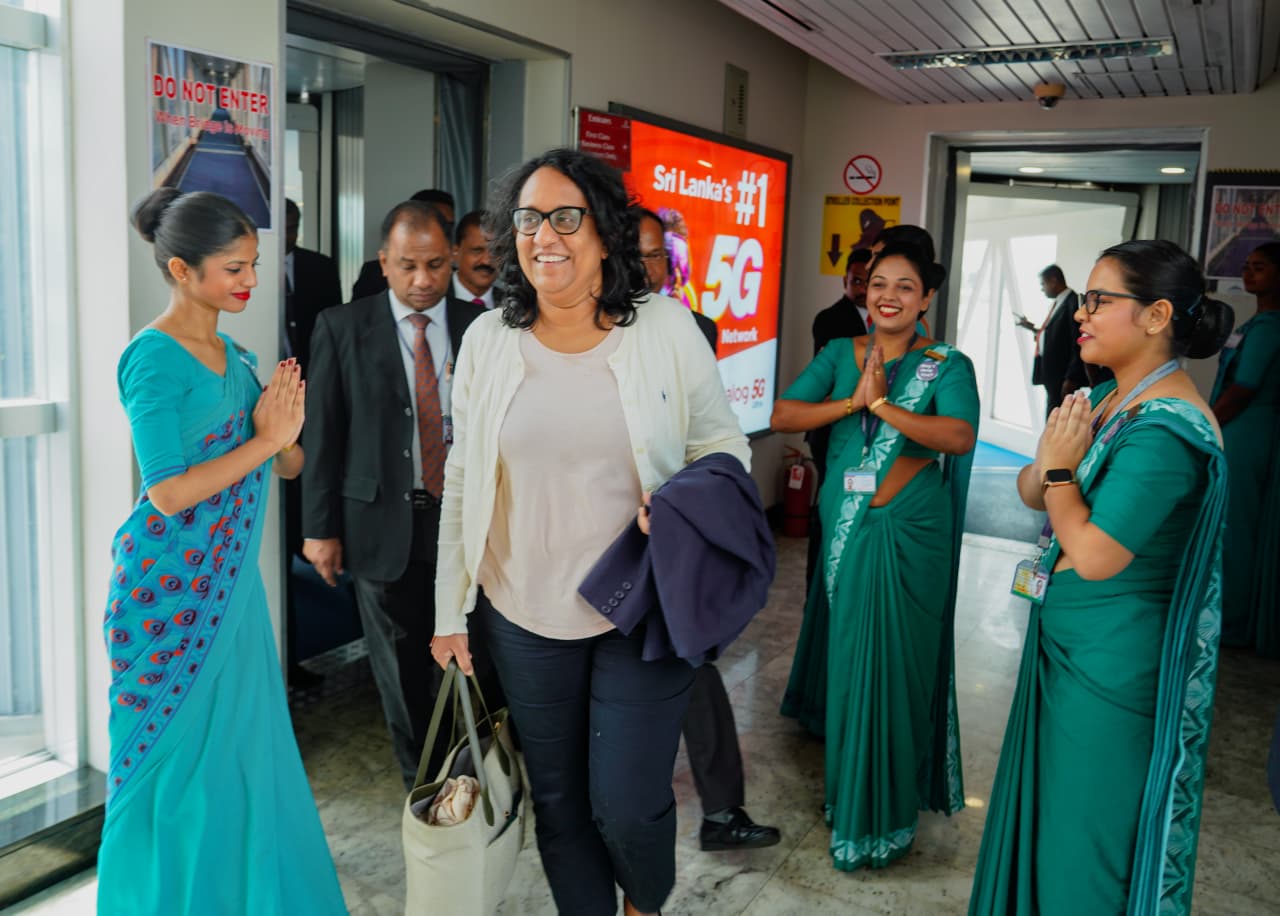
Prime Minister Dr Harini Amarasuriya concluded a successful official visit to the United Kingdom from 18 to 22 May 2026. The visit was undertaken to participate in the 43rd Commonwealth of Learning (COL) Board of Governors Meeting 2026 and to advance bilateral, academic, and community engagement.
The Prime Minister commenced her programme with academic engagements at the Institute of Development Studies (IDS), University of Sussex, where she addressed the 60th anniversary celebration. Addressing the gathering, the Prime Minister reflected on the relationship between politics, governance, and development, drawing from Sri Lanka’s recent political and economic experiences. She emphasized the challenges of balancing governance, economic recovery, social protection, and institutional reform while responding to public expectations and maintaining democratic accountability.
The Prime Minister subsequently delivered the 2026 Annual Lecture at the St Antony’s College, University of Oxford, organized by the Oxford School of Global and Area Studies (OSGA). Addressing the audience comprising students, academics, and researchers from across the University of Oxford, the Prime Minister reflected on the intersections of development, governance, and politics in Sri Lanka while discussing the broader realities faced by the country attempting to achieve meaningful social and economic reform. During her visit to Oxford, she also engaged with scholars and Sri Lankan fellows of the Chevening CRISP programme.
During the visit, Prime Minister Amarasuriya held bilateral discussions with Ms Yvette Cooper Secretary of State for Foreign, Commonwealth and Development Affairs of the United Kingdom. During the discussions, Prime Minister Amarasuriya conveyed Sri Lanka’s appreciation for the United Kingdom’s support following Cyclone Ditwah, including ongoing rebuilding and recovery assistance, and commended the UK’s continued efforts to facilitate increased bilateral trade and exports for Sri Lanka. She also briefed the UK side on Sri Lanka’s economic developments and policy priorities, reaffirming the Government’s commitment to human rights, reconciliation, and the country’s positive growth trajectory. Both sides exchanged views on global geopolitical developments, energy challenges, and regional connectivity, and reaffirmed their commitment to further strengthening bilateral cooperation in areas of mutual interest.
At a discussion with Ms Bridget Phillipson, UK Secretary of State for Education Prime Minister Amarasuriya emphasized the importance of sustaining meaningful institutional partnerships, enhancing quality assurance in higher education, and expanding opportunities for students and educators. Both sides reaffirmed the long-standing and historic cooperation between Sri Lanka and the United Kingdom in education and expressed interest in further deepening collaboration in student mobility, joint programmes, and research.
The Prime Minister also met with academic experts from the British Council at the High Commission in London to discuss strengthening cooperation in education. The discussions focused on strengthening cooperation in education, particularly in teacher training, English language programmes, education frameworks, and language acquisition skills. The meeting also addressed ways to improve quality assurance, expand research collaboration, and enhance learning opportunities for students and educators.
The Prime Minister attended the 43rd Commonwealth of Learning (COL) Board of Governors Meeting 2026 from 21 to 22 May 2026. She met with Shirley Ayorkor Botchwey, Secretary-General of the Commonwealth of Nations, at the Commonwealth Secretariat, where discussions focused on strengthening cooperation within the Commonwealth framework, including climate change, climate finance, democratic governance, and women’s political participation. The Secretary-General reaffirmed the Commonwealth’s readiness to continue supporting Sri Lanka through technical assistance, capacity-building initiatives, and collaboration in areas including climate finance and electoral governance.
Prime Minister Amarasuriya visited the London Buddhist Vihara ahead of its upcoming centenary celebrations, where she met with the Most Venerable Bogoda Seelawimala Nayaka Thera, Chief Sangha Nayaka of Great Britain and Head of the London Buddhist Vihara and discussed the preparations for the celebrations and the Vihara’s longstanding contribution to the Sri Lankan community. She subsequently engaged with members of the Sri Lankan community at a separate community event.
Concluding her successful official visit to the United Kingdom, Prime Minister Dr. Harini Amarasuriya arrived in Sri Lanka on Satueday morning via Bandaranaike International Airport.
[Prime Minister’s Media Division]

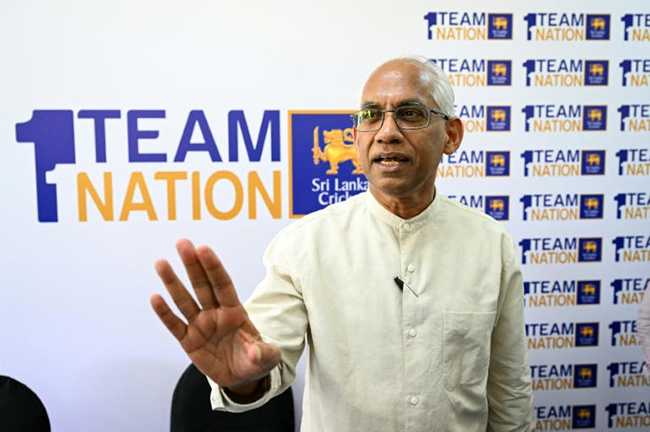
(AFP)Financial irregularities surrounding Sri Lankan cricket were far worse than feared, government-appointed administrators said Thursday, promising a full accounting and sweeping reforms.
“We have already ordered a forensic audit of the accounts,” Eran Wickramaratne, interim president of Sri Lanka Cricket (SLC), told his first news conference since taking office last month.
He said financial irregularities were “far greater than initially feared”.
He said the new SLC leadership — handpicked by the government of President Anura Kumara Dissanayake — would bring in sweeping reforms as concerns linger over international sanctions.
The current administration was appointed following the mass resignation of SLC’s elected officials last month — a move that raised fears of possible suspension by the International Cricket Council (ICC) over political interference.
The SLC, the country’s richest sports body, was suspended for two months in 2023 on similar grounds.
Wickramaratne, however, said discussions with the ICC were underway on reforming the SLC.
“Our talks with the ICC have been extremely cordial and constructive,” he said.
“We have been very open and transparent in what we are doing, and they want us to pursue open and transparent methods in doing this.”
Reforms include drafting a new constitution aimed at curbing abuses that allowed groups to retain power for a prolonged period, he added.
Four-time SLC president Shammi Silva and his entire committee stepped down in April after the government intervention, clearing the way for the current overhaul.The previous administration had also faced criticism over the national team’s performances, including an early exit from the T20 World Cup, which Sri Lanka co-hosted with India earlier this year.

All-round Archer helps Rajasthan Royals secure last playoffs spot

Suicide car bomb attack on train in Pakistan kills at least 24

Landslide Early Warnings issued to the Districts of Colombo,Gampaha, Kalutara, Kegalle, Nuwara Eliya and Ratnapura

PM concludes official visit to UK

Suspect killed after shooting at Secret Service agents, officials confirm

Trump says Iran deal ‘largely negotiated’ including reopening Strait of Hormuz

‘Dates have the highest sugar content to fight Coronavirus’

Sunday Island 27 December – Headlines

#SundayIsland 17th December – Headlines

Sunday Island – 28th March

Sunday Island Headlines – 21 March

Sunday Island – 21st February – Headlines
-
 Features5 days ago
Octopus, Leech, and Snake: How Sri Lanka’s banks feast while the nation starves
-
 Opinion4 days ago
Murder of Ehelepola family, Bogambara Wewa and Sightings of Wangediya
-
 News4 days ago
Steps underway to safeguard Sri Lanka’s maritime heritage
-
 Sports5 days ago
Sri Lanka women’s volleyball team ready for Central Asian challenge
-

 Editorial4 days ago
A play without its protagonist
-
 Midweek Review5 days ago
Overall SLPP failures stressed in new Aragalaya narrative
-

 Opinion3 days ago
The need to reform Buddhist ecclesiastical order
-
 Features23 hours ago
The NPP’s pivot to the past