
Features
China emerges as key challenger to US global dominance

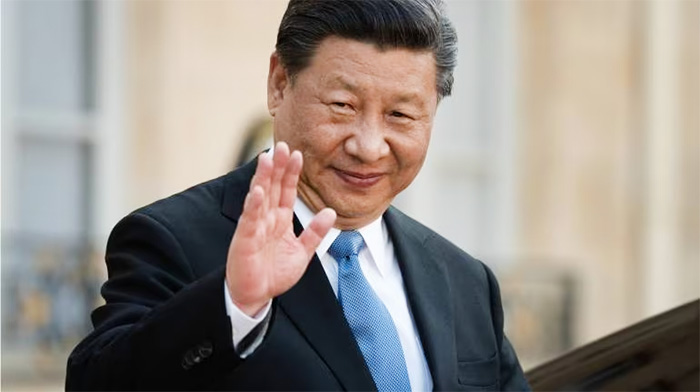
 Considering Chinese leader Xi Jinping’s singular focus over the years on tightening his grip on power at home, his securing a third straight term as President of China recently would not have come as a surprise to many a China watcher. However, of equal importance are his policy prescriptions for his country as it steps into the future.
Addressing the concluding sessions of the China National People’s Congress recently, which readily handed him a third term as China’s supreme leader, Xi said that from now on China would be playing an “active part in global governance.” He went to say, among other things, that, “Security is the bedrock of development, while stability is a prerequisite for prosperity.” Pointing to the role the armed forces of China would be playing in the affairs of the country, Xi said that efforts would be made “to advance the modernization of national defense and the armed forces on all fronts.”
Xi explained that a chief aim of his administration would be to transform the armed forces into a “great wall of steel”, that would be capable of “effectively safeguarding national sovereignty, security and development interests.”
The above stress on national security as an essential prerequisite for development sends out the message to Xi’s domestic audiences in particular that dissent on their part to his national policy agenda would not be tolerated on any account. That is, democratic development in China would be subjugated to national security considerations. Iron fist rule, therefore, will continue to prevail.
The emphasis laid on the increasing modernization of the Chinese armed forces clearly indicates that there would be no paring down of the role the armed forces would be playing in achieving China’s foreign policy aims. Chief among the latter is the increasing projection of Chinese power and influence regionally and worldwide. In these efforts the Chinese armed forces would be proving “a great wall of steel.”
Meanwhile, the fact that the Chinese President has played a principal role in bringing together once again Iran and Saudi Arabia is proof that China would indeed be figuring prominently in “global governance”. By helping the two Middle East powers to re-establish diplomatic ties China could be said to have stolen a march over the US in respect of power and influence-wielding in the region.
It is far too early to take the position that from now on there would be a drastic de-escalation of sectarian tensions in particular in the Middle East but a decrease in animosities between Iran and Saudi Arabia could contribute sizably towards defusing Shia Moslem-led revolts in the region. This is in consideration of the fact that these uprisings are being seen as supported by Iran, which is the leading Shia Moslem state in the region. For example, there could be a de-escalation of the separatist rebellion in southern Yemen, which is perceived as enjoying Iranian backing.
These diplomatic breakthroughs are of the first importance from the Chinese viewpoint on account of the fact that they could pave the way for an expansion of Chinese influence in the inter-state politics of the Middle East. With Iran and Saudi Arabia on its side quite substantially, China could from now on work more decisively towards its crucial interests in the region. One of these is the securing of greater access to the oil and energy reserves of the Middle East. By enabling Iran and Saudi Arabia to parley more cordially, China could be said to have scored a major diplomatic triumph.
In contrast, the US’s efforts at increasing its influence in the region could be said to be somewhat tardy. The centrality that the US attaches to defending Israeli interests, apparently at whatever cost, gets in the way of the US decisively upstaging other external powers seeking intervention in the politics of the Middle East.
Right now, the Middle East watcher could not be faulted for seeing the US as being comparatively ineffective in the region because it is yet to make substantial progress towards helping in effecting a political solution to the wasting conflict in the Middle East. In fact, the conflict seems to have only aggravated in recent times.
Clashes between the Israeli security forces and sections of the Palestinian populace in some of the contested areas of the Middle East have claimed some 78 Palestinian lives since the beginning of this year and this alone is proof that the US is yet to pull its weight behind a two-state solution in the region. However, it is by facilitating a solution on these lines that the US could carve out a positive and constructive role for itself in the Middle East.
Meanwhile, the indications are that the West is speeding up efforts to stymie the perceived spread of Chinese power and influence in some other strategically important regions of the world. One of these is the Asia-Pacific. Perceiving the need to bolster Australia’s defense capabilities, apparently in the face of a rising Chinese military presence in the region, the AUKUS grouping, comprising the US, the UK and Australia, is going ahead with plans to manufacture and arm Australia with a number of nuclear-powered attack submarines over the next 20 years. From the viewpoint of the US, this measure is imperative in view of China’s perceived substantial military presence in the South and East China sees. Thus, is the path paved for a stepped-up arms race in the Asia-Pacific between the West and China.
While Russia and its power expansion designs in Eastern Europe are continuing to be major concerns for the West, it is plain to see that it is China that is seen as needing to be cut down to size by the US and its allies. What contributes towards this perception, among other factors, is China’s ability to use economic means to win over more and more countries of the South. China’s expansionist designs in Africa are a case in point.
While the threat to Western interests emanating from Russia could be said to be comparatively localized, the same could not be said of China which enjoys economic links with the majority of the world’s regions. China is the more subtle rival to watch.






 by (Dr) Jayampathy Wickramaratne President’s Counsel
Sri Lanka’s constitutional journey remains marked by unresolved dilemmas: entrenched executive dominance, fragile fundamental rights, unfulfilled reform promises, and the persistent national question. These challenges have deepened inequality, strained ethnic relations, and weakened democratic accountability. The writer argues that constitutional supremacy must be firmly secured above transient political majorities, with judicial review extending to all acts of the State, including those of Parliament. Central to this vision is the abolition of the executive presidency, whose concentration of power has undermined Parliament and diminished popular sovereignty. Equally vital is the adoption of a modern bill of rights that safeguards equality, social justice, and human dignity and is enforced by an independent judiciary. Devolution of power is presented not as a concession but as a constitutional necessity—indispensable for unity in diversity and for laying the foundations of ethnic peace.
Based on the reports of the Steering Committee and the sub-committees of the 2015-2019 constitutional reform process, one could say that if a constitution had materialised, it would have been somewhere between a “reformist” and a “transformative’ constitution. On the other hand, if the 2000 Constitution Bill had been passed, the new constitution would have been a “transformative” one. On the 54th anniversary of Sri Lanka’s declaration as a Republic, the writer calls for a Third Republican Constitution that should be “transformative” rather than merely “reformist”.
The significance of the Aragalaya
Much has happened since 2000. The separatist war is over, but the ethnic conflict persists. The Aragalaya protest of 2022 marked a historic citizen-led uprising against authoritarianism, corruption, dynastic rule, and economic mismanagement, and was a turning point in the country’s democratic struggle. It symbolised the reclaiming of public space, the demand for accountability, and the assertion that ordinary citizens—especially youth—could challenge entrenched political dynasties. How should the new constitution respond to these developments?
The Aragalaya’s core significance lies in its role as a democratic awakening, in which ordinary citizens, transcending ethnic and class divides, reclaimed public space and demanded accountability from entrenched elites. It symbolised the rejection of corruption, nepotism, and unchecked executive power, while affirming the capacity of grassroots, youth-led mobilisation to force systemic change. As a basis for a new constitution, the Aragalaya underscored the urgent need to embed constitutional supremacy, end executive dominance, secure judicial independence, and strengthen institutional accountability—ensuring that sovereignty truly rests with the people and that governance cannot again be monopolised by dynastic or authoritarian rule. The Aragalaya fostered unprecedented solidarity among Sri Lanka’s diverse communities; it created bonds across ethnic and religious lines, making it far more difficult today for divisive forces to rekindle communal or sectarian hatred.
Aragalaya
directly shaped the 2024 elections in Sri Lanka by delegitimising dynastical rule, energising youth and civil society, and embedding demands for accountability and constitutional reform into the electoral agenda. The protests created the political climate in which voters decisively rejected continuity and sought leadership promising systemic change.
NPP Victory in 2024
In 2019, Janatha Vimukthi Peramuna (JVP) formed a coalition called the National Peoples Power (NPP) with more than twenty organisations, including political groups, youth organisations, women’s groups, trade unions, and civil society organisations. Although it did not fare well in the 2019 Presidential elections and the 2020 Parliamentary elections, it was the primary beneficiary of the unprecedented protests against the political establishment in the wake of the massive economic crisis in 2022, which culminated in President Gotabhaya Rajapaksa fleeing the country and resigning.
In the 2024 Presidential election, Anura Kumara Dissanayake of the NPP secured 42.31% of the vote in the first round. In the second round, preference votes from candidates outside the top two—Dissanayake and Sajith Premadasa of the SJB—were redistributed, and Dissanayake secured 55.89% of the combined tally and was declared the winner. Upon assuming office, President Dissanayake promptly dissolved Parliament. The subsequent election delivered a historic outcome: the NPP captured 61.56% of the vote and 159 of 225 seats, granting the party a decisive two-thirds majority to pursue constitutional reform.
In its election manifesto, the NPP pledged to introduce a new Constitution. Notably, the NPP committed to completing the 2015-19 constitutional reform process early. The main features of the Constitution would be a parliamentary form of government to replace the executive presidency, a new electoral system, fundamental rights to include economic, social, and cultural rights, rights of women, children, and the disabled, as well as “devolution of political and administrative power to provinces, districts, and local government units.”
The NPP’s main rival, the SJB, also committed itself to changing the present Constitution and formulating a new Constitution that would convert the form of government to a parliamentary system, include economic, social, and cultural rights, and provide maximum devolution based on the Thirteenth Amendment within a single country.
A transformative, “system-changing” constitution
How should a new constitution respond to the people’s cry during the “Aragalaya“, reiterated at the 2024 elections?
In essence, the Aragalaya’s cry for “system change“ should translate into a constitutional framework in which sovereignty genuinely rests with the People and institutions are resilient against authoritarian capture. The new constitution must affirm that all power flows from the people and is exercised in trust, with accountability and in accordance with justice. Recognising the dangers of unchecked authority, corruption, and dynastic rule, there must be a clear commitment to a constitutional order that safeguards democracy, ensures transparency, and protects the independence of institutions.
The above can be realised only through a “transformative constitution” committed to “system change”, not a mere “reformist constitution”. The essentials of such a constitution lie in recognising that it is not a static text but a dynamic, evolving framework of governance. It must enable courts to interpret constitutional provisions in ways that respond to contemporary realities and advance justice and equality. A new constitution must therefore embody a strong commitment to social justice, requiring the state to dismantle systemic discrimination and ensure fairness and dignity for marginalised communities. Its legitimacy must also rest on participatory democracy, with citizens playing an active role in shaping institutions and contributing to the ongoing development of the constitutional order. Above all, a new constitution must be understood as a living instrument—capable of adapting to changing social, political, and economic conditions while remaining faithful to democratic values and fundamental rights. In this sense, the purpose of constitutionalism is not merely to preserve constitutional order but also to promote justice, equality, inclusion, and meaningful democratic engagement in a changing society.
Sri Lanka requires a modern, comprehensive bill of rights capable of addressing contemporary challenges, including equality, social justice, and human dignity. Rights must be real and enforceable rather than merely aspirational, and their protection depends on an independent and courageous judiciary. Likewise, devolution of power must be understood not as a political concession but as a constitutional necessity to empower the people at all levels. In a pluralist society, meaningful power-sharing is indispensable for preserving national unity while respecting diversity and for laying the foundations for ethnic peace.
Supremacy of the Constitution
The supremacy of the Constitution should be the cornerstone of any truly transformative constitutional order. In the Sri Lankan context, it should mean that no state institution, nor any individual, family, or political party, can place itself above the law or manipulate institutions for personal gain. A transformative constitution must therefore enshrine the principle that all state power derives from and is limited by the Constitution, and that any act inconsistent with it is void.
To achieve this, the new Constitution must, at a minimum, provide that any law, subordinate legislation, or conduct inconsistent with its provisions is void, thereby affirming constitutional supremacy. It should guarantee unlimited judicial review of legislation, ensuring that no enactment escapes scrutiny. All existing laws must be interpreted subject to the Constitution, including the fundamental rights, unlike under the 1972 and 1978 Constitutions. Furthermore, all actions of Parliament, whether legislative or otherwise, must remain subject to judicial review. Finally, the jurisdiction of fundamental rights should extend to all actions of the state—legislative, executive, judicial, and otherwise—as well as to conduct by non-state actors, thereby securing comprehensive accountability under the constitutional framework.
An unalterable basic structure
Soon after a parliamentary election, the governing party often enjoys strong prospects of winning a referendum. But does this mean that a twothirds majority in Parliament, combined with 50% plus one of the People, can impose any constitution? Could it, for example, deny the freedom from torture to suspected terrorists or entrench oneparty rule? In the absence of entrenched safeguards, the risk of such perilous constitutional changes remains unchecked.
Sri Lanka’s constitutional reform process should pursue a carefully balanced approach to entrenchment. Provisions that safeguard foundational principles are essential to guard against abusive or opportunistic amendments. However, such protections must be drafted with precision and restraint. If entrenchment is framed too broadly, it can immobilise detailed or technical provisions, resulting in excessive rigidity and weakening the Constitution’s capacity to adapt to evolving democratic realities.
The most effective protection lies in a dual framework: confining entrenchment to the Constitution’s core identity while simultaneously empowering the judiciary to scrutinise constitutional amendments against those basic principles. This approach secures permanence where it is most necessary while preserving flexibility in other areas of governance. For Sri Lanka, the central lesson is that constitutional stability should not be achieved at the cost of democratic adaptability. A thoughtfully calibrated combination of narrowly defined entrenchment and principled judicial review provides the most reliable foundation for a constitutional order that is both resilient and responsive.
The writer submits that a future constitution should contain a set of basic principles that form an unalterable basic structure. On the eve of the 2024 Presidential elections, the Collective for Democracy and Rule of Law, a group of academics and professionals, proposed that a set of ‘Constitutional Principles’ be included in a new Constitution. They should be described as ‘immutable and inviolable values of democratic republicanism.’ These principles will embody the fundamental constitutional values that guide the new Constitution and future judicial interpretation of its clauses. The Collective proposed that the Constitution should recognise the following immutable and inviolable values of democratic republicanism and consociationalism: human dignity, social justice, economic justice, equality and the advancement of human rights and freedoms; ethnic, gender and social equality; the supremacy of the Constitution and the Rule of Law; regular, uninterrupted, free and fair elections and a multi-party system of democratic government; non-concentration of state power in one individual or institution; the assurance of accountability, responsiveness and transparency at all levels of governance; public authorities hold and exercise powers in accordance with the doctrine of public trust. The writer submits that the above principles could form the basis for an unalterable basic structure.
The NPP government was entrusted with a clear mandate to dismantle authoritarian structures and deliver constitutional reform, yet its continued inaction betrays that trust. Sri Lanka cannot afford further delay, for every day without reform entrenches executive dominance and erodes public faith in democracy. What is needed now is decisive action to abolish the executive presidency, entrench constitutional supremacy, advance devolution, and pave the way for social justice, so that sovereignty genuinely resides with the people and the promise of a just, democratic republic is finally realised.
(Excerpted from the writer’s forthcoming publication ‘Constitutional Conversations.’)
The Island of 20 May revealed the possible Indian investment in the ‘loneliest Airport In the world’.
Will the proverbial camel put its head inside the tent?
This effort could be compared to flogging a dead horse!
Your report mentions that Mattala Airport is an ideal place for a flying school.
The sad fact is that no wind pattern and turbulence studies have been carried out in the area. The turbulence is so great that even large passenger aircraft find the approach to land extremely turbulent.
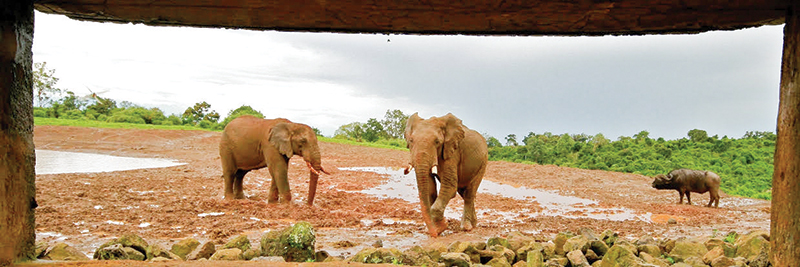
In the same issue of The Island, another report by Ifham Nizam, on the Human-Elephant conflict at Hambantota says an’ Elephant Management Reserve’ is essential for Hambantota. The real reason for that is no secret. It is due to the displacement of elephants from their natural surroundings.
Read the whole story of Mattala Rajapaksa International Airport (MRIA) below. It is an extract from a book, titled ‘From Nose to Tale’ By Captain Gihan A. Fernando, published last year.
‘Mattala: A Mistake?’
“Many years ago, when an alternative international airport to Colombo-Bandaranaike International (BIA), Katunayake was mooted, the Air Ceylon Pilots’ Guild began lobbying for China Bay, Trincomalee. Among other considerations, it was pointed out that because Sri Lanka is subject to both the Southwest and Northeast monsoons, at each of those seasons the coast on the opposite ‘quadrant’ of the island would generally be experiencing good weather, and vice versa.
But the guild’s request came too late, as the Sri Lanka Air Force (SLAF), which has a base at China Bay, had already stated that they had no objection for tall silos to be built at the site of the Prima flour mill, along the take-off and landing paths of China Bay’s single runway.
Another site was then suggested, near Nilaveli, 20 miles north of Trincomalee. In the 1970s, Nilaveli was fast developing into a popular tourist location. But that idea of a new airport was also dropped when Eelam separatist rumblings first began as early as 1978 when an Air Ceylon HS 748 on the ground at Ratmalana Airport was destroyed by a terrorist’s bomb, fortunately without injuries to anyone or loss of lives (Chapter 17).
The need for an alternative international airport in Sri Lanka was driven by a requirement by Ceylon’s then Air Navigation Regulations (ANR) for all airliners destined for BIA. In the event of being unable to land there for one reason or another, they must be carrying sufficient fuel to reach Madras (Chennai), the nearest ‘alternative’ to BIA that could accept large jets, plus fuel for another half-hour in the air. Establishment of a second international airport would obviate that burdensome necessity.
However, all aircraft ‘burn fuel to carry fuel’. For example, if an aircraft needed to have 10,000 kg of fuel onboard to comfortably reach BIA, based on flying time for that particular sector, the crew would have had to uplift 12,000 kg at the point of departure. Put simply, if a closer alternative airport was available, carrying less fuel would be a saving.
The ANRs of developed countries have been progressively updated to keep pace with advances in aviation, yet in Sri Lanka supplementary regulations to ANRs promulgated in 1955 remain in force.
When Air Lanka began operating Lockheed L-1011 TriStars, the first few were obtained from Canada. Accordingly, the airline followed operational procedures laid down by Air Canada in the Canadian operations manual. One such statement was that it was not necessary to always have fuel onboard to reach a designated alternate airport as it permitted the captain to arrive at the destination with a lesser amount of fuel, provided the destination airport predicted good weather and had at least two runways [author’s emphasis].
The theory behind the Canadians’ thinking was that even if one runway becomes unusable for whatever reason, a second was available as a fall-back. Interestingly, even today, when a new airline requests permission from the Civil Aviation Authority of Sri Lanka (CAASL) to operate to BIA, they must show that it can remove a disabled aircraft as soon as possible, so as not to obstruct the single runway leaving it unserviceable for an unduly protracted period.
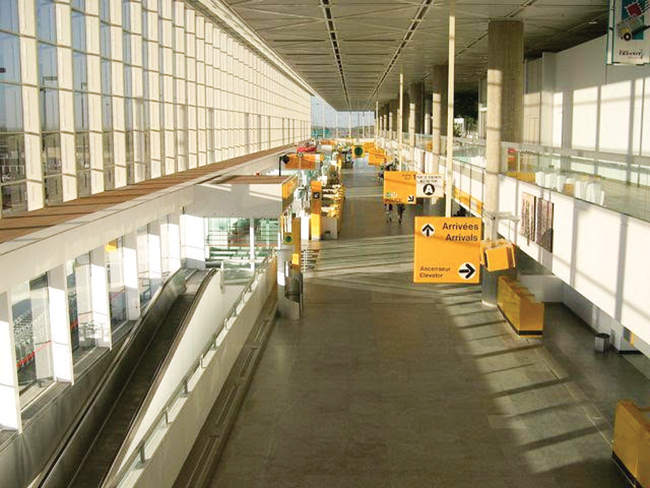
Near-deserted passenger terminal at Mirabel Airport Montreal, Quebec, Canada
When the runway at BIA was becoming outdated, having been constructed with Canadian aid and expertise in the late 1960s, it was decided that a new one should be constructed, this time with aid from Japan. The plan was for it to be built parallel to and north of the existing runway, with the latter narrowed and converted to a taxiway. That was when the Air Line Pilots’ Guild of Sri Lanka (ALPGSL) made representations to General D. Sepala Attygalle, secretary to the Ministry of Defence under whose purview Air Lanka was administered. They requested Attygalle to retain the old runway as a second runway, so that the requirement to carry extra fuel during times of good weather would no longer apply.
Separately, an expert from the International Civil Aviation Organization (ICAO) declared that the new and taller air traffic control tower was too close to the old runway, making its use illegal. On the other hand, what pilots wanted was a runway that would be used in ‘one-off’ situations, not on a regular basis. However, those plans didn’t proceed, and the status quo prevailed.
Another suggestion was for an international airport at Hingurakgoda, site of the present domestic and military Minneriya airfield. With Australian financial aid promised, there was a strong possibility of that proposition becoming reality. In fact, Singapore Airlines began drawing up Boeing 747 performance charts for use at the proposed new Hingurakgoda International Airport. However, some decision-makers believed that the estimated costs, based on Australian labour rates, were too high. Other critics pointed out that the same weather patterns affecting BIA would prevail at Hingurakgoda too. Eventually, that idea was also scrapped.
Then the SLAF decided to move its jet-fighter base to Sigiriya airport which, after extension, could have also accepted big passenger jets diverting from BIA. However, the Department of Archaeology objected to that move on the grounds of noise and vibration produced by jet engines adversely affecting the structure and amenity of Sigiriya Rock.
In response, Sri Lanka’s then President Chandrika Bandaranaike Kumaratunga granted the Director of Archaeology, Dr. Roland Silva, and chairman of the Urban Development Authority, Mr. Gemunu Silva, an eminent civil engineer, the use of a SLAF Bell 412 helicopter for two weeks, to travel to all parts of the island looking for a suitable location for an alternative international airport. The pair identified a potential 250-acre site within the triangle formed by Kekirawa, Dambulla and Habarana, consisting mostly of crown land requiring no major acquisition from resident farmers. A report was submitted to the president, but nothing eventuated from that exercise.
Second Runway at BIA
Meanwhile, many experts declared that the best option was indeed to construct a second runway at BIA. Accordingly, an extensive study was conducted by the International Air Transport Association (IATA) in conjunction with Dayantha Athulathmudali, a former deputy director of CAASL. They took into consideration such diverse factors as: the proximity to the Attanagalu Oya; relocating the SLAF base from Katunayake to another site; the effect on the Free Trade Zone (FTZ); and how the many churches and temples in the area may be affected. The primary question was whether the new, second runway, aligned parallel to the existing one (built with Japanese aid), should be situated north or south of it.
Going Down South
But before any decision on the future of expansion at Katunayake was made, it was announced by the then secretary to Ports and Civil Aviation that three potential sites in the Hambantota District were under consideration: Udamaththala, Gonnoruwa and Weerawila. Already, in 2007, an Environmental Impact Assessment (EIA) was conducted on behalf of Airport and Aviation Services (Sri Lanka) Ltd (AASL), on behalf of the Central Environmental Authority (CEA), by the Central Engineering Consultancy Bureau (CECB). The report stated that as there was already an airport at Weerawila, it was the most cost-effective location for the second international airport, and therefore the preferred of all three options examined.
When it was eventually announced that the second international airport would be built at Weerawila, many aviation ‘experts’ wrote to the newspapers claiming that the government had its priorities mixed, and that the best option was, still, to build a second runway at BIA. One writer even said that Weerawila is “one of the best examples of an ill-conceived project and chronic waste of tax-payers’ money.”
Similar sentiments were expressed in 1975, when the Canadian government built a new airport at Mirabel in Montreal to cater to the 1976 Olympics in that city. But after the Olympics, and for a variety of other economic reasons, Montreal-Mirabel Airport gradually fell into disuse over the next 27 years. In Sri Lanka, concerned parties believed that Weerawila would suffer an identical fate.
Near-deserted passenger terminal at Mirabel Airport Montreal, Quebec, Canada
When farmers discovered that the officially preferred site was Weerawila, and that their paddy lands would have to be acquired, organisations representing them resorted to legal action, forcing the government to revert to its second preference, Udamaththala, 13 km from Weerawila. Accordingly, 800 hectares (almost 2,000 acres) were cleared, and 44,000 hardwood trees chopped down on land that largely comprised elephant habitat. Although it was widely known that this site was in the middle of an elephant corridor, no-one protested – at least not immediately.
Yet the chairman of the Central Environmental Authority (CEA) subsequently said: “Since there was no objection from stakeholders, we gave permission to the Mattala project. I refute the allegations levelled against this institution by the environmentalists. Those allegations are made to mislead the people.”
The Mattala airport project started in 2009, but airline pilots, the ‘end users’, were not consulted. Nor was there any serious aeronautical or environmental research. For example, no wind studies were carried out, contrary to ICAO recommendations that before construction of a new airport commences a wind study must be conducted for at least five years, with readings taken at least eight times daily at frequent intervals. ICAO also stipulates, in Annex 14 to the ICAO Convention, that the potential for turbulence must be studied too. CAASL officers neither knew nor cared to determine the locations relative to each other of the proposed airport, Bundala Bird Sanctuary, and Yala National Park.
They even lacked a detailed map of the area, despite the author having donated a 1:50000 map to the CAASL.
In March 2007 the Sri Lanka Aeronautical Society (SLAeS) was formed to primarily serve as a think tank on aviation matters, with all aspects coming under its purview. When the first president of the SLAeS, who was an airline captain not working in Sri Lanka, pointed out the embarrassing truth that Mattala was going to be a bad investment, and that it was SLAeS’s duty to make it known, his warning was not well received by CAASL officials. Instead, because the Mattala airport project had to proceed at all costs, a parallel association was formed to take over some of the functions of the SLAeS with a view to deliberately shutting down the latter body – which soon happened. Sadly no-one, including officers of CAASL, was bold enough to speak up for fear of incurring the ire of political forces driving the establishment in that location of what would be named Mattala Rajapaksa International Airport (MRIA).
So much so that in 2017, by which time the viability of MRIA was shown to be far below expectations, the aviation minister declared to members of CAASL: “You people never told us”. In other words, claiming not to have been forewarned of what a farce the new, grossly under-utilised airport would turn out to be.
But there were other acts of omission. In fairness to CAASL, in 2007 its management was in a fluid state. The CAASL chairman’s contract hadn’t been renewed, and the director-general had taken leave of absence from CAASL as he had had a difference of opinion with the then chairman of Mihin Lanka, the newly formed government-backed regional airline. Consequently, CAASL officials were all acting in other capacities.
Nowadays at Mattala the air is often extremely turbulent on final approach, and it is a struggle even for pilots of big jets who occasionally fly in there. On some days lighter aircraft are also unable to land due to turbulence. Ironically, today the same farming organisations which took out an interim injunction on development of the Weerawila airport are affected by elephants displaced from the Mattala precinct.
Creating further environmental disruption and damage, trees at the future site of Mahinda Rajapaksa International Cricket Stadium, another grandiose government project built at Sooriyawewa in the Hambantota District, were felled in the name of progress. That stadium has also been rarely used for its intended purpose, and fallen into neglect and deterioration.
According to Nirmala Kannangara writing in the Sunday Leader, the Director of the Environment Conservation Trust, Sajeewa Chamikara, is reported to have said: “All attempts to educate the Aviation Ministry of the consequences that have to be faced in future when plans were drawn to construct an international airport at Mattala were ignored. Since this area is populated with migrant birds throughout the year, we told the government to shift the location to a place with less vulnerability, but their failure to listen to us has now brought several consequences.” Mr. Chamikara’s warnings were supported by many leading professionals who also wrote about the dire consequences to aircraft, passengers and crew in the event of bird strikes.
But building a new airport, suitably located or otherwise, is not the end of the process. The airport authority must continuously maintain it, at great expense. High safety standards must be met in a multitude of areas, not least aircraft inspection, servicing, overhaul and repair.
All components of its infrastructure require constant attention, for example such items as: maintenance of landing visual aids; provision of spare parts; adhering to a lighting maintenance schedule for general and basic maintenance of approach, runway and taxiway lighting systems; aircraft docking systems including their specific light maintenance procedures; cleaning procedures for lights; light intensity measurements; removal of water (condensation); maintaining signs and painted markings. Painting runway centre lines alone requires more than 1,000 gallons of white paint.
Runway and tarmac surfaces need constant maintenance and repair, with attention paid to joints and cracks in concrete and bituminous pavements. ‘Gardening’ activities must be undertaken regularly to keep grass and other unpaved areas neat and free of excess growth. Building maintenance must encompass such aspects as lighting and other electrical equipment, communication facilities, air conditioning systems, automatic doors, baggage conveyor belts, baggage claim units, passenger boarding bridges, people lifts (elevators), people movers (escalators and travelators), fixed fire protection installations. Not least, conducting regular safety meetings. The list goes on.
In view of the above, the question must be asked: did the authorities get their priorities mixed up? Their rationale for MRIA’s creation and existence to earn revenue as an emergency refuge for overflying traffic between two other destinations is no more than a myth. BIA can satisfy the same requirement. Apart from a second runway at BIA, the focus should have been on improving domestic air services, for locals and tourists, by developing existing airports, or creating new facilities, at Jaffna, Batticaloa and Weerawila.
It has to be said, though, that Jaffna has since attained the status of an international airport, as have Ratmalana and Batticaloa, with planning already underway for Hingurakgoda to join Sri Lanka’s multitude of ‘international gateways’, taking the total to six. Yes, count them – six international airports on an island the size of Tasmania, Australia. Overkill? Political grandstanding? Parochialism? Nest-feathering? You be the judge.
At the time of writing, 11 years have elapsed since the MRIA ‘white elephant’ was commissioned, yet it continues to suck up taxpayers’ money better than any leech could. Today’s crop of so-called ‘aviation experts’ are unable to come up with an acceptable solution to turn MRIA into a profitable enterprise. Meanwhile, people in high places with vested interests in and ‘connections’ with the regime that built that wasteful airport in the first place continue to sing its praises while suggesting possible alternatives for using MRIA as an aviation ‘hub’. But that is nothing more than pie in the sky. Or like the emperor’s new clothes in the folktale by Hans Christian Andersen.
So, while MRIA’s runways see more use by trespassing elephants – across whose traditional migratory path the airport violated – than airliners with fare-paying passengers, the question must be asked: what can be done with MRIA? Will the chairman and director-general of CAASL, in conjunction with AASL and environmentalists be able to resolve this expensive problem and face the situation squarely? Or will the nation have to wait even more years for a satisfactory solution than it took for the stewards of Mirabel International Airport, Montreal, Quebec, Canada? “
***
A reasonable solution for Mattala Rajapaksa International Airport
Flying has been this Seeya’s life for over fifty years and he never thought he would be saying this. In Kenya, there is a hotel in the jungle called ‘The Ark’, built near a waterhole where all kinds of animals come to drink, day and night. There are flood lights trained on to the water hole at night. There are animal spotters who activate buzzers in the hotel rooms, depending on the type of animal. The visitors could come to large viewing areas to watch them. The Airport and Aviation Sri Lanka, the Tourist Industry and the Wild Life Conservation Department could remove the electric fencing and reopen the waterholes that were closed to prevent birds from nesting and in short throw it open to the elephants again. There is also an airport in Ecuador, which has been turned into a park. The terminal building has large glass windows that would be great for viewing and photographing elephants. A large water hole by the parking apron could attract more elephants. The Control Tower could be used for elephant spotting. Converting Mattala into a Tourist Hotel will create a money spinner. Let us ‘Bite the bullet’ and cut our losses in these difficult times. As experts say “Mistakes pave the way for innovation, growth and creativity”
The best radio navigational and landing aids have been installed at Mattala and remain largely unused, while Ratmalana, the cradle of Civil Aviation, remains technically deficient. AASL could therefore reinstall some of the Mattala navigational aids like the Very High Frequency Omnidirectional Range/ Distance Measuring Equipment (VOR/DME) and the Instrument Landing System (ILS) at the Colombo International Airport, Ratmalana, at minimum cost. The other ILS could be installed at KKS, Batticaloa or Weerawila airports which also lack Navigational Radio aids.
The Human-Elephant conflict could be greatly resolved if Mattala and Suriya Wewa are given back to the jungle. The SLAF could initiate intense seed bombing to replace the 44,000 trees that were cut. It may take hundreds of years to recover. Let us forget our egos and think out of the box. After all, to ‘Err is human’ (Cicero).
by Guwan Seeya
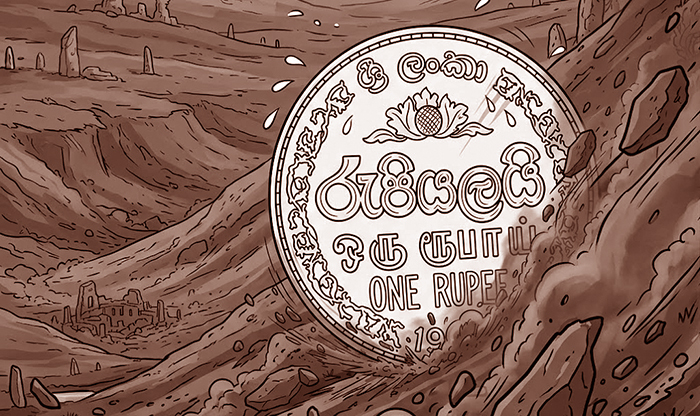
The gradual depreciation of the Sri Lankan rupee is one of the most serious economic signals facing the country today. It is not merely a change in the exchange rate. It is a powerful reflection of a nation’s economic strength, fiscal discipline, investor confidence, political stability, and the future hopes of its people.
When a country’s currency loses value, it indicates deeper weaknesses in production capacity, foreign exchange earnings, economic management, and institutional credibility. In this sense, the depreciation of the rupee is not an isolated financial issue. It is a factor that further deepens Sri Lanka’s already fragile economic, social, and political crisis.
Only a few years ago, around Rs. 130 or Rs. 150 was sufficient to buy one US dollar. However, during the 2022 economic crisis, the exchange rate exceeded Rs. 360 per dollar at certain points. Although some stability has returned since then, it would be misleading to say that the real strength of the rupee has been fully restored. The simple meaning is this: Sri Lanka now needs far more rupees than before to import essential goods such as fuel, medicine, food, machinery, and raw materials.
Inflationary Pressure in an Import-Dependent Economy
The first and most direct consequence of rupee depreciation is the increase in the general price level of goods and services. In other words, it fuels inflation. Sri Lanka remains an economy that depends significantly on imports. According to World Bank data, in 2024, imports of goods and services accounted for around 22.5% of Sri Lanka’s Gross Domestic Product.
Therefore, whenever the rupee weakens, the cost of imports rises. Fuel prices increase. Transport costs go up. Industrial production costs become higher. Eventually, this burden falls directly on the daily lives of ordinary people.
In September 2022, inflation in Sri Lanka, measured by the Colombo Consumer Price Index, reached 69.8%, while food inflation climbed to 94.9%. These were not just numbers. They represented real suffering in family food budgets, children’s education, healthcare expenses, and the living standards of the middle class.
As a result, poverty also increased. According to World Bank estimates, urban poverty rose to 15% in 2022, while rural poverty increased to 26%. The data also showed that more than half of the population in estate communities lived below the poverty line.
The Silent Crisis of Fixed-Income Earners
Those most affected by rupee depreciation are people who depend on fixed salaries. Their income may remain the same in numerical terms, but its real purchasing power continues to decline.
A person earning Rs. 100,000 per month today finds it extremely difficult to maintain the same standard of living that was possible a few years ago. The rising cost of food, housing, education, healthcare, and transport has weakened the middle class at an alarming rate.
This situation can be described as “working poverty.” A person may be employed, yet unable to maintain a dignified standard of living from that income. This is a serious threat to social stability, because in any country, a strong middle class is one of the main foundations of social balance and national resilience.
The Collapse of Youth Hope and the Outflow of Human Capital
This economic pressure also damages the hopes of the younger generation. When young people begin to lose faith in the idea that education, effort, and talent can help them build a future within their own country, they naturally begin to think of leaving the country instead of helping to rebuild it.
According to the Sri Lanka Bureau of Foreign Employment, 310,948 people left for foreign employment in 2022. By December 13, 2024, the number had again risen to 300,162. In the first six months of 2025 alone, 144,379 people had left for foreign employment.
In the short term, this may increase foreign exchange earnings through remittances. However, in the long term, it creates a serious challenge for the country. When skilled doctors, engineers, IT professionals, technicians, professionals, and graduates leave in large numbers, Sri Lanka’s human capital, innovation capacity, and productive strength are weakened.
External Debt and the Fiscal Crisis
The depreciation of the rupee also has a serious impact on public finance. A large share of Sri Lanka’s external debt is denominated in US dollars. Therefore, when the rupee weakens, the amount of rupees required to repay the same dollar debt automatically increases.
For example, when the exchange rate is Rs. 200 per dollar, a debt of USD 1 billion is equal to Rs. 200 billion. But if the dollar rises to Rs. 300, the same debt becomes Rs. 300 billion. This shows how the debt burden can increase even without taking new loans, simply because the rupee has weakened.
According to Treasury debt data at the end of 2024, Sri Lanka’s total external debt was around USD 36.7 billion. IMF data also shows that Sri Lanka’s public debt stood at 125.8% of GDP in 2022. Although it declined to 105.7% in 2024, it still remains at a very high level.
In such a situation, the government is often forced to increase taxes, reduce public expenditure, and limit essential services. This again weakens living standards, increases the cost of doing business, and reduces confidence in the economy.
From Economic Crisis to Political Crisis
People often see the collapse of a currency as a symbol of government failure. When the cost of living cannot be controlled, when the tax burden rises, when job opportunities decline, and when uncertainty about the future grows, public confidence begins to collapse.
The 2022 “Aragalaya” is a powerful example of this. It was not merely a political protest. It was a moment when an economic crisis transformed into a social and political crisis. When economic pressure increases, people are often drawn towards populist politics that promise quick and simple solutions. In such an environment, short-term popular decisions can easily take priority over long-term reforms.
The Root Problem: A Weak Economic Structure
It is not enough to understand the depreciation of the rupee merely as an event in the foreign exchange market. It is a warning sign of deep structural weaknesses in Sri Lanka’s economy.
For decades, the country has depended more on consumption than production, more on imports than exports, and more on borrowing than income generation. Political decisions were often shaped by short-term popularity rather than sound economic reasoning. The result is the structural crisis Sri Lanka faces today.
What Should Policymakers Do?
This problem cannot be solved through temporary monetary controls alone. Spending foreign reserves to artificially defend the rupee is not a sustainable long-term solution. What Sri Lanka needs is to give the rupee a real economic foundation.
For that, policymakers must focus on increasing export earnings, strengthening import-substitution industries, maintaining fiscal discipline, broadening the tax base in a fair manner, and creating a stable policy environment for foreign investment.
Sri Lanka should not continue to depend only on tea, garments, tourism, foreign employment, and traditional service exports. The country must build new sources of foreign exchange through information technology, professional services, value-added agriculture, pharmaceutical production, light manufacturing, higher education services, and innovation-driven enterprises.
At the same time, corruption must be controlled, public institutions must regain credibility, policy consistency must be protected, and the business environment must be simplified. The stability of the rupee cannot be secured through Central Bank interest rate policy alone. It requires rebuilding the productive economy, export capacity, fiscal credibility, and public confidence.
The depreciation of the rupee is not merely a decline in the value of money. It is a mirror that reflects the economic strength, political quality, and social confidence of the nation.
Protecting the rupee does not mean artificially controlling the exchange rate. It means rebuilding the country’s productive strength, institutional credibility, fiscal discipline, export capacity, and the future hopes of its people.
Sri Lanka’s real challenge lies there. The rupee becomes strong when the economy becomes strong. The economy becomes strong when the country produces. The country produces when people, businesses, and investors have confidence in the future. Rebuilding that confidence must become one of Sri Lanka’s most urgent national priorities.
by Prof Ranjith Bandara

Italian Navy’s ITS GIOVANNI DELLE BANDE NERE departs following replenishment visit

PM meets Secretary-General of the Commonwealth of Nations

Tennessee execution called off after failed lethal injection

Landslide early warnings issued to the Districts of Colombo, Gampaha, Kalutara, Kegalle, Nuwara Eliya and Ratnapura

Minor flood situation likely to occur within the next few hours in the low-lying floodplain areas of the Kalu River
Flood warning issued to low lying areas of the Aththanagalu Oya and Uruwal Oya valleys

‘Dates have the highest sugar content to fight Coronavirus’

Sunday Island 27 December – Headlines

#SundayIsland 17th December – Headlines

Sunday Island – 28th March

Sunday Island Headlines – 21 March

Sunday Island – 21st February – Headlines
-

 Features5 days ago
Sri Lankan Airlines Airbus Scandal and the Death of Kapila Chandrasena and my Brother Rajeewa
-
 News6 days ago
Lanka’s eligibility to draw next IMF tranche of USD 700 mn hinges on ‘restoration of cost-recovery pricing for electricity and fuel’
-

 News5 days ago
Kapila Chandrasena case: GN phone records under court scrutiny
-

 News5 days ago
Rupee slide rekindles 2022 crisis fears as inflation risks mount
-
 Features3 days ago
Octopus, Leech, and Snake: How Sri Lanka’s banks feast while the nation starves
-

 Business5 days ago
Expansion of PayPal services in Sri Lanka officially announced
-
 News1 day ago
Steps underway to safeguard Sri Lanka’s maritime heritage
-

 News6 days ago
Court orders further arrests in alleged USD 42 Mn NDB fraud case