
News
COPE recommends closure of loss-making overseas branches of SLIC


By Saman Indrajith
The Committee on Public Enterprises (COPE) will ask the Ministry of Foreign Affairs to take steps to close two branches of the Sri Lanka Insurance Corporation in the Maldives and Seychelles, as they are making huge losses.
The COPE made that decision during a meeting to review the Auditor General’s reports and current performance of the Sri Lanka Insurance Corporation (SLIC) Limited for the financial years 2019 and 2020.
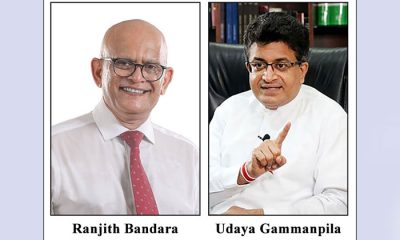
The COPE Chair, SLPP MP Ranjith Bandara, also asked SLIC officials why it has still not submitted its corporate annual report, for the year 2021, to Parliament, and said that by delaying the annual reports, the institution is attempting to undermine the authority of the Parliament. Accordingly, COPE members pointed out that due to the delay in the annual reports, the SLIC has failed to get a proper understanding of the annual financial situation of the affiliated institutions.
The Chief Executive Officer of the Insurance Corporation said that the relevant report has been submitted to the Ministry of Finance. Officials pointed out that the delay was due to it having to be translated. Accordingly, the COPE recommended that all annual reports, which are overdue, be submitted within one month.
The Committee also drew attention to the failure to close the two branches established in the Maldives and Seychelles Islands, which have suffered huge financial losses. The chief financial officer of the corporation pointed out that since the respective branches are not functioning at the moment, money are not spent on them and the money, currently available, has been deposited in the Bank of Ceylon branches in the respective countries. He also mentioned that after the completion of the tax clearance work, by the Inland Revenue Tax Authority of Maldives, the closure of the relevant institution can be completed. The Chairman mentioned that COPE will take steps to send its observations to the Ministry of Foreign Affairs in order to complete the said work.
The Committee also paid attention to the lease agreement related to the land and building, currently used by the President’s Secretariat, belonging to the Sri Lanka Insurance Corporation Limited. It was revealed that the property, with an estimated fair value of 798,000,000 rupees, which was given to the Presidential Secretariat on tax basis, was given back to the Corporation last year, as agreed, but due to the Covid pandemic, it was revealed that the Presidential Secretariat took it again.
The Secretary to the Ministry of Finance stated that during the discussion between the two parties, the Presidential Secretariat agreed to pay the arrears of rent, in installments, for the period of use of the land, in question, and to enter into a new agreement, from January 2023.
The COPE Chair informed the Secretary to the Ministry of Finance to submit a report on the same within two weeks.
The COPE also paid attention to the progress of investigations against fake brokers related to the Sri Lanka Insurance Corporation. Complaints were made to the Criminal Investigation Division about this, in 2014, and the Committee inquired about its progress and current status.
The Chief Executive Officer mentioned that this incident took place when the Insurance Corporation was privatized and it was not looked into because a complaint had been made to the Criminal Investigation Division. However, he informed that the situation can be investigated and reported.
The COPE thus instructed the Chair of Sri Lanka Insurance Corporation to submit a report in this regard, within two weeks.
Moreover, the COPE inquired from officials regarding not separating the long-term insurance business and the general insurance business into two separate companies within the Sri Lanka Insurance Corporation structure.
The Chair pointed out that according to a comparative analysis done by the Committee, though the life insurance market in Sri Lanka has grown by 21% in 2021, the life insurance market of the Sri Lanka Insurance Corporation has grown only by 14%. The Chair further stated that all other insurance companies in Sri Lanka run long-term insurance and general insurance separately.
The Chair of the Corporation stated that though it is not necessary to separate it as a government-owned institution, but the Ministry has been requested to give a proper decision about it. The Committee discussed this at length and the Chair gave recommendations to the Secretary to the Ministry of Finance to give a decision on this immediately.
The COPE further focused its attention on the market share growth strategies of the Sri Lanka Insurance Corporation. Officials present mentioned that although there was some setback in their market share last year, they are currently working to increase it. Therefore, they pointed out that there has been significant growth in the life insurance market as of January this year compared to last year.
Pointing out that the total assets of the Sri Lanka Insurance Corporation are 184 billion rupees, the COPE Chair recommended to the CEO of the Corporation to submit a report on the future trade promotion strategic plans of the Insurance Corporation to the Committee as soon as possible.
The COPE Members pointed out that the policyholders are inconvenienced due to the fact that the insurance companies do not properly inform the people while getting the insurance cover. The Members also pointed out that the insurance holders are in a lot of trouble, especially when they fail to submit the original copy of the insurance bill. Accordingly, the Chair informed that steps should be taken to inform the policyholders properly.
The Committee also directed its attention towards the staff of the Sri Lanka Insurance Corporation. The CEO mentioned that the corporation employs 2535 permanent staff and 232 employees, on contract basis. He further mentioned that steps have been taken to introduce a task factor index to evaluate the work performance levels of employees. COPE directed the Chair of the Insurance Corporation to conduct a full human resource audit of the Corporation and submit a report to the committee, within six months.
The COPE also questioned the top management of the Insurance Corporation about the necessity of setting up a body, called the Management Service Insurance Company, to decide the salary scales of the top management of the Insurance Corporation. It was disclosed that 700 million rupees will be spent to pay the salaries of 93 people in the top management of the institution.
Officials mentioned that since the insurance market is highly competitive, it is imperative to maintain the confidentiality of top management’s ratings. The COPE Chair suggested to the Corporation Chairman to convey a correct opinion on the running of this company, within two weeks.
Pointing out that the Corporation has not done a proper evaluation of the performance of the branches of the Sri Lanka Insurance Corporation, the COPE Chair directed that the correct information, regarding the relevant branches, be provided to the Auditor General.
The IT network used by the Insurance Corporation was also discussed at length, and COPE inquired about the information technology network proposed to be newly established and the selection of institutions for it.
In 2015, the Foreign Employment Bureau took steps to introduce an insurance system for foreign workers in Arab countries and it had also received Cabinet approval to do it without calling for tenders. It was given to the Insurance Corporation and the Committee questioned at length about the Corporation calling for bids from a single party and giving them a bid value of $100. According to the audit conducted by the Auditor General, the Sri Lanka Insurance Corporation does not have any information about this transaction, which resulted in a loss running to millions.
The CEO of the Corporation informed that his Corporation has not introduced an insurance system and only administrative work has been done and payment has been received only for that. Accordingly, the COPE Chair informed that when the Foreign Employment Bureau is called before the Committee again, steps will be taken to call the officials of the Insurance Corporation.
Furthermore, the COPE recommended to the CEO of the Corporation to investigate the information and submit a detailed report with documents within two weeks.
Apart from the stated, the COPE Chair informed the Auditor General to provide a special audit report related to the mega branch building, onKinsey Road, Borella, owned by the Insurance Corporation.







“No shipment for 10 days; seas off western coast will become rough by April end”
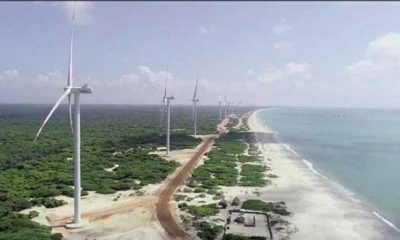
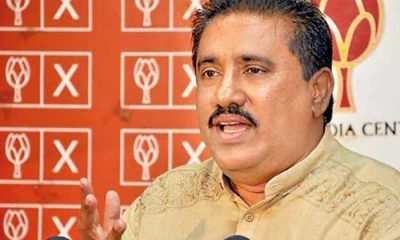
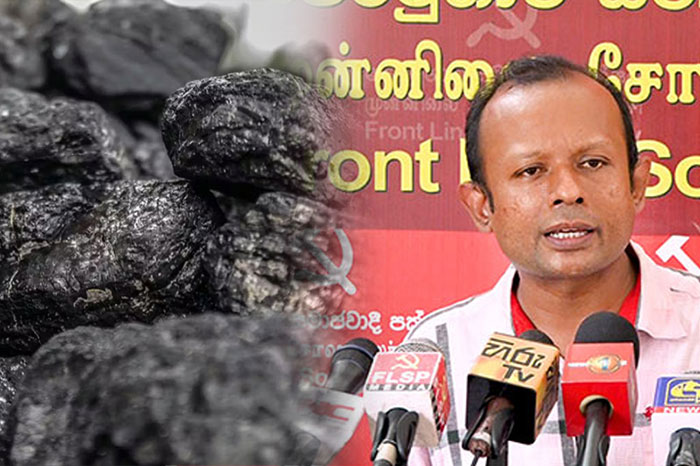
Education Secretary of the Frontline Socialist Party (FSP) Pubudu Jayagoda says the Indian company which secured a tender to supply coal for electricity generation this year has delivered only 13 of the 25 shipments required and no vessel has arrived in Sri Lanka for the last 10 days or so.
Jayagoda said so while addressing the media during a protest held in Colombo yesterday.
Jayagoda said the Indian company Trident Chemphar, which secured the tender to supply 25 coal shipments for 2026, had placed the country’s coal stocks at risk.
Although all 25 coal shipments are required to be unloaded before the end of April, only 13 vessels have arrived in Sri Lanka so far, according to Jayagoda. He also claimed that no shipment had arrived during the first week of March, adding that coal vessels had not arrived for about 10 days.
Jayagoda warned that the situation could endanger the country’s energy supply as the seas off the western coast usually turn rough by the end of April, disrupting unloading operations.
According to Jayagoda, a report submitted by the Public Utilities Commission of Sri Lanka to the Parliamentary Oversight Committee on infrastructure and strategic development, power cuts may become necessary from August even if the country falls short of five shipments unless electricity is generated using costly diesel-powered thermal plants.
Jayagoda also alleged irregularities in the tender process, claiming that the government had changed tender specifications and delayed the tender process by about four months, possibly to allow the Indian company time to register and secure performance guarantees.
He further alleged that the coal supplied by the Indian company was substandard.
Jayagoda questioned why the tender had not been cancelled despite several shipments allegedly failing to meet quality standards and why no investigation had been launched.He asked why legal action had not been taken against the company despite supply disruptions.
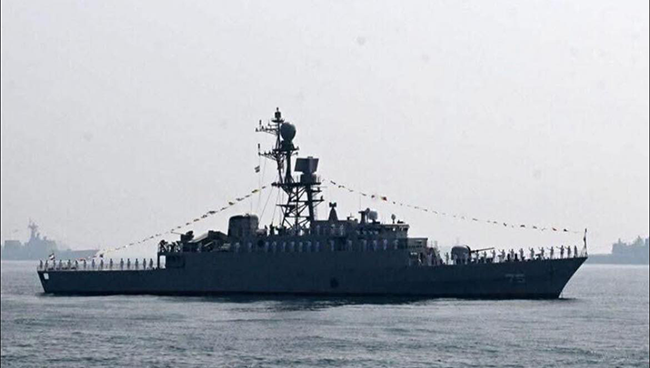
The US Department of State has said that Washington respects Sri Lanka’s sovereignty in handling matters relating to the Iranian warship IRIS Bushehr and its crew, according to agency reports, quoting a State Department Spokesperson. He has said the final decision regarding the vessel, its crew and the rescued Iranian sailors rests with Sri Lanka in accordance with its domestic laws and international legal obligations.
The statement follows comments by Foreign Minister Vijitha Herath that Sri Lanka was looking after 32 sailors rescued from the Iranian frigate IRIS Dena under Colombo’s international treaty obligations.
The frigate was sunk by a US submarine off Sri Lanka’s southern coast on Wednesday during escalating hostilities involving the United States and Iran.
Sri Lanka’s Navy conducted rescue operations, following the incident, recovering 84 bodies.
Asked whether Colombo was under US pressure not to repatriate the Iranian sailors, Herath said Sri Lanka had taken all actions in accordance with international law.
Sri Lanka also provided safe harbour to the second Iranian warship, IRIS Bushehr, and evacuated its 219 crew members a day after the Dena was torpedoed. The vessel was taken to the port of Trincomalee after reporting engine problems.
Citing an internal cable, Reuters reported that Washington had urged Sri Lanka not to repatriate the Iranian sailors. However, the State Department spokesperson reiterated that the disposition of the crew and survivors was a matter for Sri Lanka to decide, adding that the United States respects Sri Lanka’s sovereignty in managing the situation.
Meanwhile, India allowed a third Iranian warship, IRIS Lavan, to dock in a port on humanitarian grounds after it reported operational difficulties.
The ship docked at the port of Kochi, where many of the crew, including young cadets, were disembarked and transferred to a nearby facility.
President Anura Kumara Dissanayake said Colombo would follow the provisions of the Hague Convention, which requires neutral states to detain combatants of warring parties until the end of hostilities.
A senior administration official said Sri Lanka was in discussions with the International Committee of the Red Cross regarding the treatment of survivors from the torpedoed vessel. International humanitarian law would apply to the wounded, who could be repatriated if they requested it, the official added.
Iranian diplomats in Colombo have requested the return of the remains of sailors killed in the attack to Iran.
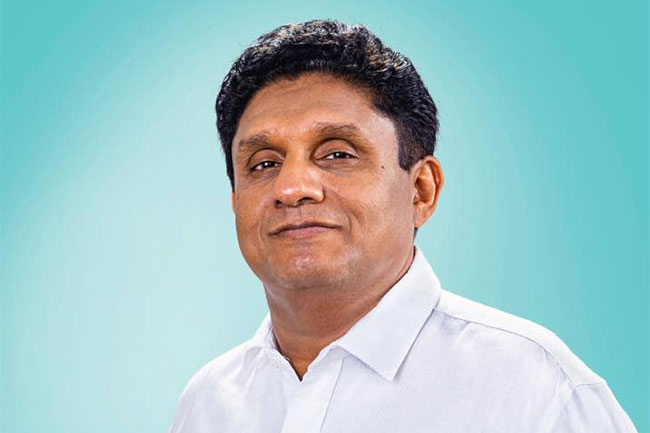
Opposition and SJB leader Sajith Premadasa, emphasised the critical need for the Indian Ocean region to remain peaceful and not become part of any conflict, said a news report published by NDTV yesterday.
It said: As the Iran-Israel war enters its second week, the theatre of the war has expanded dramatically, reaching the waters of Sri Lanka. With the sinking of Iranian warship IRIS Dena in international waters off Lanka’s coast and the docking of a second Iranian vessel, IRIS Busheher, Colombo has become embroiled in a conflict where it seeks to remain only a neutral bystander.
Speaking with NDTV, Sajith Premadasa, Leader of the Opposition in Sri Lanka emphasised the critical need for the Indian Ocean region to remain peaceful and not become part of any conflict.
“The Indian Ocean has on successive occasions been declared a peaceful area and should remain so,” said Premadasa.
The Sri Lankan government has said that it will attend to all survivors of the ill-fated IRIS Dena and IRIS Busheher as per international protocols and norms. Sri Lankan President Anura Kumara Dissanayake said his country had a “humanitarian responsibility” to take in the crew of the vessel, which was allowed to dock at Trincomalee in Northern Sri Lanka.
Premadasa, who is the leader of the opposition party SJB, called on all parties to cease the ‘asymmetric warfare’. He cautioned that the widening conflict would have devastating consequences for smaller countries like Sri Lanka, which is still reeling from its worst economic crisis in 2022.
“The Middle East conflict is already spreading to other countries, and this is having an impact on Sri Lanka and Sri Lankan people,” Mr Premadasa told NDTV.
A third Iranian vessel that was in the Indian Ocean, IRIS Lavan, has docked at Kochi in India. India has said it was a “humanitarian call” after the vessel sent out a distress call.

Iran names Khamenei’s son as new supreme leader after father’s killing

Oil prices jump above $100 for first time in four years

Dry weather will prevail over the island

FSP warns of possible coal shortage

Repatriation of Iranian naval personnel Sri Lanka’s call: Washington

Indian Ocean must remain peace zone: Sajith

‘Dates have the highest sugar content to fight Coronavirus’

Sunday Island 27 December – Headlines

#SundayIsland 17th December – Headlines

Sunday Island – 28th March

Sunday Island Headlines – 21 March

Sunday Island – 21st February – Headlines
-

 News3 days ago
University of Wolverhampton confirms Ranil was officially invited
-

 News4 days ago
Legal experts decry move to demolish STC dining hall
-

 News3 days ago
Female lawyer given 12 years RI for preparing forged deeds for Borella land
-

 News2 days ago
Peradeniya Uni issues alert over leopards in its premises
-

 Business5 days ago
Cabinet nod for the removal of Cess tax imposed on imported good
-
 News3 days ago
Library crisis hits Pera university
-

 News2 days ago
Wife raises alarm over Sallay’s detention under PTA
-
 Business5 days ago
War in Middle East sends shockwaves through Sri Lanka’s export sector