
News
Ex-COPE chief denies he was behind prorogation of Parliament


… Dissident SLPPers express contradictory views
By Shamindra Ferdinando
Prof. Ranjith Bandara, MP, yesterday (09) said that there was absolutely no basis for claims that he was asked to step down as Chairman of the Committee on Public Enterprises (COPE) by anyone.
The SLPP National List MP said so when The Island sought his response to Pivithru Hela Urumaya (PHU) leader Udaya Gammanpila’s claim that President Ranil Wickremesinghe prorogued Parliament thus dissolved over 60 parliamentary committees just to get rid of one MP who refused to step down.
Colombo District MP Gammanpila made the declaration in Parliament on Thursday (08). National Freedom Front (NFF) leader Wimal Weerawansa, MP, recently alleged that President Wickremesinghe prorogued Parliament to save Prof. Bandara, embroiled in a controversy over his handling of the COPE investigation into Sri Lanka Cricket (SLC).
Declaring that he hadn’t been asked to quit, under any circumstances, the academic pointed out that the two Opposition MPs contradicted each other.
President Wickremesinghe prorogued Parliament in accordance with the powers vested in him under Article 70 (1) of the Constitution with effect from midnight January 26. The fifth session of the Ninth Parliament commenced on 07 February. COPE is among the committees that had been dissolved due to the prorogation, the second time since Wickremesinghe became President after the Parliament voted him in to complete the balance term of the elected President Gatabaya Rajapaksa after apparent foreign instigated violent protests ousted him.
Prof. Bandara dismissed Samagi Jana Balawegaya (SJB) and Opposition Leader Sajith Premadasa’s demand for him to give up leadership of COPE over the SLC controversy as nothing but political rhetoric.
Several members of the Opposition asked Prof. Bandara to step down, at least temporarily, to facilitate the probe on SLC in respect of the Auditor General’s report on the disastrous T 20 cricket tour of Australia. The Opposition subsequently stepped up pressure on Prof. Bandara in the wake of revelation that his son participated in COPE proceedings as well as his previous dealings with SLC. Prof. Bandara is on record as having said that his son Kanishka attended COPE proceedings in his capacity as co coordinating secretary to the COPE Chairman.
Addressing Parliament on Thursday the PHU leader pointed out that the Parliament elected in 1977 lasted till 1989-a period of 12 years but there were only eight sessions throughout that period. The former Power and Energy Minister said that prorogation of Parliament disrupted many committees and such a course of action to remove chairman of one committee must be a world record.
However, dissident SLPP National List MP Prof. G. L. Peiris told a media briefing early this week, at his Kirula Road residence, that the prorogation of Parliament was meant to disrupt the workings of six parliamentary committees which dealt with public finance.
The dissolved mechanisms were the Public Finance Commission, the Public Accounts Committee, Committee on Public Enterprises, Economic Stabilization Committee, Ways and Means Committee and Banking Sector and Financial Management Committee. According to Prof. Peiris, out of 91 committees in operation in Parliament, 64 have been dissolved.








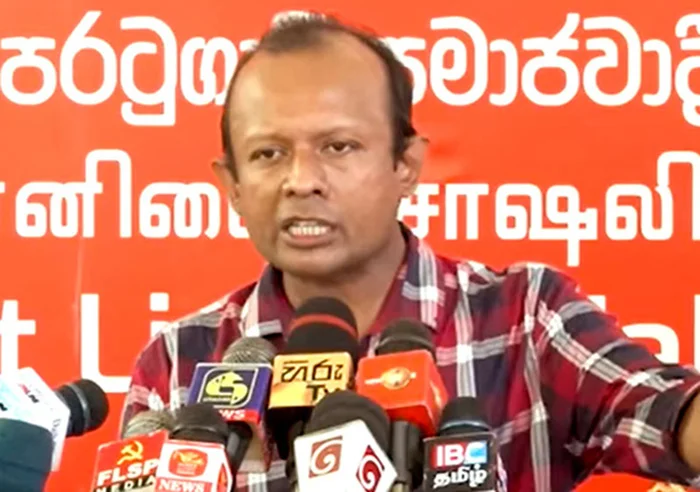
The Frontline Socialist Party (FSP) yesterday accused the government of seeking to use the proposed Protection of the State from Terrorism Act (PSTA) to suppress popular political activity, claiming that some of its provisions were more repressive than those of the Prevention of Terrorism Act (PTA).
FSP Education Secretary Pubudu Jayagoda told a media briefing, in Nugegoda, that the definition of terrorism in the Bill was so broad that it could be used to label almost any form of popular political activity as terrorism.
He said the Bill’s approach to defining terrorism was based largely on attempts to compel a government, or an international organisation, to do, or refrain from doing something, rather than on internationally recognised criteria, such as killings, causing serious bodily harm, kidnapping or acts intended to spread terror among the public.
Jayagoda also alleged that the Bill transferred substantial powers from the judiciary to the executive, while extending powers of arrest, investigation and detention to the armed forces, in addition to the police.
He claimed that the government had sought to portray the Bill as a replacement for the PTA while retaining or introducing provisions that could facilitate political victimisation and repression.
The FSP also questioned the government’s decision to proceed with the Bill, despite having previously sought public views on an earlier draft.
Jayagoda said a draft had been published earlier this year, with the period for public submissions ending on February 28, but the Bill subsequently gazetted was essentially the same draft with some provisions rearranged.
Jayagoda also referred to a letter reportedly sent by Attorney-at-Law Saliya Peiris, a member of a Committee, chaired by President’s Counsel Rienzie Arsecularatne, that had been appointed to draft the legislation. He said Peiris had stated, in the October 06 letter, that changes had been made to the draft prepared by the Committee.
“This means that even the Committee, appointed to prepare the Bill, was a deception,” Jayagoda alleged.
He said that the PSTA was fundamentally similar to the Anti-Terrorism Bill introduced by the previous government, in 2023, which the National People’s Power (NPP) opposed and challenged in court.
“If the NPP opposed that Bill then and is now bringing the same legislation before Parliament, the government must explain its position,” he said.
Jayagoda called on NPP MPs to oppose the PSTA in Parliament and urged trade unions and other groups to build a broad public movement against the legislation.
He challenged the government to an open debate on the Bill.
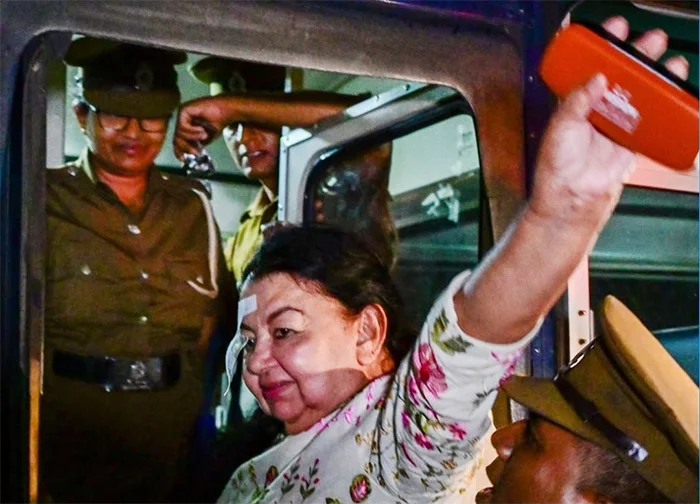
Former First Lady Shiranthi Rajapaksa was yesterday remanded until 13 October after being produced before the Colombo Magistrate’s Court following her arrest by the Commission to Investigate Allegations of Bribery or Corruption (CIABOC).
Shiranthi, wife of former President Mahinda Rajapaksa, was arrested at her residence on Poorwarama Road, Kirulapone, after CIABOC officers recorded a statement from her for nearly two hours.
According to the CIABOC, the arrest was made over allegations that Rs. 10 million obtained from the National Savings Bank through the Siriliya Saviya organisation was misappropriated.
The money was allegedly obtained to provide a Computed Tomography (CT) scanner to the children’s hospital. Investigators allege that the scanner was not provided and that the funds were instead unlawfully used.
CIABOC is investigating alleged offences under the Public Property Act and corruption-related provisions in connection with the transaction and other financial activities involving Siriliya Saviya, which was headed by Rajapaksa.
Rajapaksa returned to Sri Lanka on Monday night on a flight from Malaysia after travelling overseas for medical treatment. She left for Singapore on 16 September after being admitted to a private hospital in Colombo on 15 September following an illness.
She had been due to appear before the Financial Crimes Investigation Division (FCID) on 13 October in connection with its investigation into the financial affairs of Siriliya Saviya.
Meanwhile, her lawyers filed an anticipatory bail application before the Maligakanda Magistrate’s Court on Monday, seeking an order preventing her arrest in connection with the FCID investigation.
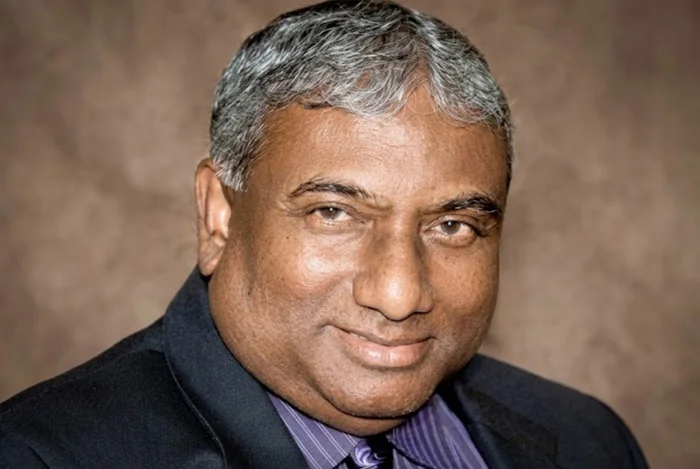
Former National Savings Bank (NSB) Chairman Pradeep Kariyawasam was yesterday granted bail by the Colombo Magistrate’s Court following his arrest by the Commission to Investigate Allegations of Bribery or Corruption (CIABOC).
Kariyawasam, husband of former Chief Justice Shirani Bandaranayake, was arrested in connection with the Bribery Commission’s investigation into the ‘Siriliya Saviya’ account linked to former First Lady Shiranthi Rajapaksa.
The investigation concerns financial activities involving the Siriliya Saviya initiative, which was headed by Rajapaksa, wife of former President Mahinda Rajapaksa.
CIABOC is continuing investigations into the alleged financial irregularities relating to the account.

Showers above 100 mm are likely at some places in the Western, Sabaragamuwa, Central, Uva and Southern provinces and in Anuradhapura district

PSTA worse than PTA: FSP

Shiranthi R remanded until 13 Oct.

Former NSB Chairman Kariyawasam granted bail

Katchatheevu row: India SC urges fishermen to avoid Sri Lankan waters

Remembering Juvenal, Coke, Acton and Machiavelli

‘Dates have the highest sugar content to fight Coronavirus’

Sunday Island 27 December – Headlines

#SundayIsland 17th December – Headlines

Sunday Island – 28th March

Sunday Island Headlines – 21 March

Sunday Island – 21st February – Headlines
-

 Editorial6 days ago
Colombo Port drug bust: The plot thickens
-

 Features4 days ago
The first woman in the foreign service or Ceylon Overseas Service it was then called
-

 Editorial5 days ago
Fuelling discontent and protest
-

 News3 days ago
Geneva takes up Sallay’s case and govt. ignores opportunity to answer accusations
-

 Foreign News5 days ago
Ten injured after car crashes into rugby supporters in Australia
-

 Latest News5 days ago
Tharindu Rathnayake, bowlers secure Asian Games Bronze for Sri Lanka
-

 News4 days ago
Nearly 20 Iranian tankers stranded off Lanka amid US sanctions
-

 Features3 days ago
Sri Lanka Cricket Bill: Governance reform is not yet a cricket strategy