
Features
Childhood and Growing Up


Excerpted from Memories that Linger by Padmani Mendis
(continued from last week)
Published in Sri Lanka by The Jam Fruit Tree Publications and is available as a Kindle eBook.
“For when the One Great Scorer comes
To mark against your name,
He writes not that you won or lost
But how you played the game”
Grantland Rice, 1941
This is what my mother would quote to us at regular intervals, lest we forget the values she wanted us to have.
My first memories are too hazy to share. Running barefoot up and down the never-ending patnas of Bandarawela with seemingly countless cousins. Ice-cold spring-baths at the peella at the foot hills below, every morning as a pre-lunch ritual. We were spending the years of World War II in Bandarawela, where many Colombo families had moved for protection from possible Japanese bombs and attacks.
And then my recall becomes clearer as it continues after we returned to Colombo to live at 11, Sunandarama Road, Kalubowila. This is where I spent a remarkable childhood. What made it so remarkable were the oodles and oodles of love that I was showered with. My mother had told me at some point in my childhood that the more love you are given now, the more you will be able to give later. It is a truism I believe in firmly. It influenced me when I chose to work with disabled people. It influences me now as an aunt and a grand-aunt to many in the next generations. Nalin and I do not have children of our own to shower my love on.
Growing up, I never had many bought toys to stimulate my development. My mother barely managed to feed her large household to be able to afford toys for me. There were always relatives living with us. Friends of Uncle Lyn (more of Uncle Lyn later) and of the siblings dropped in to visit daily, and they were welcomed warmly by my mother to share our meals.
A vivid image I have in my mind is that of a little brother and sister, perhaps of the ages of six and eight years, coming frequently to our home as dusk fell, clinging to each other perhaps with fear and apprehension. They would say something like “Mummy told to ask for a loaf of bread”. They always had a loaf and more – perhaps a couple of eggs to eat with the bread. We had plenty of those because Uncle Lyn also bred poultry on his farm. To help with the feeding of all of us and more. For this also her cousin Uncle Geoff was always there for my mother. The same Uncle Geoff who had registered my birth.
Uncle Geoff brought groceries for my mother from the Marketing Department Wholesale Store in Maradana. He would bring these in his blue Plymouth. Riding on the back seat with his legs stretched out in front to rest on the front seat. Driven by the ever-faithful Lionel. And a practice he would always adhere to was to display the purchases to my mother. He would set out what he had bought for her on the dining table. She would be sitting at the table adding up the costs which he said he had paid.
And we would love to stand by to watch this ritual being enacted. We all knew that Uncle Geoff always, always, understated the costs of the things he had bought, just to help her. She knew it. But through a mutual understanding between them his kindness was never put into words.
Of Santa, Dolls and Books
I got my first doll when I was about six or seven. My older brothers and my oldest sister had, by this time, passed the age of 21 and were entitled to a small monthly allowance from my father’s estate. They contributed to buy me my first doll. They did not disclose this to me at the time. The doll was in the pillow-case I had hung up that Christmas for Santa Claus; and, because my siblings told me, I had been a good girl. To me the doll was a living idol – in dresses that could be changed, she could open and close her eyes – what wonder! The younger of my sisters made dresses for her so I could not only bathe her but also wash her clothes regularly.
The next year that same Santa gave me a silver tea set. Who was to know or care that it was aluminum? I became the perfect hostess making real tea for any and all. With milk and sugar. With never a show of reluctance, all my guests actually drank my tea. Then I had to collect the used items, wash and dry them and have them ready for my next guests. I was eight or nine years old when, sadly, I learned the truth about Santa.
I got my first book when I was six years old. It was the prize I got in the middle kindergarten when Miss Freda Welikala was my class teacher. It was called “Thumper” and was about a rabbit. The next book I had was “The Water Babies” by Charles Kingsley. That too probably came in the annual pillowcase. It was about a chimney-sweep called Tom. I remember another character in it called “Mrs. Do-As-You-Would-Be-Done-By”. She had a significant impact on me. And only in my youth did I know that this book was a children’s classic written in 1863. I learned much from both. Both books had delightful illustrations, so attractive to a child of that age; both grew my mind with wonder and imagination.
Learning from Nature
But it was not these rare and expensive toys and books that first made my life joyful. Nor were they the toys that I learned my earliest lessons from. My earliest toys were from nature and the toys came free. We lived in a house with a very large garden, well over an acre of it or even two. Someone wise had lived there before us. This person had covered the land with trees – not just any trees, but those that would bear useful produce.
So coconut, that-was-a-plenty; and thambili, always ready to be plucked for guests or to quench a thirst. There were many different varieties of mango, jambu and guava; there was ambarella, lovi, and other fruit trees that many will not see now – huge masang and veralu trees among them. And then there was jak or kos and breadfruit or del. Always seemed to be available cooked for lunch or dinner or boiled or fried as chips at any time to satisfy a hunger.
My brother Shatra would often take me down the garden and show me how the seeds that fell to the ground germinated and grew into trees. He would show me buds burst into blossom from which fruits magically appeared. Always with catapult in hand he would shoot down luscious fruit which we would share. We would collect the bi-coloured red and black olinda seeds.
On a rainy day when we had to be indoors, we would play games using these seeds. They suited the playing of counting games. One game I recall was to throw them up with the palm of one’s hand then see how many one could catch with the back of the hand. With others to help me, I would make garlands and chains and bouquets for guests from flowers we collected from the garden.
Our front garden at No. 11 was covered with neat beds on which my young brothers would grow an array of different kinds of flowers. Seeds were available at not much cost – zenias, marigolds, cosmos, and there had to be the pretty little phlox. At Easter, parts of the back garden would be covered with orange Easter lilies. I would collect some bulbs and plant them in areas that that did not have them so that next year we would have more lilies. This is where my love of flowers blossomed. I have pots of these lilies even now on my balcony.
There was space in this garden of wonder for animals – goats, pigs and a small dairy which Uncle Lyn took care of. Uncle Lyn was more than a relative. My mother had married again and this was her husband “Llewellyn Adolphus Dalrymple Perera Abeyewardene. Although he was married to my mother, to us he was never considered a stepfather. He was always Uncle Lyn. That was our relationship. An amiable but distant uncle – and always there to drive us around and about. Besides, no one could replace our father. My siblings talked often about him and I would listen attentively. We still loved him hugely.
So here in this environment, nature provided my first remembrances of fun and of joy and of sadness, and of my first toys. It promoted my early learning and my early development. I loved especially playing with the baby kid goats of which there was always a steady supply. So much time I spent with them that my sister Nali would call me “Padi the Kid”. And that is how I came to be called “Padi”, then and to this day.
Theva
The dairy cattle were housed in a shed in one corner of the back garden. To care for them, and for the goats and pigs when we had them, was Theva from South India. I don’t recall that we had a bull full-time. I think Uncle Lyn got one down when he felt the cows needed a bull. When Theva required an assistant, he got down his son-in-law from South India. Ranga was a graduate from the University of Madras but had no job back home, and this solved the problem for both father and son-in-law.
Theva and I had a special relationship. I would stand by when I could while he bathed and then fed the cattle with poonac and with grass he cut from the grassland he had tended; while he milked the cows and bottled the milk; while he led the calves to their mothers for their feed. Theva explaining to me what he was doing and why, talking to me about the animals he cared for and about his home in South India and the family he had left behind. Me a keen listener, but full of questions which he had only to answer, helping him with fetching and carrying, and with other little tasks.
A vivid memory I have is of the toys Theva made for me. He would, for example, clean and then cut a dried fallen coconut branch into various sizes. Then he would shape them. The largest part of the branch would be made into a bull and later sections into cows and calves of various ages. Each had their nose and ears as well as a neck round which he would tie coconut string with which I could move them from tree to tree. I had to make sure they were tied firmly so they would not break loose. Then he would help me to tend to my own cattle, while he tended to his.
He also saw to it that I had my own little house. He had not heard of a doll’s house and neither had I. But this was the real thing. Walls and roof made of thatch using fresh coconut leaves. He also made dolls and carts and other toys for me using bits of cloth and paper and empty cans from the house, and sticks and leaves and string and I know not what, except that they were all from the house and garden. Theva, who had never been to school and was not able to read and write, taught me how to be innovative and stimulated creativity within me.
Pets and Other Living Things
In the house we had many dogs – the first I recall is an Alsatian called Marina. She was beautiful and ever so affectionate. I remember Marina allowing me to ride on her back, although when I think of that now, I am angry with myself for having done so.
Then there were the Cocker Spaniels, Chappie and Bessie. Each dog spent a lifetime with us and made us so sad when they left this earth and us. But they were soon replaced with other dogs.
We had two monkeys in the garden. To recall that they were always tied with chains to sturdy posts now makes me wonder how we could have done that. We had, at one end of the verandah, a green parrot who was the same age as my oldest brother, then in his twenties. She was called peththappu. At the other end, we had a white cockatoo Uncle Lyn brought from Anuradhapura where he had inherited paddy lands. Called Polly, she was a very polite cockatoo, and sociable, always ready to greet us in the morning and at other times, and greet also any visitor. She would love to have us sit down in front of her cage and converse with her. Uncle Lyn was a hunter, and on our walls hung leopard and deer skins and antlers of various sizes, and on the floor were bear skins.
Of Songs and Relatives
My mother had a beautiful voice and she had many favourite songs. Some that had been taught to her by her English Governess. My fondest memories of her are when she was relaxing on a sofa, singing. Equally happy singing when we would be traveling in a car with many of the children jostling together on the back seat. I would often be sitting on her lap in the front seat. No seat belt requirements then.
A routine weekly trip would be to Moratuwa because that is where my aunt Violet, my mother’s oldest sister, lived with her brood of eight. My mother had to see each of her sisters at least weekly. I recall those songs she sang often – “One day when we were young” and “After the Ball is over”. The favourite of all was however “Jerusalem”. I can sing those to this day even in my now ageing and crackling voice.
My mother also used to visit her surviving aunts and uncles regularly. So almost always, on the return trip from Moratuwa we would stop by to visit Eddie Seeya. This was her father’s brother, her uncle E.L.F. who lived in a “cottage” on his coconut plantation, situated in what is now Ratmalana. As we drove up the long straight drive, the cottage under the tall coconut trees came into view. It was painted in colours of green and gold.
E.L.F was a well-known horse-racing enthusiast – for several consecutive years, the winner of the Governor’s Cup with his horse called Orange William. His racing colours were green and gold. These are the colours worn by the jockeys who rode his horses. But it seemed to us children that to E.L.F., everything he owned had to be in green and gold. I recall clearly those green and gold flower pots at the end of the drive and surrounding the cottage.
One day Eddie Seeya gifted to me a toy Daschund pup. He told me I could call it Gypsy. She was my loving companion at Kalubowila for many long years.
With me hanging on to her sari pota there would be visits to Mary Archchi and to Willie Seeya in Colombo. There were also regular visits to other relatives in Moratuwa and Angulana where many of them still lived on their large coconut properties.
Anura, Summa and Shatra
The younger of my six brothers, Anura, Summa and Shatra, I came to know better than I did the older three who had already embarked on their post-secondary studies. And those three did tease me with tall stories. A favourite was that my mother had found me in the “kaanuwa” or drain at Kadugannawa, felt sorry for me and brought me home. They even had a rhyme that went with that story – “kalu, katha, kota ape nangee, Kadugannawa kaanuwen gedara genawe ape ammi”.
To the extent that sometimes I believed stories like this and that would have me in tears. But there were always loving sisters to admonish them and send them off to do something more productive. And comfort me with stories of me as a baby and of my father, and action songs I liked to hear. These would end with tickles and hugs and kisses.
One thing that I have not forgiven those three brothers for is that even after plea after plea, none of them ever taught me to ride a bike. And after that I could never do so, in spite of trying over and over again. It must have been a mental block.
Anura was the one who had the most number of interests and hobbies, was always looking for something creative to do. At one time, he produced a family newspaper, a replica of the real thing with current news of family members and sketches of their activities. At another time, he was an amateur photographer. He started with a Kodak box camera and then, when he saved up enough from the allowance he got as an accountancy apprentice, bought a real fancy one which had to be focused each time before taking a photograph. He developed his own films in a dark room he made, sectioning off a corner of the front room with dark curtains.
,I would love to join him there, smell the chemicals and watch his photographs as they came to life. With this he introduced me to elementary science, which I learned later was physics and chemistry.Anura and Summa were boxers at school. Shatra still has his trophies earned in his childhood from his prowess in athletics. They played rugger at school and later for the Havelock’s Sports Club. I had no interest in sports and, come to it, in any physical activity. At school, I would be standing at the back of the class when we had physical education hoping I would not be seen.
(To be continued)

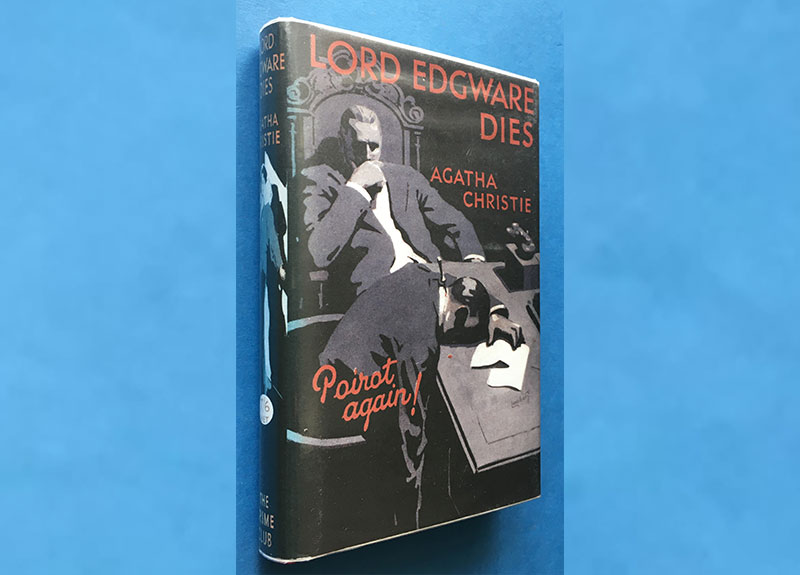
It has been some time since I read an Agatha Christie, the plot of which I cannot remember. So, I was delighted to find on the shelves of a friend Lord Edgware Dies, which I had a vague memory of, but no certainty about who had done it.
When I read it, I found that my memory of who was probably the killer was correct, but I could not be certain and the red herrings Christie threw in were so diverting that until almost the very end I wondered if I had been wrong.
The plot is very simple. Jane Wilkinson, who is married to Lord Edgware, tells him that she is desperate for a divorce since she is in love with a very proper Anglo-Catholic peer, Lord Melton, but Edgware refuses to divorce her. She asks Poirot to talk to him, which he does, and is surprised to find that Edgware has told Jane he is prepared to give her a divorce. This was, after he had categorically refused, through a letter, which Jane said she had not received.
That night Edgware is murdered, after Jane had been to see him, or so the butler said, and also Edgware’s secretary. But Jane had been that evening at a grand dinner many miles away, where a dozen fellow guests could swear to her presence.
There was a solution however to the mystery of two Jane Wilkinsons, namely a skilful impersonator called Carlotta Adams who, in the opening chapter had impersonated Jane Wilkinson, who had also been at the performance. But when Poirot goes to see her, he finds that she had been found dead on the morning after Edgware had been killed, of an overdose. And in her bag was a gold case, with a strange inscription, that contained the drug, along with a pair of pince-nez.
Her maid said she had written a letter to her sister in America and posted it the previous night. Poirot asks Inspector Japp to get the letter, and a transcript is received from America, and in it the name of Edgware’s nephew Ronald Marsh is mentioned; he had taken Carlotta to dinner after her performance, with which the book opens, and had then set her a challenge. Japp arrests Marsh, but Poirot is not happy and asks for the original of the letter, which the sister sends him. That shows that a page is missing, and the tear is obvious, though that raises the question as to why it had not simply been cut.
Matters are further complicated by the fact that Marsh had gone in a taxi to the Edgware house, along with Edgware’s daughter Geraldine, in the interval of an opera which had previously seemed to provide them with cast iron alibis. Geraldine had gone in to fetch her pearls so that Marsh could raise money he needed, and thus had an opportunity to kill Edgware, as did Marsh, for the driver said he had got out of the taxi while waiting and gone into the house.
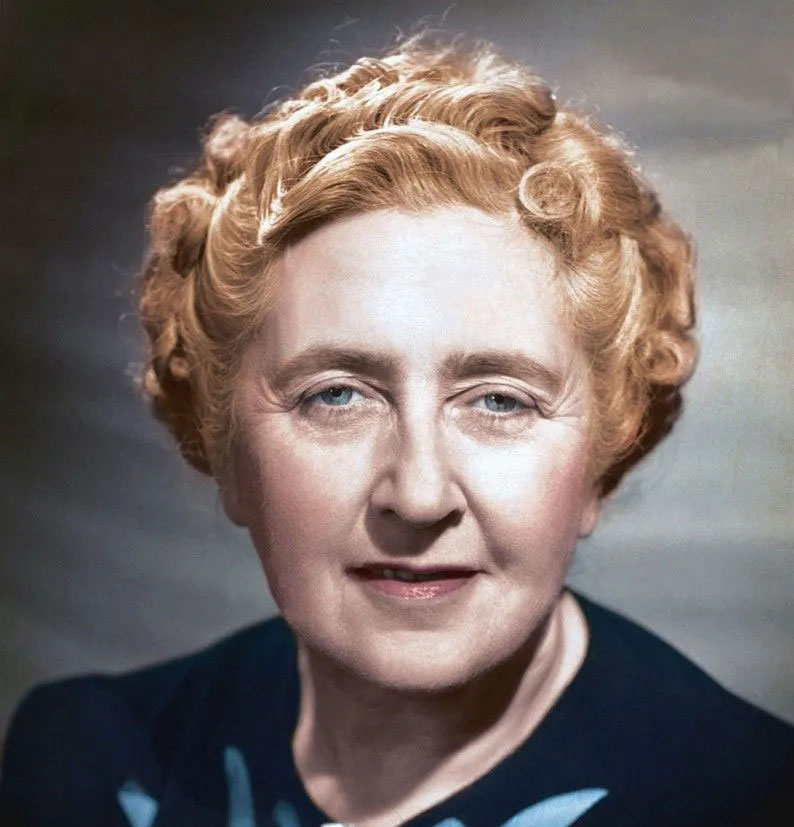
Agatha Christie
Marsh explained why he had gone to the house on the night of the murder as having followed Bryan Martin, an American actor, who had been in love with Jane, whom he saw go into the house with a key. But there was no one visible when he entered, and Geraldine almost immediately came down and they left together. And Martin too has become an object of suspicion to Poirot, for he had been to see him before the murders were discovered with a story of being followed by a man with a gold tooth – a story Poirot immediately realized was false when he was asked how old the man was, and was told he was young, for young people did not have gold teeth.
A heap of French money Edgware had got for a trip to Paris was missing, but since Marsh had no need for it after his cousin’s offer of help, Poirot deduces that it must have been taken by the butler, who has disappeared. Christie has stressed that he is astonishingly handsome, unusual in a butler, and Poirot notes a resemblance to Martin, so he thinks the mysterious man going into the house must have been him.
Incidentally, later Poirot assumes that Edgware’s change of mind was because he was involved in some scandal, and I believe Christie intends us to see the cause of this in his handsome butler, though this is not specified.
Meanwhile, Poirot has asked Japp to find out the provenance of the case found in Carlotta’s handbag, and it turns out to have been made in Paris, specially commissioned, and collected by a woman with pince-nez.
But then another murder occurs—that of another guest at the grand dinner, which provided Jane with her alibi. The victim is an actor who had been bemused when Jane, at a lunch, thought the Judgment of Paris referred to the city. He told Hastings he wanted to see Poirot, but was killed before he could get to the appointment. Poirot had rushed there when told about his request, but it was too late.
Meanwhile, Poirot has tried out the pince-nez on Edgware’s secretary, but she could not see through these. It was only a chance remark heard outside the theatre that led him to try them out on Wilkinson’s maid Ellis, a spare pair that had been appropriated for the night of the murders.
Poirot then lays things out, having summoned Martin and told him that he probably suppressed Edgware’s letter, as he had been dropped by then and he did not want Jane to marry another. But after teasing Martin, Poirot says that Jane was in fact the murderer, and she got Carlotta to impersonate her at the dinner while she went to the house and killed her husband. After meeting Carlotta later and checking with her through a call that she had not been rumbled, Jane had gone ahead with the murder – she put veronal into her drink and the case with veronal into the handbag. She forgot to take out the pince-nez she had used earlier to imitate an American. Carlotta had registered as the American in a hotel and Jane had gone to see her, and there they exchanged identities. After seen the letter, she made use of it by tearing off the page that referred to her, and the S of She, so that the person who had challenged Carlotta to impersonate her seemed to be a man.
There is a coda in which Jane, condemned to death, writes to Hastings, still full of pride at her ingenuity hoping she will be remembered.

by Prof. O. A. Ileperuma
Silting of reservoirs is a major problem today affecting our hydropower production and irrigation systems. The main Mahaweli reservoirs are silted to a considerable extent reducing the water holding capacity of them. Due to poor soil management practices, floodwaters deposit large amounts of silt in these reservoirs. When the Polgolla reservoir was fully drained about two years back, one could see mountains of silt in the lower reaches of the reservoir. A rough estimate is that 50% of the total capacity of these reservoirs has been lost to siltation. This is a serious issue which affects not only power and agriculture but also flood control.
Our ancient irrigation systems ensured that desilting of reservoirs took place under royal decree where all users of the reservoirs were ordered to carry out desilting of reservoirs during the dry season. The clay thus collected was used in making bricks for the construction of great stupas which dot the landscape of our ancient kingdoms. This ensured that the reservoirs had their full capacity filled with water for the next cultivating season. Our ancient kings were clever enough not to construct reservoirs by blocking main rivers such as the Mahaweli. A classic example is the Minipe left canal where they tapped only the surface water of Mahaweli. Even the bigger tanks such as Nuwara Wewa and Parakrama Samudraya were fed with minor rivulets. There were also other ingenious features in the cascade irrigation systems built by the ancient kings, such as mud sluice canals and forest reservations between the reservoirs in the cascade system. These reservations helped trap silt and remove excess nutrients, which could otherwise contribute to increasing salinity as water flowed from one reservoir to another.
-

- Parakrama Samudraya
-

- Kalawewa
-
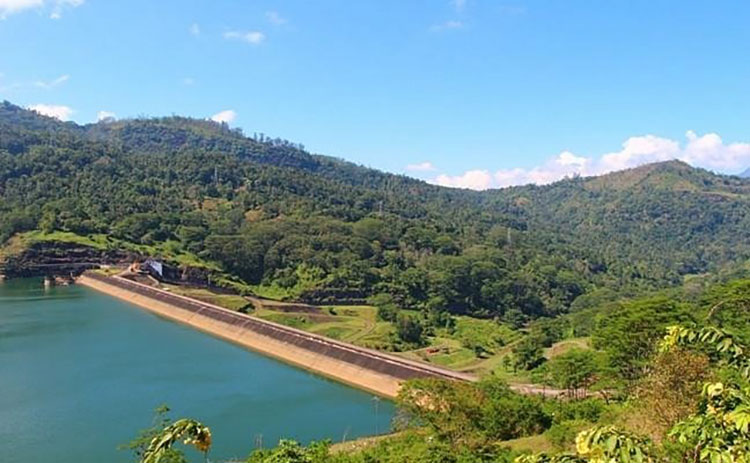
- Kotmale

Victoria

Moragahakanda
A classic engineering marvel is the former Yoda Ela, which carries water from Kalawewa to Nuwara Wewa and Tissa Wewa. It is 87 km long although the straight distance between these points is only about 40 km. The gradient of this canal is about 10 cm per km or 6 inches per mile. Yodha Ela functions as a moving reservoir and feeds about 4,600 hectares of paddy lands. It is a winding canal with about 120 smaller reservoirs on its way. It was constructed during the reign of King Dhatusena around 459 AD and later expanded by King Parakramabahu by connecting more reservoirs to the network. Unfortunately, during the Mahaweli project our modern-day engineers constructed a concrete canal replacing the winding path of this Yoda Ela also called Jaya Ganga. This effectively removed the ability of the old Yoda Ela to remove silt and nutrients. The bank of this Ela has wet zone trees such as jak and areca nut growing well. They take up the nutrients from the flowing stream making the water suitable for irrigation later.
Ancient Mesopotamian civilisations depended on dams constructed along the two main rivers, Euphrates and Tigris. After continuous irrigation of their fields over several thousand years, salinity of the irrigated lands increased making them unsuitable for agriculture. People died due to famine and this clearly illustrates the danger of blocking main rivers for agriculture. There is scientific evidence that the salinity of paddy soils in the Mahaweli C area is increasing.
We saw the devastation caused by Cyclone Ditwah. The sluice gates of the Kotmale Reservoir were opened, and Kandy and Peradeniya were flooded. If the reservoir had had greater storage capacity, couldn’t the opening of the gates have been delayed? This may not be an argument that modern-day engineers would readily accept, and I am not an irrigation expert. These ideas may well be naïve. But most of us tend to think of reservoirs mainly in terms of hydropower generation and irrigation, while their role in flood control receives much less attention. The question therefore deserves serious consideration. Could restoring lost reservoir capacity through desilting help improve our ability to manage extreme rainfall and reduce flood risks?
Desilting our reservoirs should be considered a national priority.
Export diversification – Missing the wood for the trees – Part III
by Gomi Senadhira
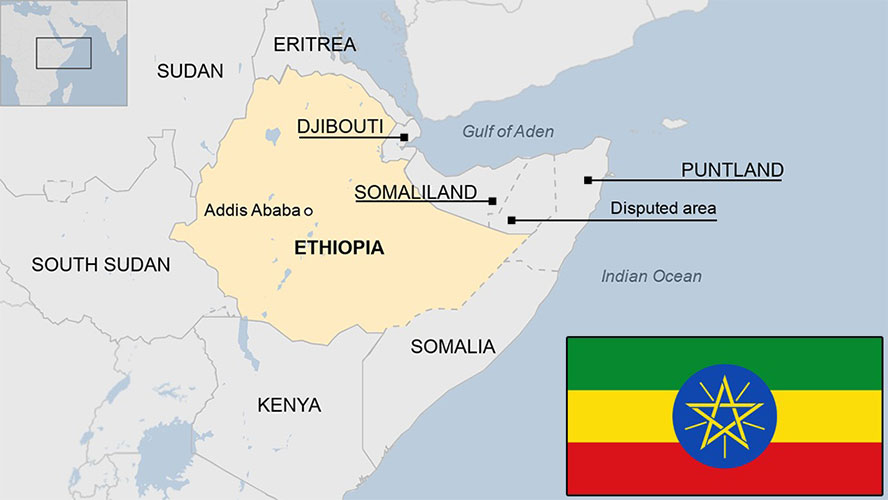
In Sri Lanka, the word “Ethiopia” is often used as disparaging slang to describe individuals or areas experiencing extreme poverty, starvation, or severe economic hardship. This linguistic habit originated in the 1980s with the Western media coverage of the devastating Ethiopian famine of 1983-85. That media coverage shocked the world but also left an outdated and offensive global stereotype that the country is permanently starving. Much has changed since then. By now, with an annual growth rate of around 9%, it is the fastest-growing economy in sub-Saharan Africa. Ethiopia has also emerged as a highly competitive exporter and is challenging not only its competitors in the region but also countries like Sri Lanka. This article is on how Sri Lanka has lost ground to Ethiopia (and a few other countries) in the GCC markets for agricultural and floricultural products.
Sri Lanka – A Pioneer in the Agriculture and Floricultural Market in the GCC
As discussed in Part II of this article, by the mid-1980s Sri Lanka had established a strong foothold in the GCC’s fruit, vegetable, and floricultural market. Geographical proximity and well-established shipping and air links gave Sri Lanka a strong comparative advantage over Southeast Asian and African nations. Thailand, Vietnam, and Kenya were not even in the market. At that time, Ethiopia was experiencing (as BBC news reports described) “a biblical famine”.
The market was not very large, but it was lucrative and growing. Trade Minister Lalith Athulathmudali as well as the Chairman of the Export Development Board, Victor Santiapillai, who visited Kuwait (and the GCC countries), recognised the market potential for these products and encouraged us to continue with our work. The minister was particularly keen to further develop links between the market for these products, exporters, and his Export Production Villages (EPVs). So, it was becoming a successful case not only for export diversification but also for transferring gains from exports directly to rural households.
From Trailblazer to Tailender
As a result, even by the beginning of this century Sri Lanka had a larger market share than most of its competitors from Asia or Africa. But since then, our competitiveness has weakened significantly. The tables below provide a comparative snapshot of Sri Lanka’s performance vis-à-vis Thailand, Vietnam, Kenya and Ethiopia in the GCC market for vegetables, fruits and floricultural products. As illustrated therein, in 2001 Sri Lanka was ahead of Thailand, Kenya and Ethiopia in this small but rapidly growing market. Since then, we have fallen behind Thailand, Kenya and many other countries in that lucrative market. If this trend continues, Sri Lanka will fall behind Ethiopia within the next few years. (See Table 1)
In the GCC market for vegetables (covered in HS chapter 07), Sri Lanka was ahead of most other competitors in 2001. As illustrated in Table 1 , Sri Lanka had failed to develop this market, while Thailand, Kenya, and even Ethiopia had very efficiently increased their market shares. The GCC is a market to which Sri Lanka can supply some vegetables, like cabbages, by sea. It appears Sri Lanka had also failed to exploit this mode of supply.
We can see a similar trend in the market for fruits. Vietnam, Kenya, and Thailand have emerged as major players, while exports from Sri Lanka have staggered on slowly. In this segment, Vietnam has emerged as a leading player during the last twenty years and the GCC imports from Viet Nam have shot up from US$44 thousand in 2001 to US$346 million by 2024. In part one of these articles, I discussed the remarkable increase of jackfruit exports from Vietnam “…just $3 million in 2015 to an impressive $236.8 million in 2023” while most of our jackfruit production rots under the trees. This explains how countries develop their markets, geographically and product-wise. (See Table 2)
Sri Lanka’s performance has been weakest in the market for floricultural products (HS Chapter 06), which groups live trees, cut flowers, and ornamental foliage. When we first entered the market in the 1980s, the market was dominated by the Netherlands, and Kenya and Ethiopia were not even in the market. At that time, we identified the Gulf states as a market where Sri Lanka could have a dominant presence due to geographical proximity. Even in 2001, Sri Lanka was ahead of Kenya, Ethiopia, and Thailand. But by now, Kenya has emerged as the dominant supplier. Ethiopia is also expanding its market share and is the third-largest exporter. (See Table 3)
Missing the Wood for the Trees
In the mid-1980s, Sri Lanka first established its foothold in the GCC market. Since then, Thailand, Vietnam, Kenya, and even Ethiopia have moved well ahead of us and have become leading players. Why did we lag behind in our export diversification efforts in general and, more particularly, in the GCC market?
The reasons are very clear. After the initial attempts in the 1980s and early 1990s, Sri Lanka has not been proactively involved in identifying, developing, and promoting new products and markets, or protecting and further developing new markets already established. The focus has simply been on traditional exports: tea, coconut, cinnamon, and garments, while other products were almost ignored. In essence, we have been and continue to focus intensely on a narrow group of products and markets, and we have lost sight of the bigger picture.
(The writer can be reached at senadhiragomi@gmail.com)

ITS Giuseppe Garibaldi’ departs Colombo

Green Climate Fund (GCF) Regional Dialogue for East and South Asia will be held from 14 to 17 September 2026 at Cinnamon Life at City of Dreams Hotel, Colombo

Showers will occur in the Western, North-western and Sabaragamuwa provinces and in Kandy, Nuwara-Eliya, Galle and Matara districts

Prof. Pieris says Buddha Dhamma recognised as source of law under Constitution

GR leaves FCID after making statement over MiG deal

Dengue cases top 97,000 in 2026

‘Dates have the highest sugar content to fight Coronavirus’

Sunday Island 27 December – Headlines

#SundayIsland 17th December – Headlines

Sunday Island – 28th March

Sunday Island Headlines – 21 March

Sunday Island – 21st February – Headlines
-

 Sports2 days ago
DDS set to lose Test captaincy
-

 Latest News7 days ago
Tharanga creates history with Diamond League crown in Brussels
-

 Features6 days ago
After the parade: What a traffic OIC’s walk-out tells us
-

 News7 days ago
Dispute which triggered listed company director being detained at BIA resolved
-

 Editorial6 days ago
Arrests as theatre
-

 Latest News6 days ago
Harshitha’s composed knock seals Sri Lanka’s semi-final berth
-

 News5 days ago
Thailand shuts door on undesirables from Sri Lanka
-

 News6 days ago
‘Choka Malli’ slips out of country before travel ban