
News
Lankan envoy frowns at UN one sided resolutions against Sri Lanka


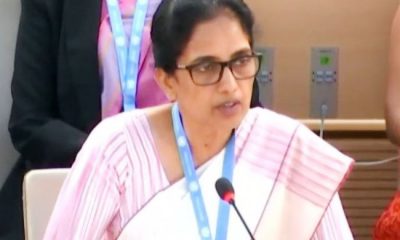
Permanent Representative of Sri Lanka to the United Nations in Geneva, Himalee Arunatilaka has recently said that UNHRC adopting resolutions in respect of Sri Lanka without the country’s consent was unhelpful.
Arunatilaka has said so once again rejecting the resolution 51/1 adopted in October last year. However, she assured that Sri Lanka would remain open to discussion with the Council.
“A series of unhelpful resolutions have been adopted by the HRC, the latest being resolution 51/1, without our consent as the country concerned. I reiterate Sri Lanka´s position, which was stated by the Minister of Foreign Affairs last October, that we reject this resolution, which will extend and reinforce the so-called external evidence gathering mechanism on Sri Lanka established by the OHCHR in line with its own interpretation of Resolution 46/1,” the Permanent Representative of Sri Lanka to the UN in Geneva, Himalee Arunatilaka, said addressing the 52nd Regular Session of the Human Rights Council in Geneva recently.
She said that “these resolutions are unhelpful to the people of my country, will polarise Sri Lankan society, and do not serve the objective of promoting reconciliation in Sri Lanka. We are of the view that this is an unproductive drain on the scarce resources of UN Member States which can be productively deployed elsewhere.”
“Despite our opposition to country specific resolutions, as explained to this Council before, we remain open to discussion with the Council, Special Procedures and Treaty Bodies, and continue to believe in the value of constructive engagement.”
“It is in this constructive spirit that Sri Lanka participated in the UPR Process last month, despite the difficult circumstances in the country. We consider the UPR to be an extremely important tool, enabling countries to mutually assess the progress of each other’s human rights situation through engagement with peers in an atmosphere that is constructive and mutually respectful. Sri Lanka also looks forward to a meaningful dialogue when our 6th Periodic Report under the ICCPR is taken up for Review later this month.”


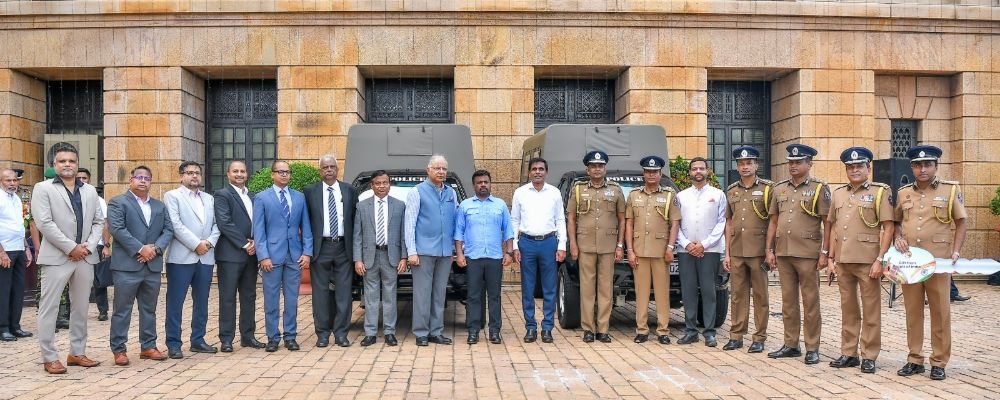
A consignment of 134 single cabs gifted by the Government of India under the Indo–Sri Lanka Friendship Programme for the use of the Sri Lanka Police was officially handed over to President Anura Kumara Dissanayake on Monday (25) morning at the Presidential Secretariat.
The Government of India has incurred an expenditure of approximately LKR.300 million for this initiative and the vehicles are scheduled to be distributed among police stations in the Northern Province.
Speaking at the occasion, Indian High Commissioner Santosh Jha stated that similar assistance would continue to be extended to Sri Lanka in the future.
In appreciation of this gift by the Government of India, Inspector General of Police Priyantha Weerasooriya presented a commemorative memento to Indian High Commissioner Santosh Jha.
Minister of Public Security and Parliamentary Affairs, Ananda Wijepala, Deputy Minister of Public Security and Parliamentary Affairs, Sunil Watagala, Secretary to the Ministry of Public Security Ravi Seneviratne, General Manager of DIMO Rajeev Pandithage, officials of the Indian High Commission and senior officers of the Sri Lanka Police were also present at the occasion.
(PMD)
Latest News
Landslide Early Warnings issued to the Districts of Colombo, Gampaha, Kalutara, Kegalle, Nuwara Eliya and Ratnapura extended till 1600 hrs on Tuesday [26]

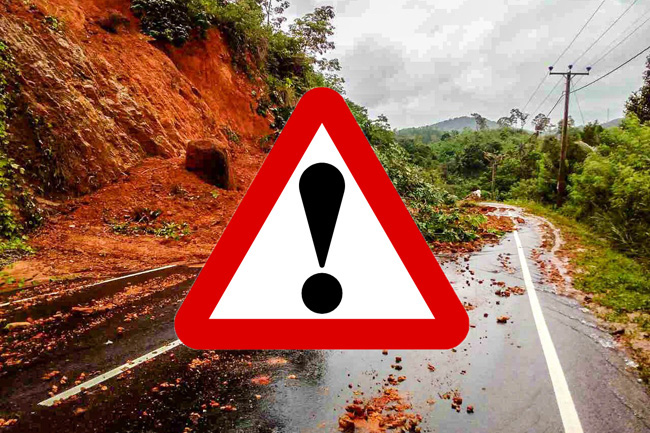
The National Building Reasearch Organisation [NBRO] has extended the landslide early warnings issued to the districts of Colombo, Gampaha, Kalutara, Kegalle, Nuwara Eliya and Ratnapura till 1600 hrs on Tuesday 26th May 2026.
Accordingly,
The LEVEL II [AMBER] landslide early warnings issued to the Divisional Secretaries Divisions and surrounding areas of Dehiowita, Deraniyagala, Ruwanwella and Yatiyanthota in the Kegalle district and Kuruwita, Ratnapura, Ayagama and Eheliyagoda in the Ratnapura district and
The LEVEL I [YELLOW] landslide early warnings issued to the Divisional Secretaries Divisions and surrounding areas of Seethawaka and Padukka in the Colombo district, Attanagalla in the Gampaha district, Palindanuwara, Mathugama, Bulathsinhala, Agalawatta, Ingiriya and Horana in the Kalutara district, Bulathkohupitiya in the Kegalle district, Ambagamuwa in the Nuwara Eliya district and Kiriella, Pelmadulla, Nivithigala, Elapatha and Kalawana in the Ratnapura district have been extended.

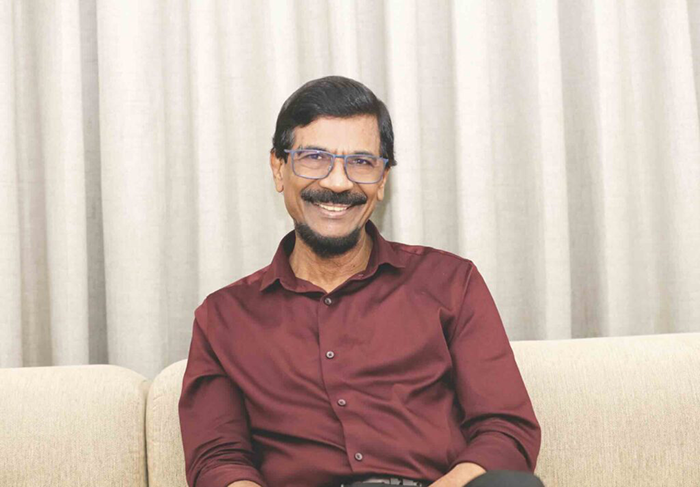
The much-delayed Provincial Council (PC) elections cannot be held this year due to financial and legal constraints, JVP General Secretary Tilvin Silva has said in Jaffna.Silva said so, fielding questions from journalists after the opening of the NPP coordination office in the Jaffna District on Saturday.
When asked whether the government was under Indian pressure to conduct the Provincial Council elections soon, Silva answered in the negative, claiming that Sri Lankan and Indian governments maintained close and friendly relations with a strong level of understanding.
He said budgetary allocations had been made for the PC elections, but the government had been compelled to divert resources for disaster relief following the impact of Cyclone Ditwah. According to Silva, nearly Rs. 500 billion had to be allocated for relief measures, making it difficult to hold the elections this year. He further said legal complications in the electoral reform process had also contributed to the delay in holding the PC elections, noting that a parliamentary committee had been appointed to determine the electoral systems under which the PC polls should be conducted. Once the committee submitted its report and if no further issues arose, the elections could possibly be held next year, he said.
Silva also said the government had taken measures to strengthen reconciliation and development in the North by releasing lands previously occupied by military camps and improving road infrastructure.He added that empowerment initiatives were being implemented under the Praja Shakthi programme and that both Sri Lanka and India were continuing to work in close cooperation.

Cambodia’s former opposition leader receives royal pardon for 27-year sentence

Death toll rises to four in Philippines building collapse; 17 missing

India gifts 134 cabs to Sri Lanka Police

Landslide Early Warnings issued to the Districts of Colombo, Gampaha, Kalutara, Kegalle, Nuwara Eliya and Ratnapura extended till 1600 hrs on Tuesday [26]

Attacks on Ebola centres intensify in eastern DRC amid outbreak fears

Oil prices fall amid mixed signals on US-Iran peace deal

‘Dates have the highest sugar content to fight Coronavirus’

Sunday Island 27 December – Headlines

#SundayIsland 17th December – Headlines

Sunday Island – 28th March

Sunday Island Headlines – 21 March

Sunday Island – 21st February – Headlines
-
 Features6 days ago
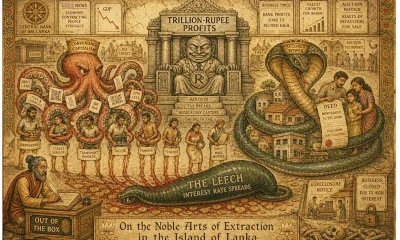
Octopus, Leech, and Snake: How Sri Lanka’s banks feast while the nation starves
-
 Sports6 days ago
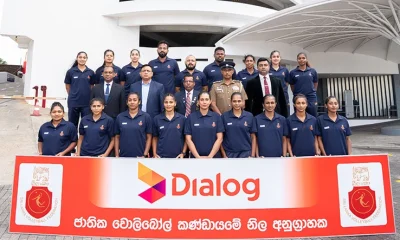
Sri Lanka women’s volleyball team ready for Central Asian challenge
-
 Opinion5 days ago
Murder of Ehelepola family, Bogambara Wewa and Sightings of Wangediya
-
 News5 days ago
Steps underway to safeguard Sri Lanka’s maritime heritage
-
 Features2 days ago
The NPP’s pivot to the past
-

 Editorial5 days ago
A play without its protagonist
-

 Business4 days ago
Historic launch of CCWE Fashion Week & International Summit 2026
-

 Opinion4 days ago
The need to reform Buddhist ecclesiastical order