
News
2020 General Election – SLPP confident of securing majority

By Shamindra Ferdinando
The SLPP was preparing to form the next government, party sources said, adding that a two-thirds majority was difficult to achieve. The SLPP sought a two-thirds majority to amend or do away with the 19th Amendment to the Constitution enacted in 2015.
Political parties had secured working majorities in Parliament only twice since the introduction of the Proportional Representation (PR) system in 1989, sources said.
President Ranasinghe Premadasa secured a simple majority at the 1989 poll and the UPFA led by President Mahinda Rajapaksa obtained 144 seats at the 2010 general election.
SLPP strategist Basil Rajapaksa has said in a newspaper interview that if his party couldn’t obtain a two-thirds majority, talks will be held with other parties.
Countrywide counting of ballot papers is scheduled to commence at 7 am today (6).
Of the 225 parliament members, 29 are appointed through the National List.
Political sources were of the opinion that the SJB would emerge as the main Opposition at the expense of the UNP. The last parliament was represented by 106 UNP lawmakers.
Two of the SLPP constituents, the National Freedom Front (NFF) and the Pivithuru Hela Urumaya (PHU) in the run-up to August 5 poll declared that they wouldn’t be part of the government in case an agreement was sought with extremist elements to secure a two-thirds majority.
A civil society grouping that campaigned against the SLPP effort to do away with the 19th Amendment yesterday told The Island that the new government’s conduct would largely depend on the margin of victory at the August 5 poll. Spokesperson Gamini Viyangoda said that in case the SLPP managed to secure as many as 130 seats, it would aggressively push for crossovers. However, the situation would be different if it obtained 30 seats short of a two-thirds majority, Viyangoda said.
President Gotabaya Rajapaksa, in terms of the powers vested in him by the Constitution and the Parliamentary Election Act, has summoned the new parliament on August 20.
In terms of the 19th Amendment to the Constitution, President Rajapaksa has to restrict the number of Cabinet ministers to 30 unless a consensus could be reached with political party/parties on the formation of a National Government.
The 19th Amendment also deprives the President of an opportunity to hold any ministerial portfolio. President Rajapaksa refrained from appointing defence minister in the interim government following the last presidential poll.










The NPP government has not taken a final decision regarding filling of the vacancies in the judiciary.
A group of Opposition MPs, led by SJB leader Sajith Premadasa, on 12 June, requested Speaker Dr. Jagath Wickremeratne to take up the issue of judicial vacancies with President Dissanayake. Opposition sources said that there were four vacancies, each in the Court of Appeal and the Supreme Court, and the inordinate delay had adversely affected the judiciary.
Government sources indicated that there was no change in the status quo as regards filling of vacancies. Referring to the government proposal to extend the retirement age of judges, authoritative sources said that no final decision had been taken yet.
SJB lawmaker Dayasiri Jayasekera told The Island that they would raise the issue in Parliament this week.
He said that the deliberate delay in making appointments to superior courts and the move to extend the retirement age couldn’t be taken separately.
The MP noted that the Bar Association of Sri Lanka, the Lawyers’ Collective, the Colombo High Court Lawyers’ Association, Colombo Magistrate’s Court Lawyers’ Association and the Bar Association of Badulla had opposed the government move.
There hadn’t been any public statements in support of the government move, MP Jayasekera said, urging the government to end uncertainty in the judiciary.
by Shamindra Ferdinando
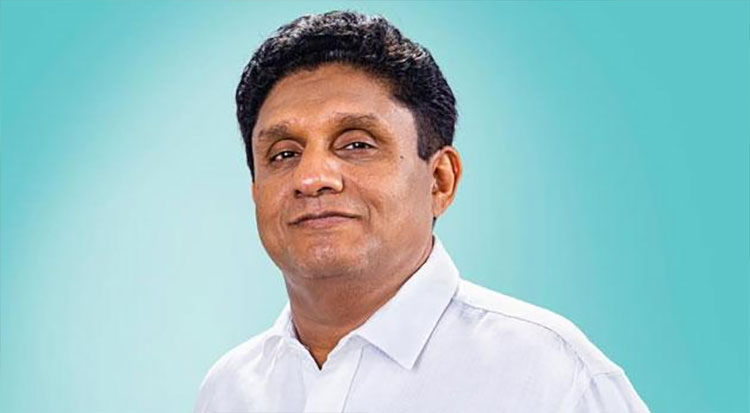
SJB leader Sajith Premadasa has invited the UNP and other political parties to join his party. Premadasa, who is also the leader of the Opposition, has emphasised that the UNP and the SJB could reach a consensus on policies but his party wouldn’t, under any circumstances, accept whatever formula to share positions. Premadasa said so, speaking to the media over the weekend, after meeting the Mahanayaka Thera of the Malwatta Chapter of the Siyam Nikaya Most Venerable Thibbatuwawe Sri Siddhartha Sumangala Thera.
A statement issued by the Opposition Leader’s Office quoted MP Premadasa as having extended an invitation to all political parties to give up extremist policies and join the SJB.
The SJB leader alleged that the NPP government feared facing elections and that was the reason for the inordinate delay in holding Provincial Council polls. PC polls were last held in 2012, 2013 and 2014, on a staggered basis. Premadasa said that if PC polls were held his party would definitely win the majority of PCs.Premadasa also urged the government to reduce electricity tariffs and fuel prices.
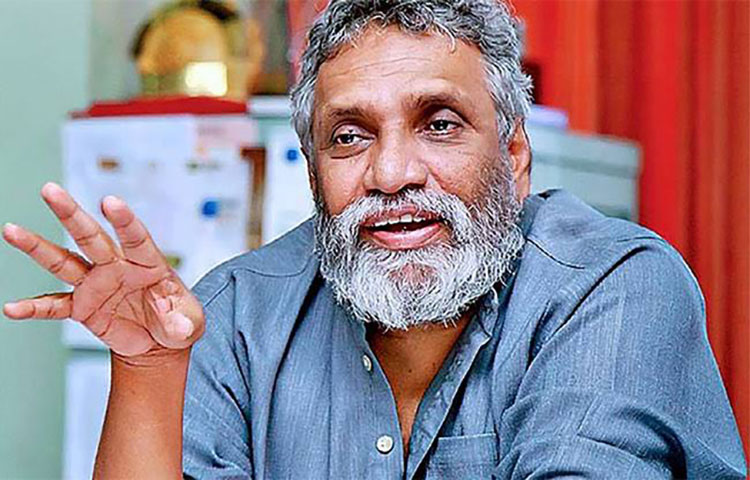
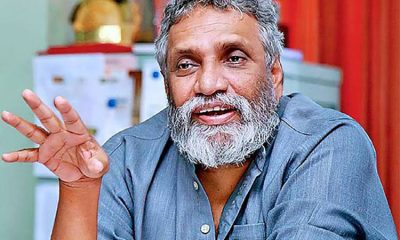
Former Chairman of the Election Commission, Mahinda Deshapriya, on Saturday, strongly criticised the continued postponement of local government elections, declaring that every day without elections constitutes a violation of both the Constitution and democratic principles.
Speaking during an interview with journalist Bhanuka Rajapaksa, on Hiru TV, on Saturday, Deshapriya described the current administration of local government institutions by unelected officials as fundamentally undemocratic and contrary to the spirit of representative governance.
Deshapriya said local authorities, across the country, are presently being managed by secretaries and bureaucrats rather than elected representatives, depriving citizens of their democratic right to be governed by individuals, chosen through the electoral process.
“If the Constitution recognises and provides for local government institutions, then it is the responsibility of the State to ensure that elections are held and that these bodies are administered by representatives, elected by the people,” he said.
Deshapriya rejected attempts to justify the prolonged delay, arguing that responsibility for the situation rests with the government.
He noted that while various political parties have publicly stated their readiness to face elections, the ruling administration possesses the authority to resolve any issues relating to the electoral system.
The former Election Commission chief pointed out that the government enjoyed a two-thirds majority in Parliament, enabling it to enact any legislative amendments required to facilitate the conduct of elections. Instead, he said, successive committees and review processes had been used to postpone a final decision.
He also referred to efforts by opposition legislators who have moved motions seeking to address concerns relating to the electoral framework and expedite the holding of local government polls.
Deshapriya warned that any attempt to appoint a fresh delimitation committee could further delay the electoral process, making it unlikely that local government elections would be held within the current year.
He also dismissed claims that financial constraints have prevented the conduct of elections. Expressing surprise at such assertions, he questioned how funding shortages could be cited as a reason for postponement while expenditure continues in other sectors.
According to Deshapriya, the existence of laws establishing local government institutions imposes an obligation on the State to ensure that those institutions are populated through democratic means.
“The legal framework exists. If elected representatives are not appointed through elections and institutions continue to function under unelected administrators, that is a failure of the State,” he said.

Judicial vacancies: President keeps country guessing

Sajith calls on Opposition parties to rally around SJB

Ex-EC Chief slams govt. over PC polls delay

Minister: Actual number of missing persons in Jaffna much higher than 2,452 recorded by OMP

Katchatheevu sovereignty ‘settled’ under int’l law – Hakeem in Chennai

Investing in ecosystems

‘Dates have the highest sugar content to fight Coronavirus’

Sunday Island 27 December – Headlines

#SundayIsland 17th December – Headlines

Sunday Island – 28th March

Sunday Island Headlines – 21 March

Sunday Island – 21st February – Headlines
-

 News6 days ago
Beijing Capital Airlines to resume flights to Colombo signalling boost to tourism
-
 Features5 days ago
Killing of Colombo’s ancient trees — a warning on UN’s World Desertification Day – 17 June
-

 News2 days ago
Creditor not yet paid
-

 News3 days ago
Creditor receives USD 2.5 mn as Lankan public bears loss from theft of Treasury funds
-
 News2 days ago
Consumers bearing 22% tax burden despite 18% VAT claim: Dr. Harsha de Silva
-

 Opinion4 days ago
Beyond diagnosis: A strategic design for 7% growth by 2029 (Part I)
-

 Opinion6 days ago
Fifty years after Soweto uprising
-
 News5 days ago
India provides military stores worth USD 5.5 mn to SL