
Business
1 billion vaccine doses: Emirates SkyCargo surpasses a historic landmark for COVID-19 vaccine transportation


Cargo carrier reaches 1 billion vaccine doses milestone 18 months after transporting the first trial shipment of COVID-19 vaccines
Vaccines moved to more than 80 destinations through Dubai, supporting local vaccination programmes
Emirates SkyCargo has transported more than 1 billion doses of COVID-19 vaccines on its aircraft. The air cargo carrier has achieved this historic milestone within a span of 18 months from the first shipment of COVID-19 vaccines trialled in October 2020. More than 4,200 tonnes of COVID-19 vaccines, equivalent to over 1 billion doses, have been moved to over 80 destinations on over 2,000 Emirates flights. Close to two-thirds of the 1 billion doses were transported to developing countries.
Nabil Sultan, Emirates Divisional Senior Vice President, Cargo, said: “From the start of the COVID-19 pandemic, Emirates SkyCargo has been focused on supporting global communities in their recovery from the devastating effects of the virus and we have prioritised assistance to developing countries. The strategic location of our Dubai hub combined with the strengths of our modern fleet of widebody aircraft, our purpose built facilities and capabilities in moving temperature sensitive pharmaceuticals allowed us to transport COVID-19 vaccines securely, reliably and rapidly from one corner of the globe to another. Ahead of World Health Day, we’re incredibly proud of our global Emirates SkyCargo team who have pulled out all stops during the pandemic to keep supply chains for essential goods like vaccines up and running. “
As early as August 2020, Emirates SkyCargo was one of the first global air cargo carriers to begin mapping out the global logistics for the movement of potential vaccines for COVID-19 transport. In October 2020, Emirates announced that it would be setting aside a dedicated GDP certified airside hub for transport of COVID-19 vaccines. During the same month, working with its logistics partners, the cargo division of Emirates transported trial shipments of COVID-19 vaccines through Dubai.
In January 2021, Emirates SkyCargo teamed up with leading Dubai-based companies to form the Dubai Vaccine Logistics Alliance to speed up distribution of vaccines through Dubai to developing countries. In February 2021, the carrier signed an MoU with UNICEF to prioritise transport and delivery of COVID-19 vaccines in support of the COVAX initiative. By early April 2021, Emirates SkyCargo had already transported more than 50 million doses of vaccines.
In June 2021, Emirates SkyCargo expanded its pharma cool chain infrastructure at Dubai International Airport, allowing it to store an additional estimated 60-90 million doses of COVID-19 vaccines at any one point of time. With the global scaling up of vaccine distribution and administration, Emirates SkyCargo facilitated transport of larger volumes of COVID-19 vaccines from manufacturing origins to destinations, reaching 250 million doses by September 2021 and 600 million doses by December 2021.
Emirates SkyCargo is one of the leading global air cargo carriers for the transport of temperature sensitive pharmaceutical cargo. In addition to COVID-19 vaccines, the carrier transports other critical life-saving medicines and treatments on its flights to more than 140 destinations across six continents. An estimated 200 tonnes of pharmaceutical cargo are flown every day on Emirates’ aircraft.

By Ifham Nizam
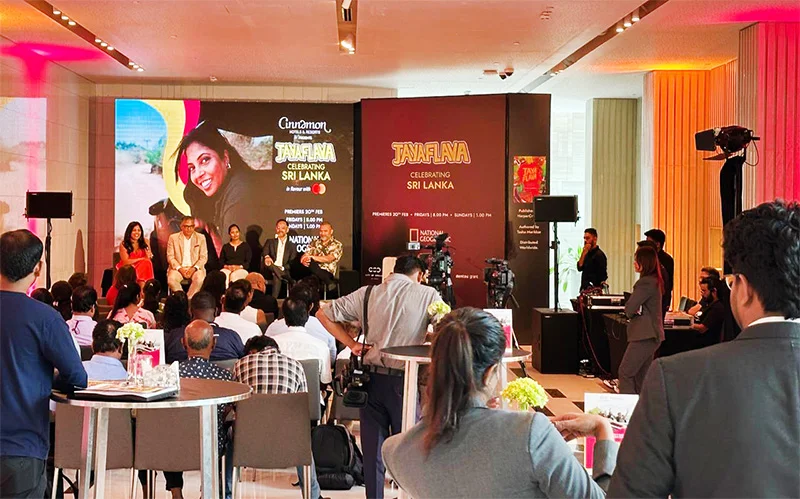
On a bright Colombo morning, beneath the polished lines of Cinnamon Life at City of Dreams Sri Lanka, Sri Lanka quietly redrew the contours of its global image.
This was not merely a programme launch. It was a recalibration.
For the first time, a Sri Lankan-made food and travel series will premiere across South Asia on National Geographic — a platform synonymous with global storytelling. In a region where culinary diplomacy has long been monopolised by larger neighbours, Sri Lanka has chosen its entry point carefully: flavour.
Jayaflava: Celebrating Sri Lanka is a six-part travel and food series hosted by Tasha Marikkar, airing on National Geographic South Asia. It premieres on Friday the 20th at 8.00 p.m., with a repeat on Sunday at 1.00 p.m. The series will broadcast across India, Sri Lanka, Bangladesh, Nepal and the Maldives — positioning Sri Lanka’s culinary identity before one of the most dynamic regional audiences in the world.
The series is the brainchild of Marikkar — author, food storyteller and an unapologetic champion of Sri Lankan cuisine. What began as a cookbook evolved — through persistence, private backing and creative risk — into a broadcast production that now carries Sri Lanka’s culinary narrative beyond its shores.
“This was never just about recipes,” Marikkar told the audience. “It was about representing Sri Lanka as it truly is — multi-ethnic, modern, chaotic, generous and absolutely obsessed with flavour.”
Her long-time collaborator Afdhel Aziz framed it in strategic terms.
“Sri Lanka has always had depth and brilliance,” Aziz said. “What it hasn’t always had is ownership of its narrative. When you tell your story authentically on a platform like National Geographic, you’re not just entertaining — you’re reframing perception.”
Perception, in tourism economics, is currency.
Bakmee Perera Vice President – Communications Planning and Media Strategy at Dentsu Grant Media, described the partnership with National Geographic India — part of the Jio Star Network and Disney International — as a structural milestone.
“This marks Sri Lanka’s first long-term content partnership agreement with an international network,” she said. “It extends beyond linear television into digital platforms. It is a significant step in global content affiliation.”
For Sri Lanka’s hospitality industry, the timing is strategic. Indian arrivals have rebounded strongly, surpassing pre-2018 levels, and industry leaders see culinary storytelling as a natural extension of destination branding.
Kamal Munasinghe, Senior Vice President – Colombo Hotels at Cinnamon Hotels & Resorts and General Manager of Cinnamon Life, put it plainly.
“We have always spoken about sun, sea and sand,” he said. “But we have not spoken enough about our food. Other destinations have built tourism identities around cuisine. Sri Lanka has not done enough in that space.”
He recalled stopping on the roadside en route to Ella for oil roti served with mushroom curry — a humble meal prepared by a woman supporting her family.
“That is the story we are bringing to the world,” he added. “There is culture, resilience and love in that plate.”
Cinnamon Hotels & Resorts, the title sponsor, features four of its properties in the series, including Cinnamon Grand Colombo, Cinnamon Wild Yala and Cinnamon Bentota Beach — the latter a tropical modernist icon designed by Geoffrey Bawa.
Bawa once reframed Sri Lanka architecturally, merging landscape with structure in ways that drew global admiration. In many respects, Jayaflava attempts a similar reframing — merging food, people and place into a narrative that feels both intimate and expansive.
The series moves through midnight kottu stalls, animated kitchen debates, artists’ studios and coastal bars. It captures contradiction — humour alongside hardship, ambition alongside nostalgia. It is not polished tourism propaganda, but textured storytelling.
Sri Lanka has often been presented to the world as either idyllic escape or troubled headline. Rarely as complex, contemporary and confident. By choosing food — the most universal of connectors — as its narrative vehicle, the country sidesteps cliché and leans into authenticity.
As the morning launch concluded, one message lingered: this is not simply a television debut. It is soft power in motion.
A nation, reframed — one dish at a time.

CSE grading was brisk and investor sentiment rose to a great extent when
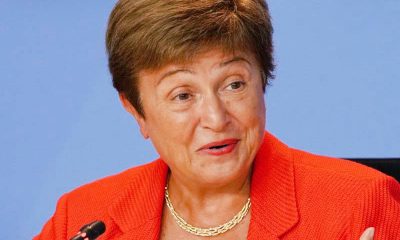
the International Monetary Fund’s Managing Director Kristalina Georgieva, who is on a visit to Sri Lanka, made positive remarks on the progress of the local economy.
She made these comments after meeting President Anura Kumara Dissanayake and other relevant officials.
Consequent to these developments both indices moved upwards. The All Share Price Index went up by 37.02 points, while the S and P SL20 rose by 47.12 points.
Turnover stood at Rs 5.66 billion with nine crossings. Those crossings were reported in ACL Cables, where 1.5 million shares crossed to the tune of Rs 154.6 million; its shares traded at Rs 103,CW Macky two million shares crossed for Rs 82 million; its shares sold at Rs 41, Dipped Products 1 million shares crossed for Rs 61 million; its shares traded at Rs 58.
Colombo Dockyard 350,000 shares crossed to the tune of Rs 56.3 million; its shares traded at Rs 151, HNB 100,000 shares crossed for Rs 45.5 million; its shares traded at Rs 455,Royal Ceramics 500,000 crossed for Rs 25.5 million; its shares sold at Rs 51 and JKH one million shares crossed to the tune of Rs 22.4 million; its shares sold at Rs 22.40.
In the retail market top seven companies that mainly contributed to the turnover were; Softlogic Capital Rs 511 million (51.2 million shares traded), ACL Cables Rs 439 million (4.2 million shares traded), Asia Siyaka Rs 307 million (19.5 million shares traded), Sampath Bank Rs 251 million (1.6 million shares traded), HNB Rs 231 million (507,000 shares traded), Softlogic Finance Rs 205 million (31.4 million shares traded) and HNB Finance Rs 171 million (19 million traded). During the day 289.2 million share volumes changed hands in 42524 transactions.
It is said that the banking and manufacturing sectors performed well. Sampath Bank, for instance, was notable. Financial sector too performed well; especially Softlogic Finance.
Yesterday the rupee was quoted at Rs 309.42/44 to the US dollar in the spot market from Rs 309.40/50 the previous day, dealers said, while bond yields were broadly steady.
A bond maturing on 15.10.2029 was quoted at 9.40/45 percent.
A bond maturing on 01.03.2030 was quoted flat at 9.50/53 percent.
A bond maturing on 15.03.2031 was quoted at 9.70/75 percent, from 9.68/72 percent.
A bond maturing on 01.10.2032 was quoted at 10.10/42 percent, up from 10.10/13 percent.
A bond maturing on 01.06.2033 was quoted at 10.38/43 percent, up from 10.35/40 percent.
A bond maturing on 15.06.2036 was quoted at 10.60/65 percent.
An auction of Rs. 60,000 million Treasury bills was going on.
By Hiran H Senewiratne
Business
A photograph of a Jaffna youth becomes a global symbol for Sri Lanka’s stalled reconciliation
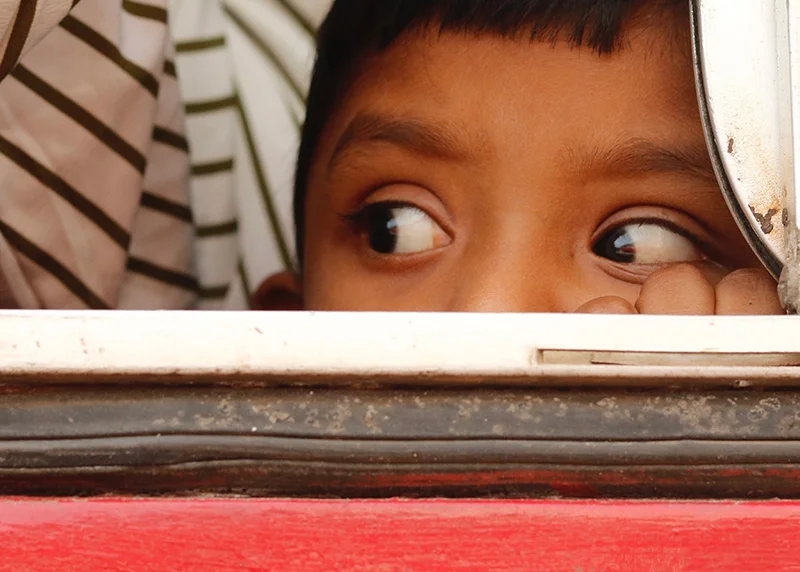
In the world of travel photography, some images do more than showcase a destination; they act as a silent mirror to a nation’s unresolved history. When British photographer Mark Julian Edwards’ portrait, ‘The Boy on the Bus,’ claimed the People’s Choice Award at the 2026 Travel Photographer of the Year (TPOTY) awards, it did more than celebrate technical brilliance. It signaled that the global community is still fixated on the scars of a region where the promise of a post-2009 peace has yet to be fully realised.
While the current NPP government often celebrates a ‘reunited’ Sri Lanka under President Anura Kumara Dissanayake, this award-winning shot turns the gaze toward Jaffna – a city that remains the emotional and political epicenter of the North-South divide. Captured through a rusting bus window, the boy’s expression – described as ‘fragile yet incredibly resilient’ – speaks to the persistent chasm between the North and the South that has remained unbridged nearly two decades after the war’s end.
Whatever the rhetoric from political platforms regarding the end of distrust, the international resonance of this image suggests that the world recognises a different reality. The capture of a northern commute is not merely a travel detail; it is a reminder of a landscape where the path to a predictable future is still viewed through a prism of distrust and uncertainty.
The significance of this win lies in its source: the public vote. Out of 20,000 entries, thousands of people from 160 countries chose this specific face. This global endorsement serves as a poignant reminder that while the local reconciliation process may be stalled in policy and paperwork, the human element of the conflict continues to haunt the international imagination.
The boy represents a generation born after the guns fell silent, yet his quiet, searching eyes reflect the weight of a reconciliation process that many feel has been more about infrastructure than true social healing. In the North, where the dust of history is still settling, such images strip away the veneer of normalcy to reveal the underlying scars that politicians often ignore.
The success of Edwards’ work comes at a time when the Sri Lankan Tourism Bureau and Jetwing Hotels are looking to nurture the next generation of local storytellers. However, the global acclaim for ‘The Boy on the Bus’ suggests that the most vital stories to be told are not the ones that look like postcards, but the ones that acknowledge the sensitivity and professional excellence required to document a people still waiting for a ta truly inclusive future.
As this image makes its way into international galleries and media outlets like the BBC, it stands as a testament to a hard truth: a photograph can win international accolades but the bridging of the political and social chasm remains Sri Lanka’s true, unfinished business.
The 2026 Travel Photographer of the Year winners were showcased and celebrated in Sharjah – UAE, Birmingham – UK and Rome – Italy. This year’s programme includes a special mentorship and winners’ trip to Sri Lanka, hosted by the Sri Lanka Tourist Board and Jetwing Hotels.
By Sanath Nanayakkare

Ambassador of Switzerland to Sri Lanka pays courtesy call on PM

Suspected carbon-monoxide leak kills at least 30 miners in Nigeria, witnesses say

Eight skiers found dead after California avalanche

Advisory for low pressure area in the Southwest Bay of Bengal to the south-east of Sri Lanka

Showers will occur at times in the Northern , North-central, Central, Uva and Eastern provinces and in Hambantota district

Canada concerned about delay in holding PC polls

‘Dates have the highest sugar content to fight Coronavirus’

Sunday Island 27 December – Headlines

#SundayIsland 17th December – Headlines

Sunday Island – 28th March

Sunday Island Headlines – 21 March

Sunday Island – 21st February – Headlines
-
 Life style4 days ago
Marriot new GM Suranga
-

 Business3 days ago
Ministry of Brands to launch Sri Lanka’s first off-price retail destination
-

 Features4 days ago
Monks’ march, in America and Sri Lanka
-

 Features4 days ago
The Rise of Takaichi
-

 Features4 days ago
Wetlands of Sri Lanka:
-
 News4 days ago
Thailand to recruit 10,000 Lankans under new labour pact
-
 News4 days ago
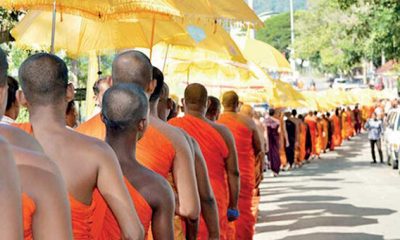
Massive Sangha confab to address alleged injustices against monks
-
 News2 days ago
IMF MD here