
News
Zuhair takes up right of Muslims killed by COVID-19 to be buried according to their religion

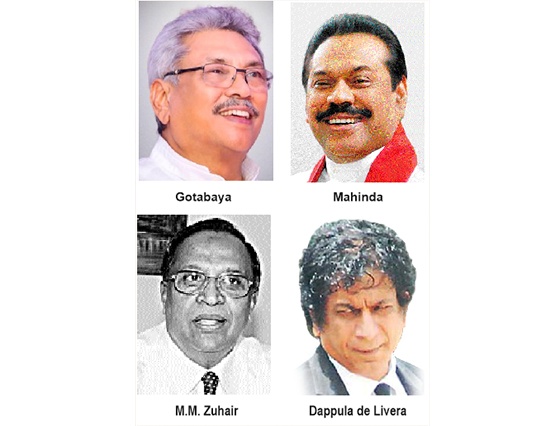
Former lawmaker M. M. Zuhair, PC, has strongly opposed what he calls forcible cremation of Covid-19 victims on a directive given by Attorney General Dappula de Livera, PC.
The following is the text of a letter by former Senior State Counsel Zuhair to President Gotabaya Rajapaksa and Prime Minister Mahinda Rajapaksa:
This is further to my previous representation dated 06th May 2020.
According to media reports the Hon Attorney General has directed the Director-General of Health Services that the dead bodies of Covid-19 victims unclaimed by the immediate members of the family to be cremated. (Ada Derana. Lk-09/12/2020 at 15.07 hrs. and AFP “Sri Lanka cremates Muslim Covid-19 victims against religious wishes” 09/12/2020 7.40 pm).
Firstly it is well known that the right to accord a dignified burial to a deceased person is an internationally recognized right. This is a right available to every person not merely to Muslims.
Secondly it is equally well known that the kith and kin of the deceased Muslims in particular have refused to accept the dead bodies as a protest against the unlawful refusal by the health authorities of our country to allow Covid 19 deceased persons a dignified burial. In the circumstances the Attorney General ought not to have directed the forcible cremation without hearing the kith and kin of the deceased persons. Such direction is in violation of the principles of natural justice, which principles the Attorney General is bound to uphold.
Thirdly, the direction has been made in terms of the Quarantine and Prevention of Deceases ordinance. If that be the case, the Attorney General would have seen that section 3(1)(i) of the Quarantine Ordinance provides for both options of burial and cremation and that he ought not to become a party to directing solely the cremation of the ‘under protest’ bodies without the consent of the kith and kin and in violation of the provisions of the Quarantine Ordinance read with section 17 (1) (c) of the Interpretation Ordinance. He ought not to expose the illustrious office of the Attorney General and the State to possible claims of damages.
Fourthly, Professor Tissa Vitharana has been quoted in the media last week that the expert panel appointed by the Minister of Health to advise her on the quarantine measures does not have a single virologist and hence not a competent panel, though the country has many eminent experts, virologists, epidemiologists, etc. Whereas 190 countries in the world had permitted burial of Covid-19 deceased persons following the World Health Organisation (WHO) guidelines, Sri Lanka and China are said to be the two countries that do not allow burials. The excellent work otherwise done by the countries health authorities and the armed forces are being brought into disrepute world-wide by the panel’s undue delay in resolving the problem by giving convincing scientific reasons as to why the WHO guidelines cannot be followed here.
Fifthly, if in fact and in science Covid- 19 will spread through contamination of water, I wish to state that no one, Muslim or otherwise will ask for burial of their victims. According to WHO any virus contaminated water may cause diarrhea but will not spread Covid-19.
Sixthly recent judicial decisions have kept the matter open to be decided by the Cabinet based on expert opinion which is anxiously awaited. Courts have not restrained the government or the experts from taking necessary decisions.
Permit me also to point out the following matters. Two Ministers Hon. Chamal Rajapaksa and Hon. Mahinda Amaraweera said recently that the government is favourably considering restoring the 27th March 2020 gazette allowing both burial and cremation for Covid-19 deceased persons and a third Minister Hon. Keheliya Rambukwella said a final decision will be taken after the experts give their opinion to the Health Minister Pavithra Wanniarachchi. The country’s accredited experts on the subject must not delay giving the opinion and they must do so with convincing scientific reasons for the public to know, because the government’s pursuit to restore burials in line with the opinion of the experts of the country as well as the World Health Organisation (WHO) guidelines are being perceived as being delayed unreasonably.
According to the WHO, water contaminated by any virus may cause diarrhoea but not Covid 19. If the local experts on virology and epidemiology have scientific reasons to establish that Covid-19 will spread through contamination of water to the living cell of a host, they also need to explain that apart from human beings animals, birds and fish will not be infected and will not host the virus and transmit them to human beings who may consume or handle them. There is thus an urgent need for the Sri Lankan experts to clear with scientific reasons all possible misconceptions.
The main protective measures that the public have been presently made aware of, to restrict the spread of Covid-19 are related to contamination through inhalation of infected droplets or by touching infected surfaces but not to Covid-19 contaminated water being consumed by living cells and getting transmitted to human beings. Experts in the relative field must clarify these matters on an urgent basis with scientific reasoning and evidence.
The composition of the committee of experts and their expertise in the relevant field to override WHO guidelines and the meetings or discussions they are engaged in need to be publicized in the interest of transparency. These representations are being made in the interest of the country’s best interests, its global reputation particularly in the Middle-Eastern countries which provide the highest foreign exchange earnings of US $ 7,000 million per year and in establishing acceptable scientific reasoning in the process of decision making affecting the fundamental rights of persons both living and dead.”
A copy has been also sent to the AG.


AKD’s request to Harsha:
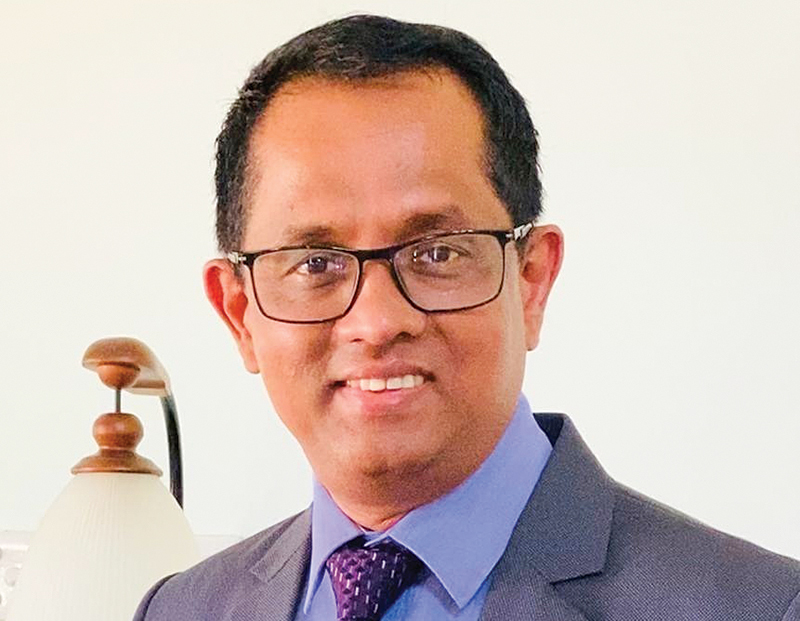
Speaker Dr. Jagath Wickramaratne has frustrated an attempt by Chairman of the Committee on Public Finance (CoPF) Dr. Harsha de Silva, MP, to intervene to settle the continuing dispute over the appointment of a new Auditor General.
Dr. De Silva yesterday told The Island he had recently written to all members of the Constitutional Council (CC) drawing their attention to the urgent need to address the issue at hand. The AG’s position remains vacant since 08 Dec, 2025. AG W.P.C. Wickremanayake retired in April and since then there have been a couple of Acting appointments. The CC has declined to endorse any of President Dissanayake’s nominees as the AG.
Asked whether he had taken up the issue with the CC following President Anura Kumara Dissanayake soliciting his support in this regard, MP de Silva said that he had written to CC members as agreed with the President.
The former UNPer and one-time State Minister said: “I did so, giving due respect to CC’s independence, underscoring the critical importance in them working with the President to resolve the crisis. I alluded to the need to have transparency in public financial management during this post-cyclone period where large amounts of funds are being transacted on multiple fronts, both domestic and foreign.”
Responding to another query, Dr. De Silva emphasised that he had clarified that the President must send the names of qualified and experienced persons to the CC for consideration. “However, these letters were returned to me by the Speaker, without being delivered to members of the CC. The Speaker didn’t give an explanation. Thus, except for members who are MPs who had been copied via email by my committee office, others never received my letter of concern. Even though I questioned, in Parliament, the basis of his refusal to forward my communication to the members of the CC of which he is Chairman, no answer was given.”
The CC consists of Dr. Jagath Wickramaratne, Speaker and Chairman of the 10-member body. Dr. Harini Amarasuriya, Prime Minister, Sajith Premadasa, Leader of the Opposition, Bimal Rathnayake, Aboobucker Athambawa, Ajith P. Perera, Sivagnanam Shritharan, and three civil society members namely Dr. Prathap Ramanujam, Dr. Dilkushi Anula Wijesundere and Dr. Dinesha Samararatne. None of the President’s nominees could obtain CC’s approval as all of them were rejected by the CC.
The present CC was introduced by the 21st Amendment to the Constitution which was endorsed on 31 October 2022.
Both the Bar Association of Sri Lanka (BASL) and the Transparency International Sri Lanka Chapter recently requested President Dissanayake, in writing, to propose a suitable person to the post of AG. The BASL, in another statement that dealt with the forthcoming vacancies in the CC due to three civil society members completing their terms, declared its concern over possible attempts by the President and the NPP government to fill the vacancies with rubber stamps.
The three civil society members will complete their terms on 18 January. In terms of Article 41E of the Constitution, the CC meets at least twice every month, and may meet as often as may be necessary. The Chairman presides at all meetings of the CC and in the absence of the Chairman, the Prime Minister, and in the absence of the Prime Minister, the Leader of the Opposition presides at the meetings of the CC.
Asked whether the CC could be disrupted due to the end of civil society members’ terms, an authoritative official pointed out that in case new appointments were not made the current members could continue.
The Parliament has not so far called for applications to fill the forthcoming vacancies.
by Shamindra Ferdinando ✍️

The NPP government’s coal procurement process has once again come under scrutiny following allegations by the Frontline Socialist Party (FSP) that substandard coal has been imported for power generation and that tender procedures were manipulated to favour a specific supplier.
Addressing the media after a party meeting in Maharagama on Saturday, FSP Education Secretary Pubudu Jagoda said a test report issued by the government laboratory at the Lakvijaya Power Plant had confirmed that the latest coal shipment unloaded in Sri Lanka did not meet the required quality standards. According to the report, the coal’s calorific value ranged between 5,600 and 5,800 kilocalories per kilo, below the 5,900–6,200 kCal/kg range specified in tender requirements.
Jagoda warned that lower calorific value coal would require higher volumes to generate the same amount of electricity, increasing costs significantly. Preliminary estimates, he said, indicated an additional financial burden of around Rs. 7,500 million, which might eventually be passed on to consumers through higher electricity tariffs.
The FSP also accused the government of tailoring procurement rules to benefit the Indian supplier, which has deposited bonds for long-term coal supply for the upcoming season. Jagoda alleged that tender conditions had been altered to accommodate the company, pointing to changes in coal reserve requirements. Under the 2021 Sri Lanka Coal Registration Document, suppliers were required to maintain a minimum reserve of one million metric tonnes with a gross calorific value of 5,900 kCal/kg. This threshold, he said, had been reduced to 100,000 metric tonnes in the 2025 document which is a 90% reduction raising serious concerns.
He further cited past allegations against the Indian company, including findings in a 2016 Auditor General’s report that the company violated procurement guidelines regarding a rice supply contract with Sathosa in 2014. Jagoda also referred to legal issues involving individuals linked to the company, and the suspension of a representative by the International Cricket Council in 2019 over match-fixing allegations.
Beyond company-specific concerns, Jagoda criticised what he described as systemic manipulation of the coal tender process. He questioned why the coal tender, typically called in February or March, was delayed until July, despite electricity being declared an essential service. He also alleged that the tender submission period had been progressively shortened from the internationally accepted six weeks to five weeks, and now reportedly to three giving an unfair advantage to suppliers with existing stock.
The Ministry of Energy has recently issued an amended tender to procure 4.5 million metric tonnes of coal for the Lanka Coal Company for the 2025/26 and 2026/27 periods, following the cancellation of an earlier tender.
Jagoda warned that delays and irregularities could lead to coal shortages, higher spot market purchases, increased electricity costs, and even power cuts if hydropower generation falls short. He called for urgent investigations into the procurement process, insisting that the burden of alleged mismanagement and corruption must not be transferred to the public.
by Chaminda Silva ✍️

SJB Gampaha District MP Prasad Siriwardhana has been summoned to the CID today (12) for questioning in connection with a statement he made on a private television channel regarding education reforms.
He was earlier asked to report to the CID on 10 January to make a statement. However, as Siriwardhana had notified the authorities that he was unable to appear on that day, he was subsequently asked to come today.
Siriwardhana is one of the critics of the shortcomings of the education reforms introduced by the NPP government.

BCB’s integrity unit finds ‘credible suspicion’ during BPL

Devine’s 95 trumps Lee, Wolvaardt fifties in see-saw thriller

Fairly heavy showers about 75 mm are likely at some places in the Western, North-western and Sabaragamuwa provinces

President proposes; Speaker disposes

Sri Lanka loses Rs.7.5 bn due to coal tender irregularities: FSP

CID summons SJB MP for criticising education reforms

‘Dates have the highest sugar content to fight Coronavirus’

Sunday Island 27 December – Headlines

#SundayIsland 17th December – Headlines

Sunday Island – 28th March

Sunday Island Headlines – 21 March

Sunday Island – 21st February – Headlines
-
 News2 days ago
Sajith: Ashoka Chakra replaces Dharmachakra in Buddhism textbook
-

 Business2 days ago
Dialog and UnionPay International Join Forces to Elevate Sri Lanka’s Digital Payment Landscape
-

 Features2 days ago
The Paradox of Trump Power: Contested Authoritarian at Home, Uncontested Bully Abroad
-

 News7 days ago
Interception of SL fishing craft by Seychelles: Trawler owners demand international investigation
-

 Features2 days ago
Subject:Whatever happened to (my) three million dollars?
-

 News1 day ago
Level I landslide early warnings issued to the Districts of Badulla, Kandy, Matale and Nuwara-Eliya extended
-
 News7 days ago
Broad support emerges for Faiszer’s sweeping proposals on long- delayed divorce and personal law reforms
-

 News2 days ago
65 withdrawn cases re-filed by Govt, PM tells Parliament