
News
Younger population, early lockdown and general immunity help SA countries keep low Covid-19 mortality rate, says study

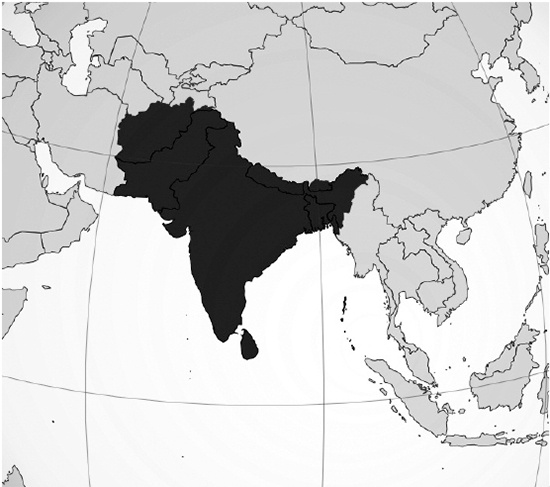
Factors such as a younger population, early lockdown and some level of general immunity may have helped India and other South Asian countries keep the Covid-19 mortality rate down compared to other nations, says a study.
Bengaluru-based epidemiologist Dr Giridhara R Babu and researchers from the Philippines and the US conducted the study, which was recently published in the journal Science Direct.
The South Asian region comprises eight countries — Afghanistan, Bangladesh, Bhutan, India, the Maldives, Nepal, Pakistan and Sri Lanka — and is home to one-fifth of the world’s population. It accounts for 21 per cent of the reported Covid-19 cases in the world and 11 per cent of the deaths. Despite low level of pandemic preparedness, the countries have done well in mounting an appropriate response, the study notes.
“The region has a lower rate and proportion of deaths attributed to Covid-19, despite case surges similar to the rest of the world,” it states.
Initial Covid-19 projections had placed South Asia at a higher risk of suffering more fatalities because of high population density, greater burden of comorbidities, socioeconomic vulnerabilities and poor healthcare infrastructure. A younger population with the average age of 25 may be a factor in the lowerthan-expected mortality rate, the researchers have observed. The relatively late onset of the pandemic in South Asia may have also played a part. “As the number of Covid-related deaths disproportionately affects the older population, these countries might have a unique advantage,” says the study.
Immunity is another aspect. “Possible exposure to other coronaviruses in the past may have helped the population in these countries to develop innate immunity, which could have reduced the severity of the infection. We have listed out hypotheses, but they need to be proved,” said Dr Babu, head of life-course epidemiology at the Public Health Foundation of India (PHFI). The researchers point out that data inaccuracies could have resulted in an underestimation of deaths in South Asia.
The researchers analysed countries’ preparedness using the Global Health Security Index Score. India scored 46.5 out of 100, Bhutan 40.3, Pakistan 35.5, Nepal 35.1, Bangladesh 35, Sri Lanka 33.9, the Maldives 33.8 and Afghanistan 32.3. “Each country had a different preparedness level. They have witnessed a lower mortality rate compared to the UK and the US, which had better preparedness,” Dr Babu told STOI.
The study’s other researchers are: Sonalini Khetrapal from Asian Development Bank, Philippines; Dr K M Venkata Narayan from the Emory University School of Medicine, US; and R Deepa and Daisy A John from PHFI.

By Shamindra Ferdinando
The government is coming under pressure from civil society organisations to formulate a clear ‘mechanism’ to deal with requests for presidential pardons.
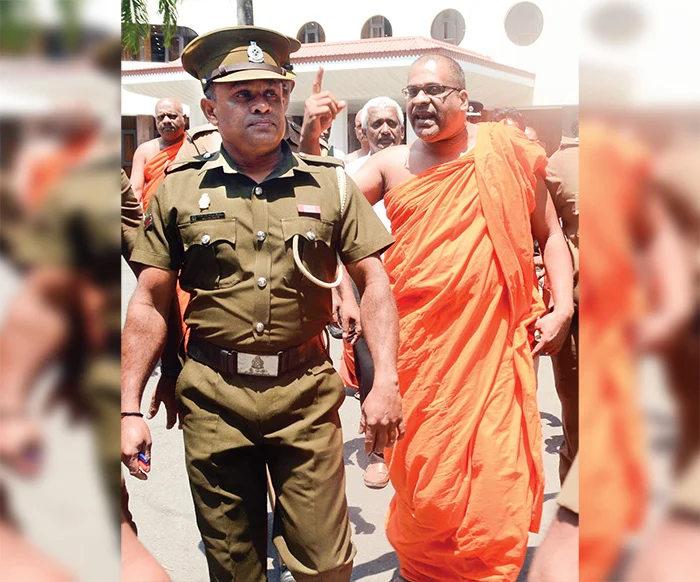
Representing civil society organisations, Gamini Viyangoda yesterday flayed the NPP government for the delay in taking action against Ven. Galagoda Aththe Gnanasara Thera, after the Supreme Court declared the 2019 presidential pardon granted to him by President Maithripala Sirisena null and void. He said successive Presidents had abused their executive power to release convicted persons from prison.
Purawesi Balaya activist Viyangoda pointed out that the Supreme Court ruled that President Sirisena had acted arbitrarily and failed to independently consider the relevant materials before exercising his executive power.
The Court of Appeal, in August 2018, sentenced Gnanasara Thera, General Secretary of the Bodu Bala Sena (BBS), to six years rigorous imprisonment for contempt of court over his conduct during proceedings concerning missing journalist Prageeth Ekneligoda. Viyangoda said that those who had been affected by the monk’s conduct have the right to know on what basis the President released him, in May 2019.
The Court of Appeal yesterday (05) ordered the relevant authorities to enforce the remaining period of imprisonment imposed on the Thera.
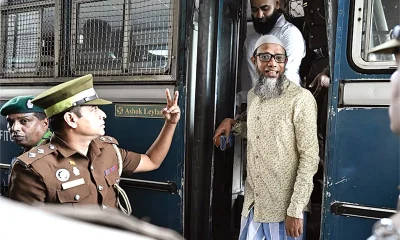
Gnanasara Thera, who had been subject to an open warrant for his arrest, was produced before the Court of Appeal, today, by prison officials.
Having considered the submissions made before it, the Court of Appeal directed the Commissioner General of Prisons to take the necessary steps to enforce the remaining period of the sentence imposed on Gnanasara Thera. Police on Saturday (03) apprehended the monk at a forest monastery in Kalutara. The Colombo Magistrate’s Court on Sunday (04) ordered the Thera to be remanded in custody till Monday.
Appearing for Gnanasara Thera, Attorney-at-Law Iresh Seneviratne, together with Attorney-at-Law Pasan Karunaratne, told the court yesterday that his client had been experiencing severe mental distress and had therefore gone to an ‘Aranya Senasanaya’, where he had been staying.
Viyangoda said that examination of presidential pardons, executed over the years, would reveal how successive leaders exploited the executive power to appease their own. Responding to The Island queries, Viyangoda said that Sirisena, in Sept. 2019, just two months before the presidential election, granted Jude Shramantha Jayamaha a Presidential pardon.
Jude Shramantha Jayamaha was sentenced to 12 years by the High Court, but the Court of Appeal revised that sentence to death, in July 2012, which the Supreme Court later upheld. Viyangoda said that though the Supreme Court, in June 2024, declared that the particular Presidential action was illegal and arbitrary, law enoforcement authorities were yet to take tangible measures to enforce the court directive.
Viyangoda stressed that no President should exercise the right to pardon a convicted on his or her own without following laid out procedures. According to him, Sirisena appeared to have simply ordered the monk, and the convicted murderer, released in response to appeals received by him. A comprehensive investigation could identify those who had been involved in these wrongdoings.
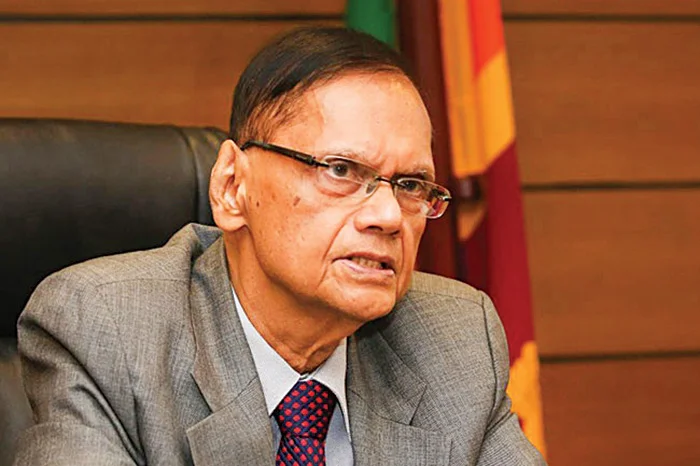
Convenor of Janathawadi Joint Opposition, Prof. G. L. Peiris, yesterday (05) emphasised the responsibility on the part of the government and others to act cautiously when making representations in respect of Sivarasa Anojan facing death sentence in Saudi Arabia over a controversial social media post.
Addressing the media at former President Ranil Wickremesinghe’s Flower Road Office, Prof. Peiris emphasised that whatever representations should be made through the Foreign Ministry.
The one-time External Affairs Minister warned of dire consequences of political party leaders, members of Parliament and civil society making direct representations and trying to get in touch with various Saudi authorities over the phone.
Prof. Peiris said that those who intervened on behalf of Anojan should keep in mind that Sri Lanka should be mindful of the Saudi way of governance and sensitivities.
The former Minister questioned the circumstances Sri Lanka was left out of the recent BRICS summit held in New Delhi. He recalled how former President Wickremesinghe discussed Sri Lanka’s entry into BRICS with Russian President Putin and received an invitation for the Summit there but as a result of the change of government, in Sept. 2024, Sri Lanka ignored that invitation.
That resulted in Sri Lanka being left out from the New Delhi summit, Prof. Peris said.
Prof. Peiris pointed out the absurdity in sending the Foreign Secretary to the BRICS Summit in Russia instead of the President, PM or the Foreign Minister to represent the country.
Referring to the forthcoming conclusion of the current IMF programme, initiated during Wickremesinghe’s time, Prof. Peiris said that Sri Lanka lost a great opportunity to benefit from BRICS by failing to represent the country at a higher level at the Russian summit.
The BRICS nations established the New Development Bank (NDB), originally called the BRICS Development Bank, Prof. Peiris said.
Dismissing NPP government’s explanation regarding Iranian ships awaiting necessary supplies but deprived by US imposed restrictions, the former Minister strongly criticised the administration’s response. According to him, this government responded in a similar manner when the US sank an unarmed Iranian frigate just outside Sri Lankan territorial waters in March this year.
Prof. Peiris declared that the government’s assertion that the US restrictions weren’t only directed at Sri Lanka but all Iranian vessels in other regions as well was not acceptable (SF)
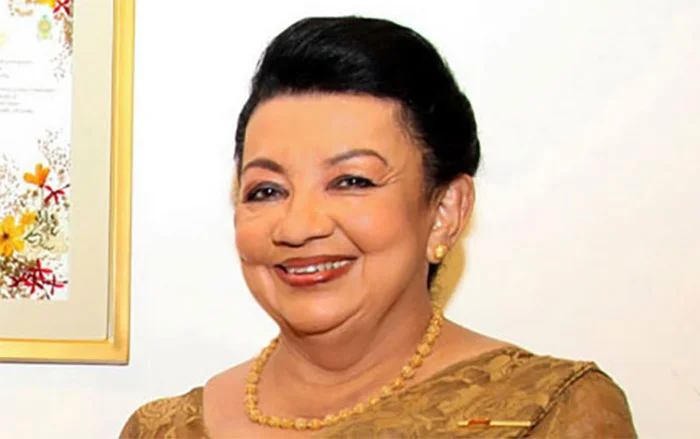
Former First Lady Shiranthi Rajapaksa, who is in Singapore, has filed an anticipatory bail application before the Maligakanda Magistrate’s Court, seeking an order preventing her arrest in connection with an ongoing investigation into the financial affairs of the Siriliya Saviya organisation.
The former First Lady left for Singapore on 16 Sept., and the police handed her a notice at the airport, directing her to appear before the Financial Crimes Investigation Division (FCID).
Attorney-at-Law Jayabalan has filed the petition, naming the Director of the Criminal Investigation Department as the respondent.
The petition states that Shiranthi Rajapaksa is currently overseas receiving medical treatment and fears that she may be arrested at the airport upon her return to Sri Lanka.

Showers above 75 mm are likely at some places in the Western, Sabaragamuwa, Central, and Southern provinces after 1.00 pm

Govt. urged to halt ‘illegal’ presidential pardons

GL urges cautious handling of Saudi death row case, blasts govt. over BRICS affair

Shiranthi files anticipatory bail application

Sri Lanka renews Honorary Consul appointment in Mombasa

Govt. plans to amalgamate NDF and ‘Api Wenuwen Api’ Fund

‘Dates have the highest sugar content to fight Coronavirus’

Sunday Island 27 December – Headlines

#SundayIsland 17th December – Headlines

Sunday Island – 28th March

Sunday Island Headlines – 21 March

Sunday Island – 21st February – Headlines
-

 Latest News6 days ago
Gold winner Tharanga gets brand-new Honda Vezel from SLAAJ
-

 Features6 days ago
Why Sri Lanka needs an Inclusive Civic Nationalism – urgently
-

 News5 days ago
US-assisted ‘Ice’ detection: NPC to examine IGP’s move to transfer drug-busting team
-

 Editorial4 days ago
Colombo Port drug bust: The plot thickens
-

 News6 days ago
Civil society activist accuses govt. of favouring Ven. Gnanasara
-

 Editorial6 days ago
When crime bosses rise above law and shrines
-
 Midweek Review6 days ago
Dappula’s Easter Sunday ‘grand conspiracy’ claim demolished
-
Editorial5 days ago
Drug busting, transfers and trust deficit