
Latest News
WWC 2025: Handshakes and rain in focus as India look to continue unbeaten run against Pakistan


The last time these teams met at an ODI World Cup, India won. They tend to. If you are new to the women’s version of this “rivalry”, the headline is that however big the gap is between India and Pakistan’s men’s teams, it has tended to be bigger here. Pakistan have never beaten India in 11 ODIs. They haven’t got close. India have always won by at least 80 runs or five wickets.
But the last time these teams met at an ODI World Cup, something else happened that seems of greater relevance to this moment. After the match (India’s win was by 107 runs, by the way), a group of India players were seen playing with and delighting in the six-month-old daughter of Bismah Maroof, Pakistan’s then-captain, who had the infant on her shoulder. It was an uncomplicated moment of shared humanity and joy, the women cooing to the baby and trying gently to draw from her a reaction, while her mother continued to comfort her. Whatever the politics surrounding Sunday’s match, it should not be forgotten that these are athletes who have enjoyed moments of connection, and treated each other with dignity, in the past.
Both teams say they are focused on the cricket ahead of this match (there has been no confirmation whether the Indian team will shake hands with the Pakistan players, though), and on a purely cricketing front, Pakistan have a lot of work to do to make a match of this. Their first problem is their batting. They were bowled out for 129 by Bangladesh on Thursday. They do have batters in form – Sidra Amin and Muneeba Ali have been especially good over the last few months. But Pakistan batters don’t have a history of batting consistently against top-quality bowling, which is what India possess.
India, meanwhile, will be pleased with the start they have made in this tournament, though they will also hope their top order can fire. Against Sri Lanka, it was the lower-order batting of Amanjot Kaur and Deepti Sharma that lifted them to a winning total. Their bowling looked in good order in the defence too, with Sneh Rana, Shree Charani and Deepti finding frequent wickets through the middle overs. They also have the advantage of knowing this venue well – India played a tri-series in Colombo earlier this year.
Offspinner Sneh Rana took to the Khettarama surface almost immediately, taking 3 for 31 in her first ODI at the venue. In four matches since, she has built up quite the record at this ground, taking 15 wickets at an average of 14.00 here, becoming Player of the Tournament in that tri-series in May. She has also made a strong start to this World Cup, taking 2 for 32 against Sri Lanka, having also contributed 28 not out with the bat.
Pakistan’s best chance of making a good score is for Sidra Amin to find some runs. Just in the last three weeks, she had hit 121 not out, 122 and a 50 not out against a good South Africa attack. She was bowled first ball on Thursday, but that was more down to the quality of Marufa Akter’s delivery than through any major failing of Amin. She is not the most aggressive batter around, but this year, she has been the rock that Pakistan build their innings around.
India may not see a need to change their winning XI.
India (probable): Pratika Rawal, Smriti Mandhana, Harleen Deol, Harmanpreet Kaur (capt), Jemimah Rodrigues, Deepti Sharma, Richa Ghosh (wk), Amanjot Kaur, Sneh Rana, Kranti Goud, Shree Charani
Pakistan will think about bringing Eyman Fatima into the side to strengthen their batting. Legspinner Syeda Aroob Shah may also be considered, as she offers some batting as well.
Pakistan (probable): Muneeba Ali, Omaima Sohail, Sidra Amin, Aliya Riaz, Natalia Pervaiz, Fatima Sana (capt), Rameen Shamim, Diana Baig, Sidra Nawaz (wk), Nashra Sandhu, Sadia Iqbal

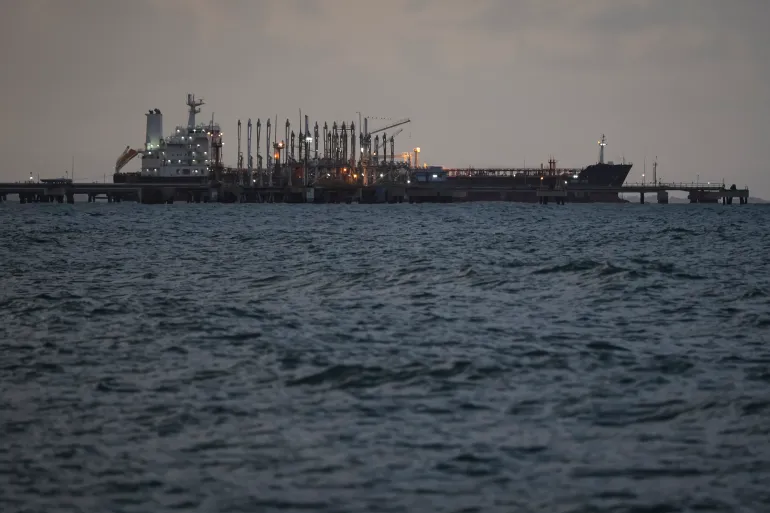
The United States has struck a deal with Caracas that would give them control of some 65 billion barrels of Venezuela’s proven oil reserves, President Donald Trump has announced, while reviving the OPEC nation’s battered energy industry.
In a post on Truth Social, Trump said the “historic transaction more than doubles American oil reserves” and “will substantially lower gas prices for all Americans”.
“At my direction, Secretary of State Marco Rubio, and Secretary of War Pete Hegseth, working closely with Highly Respected Interim President of Venezuela, Delcy Rodriguez, and, through a partnership with private business, have secured majority US control of more than 65 BILLION BARRELS of proven Oil Reserves in Venezuela, at no cost to the American Taxpayer,” Trump wrote.
![Venezuela's interim President Delcy Rodriguez, Caracas, Venezuela, January 30, 2026 [Efrain Gonzalez/AFP]](https://www.aljazeera.com/wp-content/uploads/2026/01/AFP__20260131__94MV49Z__v1__HighRes__VenezuelaUsConflictCrisis-1-1769837471.jpg?w=770&resize=770%2C513&quality=80)
Venezuela’s interim President Delcy Rodriguez welcomed the deal, which is expected to bring about $209bn to the state’s treasury.
The announcement followed weeks of negotiations over an agreement that would give American companies long-term access to a group of Venezuelan oilfields and guarantee the resulting crude supply to the US.
Venezuelan officials are preparing to sign agreements next week granting new oil exploration and production rights to a number of companies, particularly US firms.
Sources previously told Reuters news agency that a lease model was under consideration, with fields potentially auctioned to US producers, but the arrangement could face legal and constitutional challenges in Venezuela, where the state retains control over core oil industry activities.
(Aljazeera)
Latest News
Sun directly overhead Pallawarayankaddu, Akkarayankulam, Ariviyal Nagar, Puthukkudiyiruppu, Ananthapuram at about 12.11 noon today (29)

The sun is going to be directly over the latitudes of Sri Lanka from 28th of August to 07th of September due to its apparent southward relative motion.
The nearest places of Sri Lanka over which the sun is overhead today (29) are Pallawarayankaddu, Akkarayankulam, Ariviyal Nagar, Puthukkudiyiruppu, Ananthapuram about 12.11 noon.

Summer has come early to the southern hemisphere and not just because of climate change. In Australia, where they have never played Tests in August before, a two-match series has already been completed, and it’s not even the end of the month. In South Africa, the international season officially starts next door – in Namibia, where a T20I tri-series kicks off a packed season.
Zimbabwe are the other participants, having long abandoned the idea of a conventional home season so they can host teams during their mild winters. It also gives next year’s men’s ODI World Cup co-hosts an opportunity to get cosy ahead of the main event.
The tri-series is a precursor to a mooted Africa T20 Cup, a continental tournament in the mould of the Asia Cup, aimed at growing the game in this region. The likes of Uganda, who played at the 2024 T20 World Cup, and recent men’s Under-19 World Cup participants Tanzania (2026) and Nigeria (2020) are likely to be involved in future editions. For now, the organisers have kept it to the continent’s heavyweights, to raise awareness and, crucially, funds. All proceeds from this tournament will go to the Africa Cricket Association.
How much the total earnings will be remains to be seen. The new Namibia Cricket Ground has world-class high-performance facilities and a seating capacity of 7,500. Ticket prices are reasonable enough to attract full houses, but that does not mean there are millions to be made. General seating has gone on sale for between 50 and 100 Namibian dollars (US$3.12 and 6.25) while premier seating is 200 Namibian dollars (12.50 USD). There is no major broadcast deal in place and on the eve of the tri-series, a television partner was yet to be announced. Cricinfo understands the games may be available on the streaming service of the continent’s biggest sports broadcaster, SuperSport , but not on their regular bouquet of channels. The series may consequently fly slightly under the radar, but it will still serve as an exercise in relationship-building for the three boards and self-discovery for their teams.
Namibia: Desperate to level up
Hosts Namibia have not progressed as they’d have liked after making the Super 12s of the 2021 T20 World Cup. They played in the next three events but had their worst outing earlier this year when they lost all four matches in their group. More game time against Full Members is what many Associates ask for and over the next three weeks Namibia will get that, in both white-ball formats as South Africa will stay on for three ODIs.
It’s exactly the kind of challenge they want as they enter the latter stages of Cricket World Cup League 2 (the progression pathway to 2027 World Cup qualification) and with the 2028 T20 World Cup qualification process not far away. “It’s sort of a question that we always get in the associate world. How do you bridge the gap to the next level? You only bridge it by winning against teams at the next level,”Gerhard Erasmus, Namibia’s captain said at the pre-tournament press conference. “The Associate teams over the years have made that happen more frequently. Lots of the Associate nations have gone away from the tag of just competing and games are actually started on very equal footing these days, especially the T20 format. It gives you that ability to impact the game or use a bit of momentum on your side. If you have two star performers on the day, it could swing the result your way.”
Erasmus is Namibia’s stand-out, as their leading run-scorer and third-highest wicket-taker in the format but it is important that they unearth others. For this series, Namibia have two 18-year-olds, Waldo Smith and Max Heingo, in the squad and three 21-year-olds. Alexander Busing-Volschenk, Junior Taanyanda and Jack Brassell are all being seen as players for the future and the last of those has impressed Erasmus most.
“A guy that comes to mind for me is Jack Brassell. Not only has his skillset gone up by the amount of overs that he’s bowled and the loads that he’s got behind him but he’s made a conscious decision to get stronger and bowl faster,” Erasmus said. “He’s now the fastest member of our side, which is something that he wants to do. They take their careers very personally and professionally. That’s what we as management or leadership also have to always do.”
South Africa: Mining their depth
Namibia will open the tri-series against South Africa, who they have bragging rights over after beating them at their only T20I meeting last year. The naysayers will point out that the South Africa XI was experimental, but so is this one and Lhuan-dre Pretoripus, Rubin Hermann and Bjorn Fortuin, as stand-in captain, are back to try and set the record straight. “It wasn’t a fun experience,” Fortuin said. “We got beaten by the better team on the day. If you take things for granted, you will definitely feel it.”
The current South African squad, which welcomes Quinton de Kock back into the fold, will be wary of making the same mistake. It is made up largely of players on the fringes of the first-choice side who will be hoping to strengthen their cases for future selection.
Fortuin occupies a slightly different position. Though capped 43 times in white-ball formats for South Africa, his entire career has run parallel to frontline left-arm spinner Keshav Maharaj and it’s difficult to see how Fortuin will get a sustained run but that gives him a different role. “Kesh has obviously been exceptional for quite a few years and he’s taken those talents all across the world. I’ve tried to emulate that as much as I can,” Fortuin said. “My opportunities have been limited, but as a player, all I can do is try and make the best of it. With regards to the squad that we’ve got here, it’s a fairly inexperienced squad, but really talented. And they’ve all done some special things around the world. Hopefully I can just impart some knowledge to them and let their natural game flow.”
In line for debuts are Duan Jansen and Ethan Bosch, but everyone from Lhuan-dre to Dewald Brevis to Kwena Maphaka is worth keeping an eye on, especially in a season with eight Tests, nine ODIs, three T20Is and the SA20.
Zimbabwe: Chasing consistency
The middle of the sandwich are Zimbabwe, who stunned the cricket world by reaching the Super Eight of this year’s T20 World Cup and are finally on an upward trajectory. Three chastening T20Is against India aside, Zimbabwe’s progress has been steady but now it’s about how long they can make it last.
They’ve kept some of their senior core in captain Sikandar Raza and soon-to-be-40 Graeme Cremer to “handle all the youth,” in Raza’s words. But they are starting to transition too.
Briam Benett, Brad Evans and Blessing Muzarabani are the names that will dominate their future but they need the likes of Newman Nyamhuri, Dion Myers and Tadiwanashe Marumani to show they can do a job more often than not in order to build the core of a future side. That’s something on Raza’s mind and this series could go some way to showing him, and Zimbabwe, what they have to work with.
“For Zimbabwe to go forward and for us to be competing and winning at the top level, we need to have a big pool of players. I’ve been very vocal about that,” he said. “I’m very hopeful that the guys we have picked will grab this opportunity because one, will grow our pool of players and two, that means Zimbabwe has more depth in different fields of play and that could only mean that Zimbabwe is going up. That’s what I want to see. My personal ambition, one of them is that before I call time, I want to make sure this country is still going on the upward trajectory and that can only happen if we have a big pool of players to choose from.”
Is Raza’s time coming to an end soon? Even at 40, it doesn’t sound like it. “Unfortunately, to handle all this youth that we have in the team, I don’t think one old guy was enough. So to get another old guy is certainly helpful,” he joked, referring to himself and Cremer. “These Gen Zs are a bit difficult to handle at times.”
Ultimately, it is the Gen Zers for whom a series like this has been created. The tournament should be fast-moving and, ideally, high-octane. Seven matches will be played in 10 days before the winner will walk away with a trophy, which incidentally is a cross-section of a tree trunk.
The rings that reveal the tree’s age, and the environment it grew in, are all clearly visible in a living record of its history. The symbolism is fitting as African cricket takes another step towards a future in which the sport can grow across the continent and establish itself as a stronger force on the global stage.
[Cricinfo]

Norway mourns King Harald as Haakon VIII ascends throne

Trump announces ‘biggest oil deal in world history’ with Venezuela

Sun directly overhead Pallawarayankaddu, Akkarayankulam, Ariviyal Nagar, Puthukkudiyiruppu, Ananthapuram at about 12.11 noon today (29)

Showers will occur at times in the Western, Sabaragamuwa and North-western provinces and in Galle, Matara, Kandy and Nuwara-Eliya districts

FSP fires fresh salvo at Govt.

Dengue cases near 95,000 as death toll reaches 72

‘Dates have the highest sugar content to fight Coronavirus’

Sunday Island 27 December – Headlines

#SundayIsland 17th December – Headlines

Sunday Island – 28th March

Sunday Island Headlines – 21 March

Sunday Island – 21st February – Headlines
-

 Features6 days ago
My secondary schooling after Royal Primary
-

 Features6 days ago
From the First to the 22nd: A short history of Amendment Politics and Reform Frustrations
-

 News4 days ago
Missing doctor’s body found in Mahiyanganaya
-

 Features6 days ago
How Shelton Kodikara became first Professor of International Relations
-

 Features6 days ago
How St. John’s College Shaped Panadura for 150 Years
-
 News4 days ago
Australia declines to release Finance Secy Suriyapperuma’s citizenship details
-
 News6 days ago
Ex- Atamasthanadhipathi uses Magistrate’s gate to enter court
-

 News4 days ago
22A: BASL suggests CJ recuse himself from hearing petitions