
Latest News
WWC 2025: Bowlers, Haider propel Bangladesh to second win at World Cup

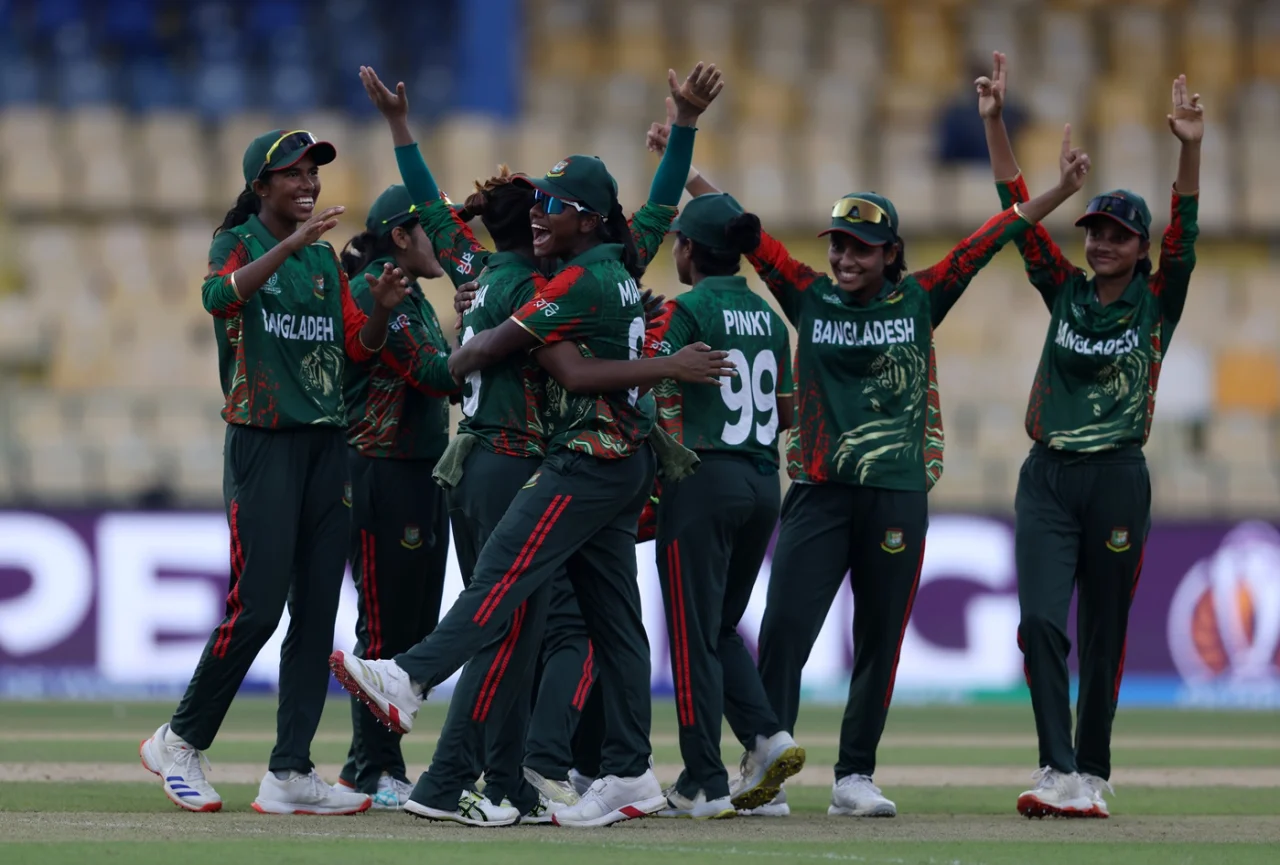
Bangladesh recorded their second ever win at a Women’s World Cup against the same opposition as their first – Pakistan.
In the first of 11 group games in Colombo, the two teams that came through the qualifiers fought a low-scoring battle, despite good batting conditions, as the attacks took centre stage.
The headlines belonged to Bangladesh’s bowlers. Sole seamer Marufa Akter set the tone with two wickets in the first over, before their five-pronged spin attack caused all sorts of problems for Pakistan. Bangladesh’s three leg spinners, Fahima Khatun, Rabeya Khan and Shorna Akter claimed six wickets between them with Shorna finishing with career-best figures of 3 for 5.
The result means Pakistan have only won one of their last 22 World Cup matches and three out of their 31 overall, and will be disappointed with the way they started this competition. After opting to bat first, only two Pakistan batters – Rameen Shamim and Fatima Sana – got past 20 and they had a highest partnership of 42. In contrast, Bangladesh’s debutant opener Rubya Haider batted through the innings and scored a half-century to back up their strong performance in the field.
A visibly more conditioned Marufa found swing immediately and success soon after. The penultimate ball of her first over pitched outside off and shaped back into Omaima Sohail, who stayed on the back foot, left a gap between bat and pad and was bowled. The final ball was even better, hooped in and took Sidra Amin’s inside-edge on its way to leg stump. That was Amin’s first golden duck in ODIs, and first since 2019. Left-handed Muneeba Ali faced Marufa’s hat-trick ball at the start of the next over, and it angled in and straightened on her but she was able to keep it out, only to be beaten next ball.
At the other end, the tournament’s youngest player, offspinner Nishita Akter took the other new ball. The first boundary came off her, when Muneeba clipped Nishita fine and then swept her away to deep backward-square. The sweep quickly became Pakistan’s go-to shot as they scored 20 of their first 45 runs with it.
Left-arm spinner Nahida Akter was introduced in the eighth over, with Muneeba and Shamim, batting at No.4 for the first time, starting to settle. Nahida removed both. Muneeba chased a wide Nahida delivery and cut it to Nishita at point, ending the third-wicket partnership at 42. In Nahida’s next over, she tossed it up to Shamim, who chipped it straight back for the simplest of return catches. Pakistan were 47 for 4 in the 14th over.
Aliya Riaz and Sidra Nawaz launched a mini counterattack when Aliya brought up the team’s fifty with a slash through backward point and Nawaz hit back-to-back boundaries off Fahima. But Nawaz’s stay at the crease was troubled. She was given out lbw to Fahima on 0 and reviewed. UltraEdge showed she had hit the ball. Three overs later, Nawaz was given not out off Rabeya Khan and Bangladesh reviewed a close call. Replays showed the ball close to both the bat and the pad as it spun back in and third umpire N Janani ruled it had hit the pad first. Nawaz was out for 15.
Sana came in at No.7 and hit the sixth ball she faced for four. She was the only batter to get Marufa to the boundary, when she creamed her through point. But Bangladesh soon applied the squeeze again. Pakistan scored six runs off the next 24 balls and pressure told: Aliya tried to hit Nishita over long-off but didn’t get enough on it and Marufa ran in from the rope to take a good catch. Sana didn’t last much longer. Two overs later, she played down the wrong line against Fahima, was hit on the front pad and given out. Sana reviewed immediately, thinking both bat and pad were close to the ball, but umpire Janani upheld the on-field decision.
Legspinner Shorna found bounce and turn and had Natalia Pervaiz caught behind in her first over. Pakistan were in danger of being bowled out inside 35 overs. They avoided that, but only just and still lost their ninth wicket in bizarre fashion. Nashra Sandhu left a full ball from Shorna and as her bat came down, she struck her own stumps to become only the second batter to be dismissed hit wicket in Women’s World Cups.
No runs were scored off Shorna’s first three overs before Diana Baig swept her for four but the fun was short lived. Sadia Iqbal holed out to mid-on halfway through the 39th over to end the innings with 69 balls remaining.
With a modest score to defend, Pakistan had to strike a balance between taking wickets and keeping Bangladesh quiet – Sana and Baig got it right early on. They found movement and teased the edge and Bangladesh had only scored seven runs off the first 22 balls of their reply. And then Baig struck. She beat Fargana Hoque with a ball that seamed in and hit her on the knee roll. Pakistan reviewed and Ultra Edge confirmed there was no bat and the ball would have hit legstump. Baig delivered a five-over spell upfront, through the powerplay, with an analysis of 5-3-2-1.
Pakistan went for double spin after the fielding restrictions were lifted and offspinner Shamim got the next wicket. She had Sharmin Akter out lbw as she was hit on the back pad.
Bangladesh captain Nigar Sultana took ten balls to get off the mark but when she did, it was in some style. She advanced down the pitch to turn a Sadia Iqbal delivery into a half-volley and hit it down the ground for four. The tension was broken in the next over when Shamim’s first ball beat everyone for four byes and then Sultana swept and reverse swept her way to two more fours.
Haider then got in on the action. She cleared the front leg to hit Shamim wide of mid-on for four, and then took on Sandhu, in an over that cost 14 runs. Haider swung Sandhu over mid-on, carved her through backward point and then charged down the pitch to hit her over mid-off. Sana brought Baig back on and Haider sent her over mid-on too as Bangladesh took control.
Pakistan kept fighting as Baig and Sana tried their best to remove Haider and Sultana. Sana thought she had found Haider’s outside edge and had her caught behind and sent it upstairs but the ball hit her thigh pad on the way through. Soon Baig thought she had Sultana lbw and called for a review but ball tracking showed it was sliding down leg. Eventually, the Pakistan pair combined when Sultana tried to short-arm jab Sana through short mid-wicket but bottom-ended to Baig.
Haider reached fifty off her 64th ball when she sent Ramim between point and cover for four. Bangladesh needed 29 runs from the last 24 overs and got there with 113 balls to spare.
Brief scores:
Bangladesh Women130 for 3 in 31.1 overs (Rubya Haider 54*, Nigar Sultana 23, Sobhana Mostray 24*; Fatima Sana 1-30, Diana Baig 1-14, Rameen Shamim 1-23) beat Pakistan Women 129 in 38.3 overs (Rameen Shamim 23, Fatima Sana 22; Shorna Akter 3-05, Nahida Akter 2-19, Marufa Akter 2-31) by six wickets
[Cricinfo]



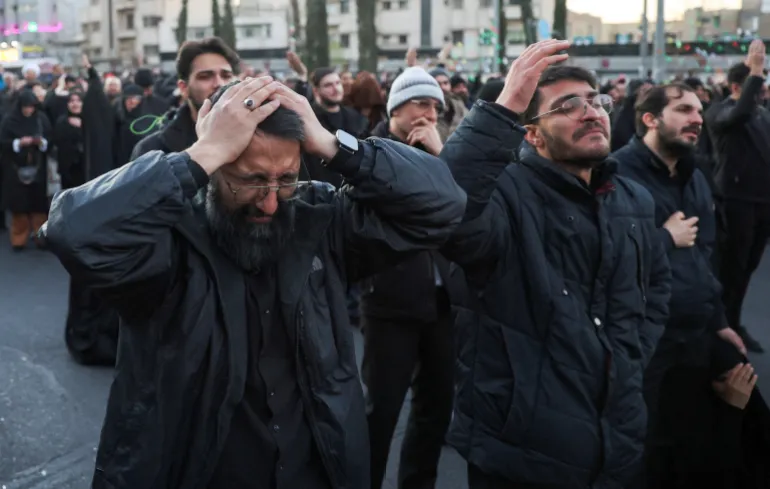
Iran has begun 40 days of mourning after Supreme Leader Ayatollah Ali Khamenei was killed in ongoing attacks by the United States and Israel, according to Iranian state media.
Top security officials were also killed in Saturday’s strikes, along with Khamenei’s daughter, son-in-law and grandson. The killings mark one of the most significant blows to Iran’s leadership since the 1979 Islamic revolution.
President Masoud Pezeshkian condemned the killing as “a great crime”, according to a statement from his office. He also declared seven days of public holidays in addition to the 40-day mourning period.
Reporting from Tehran, Al Jazeera’s Tohid Asadi said people were pouring into the streets of the capital following the news of Khamenei’s killing.
“There will be expected ceremonies,” he said, noting they would likely take place amid continuing bombardment across the country.
Protests denouncing Khamenei’s killing were also reported elsewhere, including Shiraz, Yasuj and Lorestan.
Footage aired by Iranian state media showed supporters mourning at the shrine of Imam Reza in Mashhad, with several people seen crying and collapsing in grief.
The killing also led to protests in neighbouring Iraq, which declared three days of public mourning. In Baghdad, protesters confronted security forces in the heavily fortified Green Zone, which houses Iraqi government buildings and foreign embassies.
Videos verified by Al Jazeera showed demonstrators waving flags and shouting slogans, with witnesses saying some were attempting to mobilise towards the US Embassy. Footage also showed protesters blocking vehicles at a roundabout near one of the entrances to the area.

There was also a protest in the Pakistani city of Karachi, where footage, verified by Al Jazeera, showed people setting fire to and smashing the windows of the US consulate.
However, there have also been reports of celebrations in Iran, with the Reuters news agency quoting witnesses as saying some people had taken to the streets in Tehran, the nearby city of Karaj and the central city of Isfahan.
Meanwhile, the official IRNA news agency reported that a three-person council, consisting of the country’s president, the chief of the judiciary, and one of the jurists of the Guardian Council, will temporarily assume all leadership duties in the country. The body will temporarily oversee the country until a new supreme leader is elected.
Khamenei assumed leadership of Iran in 1989 following the death of Ayatollah Ruhollah Khomeini, who had led the Islamic revolution a decade earlier.
While Khomeini was regarded as the ideological force behind the revolution that ended the Pahlavi monarchy, Khamenei went on to shape Iran’s military and paramilitary apparatus, strengthening both its domestic control and its regional influence.
Meanwhile, the Islamic Revolutionary Guard Corps (IRGC) pledged revenge and said it had launched strikes on 27 bases hosting US troops in the region, as well as Israeli military facilities in Tel Aviv.
[Aljazeera]
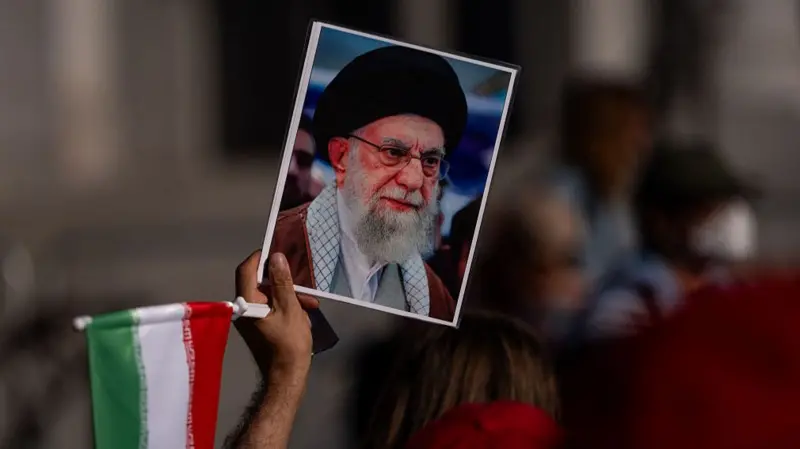
Iran’s Supreme Leader Ayatollah Ali Khamenei was killed in his office on Saturday morning during US-Israeli air strikes, state media confirms.
President Trump said Khamenei was “one of the most evil people in History” and urged Iranians “take back their Country”
In Iran, there are celebrations in several cities, while others are mourning on the streets – one local tells BBC Persian that Khameni’s death is “such a good news”
More than 200 people have been killed across Iran, the Red Crescent says. At least 108 were killed when US and Israeli strikes hit a girls’ school, Iran says
Sources have told the BBC’s US partner CBS that around 40 Iranian officials are dead. Israel said it killed several top officials, including the head of the Islamic Revolutionary Guard Corps, which has vowed to unleash “the most devastating offensive operation” against US bases and Israel
This is a defining moment in Iran’s turbulent history – but its most powerful clerics and commanders have been preparing for it, writes the BBC’s Chief International Correspondent.
Iranian retaliatory strikes were earlier reported in Dubai, Doha, Bahrain and Kuwait – places with US military bases, or that are allied to the US.
[BBC]

This fixture was, of course, known in advance, but the stakes are somewhat surprising. Neither was it expected that India could be knocked out of their own party if they lose to West Indies nor was it expected that West Indies could go to the semi-finals if they win this match.
The expected result still is for India to overcome that one blip against South Africa and make it to the semi-finals. Then again, jeopardy and unpredictability are at the heart of this format.
The path to get here has been similar for both teams: a thumping loss to South Africa and a resounding win over Zimbabwe. Even their scores against Zimbabwe were nearly identical.
West Indies are one team India haven’t faced in their dominant run starting with the 2024 T20 World Cup. They are, in fact, the last team to have beaten India in a series way back in August 2023.
Both sides have improved since then. India are a well-oiled domination machine, West Indies have put together scary six-hitters who have happened to hit form. They have hit more sixes than any side at any T20 World Cup, and India are three behind them with 63 so far.
It is with the ball that India hold an advantage. India’s bowlers are match-winners. They have pace and mystery. It gives them room for error. West Indies are a strictly defensive bowling unit. They’ll need everything to go their way to get the better of India.
He might have taken just 26 balls to get there against Zimbabwe, but it was Abhishek Sharma’s second-slowest fifty in T20Is. That’s because he had scored just 15 runs in the first four matches, which made him take his time against offspin, scoring just 13 off 17 balls against that style of bowling. That makes Roston Chase an important player even though he went for 46 against South Africa. He is the only spinner in the West Indies squad who takes his stock ball away from left-hand batters; India have five of them in their top eight.
Rinku Singh lost his father after the match against Zimbabwe, which he missed with India bringing in Sanju Samson to break up the left-hand batters in the top order. He is expected to join the squad on Saturday night but isn’t expected to play.
India (probable): Abhishek Sharma, Sanju Samson (wk), Ishan Kishan, Tilak Varma, Suryakumar Yadav (capt), Hardik Pandya, Shivam Dube, Axar Patel, Arshdeep Singh, Jasprit Bumrah, Varun Chakravarthy.
Brandon King, who had sustained an injury against South Africa, is fit and available, which should suggest no changes for West Indies.
West Indies (probable): Brandon King, Shai Hope (capt & wk), Shimron Hetmyer, Rovman Powell, Roston Chase, Sherfane Rutherford, Romario Shepherd, Jason Holder, Matthew Forde, Gudakesh Motie, Shamar Joseph.
[Cricinfo]

Iran begins 40-day mourning after Khamenei killed in US-Israeli attack

INS TARANGINI makes port call in Trincomalee

Iran’s Supreme Leader Ayatollah Ali Khamenei has been killed, state media says

Can West Indies make up for bowling gulf in virtual quarter-final against India?

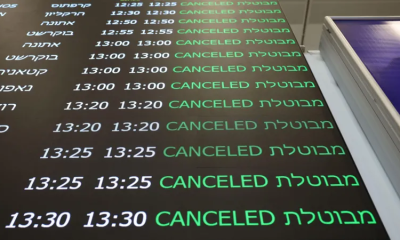
Flights cancelled as travel warnings issued after strikes on Iran

Trump says Iran’s Supreme Leader Ayatollah Ali Khamenei is dead after US-Israeli strikes

‘Dates have the highest sugar content to fight Coronavirus’

Sunday Island 27 December – Headlines

#SundayIsland 17th December – Headlines

Sunday Island – 28th March

Sunday Island Headlines – 21 March

Sunday Island – 21st February – Headlines
-

 Features6 days ago
LOVEABLE BUT LETHAL: When four-legged stars remind us of a silent killer
-

 Business6 days ago
Bathiya & Santhush make a strategic bet on Colombo
-

 Business6 days ago
Seeing is believing – the silent scale behind SriLankan’s ground operation
-

 Features6 days ago
Protection of Occupants Bill: Good, Bad and Ugly
-

 News6 days ago
Prime Minister Attends the 40th Anniversary of the Sri Lanka Nippon Educational and Cultural Centre
-

 News6 days ago
Coal ash surge at N’cholai power plant raises fresh environmental concerns
-

 Business6 days ago
Huawei unveils Top 10 Smart PV & ESS Trends for 2026
-

 Opinion2 days ago
Jamming and re-setting the world: What is the role of Donald Trump?