
News
Women’s rights groups reject current debt restructuring that places burden of repayment on working class


Women’s rights groups in Sri Lanka yesterday (11) rejected the current debt restructuring solutions that place the burden of repayment on Sri Lanka’s working classes, particularly its women.
Addressing a press conference, a number of women’s groups said they are demanding urgent and sustainable solutions to the ongoing debt crisis in Sri Lanka that respond to the actual lived experiences, struggles and needs of the people.
At the ‘National Convening on Debt and Women’s Human Rights’ held in Colombo on 9-10 August 2023, women’s rights groups from Sri Lanka and other Asian countries discussed the ways the ongoing crisis has impacted their lives and the inadequacy of government solutions to respond in meaningful ways. They also severely criticised the historical and current roles played by international financial institutions, mainly the World Bank and IMF, in imposing unjust austerity measures and their lack of accountability in worsening economic crises in the region.
Sri Lanka is currently going through a crippling economic crisis because of an unsustainable debt burden of 103.8 percent of GDP as of March 2023. This crisis hit households at a time when many had not yet recovered from the shocks of COVID-19. The government response of austerity measures to secure an International Monetary Fund bailout are being hurriedly rolled out, with no public consultation. This has included cuts in public spending, steep increases in utility tariffs, food and energy costs, indirect and regressive taxation, and limited cash handouts as social security.
This has particularly impacted low to middle income families, and labour laws that threaten to rollback gains in wage and job security, especially for women. Critically, the Government of Sri Lanka has decided to use the funds of the Employee Provident Fund to repay Sri Lanka’s debt – forcing Sri Lanka’s working class to bear the burden of repaying the wealthiest creditors – and has blocked resistance and legal challenges to the same.
“The social security funds of workers are being compromised to pay the debt for the richest income earners in the world. The government has decided to trade off the savings – for many of them this is the only savings – of some of the most hardworking people in Sri Lanka,” said lawyer and activist, Lakmali Hemachandra.
“There are severe violations going on with the domestic debt restructuring. The restructuring process is due to finish in September and by that time, workers will lose the security of their savings. We need the international community to hear and condemn the fact that creditors are being paid with workers’ savings and the Government and IMF is continuing to hold the position that there is people’s buy-in for this. There is no people’s buy-in, people just don’t have a way to communicate that,” Hemachandra said.
Juan Pablo Bohoslavsky, Former UN Independent Expert on Debt and Human Rights, said: “We also need to question why only domestic creditors have been asked by the government to make a sacrifice and accept, to some extent, a haircut in their credit. External debt holders should also be asked to make a similar contribution to bring sovereign debt to a sustainable level. According to international law, in the Sri Lankan context, prohibition of discrimination means inter-creditor equity in sovereign debt restructuring.”
The national convening was co-organised by the Law and Society Trust (LST), National Fisheries Solidarity Organisation (NAFSO), The Women and Media Collective (WMC), Colombo Urban Lab, The Asia Pacific Forum on Women, Law and Development (APWLD). Participants included representatives from groups of labour activists, trade unions, rural and urban women, academia, and civil society from Sri Lanka and Asia.













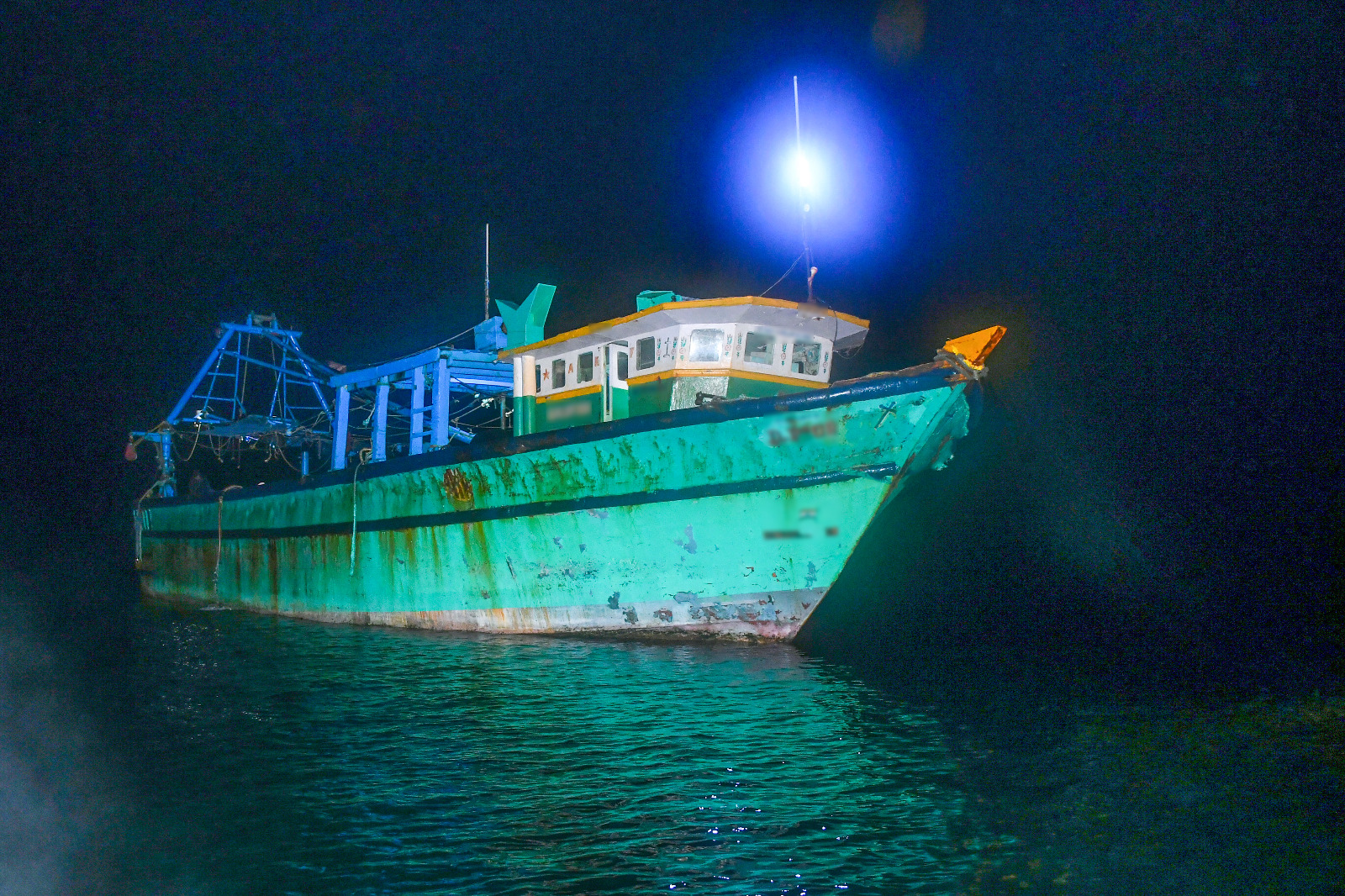
During an operation conducted in the dark hours of 22 Feb 26, the Sri Lanka Navy seized an Indian fishing boat and apprehended twelve (12) Indian fishermen while they were poaching in Sri Lankan waters, in the sea area south of Mannar.
The seized boat and the Indian fishermen were handed over to the Fisheries Inspector of Dikovita for onward legal proceedings.

FSL assures legal backing for them
Families of those sentenced to death by the Three-member Gampaha High Trial-at-Bar, over the killing of SLPP MP Amarakeerthi Atukorale, and his police bodyguard, met a senior official of the Presidential Secretariat, yesterday (23), to seek backing for their move to appeal against the verdict.
Having made representations, they addressed the media, outside the Presidential Secretariat, where they declared their intention to move the higher court against the decision.
The SLPP MP and his security officer were killed by an Aragalaya mob on 09 May, 2022, at Nittambuwa. The same day Aragalaya mobs unleashed violence against the then government MPs across the country, torching dozens of their properties.
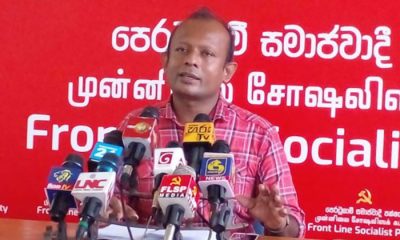
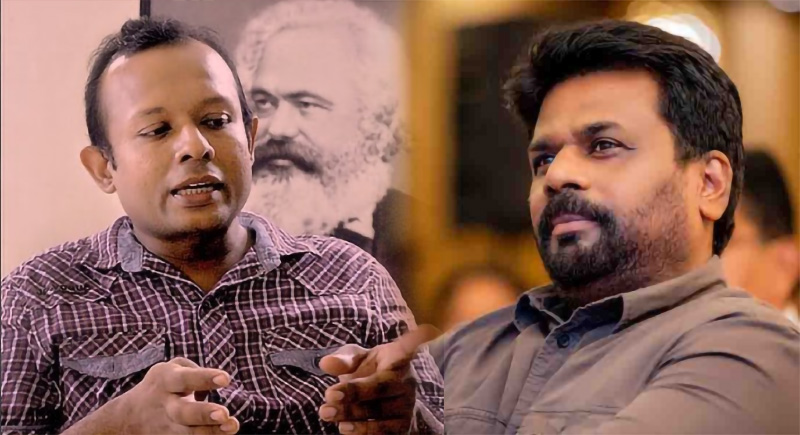
The Frontline Socialist Party (FSP) yesterday said that they would help the families of those sentenced to death to move court against the Gampaha High Court Trial-at-Bar decision. Responding to The Island queries, FSP spokesman Pubudu Jayagoda said that their representatives had already met the families and necessary work was being done to move the Supreme Court. Twenty three persons were acquitted and four handed six-month prison terms, suspended for five years
Jayagoda said that one of the HC judges differed in the ruling. Asked whether they received backing from any other political party and groups that had been involved in the 2022 protest campaign to defend those who had been found guilty, Jayagoda said such support was lacking.
The JVP/NPP played a significant role in the violent protest campaign that forced President Gotabaya Rajapaksa to step down. Pointing out that the Attorney General, too, was appealing against the court decision on the basis that the number of persons sentenced to death should be much higher, Jayagoda said that the Nittambuwa incident couldn’t be examined in isolation without taking into consideration the SLPP goon attack on Galle Face protesters on 09 May, 2022. (SF)

Offshore Patrol Vessel P 628 of the Sri Lanka Navy departed Baltimore, USA, for Colombo, on 20 February.
The ex-United States Coast Guard Cutter, USCGC Decisive was officially handed over to the SLN on 02 December, 2025, as the latest addition to the SLN fleet, under the Pennant Number P 628.
Measuring 64 metres in length, this ‘B-Type Reliance Class 210-foot Cutter’ is equipped with advanced technological systems and facilities, capable of conducting extensive surveillance operations spanning up to 6,000 nautical miles per patrol.
The vessel’s voyage to Colombo is historic, possibly marking the longest-ever passage undertaken by a Sri Lanka Navy ship. Covering approximately 14,775 nautical miles, the journey will see the P 628 navigate from Baltimore through the Atlantic Ocean, the Panama Canal (a first for a Sri Lankan naval vessel), the Pacific Ocean, and into the Indian Ocean, via the Straits of Malacca. The ship is expected to arrive in Sri Lanka during the first week of May, 2026.

More than 5,000 flights cancelled as US east coast digs out of record snow

Pakistan bat vs unchanged England with Afridi back

Navy seize an Indian fishing boat poaching in Mannar seas

Fair weather will prevail except for showers in the Southern province and in Rathnapura, Monaragala and Kaluthara districts after 2.00 p.m

Families of those sentenced to death for killing MP Atukorale seek AKD’s intervention

OPV leaves Baltimore, expected in Colombo in May

‘Dates have the highest sugar content to fight Coronavirus’

Sunday Island 27 December – Headlines

#SundayIsland 17th December – Headlines

Sunday Island – 28th March

Sunday Island Headlines – 21 March

Sunday Island – 21st February – Headlines
-
 Features3 days ago
Why does the state threaten Its people with yet another anti-terror law?
-

 Features3 days ago
Victor Melder turns 90: Railwayman and bibliophile extraordinary
-

 Features3 days ago
Reconciliation, Mood of the Nation and the NPP Government
-

 Features2 days ago
LOVEABLE BUT LETHAL: When four-legged stars remind us of a silent killer
-
 Features3 days ago
Victor, the Friend of the Foreign Press
-

 Latest News4 days ago
New Zealand meet familiar opponents Pakistan at spin-friendly Premadasa
-

 Latest News4 days ago
Tariffs ruling is major blow to Trump’s second-term agenda
-

 Latest News4 days ago
ECB push back at Pakistan ‘shadow-ban’ reports ahead of Hundred auction