
News
Women’s rights advocates reject debt restricting proposals and demand economic justice

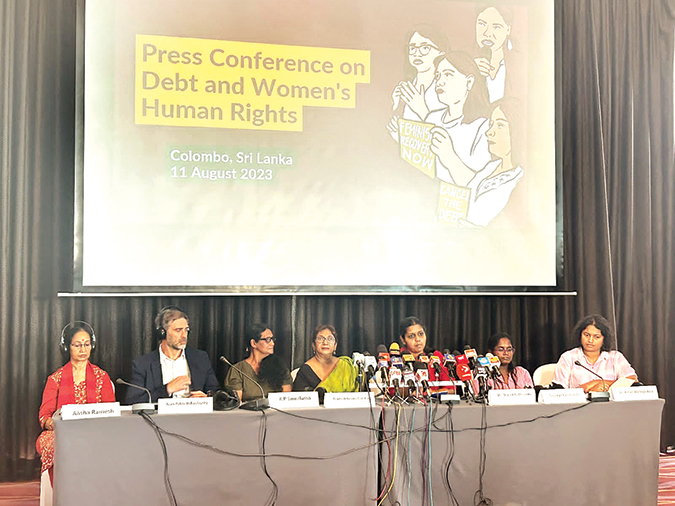
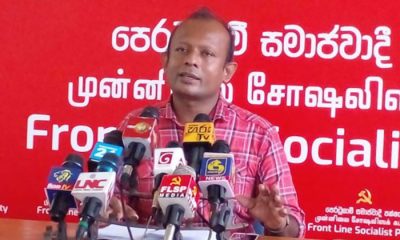
Women’s rights groups in Sri Lanka have vehemently opposed the current debt restructuring proposals that unfairly place the responsibility of repayment on the nation’s working class, particularly its women. Addressing a press conference, several women’s organizations have called for immediate and sustainable solutions to the ongoing debt crisis in Sri Lanka, emphasizing the need for solutions that genuinely address the lived experiences, challenges, and requirements of the people.
Prominent lawyer and activist Lakmali Hemachandra expressed concern over the compromise of workers’ social security funds to service the debt of the world’s wealthiest income earners. Hemachandra emphasized that hardworking individuals in Sri Lanka are facing severe violations through domestic debt restructuring, leading to a loss of their financial security. The restructuring process is set to conclude in September, further endangering workers’ savings. Hemachandra urged the international community to acknowledge and condemn the alarming practice of using workers’ savings to repay creditors, highlighting the lack of genuine public support for such measures.
Juan Pablo Bohoslavsky, Former UN Independent Expert on Debt and Human Rights, raised questions about the selective burden placed on domestic creditors and proposed a more equitable distribution of sacrifices. He underscored that international law demands inter-creditor equity in sovereign debt restructuring, urging for fair treatment across all debt holders.
The ‘National Convening on Debt and Women’s Human Rights,’ held in Colombo on August 9-10, 2023, brought together women’s rights groups from Sri Lanka and other Asian countries. These advocates discussed the profound impact of the ongoing crisis on their lives and criticized the inadequacy of government responses. International financial institutions, notably the World Bank and IMF, were censured for imposing unjust austerity measures without accountability, exacerbating economic turmoil in the region.
Sri Lanka faces a severe economic crisis due to an unsustainable debt burden of 103.8 percent of GDP as of March 2023. This crisis compounds the challenges faced by households still recovering from the COVID-19 pandemic. The government’s hurried implementation of austerity measures to secure an IMF bailout has led to cuts in public spending, significant hikes in utility, food, and energy costs, regressive taxation, and limited social security disbursements. These measures disproportionately affect low to middle-income families and pose a threat to wage and job security, particularly for women. Alarmingly, the government’s decision to utilize the earnings of the Employee Provident Funds to repay debt places an undue burden on the working class and restricts avenues for resistance and legal action.









News
Amendment to the regulations for registration of Subscriber SIM Cards (Subscriber Identity Modules- SIM) and reregistration of subscriber information related to the SIM cards obtained before 02-08-2019

As per the provisions of the Sri Lanka Telecommunications Act No. 25 of 1991, the regulations for registration of subscriber SIM Cards (Subscriber Identity Modules- SIM) No. 01 of 2019 have
been declared on 02-08-2019 and the aforementioned regulations are only applicable for the SIM cards issued after that date.
Therefore, the information on certain subscribers who registered before 02-08-2019 is not available with the telephone operating companies, which has led to problematic situations in certain law investigation activities.
Further, it has been recognized the necessity of amending the regulations appropriate to the current requirements, including the new provisions relevant to the registration of subscribers between the ages of 16 and 17 and the issuance of SIM
cards for foreigners who come to Sri Lanka.
Accordingly, the Cabinet of Ministers has approved the resolution presented by the President, in his capacity as the Minister of Digital Economy, to introduce new regulations providing the provisions for reregistration of the information of the subscribers who have obtained the SIM cards before 02-08-2019 and amending the currently implemented regulations for registration of Subscriber SIM Cards (Subscriber Identity Modules- SIM) No. 01 of 2019.

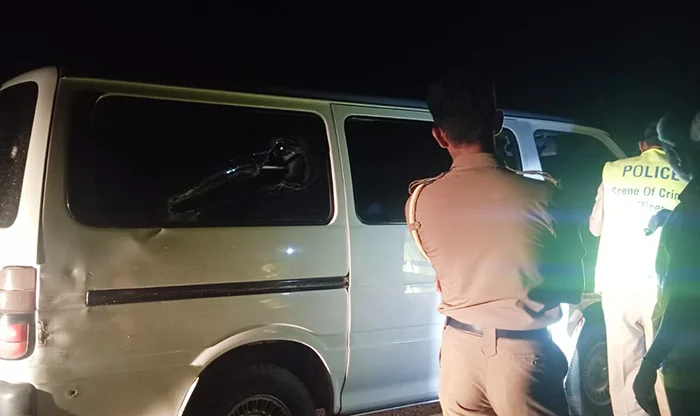
Police are investigating the circumstances under which its men, manning a checkpoint, opened fire on a vehicle, killing a 17-year-old boy in Jaffna, in the early hours of yesterday (10).
Police said that they opened fire at a van that ignored orders to stop at the checkpoint. The dead youth was identified as Albino Arul Bias, a resident of Vaddukoddai. Bias was identified as the driver of the vehicle.
Sources said that the incident happened at a checkpoint at the Alaipiddy junction, along the Jaffna–Urkavalthurai road.
After the vehicle was brought to a stop, the teenage boy, who had been inside, was found to have sustained critical gunshot injuries. He was subsequently transported to the Jaffna Teaching Hospital for emergency treatment. Despite medical intervention, he later succumbed to his injuries.
Two other individuals, who were inside the vehicle, have been taken into custody by police. Authorities have stated that one of those arrested is from the Vaddukoddai area, while the other is from Nallur.
Assistant Superintendent of Police, Attorney-at-Law, F. U. Wootler said that the men had no option but to open fire as they were suspicious of the vehicle. “The incident happened around 1 am in the morning and their failure to heed the police order couldn’t be justified under any circumstances,” the spokesman said (SF)
‘There is no basis for her accusations’- HRCSL
By Shamindra Ferdinando
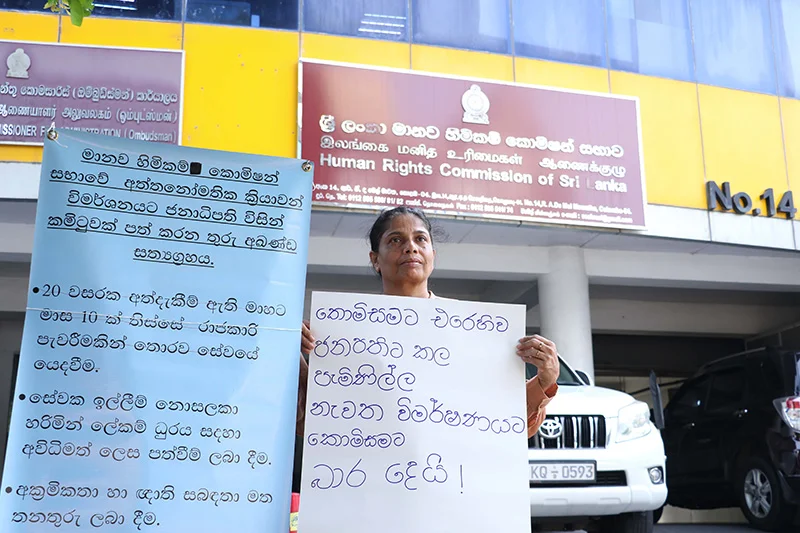
Permanent employee of Human Rights Commission of Sri Lanka (HRCSL) Ayanthini Shiromini yesterday (10) protested outside its main office at No 14, R.A. de Mel Mawatha, formerly Duplication road, in a bid to draw the attention of the Presidential Secretariat to her plight.
At the protest site, Shiromini told The Island that she had been relentlessly targeted since 2018 and the situation took a turn for worse in 2023 over her protest against the appointment of a particular member to an internal interview board and an incident pertaining to a complaint lodged against the then IGP Deshabandu Tennakoon.
Responding to a query regarding the 2018 developments, Shiromini said that she met with a near fatal accident in 2014 while engaged in official duty and depended on crutches for eight years and was recommended by a medical board to grant the opportunity for suitable work. Mother of two and post graduate social science in Kelaniya University and human rights at the Colombo University alleged that the HRCSL changed her status regardless of the recommendation made by the medical board.
Having failed to convince the top HRCSL administration to treat her fairly, Shiromi said that she sought the intervention of the Presidential Secretariat in late July 2025 to rectify the problems experienced by her.
She alleged that the Presidential Secretariat sided with the HRCSL and did absolutely nothing. “Instead of taking remedial measures, the Presidential Secretariat sent the file submitted by me against the HRCSL top management back to them. They shouldn’t have done that,” Shiromini said.
Shiromini staged a protest opposite HRCSL main office on the world human rights day on Dec 10, last year to highlight what she called injustice done to her by the HRCSL and the Presidential Secretariat. Shiromi said that she called off the protest after receiving an assurance from the Presidential Secretariat that two committees would be appointed to inquire into issues raised by her. “I had no option but to protest again as the Presidential Secretariat did nothing to address her grievances.”
A top spokesperson for HRCSL said that her allegations didn’t hold legal weight. The Parliamentary Ombudsman inquired into her accusations and the HRCSL fully explained the developments since the 2014 accident that took place in the Balangoda area.
The official said that after the accident she was granted the opportunity to work from home and other relief. “But we couldn’t have continued with the same indefinitely and she reacted angrily after a decision was made to treat her like a normal employee after the recovery,” the official said.
Shiromini has served the HRCSL since 2005. The official strongly denied allegations that Shiromini had been mistreated and harassed by a section of the HRCSL staff. “Of course, there had been a series of clashes with other employees and incidents provoked by the disgruntled worker but the HRCSL tried to address the issues in a systematic way,” the official said.
The official alleged that Shiromini exploited the post-Aragalaya situation for her advantage.
Shiromini said that she intended to continue the protest until the Presidential Secretariat ordered an investigation into the conduct of HRCSL top management. In a lengthy letter addressed to members of parliament, Shiromini named the Presidential Secretariat personnel who mishandled her case.
The HRCSL official said that in spite of her being a long-standing employee of the institution she seemed to be unaware that the President couldn’t appoint a committee to inquire into the HRCSL. “We do not have anything to hide,” the official said, calling the lone protester a quarrelsome employee.

Ghosts of 2016 writ large as England, West Indies meet again

Amendment to the regulations for registration of Subscriber SIM Cards (Subscriber Identity Modules- SIM) and reregistration of subscriber information related to the SIM cards obtained before 02-08-2019

Undermanned Australia get campaign going against dangerous Ireland

Afghanistan face mighty South Africa with campaign on the line

Pilot praised after crash-landing faulty Somali passenger plane on seashore

Except for a few showers in the Ampara, Batticaloa, Monaragala and Hambantota districts, mainly fair weather will prevail over the island.

‘Dates have the highest sugar content to fight Coronavirus’

Sunday Island 27 December – Headlines

#SundayIsland 17th December – Headlines

Sunday Island – 28th March

Sunday Island Headlines – 21 March

Sunday Island – 21st February – Headlines
-
 Features3 days ago
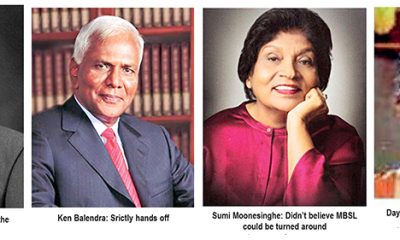
My experience in turning around the Merchant Bank of Sri Lanka (MBSL) – Episode 3
-

 Business4 days ago
Zone24x7 enters 2026 with strong momentum, reinforcing its role as an enterprise AI and automation partner
-

 Business3 days ago
Remotely conducted Business Forum in Paris attracts reputed French companies
-
 Business3 days ago
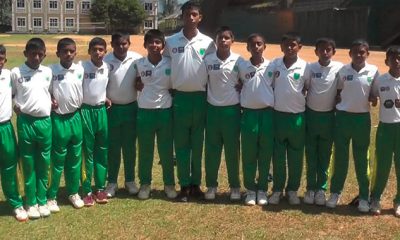
Four runs, a thousand dreams: How a small-town school bowled its way into the record books
-

 Business3 days ago
ComBank and Hayleys Mobility redefine sustainable mobility with flexible leasing solutions
-
 Business4 days ago
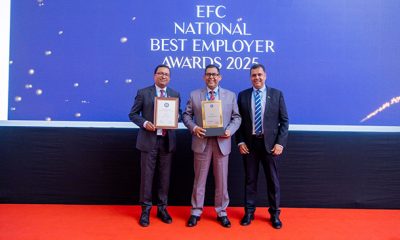
HNB recognized among Top 10 Best Employers of 2025 at the EFC National Best Employer Awards
-

 Editorial6 days ago
All’s not well that ends well?
-

 Business4 days ago
GREAT 2025–2030: Sri Lanka’s Green ambition meets a grid reality check